Wondering why your cat licks you? Learn the most common reasons—bonding, affection, stress relief, taste/scent, attention, or overstimulation—plus what t...
Article
•
Designer Mixes
Why Do Cats Lick Their Owners?

Shari Shidate
Designer Mixes contributor
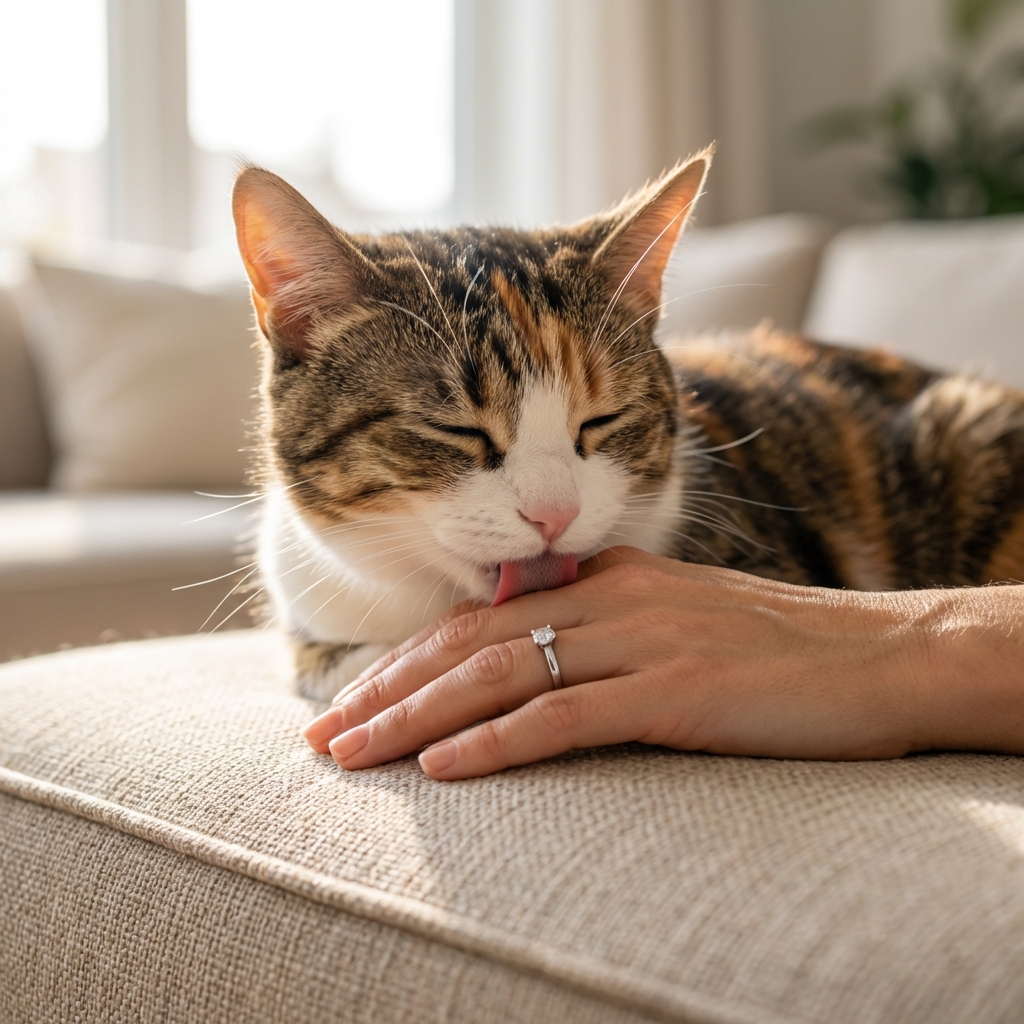
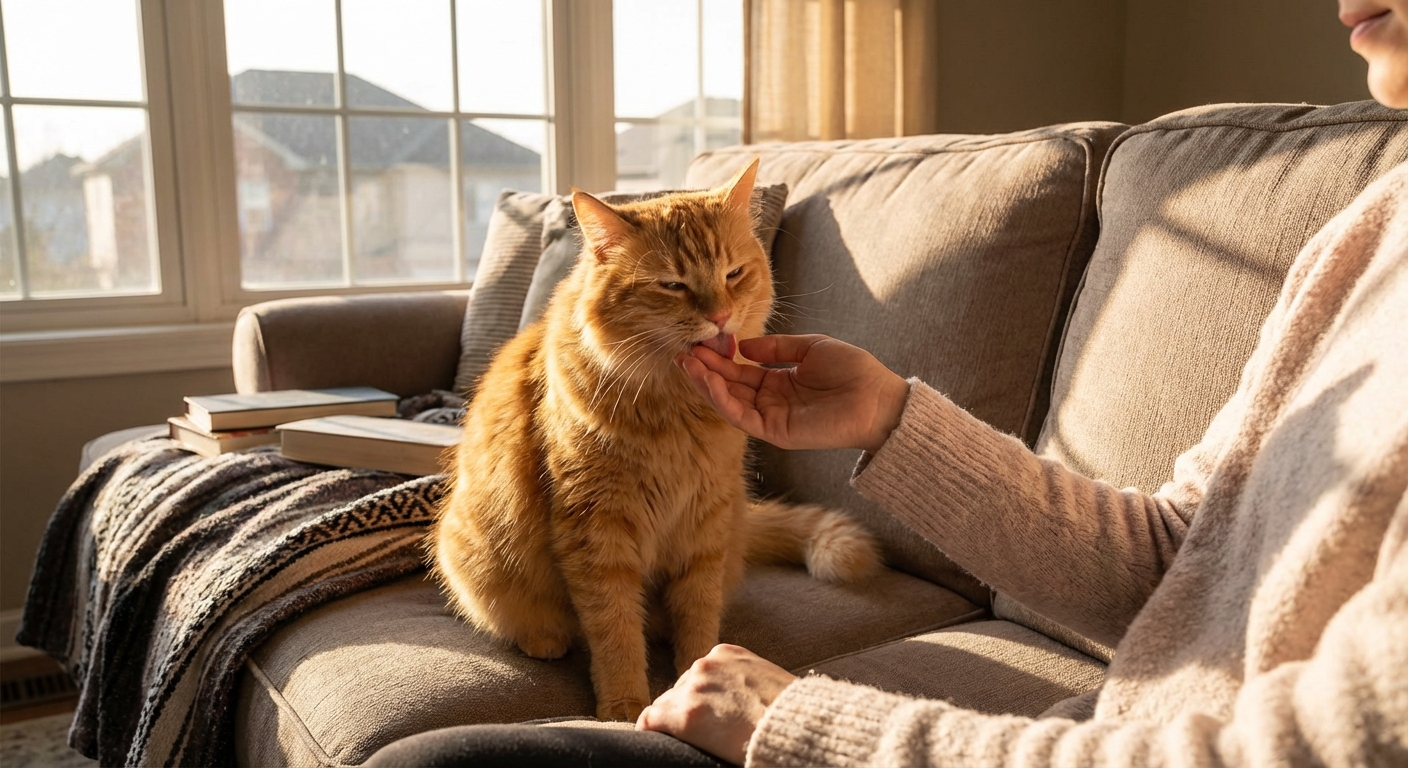
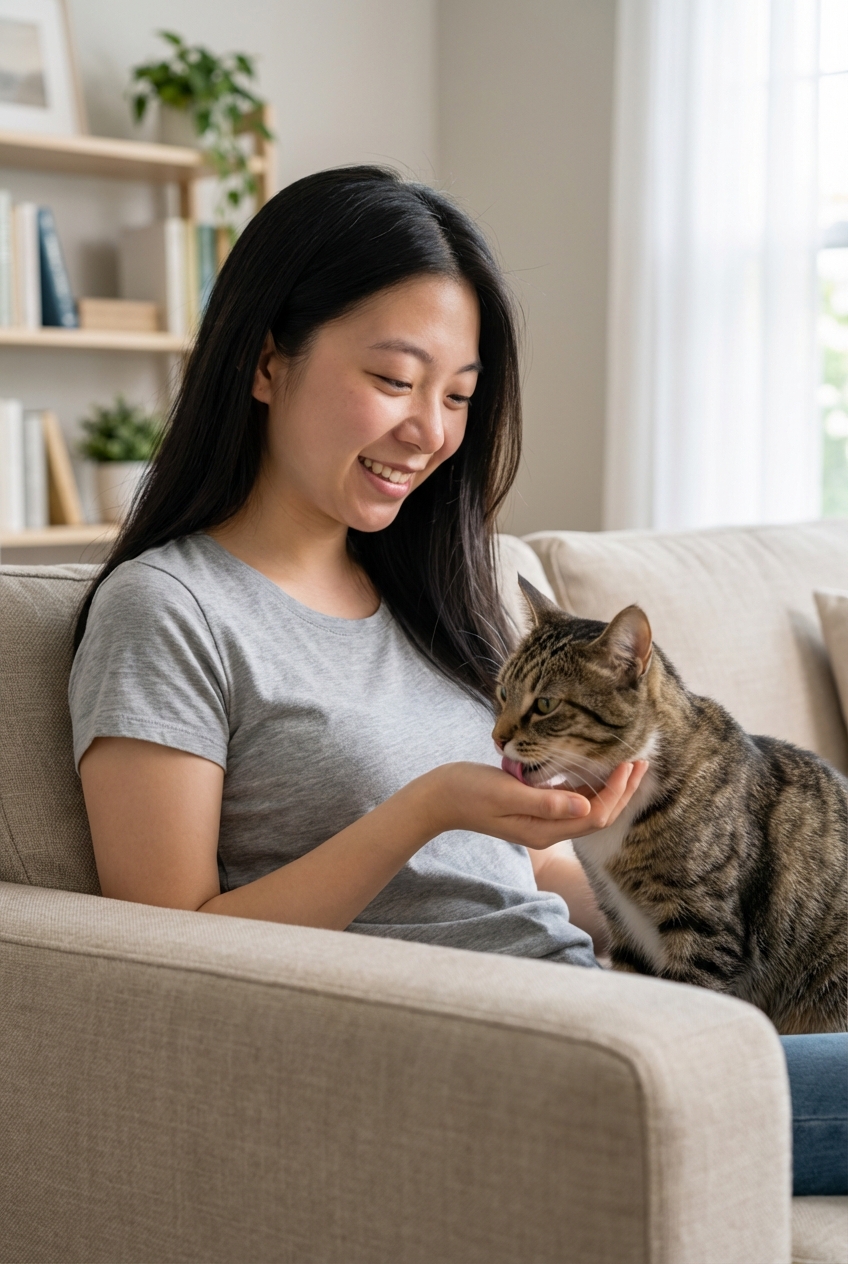
If you have ever been relaxing on the couch and your cat starts licking your hand, arm, or even your hair, you are not imagining things: this is a real form of feline communication. In my work as a veterinary assistant here in Frisco, Texas, I hear this question all the time. The good news is that licking is usually normal, affectionate behavior. The important part is knowing when it is simply a sweet habit and when it might be your cat telling you something is off.
What licking means
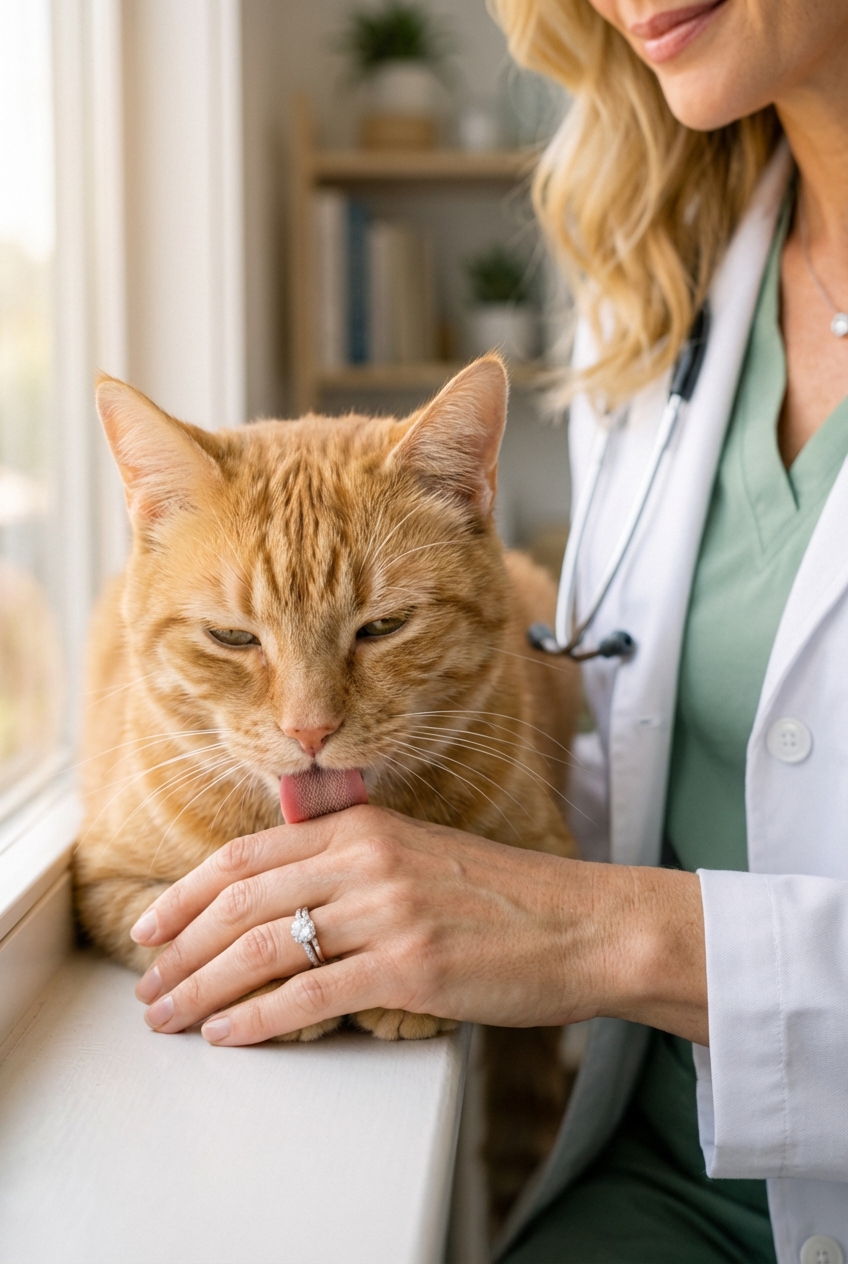
Cats use grooming to manage their world. They groom themselves to stay clean, self-soothe, and manage oils and odors on their coat. They also groom other cats, and sometimes humans, as a social behavior called allogrooming.
When your cat licks you, it can mean one or more of the following:
- Bonding and affection: Your cat is including you in their “family group” and reinforcing your relationship.
- Scent mixing: Cats are very scent-oriented. Licking can help mix familiar smells, which can help your cat feel safe around you.
- Comfort and routine: Many cats lick in predictable moments like bedtime, after you shower, or when you sit in “their” spot.
- Attention-seeking: If licking reliably makes you pet them, talk to them, or offer a treat, the behavior can become a learned habit.
Common reasons
1) You are part of the group
In multi-cat homes, you will often see one cat grooming another around the head and neck, places they cannot reach easily. When your cat licks your fingers or forehead, it is a similar social gesture. Think of it as their version of, “You are one of us.”
2) You taste interesting
Human skin can taste salty, especially after exercise. Some cats also lick hair products, lotions, or even tiny food residues on hands. This does not always mean your cat is hungry. It can simply be curiosity and taste exploration.
Safety note: Many products are not meant to be ingested. If your cat is persistently licking after you apply lotion, switch to something fragrance-free and pet-safer, and keep them from licking until it absorbs. Be extra cautious with topical medications and essential oils. Products like minoxidil (hair growth treatments), lidocaine, and tea tree oil can be dangerous to cats even in small amounts. When in doubt, wash the area and call your vet or Pet Poison Helpline for guidance.
3) Stress relief
Licking can function like a calming behavior. A cat may lick you when they are slightly overstimulated, uncertain, or trying to settle down. You might notice it during storms, after guests arrive, or during changes in the household routine.
4) Comforting you
Cats notice patterns. If you cry, lie still, or act differently, a sensitive cat may lick as a soothing social behavior. It is not proof your cat understands sadness the way humans do, but it can be a real “caregiving” response in their social toolkit.
5) Boredom
In indoor cats, repetitive licking of people can sometimes be a boredom behavior, especially if it happens at the same time every day and escalates when you ignore it.
When it is a concern
Occasional licking is normal. But if the behavior suddenly increases, becomes intense, or looks compulsive, it is worth paying attention.
Red flags
- Sudden change: Your cat starts licking you much more than usual.
- Compulsive patterns: They seem unable to stop, fixate on one spot, or become agitated if interrupted.
- Other stress signs: Hiding, overgrooming themselves, urine marking, appetite changes, or aggression.
- Oral discomfort: Drooling, pawing at the mouth, bad breath, chewing on one side, or reduced appetite.
- Pica or unusual eating: Licking and chewing fabrics, plastic, or non-food items.
Possible causes
- Anxiety or stressors (new pets, schedule changes, noise, moving)
- Dental disease (very common in adult cats)
- Nausea or GI upset
- Skin irritation (fleas, allergies, dry skin)
- Pain (cats can become clingy or show odd grooming behaviors when uncomfortable)
- Compulsive behavior (some cats develop repetitive grooming patterns that need a medical and behavior workup)
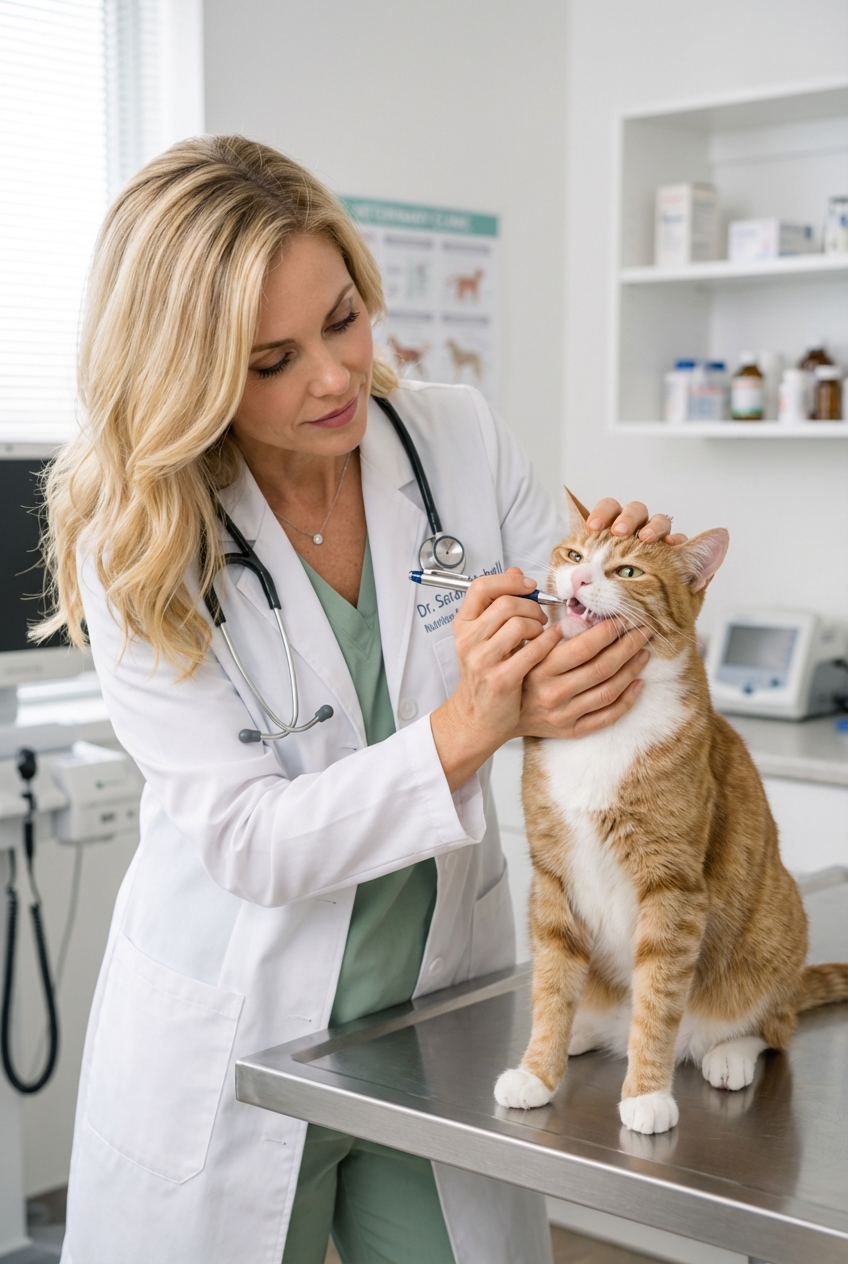
If you see any of these signs, schedule a vet visit. A quick oral exam and overall check can rule out issues that are much easier to treat early.
When to seek urgent help
Call your vet promptly (or seek urgent care) if licking comes with heavy drooling, trouble eating, repeated vomiting, sudden lethargy, mouth swelling, or suspected exposure to a toxin (for example, your cat licked a medicated cream or essential oil).
Is it safe?
For most healthy adults, an occasional lick is low-risk. That said, cat mouths contain bacteria, and their tongues can carry allergens and residue from grooming. The bigger risk is usually from bites and scratches, but saliva contact with broken skin can still cause infection.
Be extra cautious if:
- You have open cuts or broken skin (bacteria such as Pasteurella can infect wounds)
- You are immunocompromised
- You are pregnant or otherwise medically vulnerable and want personalized guidance from your clinician
- Your cat has fleas or untreated dental disease
If your cat licks an open area, wash it with soap and water. If you notice increasing redness, swelling, warmth, pain, or drainage, contact your healthcare provider.
Also, some cats lick and then give a little “love bite.” If your cat escalates from licking to biting, it may be overstimulation rather than affection.
How to respond
If you enjoy the licking and it is gentle, it is fine to allow it in moderation. If it is too much, you can redirect your cat in a kind, consistent way.
If you want less licking
- Avoid punishment: Do not yell, spray, or physically correct your cat. It tends to increase stress and can damage trust.
- Do not reward it by accident: If licking always leads to treats or intense attention, your cat will repeat it.
- Redirect calmly: Offer a wand toy, toss a soft toy, or provide a lickable treat on a mat instead of your skin.
- Create a routine: Many cats lick at predictable times. Add a play session and small meal before that “licking window.”
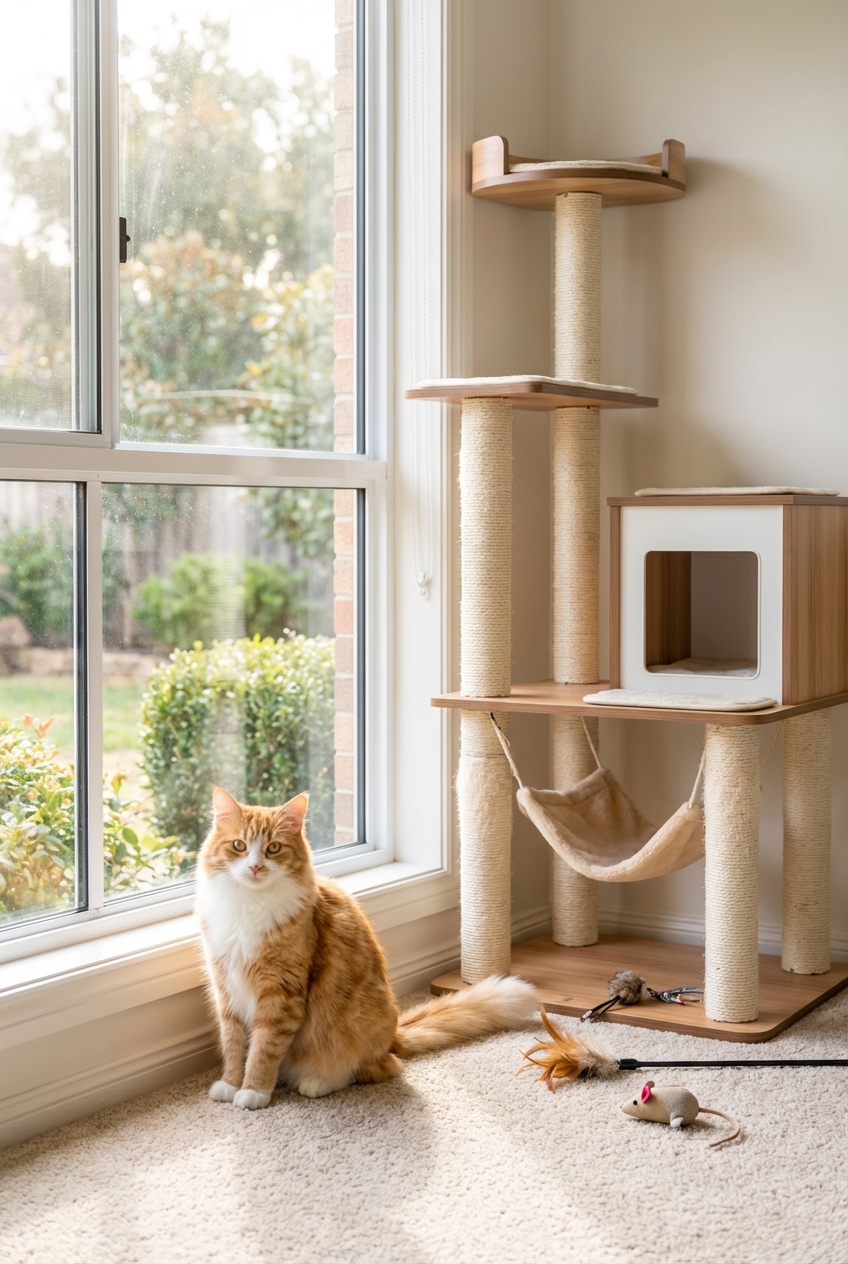
- Boost enrichment: Puzzle feeders, window perches, short training sessions, and rotating toys can reduce attention-seeking behaviors.
- Use gentle boundaries: Stand up, move your hand away, or place a small blanket between you and your cat, then offer a petting alternative.
If it looks like anxiety
Start with commonly recommended supports from veterinary behavior teams: predictable feeding times, safe hiding spaces, vertical climbing options, and interactive play. If anxiety seems significant, your veterinarian can discuss pheromone diffusers, behavior plans, and in some cases medication.
Quick FAQ
Why does my cat lick me and then bite?
This is often overstimulation. Licking starts as social grooming, then your cat hits their tolerance threshold and switches to a bite. Keep sessions short and watch for signs like tail flicking, skin twitching, or ears turning sideways.
Why does my cat lick my hair?
Hair holds scent and can taste like shampoo or styling products. Some cats also groom hair as a bonding behavior. Discourage hair licking if you use topical products that can be toxic to cats (minoxidil is a big one). If your cat ingests hair regularly, discourage it, as hair ingestion can contribute to vomiting or hairballs.
Why does my cat lick only one person?
Cats have preferences. The “chosen” person may smell more familiar, have a calmer energy, or respond in a way the cat finds rewarding.
Bottom line
Most of the time, a cat licking their owner is a sign of bonding, comfort, or curiosity. Your job is to look at the whole picture: frequency, intensity, and any changes in behavior or health. If licking becomes sudden, excessive, or paired with other symptoms, trust your gut and call your veterinarian.