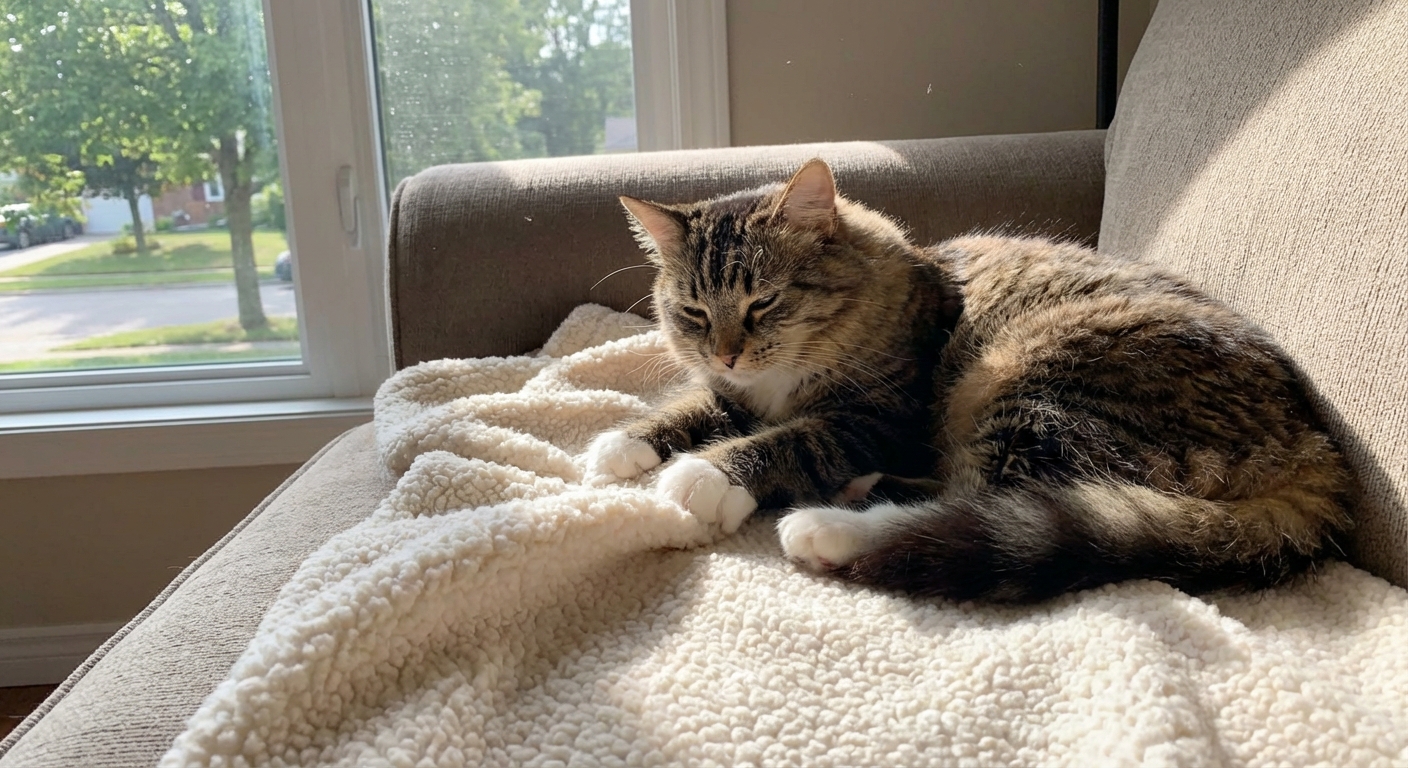
Wondering why your cat kneads you? Discover the kitten reflex, bonding, scent marking, and stress relief behind “making biscuits,” plus practical ways to...
Article
•
Designer Mixes
Why Do Cats Knead? Meaning and Behavior Explained

Shari Shidate
Designer Mixes contributor
Few cat behaviors are as sweet and a little puzzling as kneading. One minute your cat is curled up, and the next they are rhythmically pressing their paws into a blanket, your lap, or even another pet. Many people call it “making biscuits,” and while it is often a sign of comfort, it can also communicate other needs and emotions.
Let’s break down why cats knead, what it can mean in different situations, and how to respond in a way that supports your cat’s well-being.
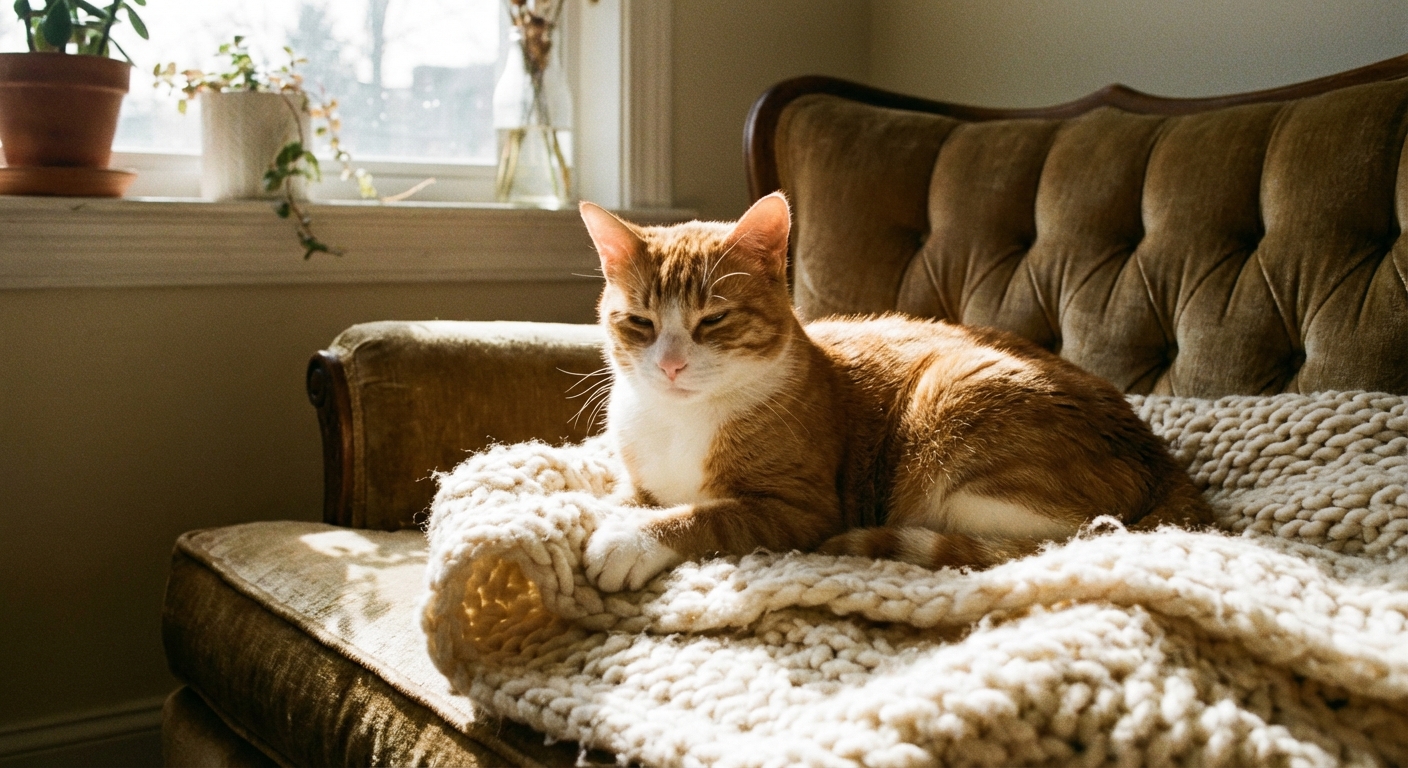
What kneading looks like
Kneading is a repetitive motion where a cat pushes their front paws in and out against a soft surface. Some cats alternate paws slowly, while others knead quickly. A few common add-ons you might notice:
- Purring or slow blinking
- Drooling (especially in very relaxed cats)
- Claws extending, which can be uncomfortable on skin
- Sucking on fabric, which can be a comfort behavior
- Chewing fabric, which may signal stress or, in some cats, a pica risk
These details matter because they can hint at whether the kneading is mainly comfort-based or tied to stress, excitement, or overstimulation.
Main reasons cats knead
1) A leftover kitten instinct
One common explanation is that kneading begins in kittenhood. Nursing kittens knead their mother’s belly to help stimulate milk flow. That early association between kneading and safety, warmth, and nourishment can carry into adulthood, especially when your cat is cozy on a soft surface.
In many adult cats, kneading is simply a self-soothing habit that signals, “I feel safe here.”
2) Marking with paw scent
Cats can deposit scent and pheromones from their paws when they knead. To us, it seems invisible. To a cat, it can be a comforting way of saying, “This is mine, and I belong here.”
3) Making a comfy spot
Wild cats and outdoor cats may press down grass, leaves, or soft ground to make a better sleeping area. Your indoor cat is not clearing brush, but the instinct can still show up as they “prep” a nap spot on a duvet or pillow.
4) Affection and bonding
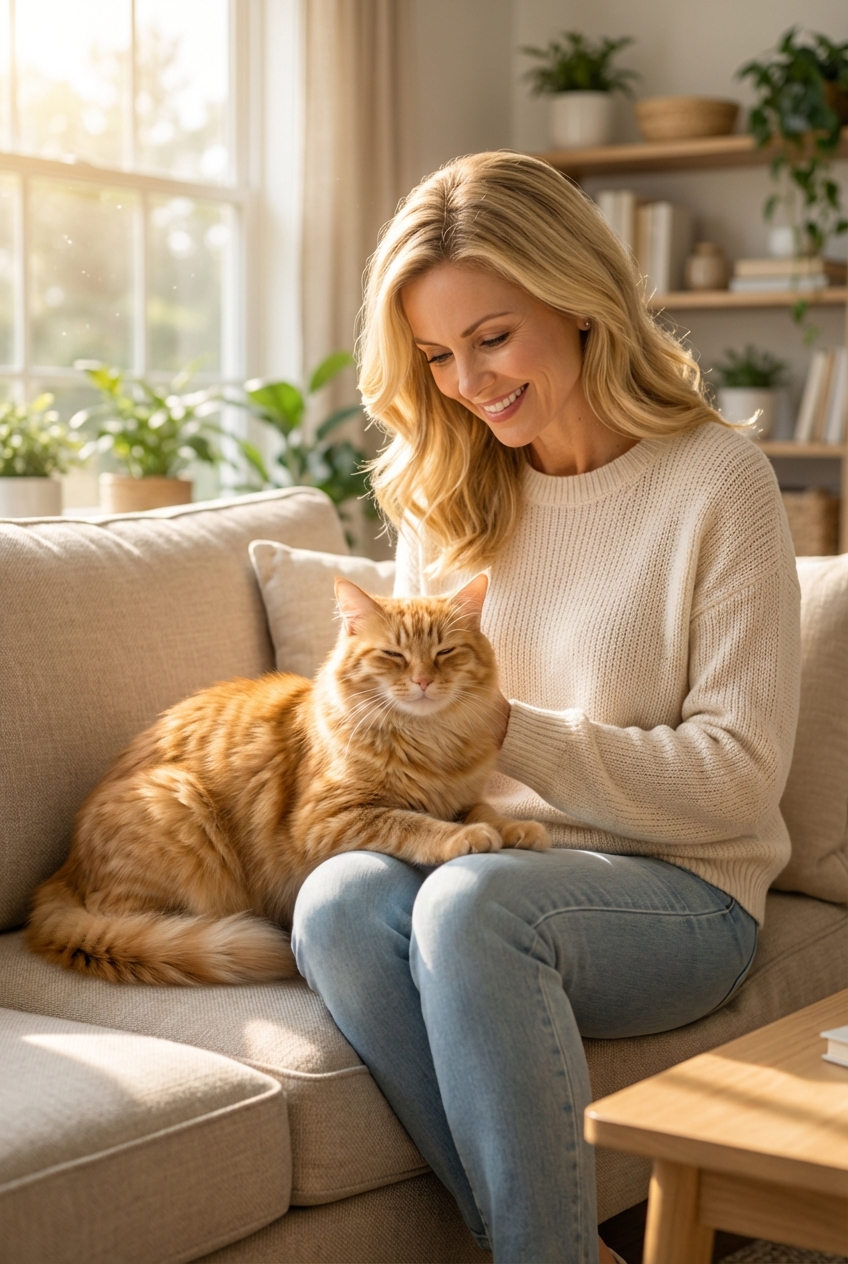
If your cat kneads on you, it is often a social signal. In many homes, kneading is part of a relaxed bonding routine, especially if it comes with purring and gentle body language. Think of it as your cat settling in and choosing you as their safe place.
5) Stress relief or big emotions
Kneading can also happen when a cat feels conflicted, overstimulated, or anxious. Some cats knead when guests arrive, after a loud noise, or during changes in routine. In these cases, kneading is more like a coping strategy than a pure cuddle signal.
6) Hormones and arousal
In some cats, kneading shows up during heightened arousal. This can happen in both males and females and may show up alongside behaviors like mounting, yowling, or restless pacing. If you see this pattern frequently, especially in an unspayed or unneutered cat, talk with your veterinarian about options.
Does kneading mean a cat is happy?
Often, yes. But it helps to read kneading alongside the rest of your cat’s body language.
- Usually content: loose body, half-closed eyes, purring, slow movements, tail resting calmly
- Possibly stressed: tense body, ears angled back, dilated pupils, frequent scanning of the room, tail flicking
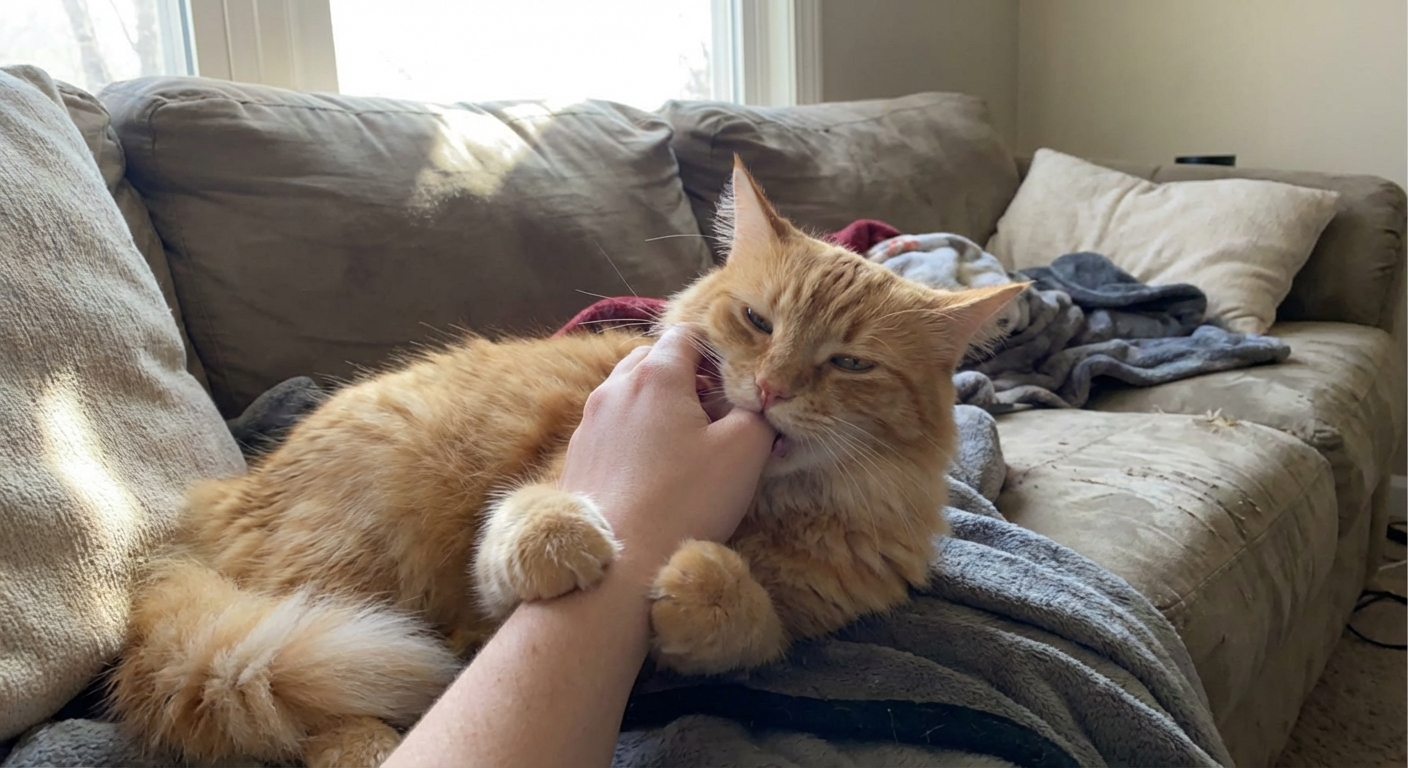
- Overstimulated: kneading becomes faster, your cat grips with claws, bites, or clamps onto fabric and will not let go easily
If kneading seems peaceful, it is generally a good sign. If it escalates into rough behavior or happens in obviously stressful moments, consider it a cue to gently reduce stimulation and help your cat feel secure.
Drooling, purring, and biting
Drooling
Some cats drool when deeply relaxed, similar to how a person might nod off during a massage. It is also common in cats that strongly associate kneading with nursing comfort. If drooling is new, excessive, or paired with bad breath, pawing at the mouth, or appetite changes, a veterinary check is wise to rule out dental or oral issues.
Purring
Purring often signals contentment, but it can also occur during self-soothing. Context matters. A calm, cuddly knead with purring is usually “I’m happy.” A tense cat purring and kneading could be calming themselves down.
Gentle biting or “love nips”
Some cats knead and lightly bite as part of an overstimulation loop. They may be affectionate, but their nervous system is getting a bit too revved up. If biting appears, it is best to pause interaction and offer an alternative, like a plush blanket or a toy.
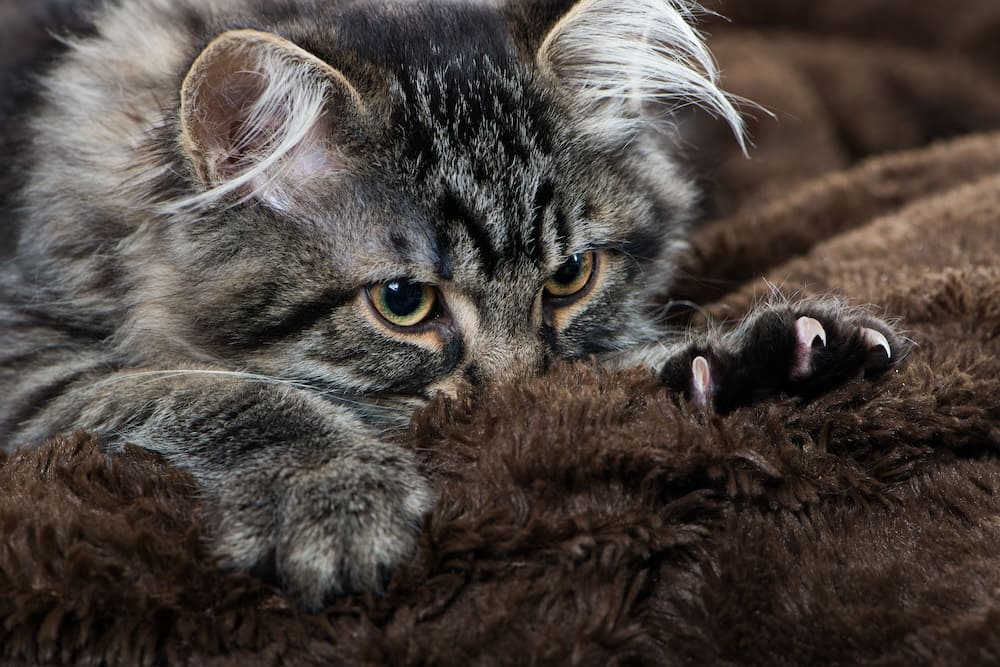
Why cats knead blankets
Blankets mimic the softness and give of a mother cat’s belly and a cozy nest. They also hold scent well, which can reinforce the “this is my safe zone” feeling. Cats may repeatedly knead the same blanket because it has become part of their comfort routine.
If your cat has a favorite kneading spot, consider making it intentional: a washable throw on a specific chair or corner of the couch can protect furniture and make your cat feel secure.
When kneading is a problem
Kneading is normal behavior, but there are a few situations where you may want to intervene gently:
- It hurts: claws on skin can be painful, especially if your cat really digs in.
- Compulsive kneading: nonstop kneading paired with pacing, vocalizing, or restlessness can signal anxiety.
- Fabric chewing or sucking escalates: some cats may chew, swallow threads, or eat fabric, which can cause an intestinal blockage.
- Sudden change: a cat who never kneaded and suddenly starts, or a cat who kneaded daily and abruptly stops, may be reacting to stress, pain, or environmental change.
If you are unsure, it is always reasonable to discuss behavior changes with a veterinarian. Seek prompt advice if you suspect your cat swallowed fabric or thread, if you see vomiting, reduced appetite, lethargy, constipation, or if your cat seems painful around the paws or legs.
How to respond
If you want to encourage it
- Offer a soft “kneading blanket” and place it where your cat likes to settle.
- Keep petting slow and gentle if your cat enjoys touch, and stop if you see tail flicking or skin twitching.
- Reward calm behavior with quiet praise or a treat after they settle.
If it hurts on your lap
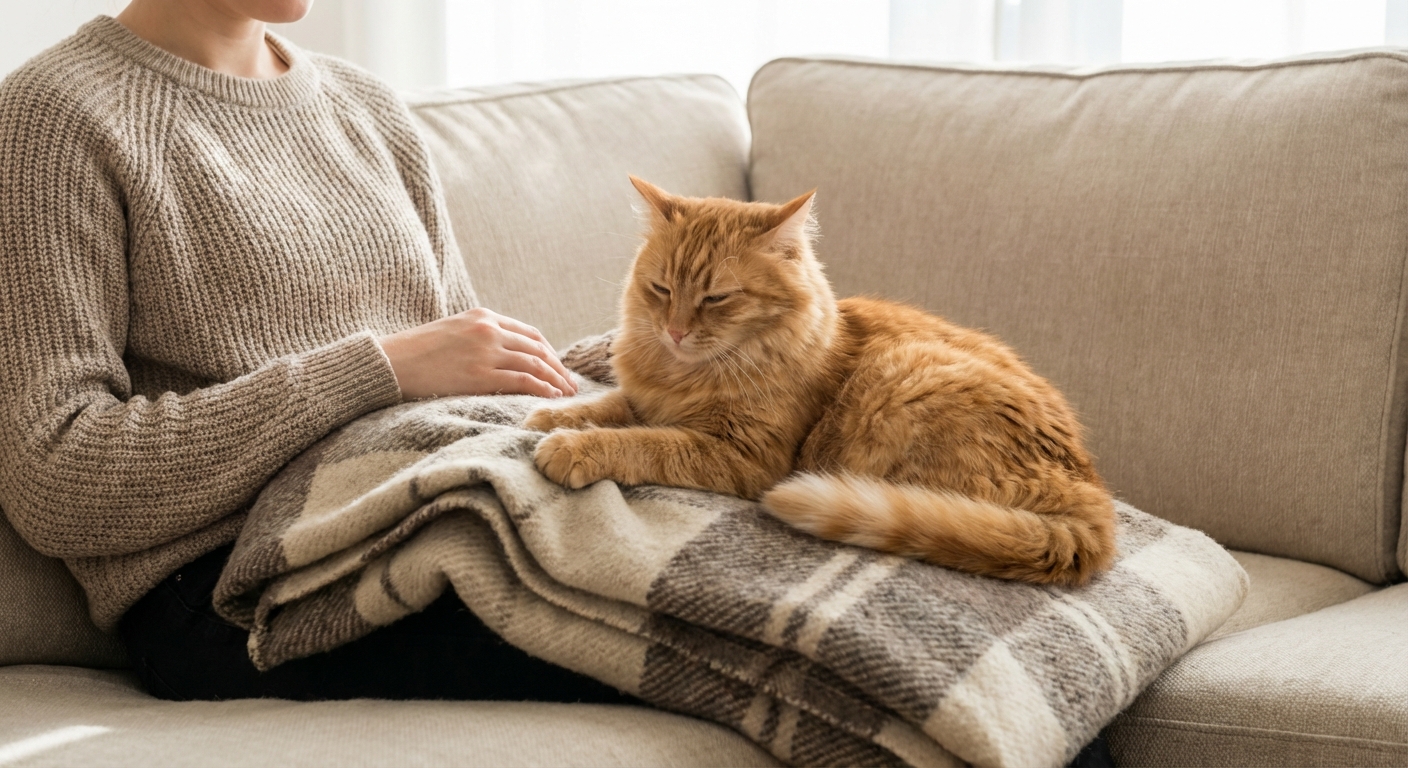
- Add a barrier like a thick towel or folded blanket between you and your cat.
- Trim nails regularly or ask your vet or groomer to demonstrate safe trimming.
- Redirect, do not punish. Gently move your cat to the blanket beside you instead of scolding. Punishment can increase anxiety and make behavior worse.
If your cat clamps onto fabric
- Do not yank the fabric away, since that can escalate biting or cause a tooth or nail injury.
- Go still and redirect by offering a toy, sliding a thicker blanket under their paws, or gently guiding them to their “kneading blanket.”
- End the session calmly if your cat is getting worked up, then offer a short play session later to burn off energy.
If kneading seems stress-related
- Check the environment: new pets, loud construction, schedule changes, or a moved litter box can all raise stress.
- Build predictable routines around feeding, play, and quiet rest time.
- Add enrichment: daily interactive play, puzzle feeders, and window perches can reduce nervous energy.
Quick questions
Do all cats knead?
No. Some cats knead frequently, some only in certain seasons or environments, and some rarely knead at all. Personality, early experiences, and comfort levels all play a role.
Do cats knead to show love?
Often, yes. Kneading on you can be a sign of trust, comfort, and bonding, especially when paired with relaxed body language.
Why does my cat knead and then run away?
This can happen when a cat becomes overstimulated or hears something that shifts them from relaxation to alertness. If it is frequent, look for triggers like noise, other pets approaching, or too much petting.
The takeaway
Kneading is one of those behaviors that reminds us how much of a cat’s inner world is shaped by instinct and comfort. In most cases, it is a sweet sign that your cat feels safe. With a soft blanket, gentle boundaries around claws, and attention to stress cues, you can support the behavior in a way that feels good for both of you.
Behavior changes can be meaningful even when a cat seems calm. If you notice sudden shifts, signs of pain, or possible fabric ingestion, it is worth checking in with your veterinarian.