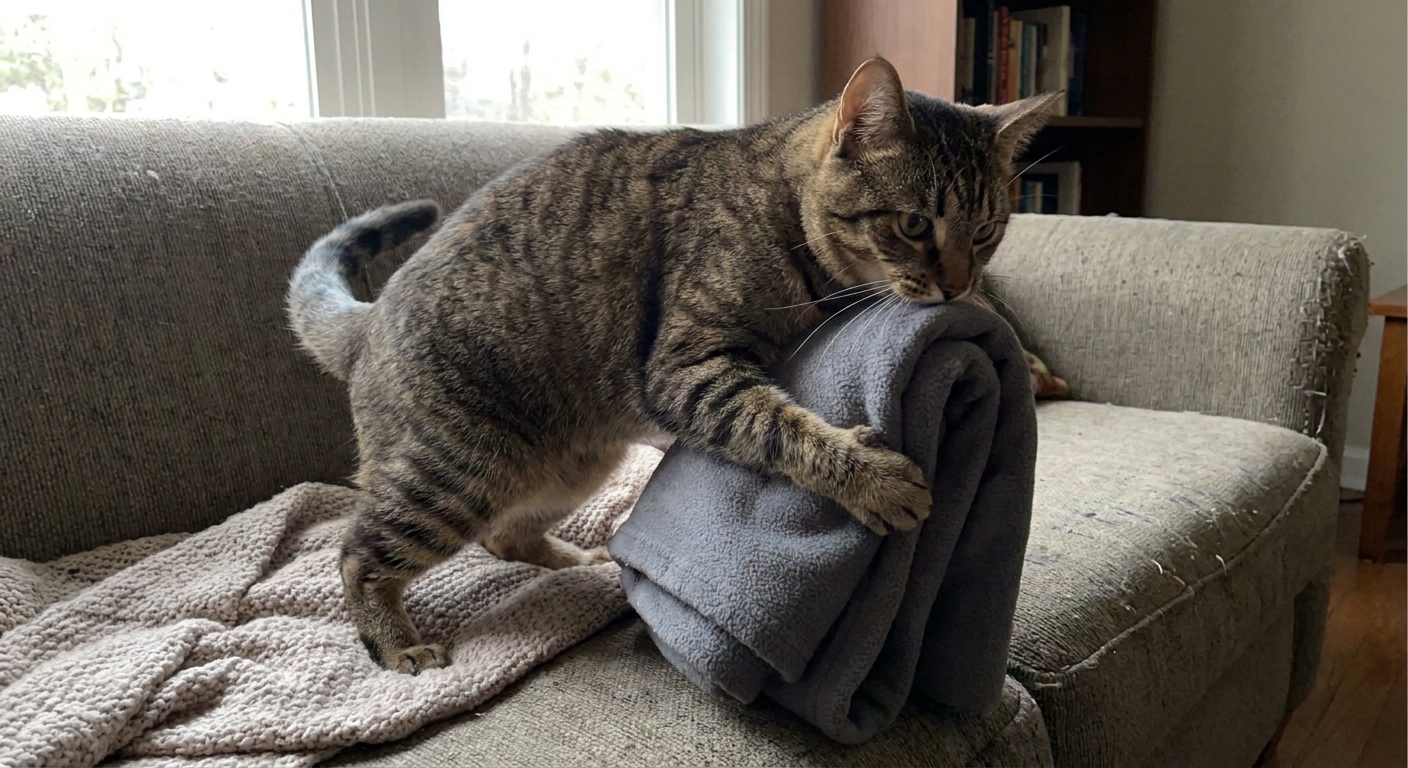
I have had a lot of pet parents whisper this question like it is a secret: “Why is my cat humping my blanket?” If you are seeing mounting behavior in your cat, you are not alone, and you are not “weird” for being concerned. Mounting can be a totally normal cat behavior, but it can also be your cat’s way of saying, “I don’t feel right.”
Let’s walk through the most common reasons cats hump blankets or other cats, what it means in intact versus spayed or neutered cats, and when it is time to skip behavior tips and go straight to the veterinarian.
Is mounting the same as mating?
Sometimes yes, but not always. Mounting is a behavior that can be driven by sex hormones, but it can also happen for non-sexual reasons like play, excitement, conflict between cats, or stress. Cats can mount objects (blankets, beds, plush toys) or other cats of any sex.
One clue is context. If it happens mostly when your cat is amped up, during play, after a stressful change, or around another cat, it may be more about emotional arousal than reproduction.
How common is it?
Mounting can show up at any age, but I hear about it most often in adolescent cats and young adults, especially when they are high-energy or going through changes in the home. For many cats it is episodic, meaning it flares up during stressful weeks, periods of boredom, or when another cat is stirring up tension.
Common reasons cats hump blankets or other cats
1) Hormones in intact cats
In unneutered male cats and unspayed female cats, mounting is often tied to reproductive behavior. You may also notice:
- Yowling or calling
- Restlessness and pacing
- Spraying urine (especially intact males)
- Increased attempts to escape outdoors
- In females, signs of heat like rolling, loud vocalizing, and raising the rear when petted
If your cat is intact, spaying or neutering is usually the most effective way to reduce hormonally-driven mounting over time. It may not stop right away, especially if the behavior has become a habit.
2) Intact females and heat cycles
If you have an unspayed female, mounting can happen around estrus (heat), and it may come and go in waves. Spaying typically reduces these hormone-driven behaviors and also prevents pregnancy and lowers the risk of certain reproductive diseases. If your cat’s behavior changes suddenly or she seems unwell, do not assume it is “just heat.” It is still worth a veterinary check.
3) “Leftover” behavior in spayed or neutered cats
Yes, fixed cats can still mount. In a clinic setting, I have seen neutered male cats and spayed females continue the behavior because:
- The behavior started before surgery and became learned
- They are easily overstimulated or excited
- They use mounting as a self-soothing habit
- They are responding to another cat in the home
Neutering and spaying reduce hormones significantly, but it does not erase a cat’s personality. Some cats are simply more intense in how they express arousal or excitement.
4) Play and overexcitement
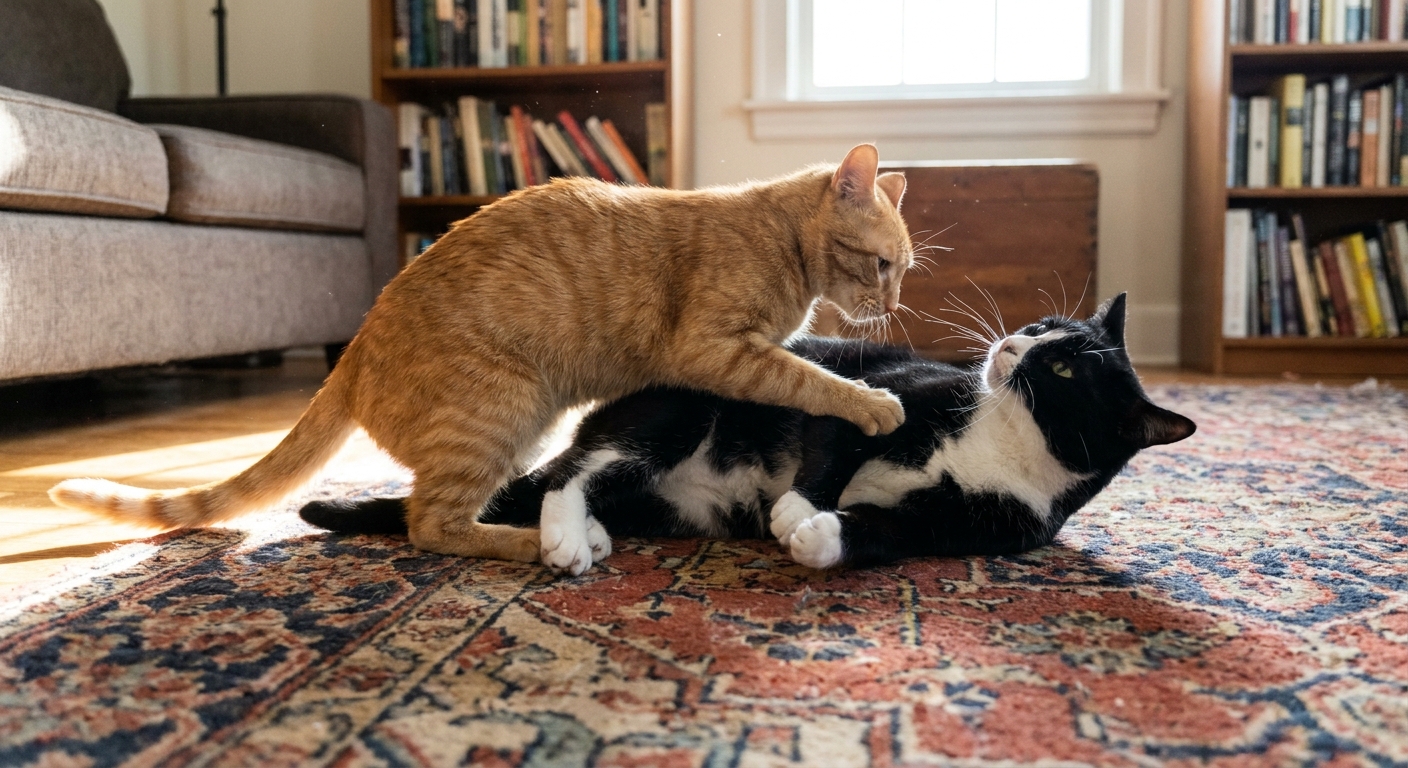
Mounting can be part of rough play, especially in multi-cat homes. It can show up during wrestling or chasing and may look more frequent when your cat is under-exercised or bored.
Look for body language. If both cats keep re-engaging and neither seems distressed, it may be play. If one cat is trying to get away, flattening ears, hissing, growling, or hiding afterward, it is no longer friendly.
Stress and changes at home
Cats are sensitive creatures. Mounting can increase during periods of stress, including:
- Moving or home renovations
- New baby or new partner
- New pet introduction
- Neighborhood cats visible through windows
- Schedule changes or extended travel
In these situations, mounting can be a displacement behavior, meaning your cat is releasing emotional energy in a physical way.
What helps with stress-based mounting
- Predictable routine: consistent feeding and play times
- More play: 2 to 3 short interactive play sessions daily
- More territory: cat trees, shelves, and hiding spots
- Resource check: enough litter boxes, bowls, and resting areas so cats do not compete
- Pheromone support: some households find feline pheromone diffusers helpful as an add-on, especially during transitions
Social tension between cats
People often call this “dominance,” but in cats it is usually more accurate to think of it as social tension, control of space, or a relationship that is not fully comfortable.
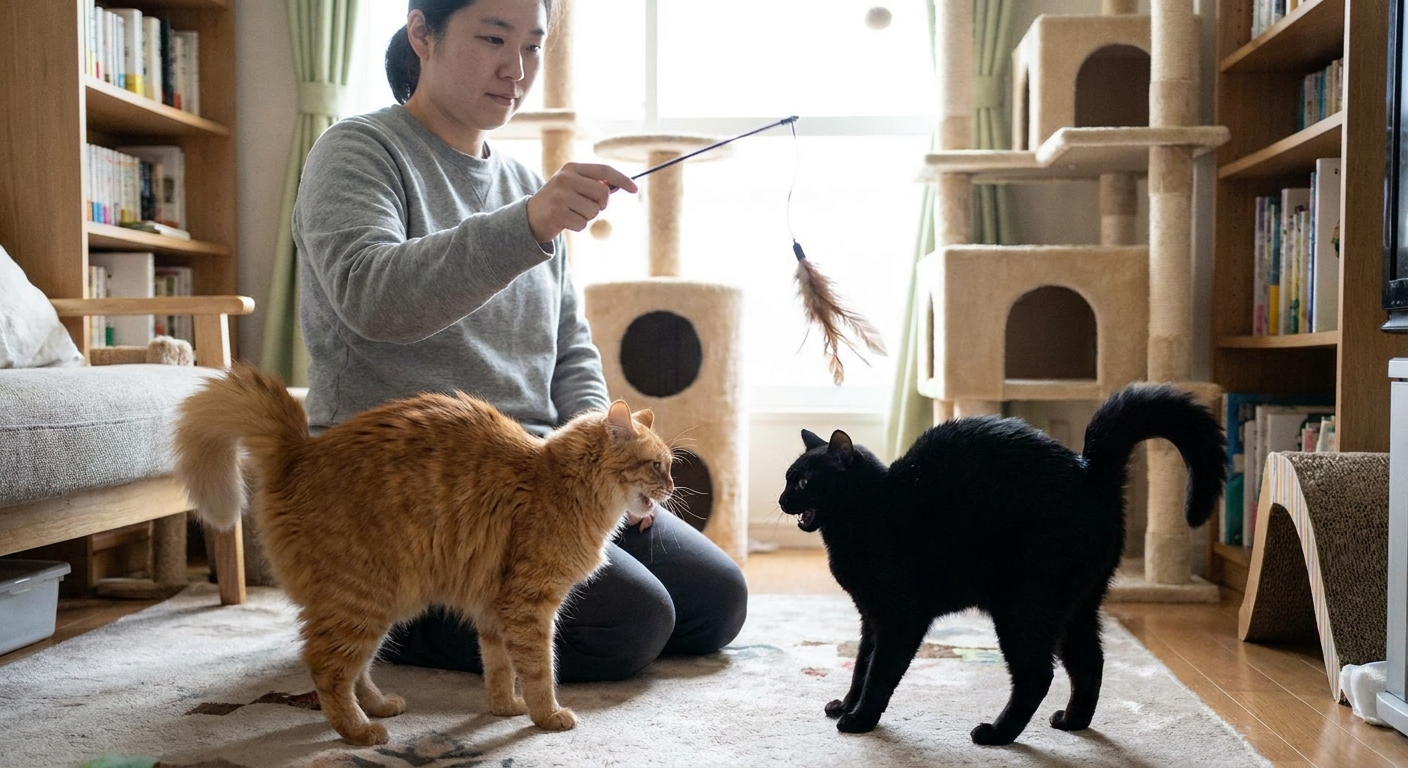
If one cat repeatedly mounts the same cat and the other cat seems bothered, you might be dealing with bullying or redirected arousal. This is especially common when cats are:
- Newly introduced
- Competing for favorite spots
- Overcrowded in a small space
In these cases, behavior management focuses on reducing tension and preventing repeated rehearsal of the behavior.
Medical causes
This part is so important. When mounting behavior appears suddenly, increases rapidly, or comes with other symptoms, I want you thinking “health check,” not “bad behavior.”
Mounting is not a specific sign of one disease, but it can show up alongside discomfort, especially when cats are dealing with urinary, skin, or pain issues. Conditions that can be involved include:
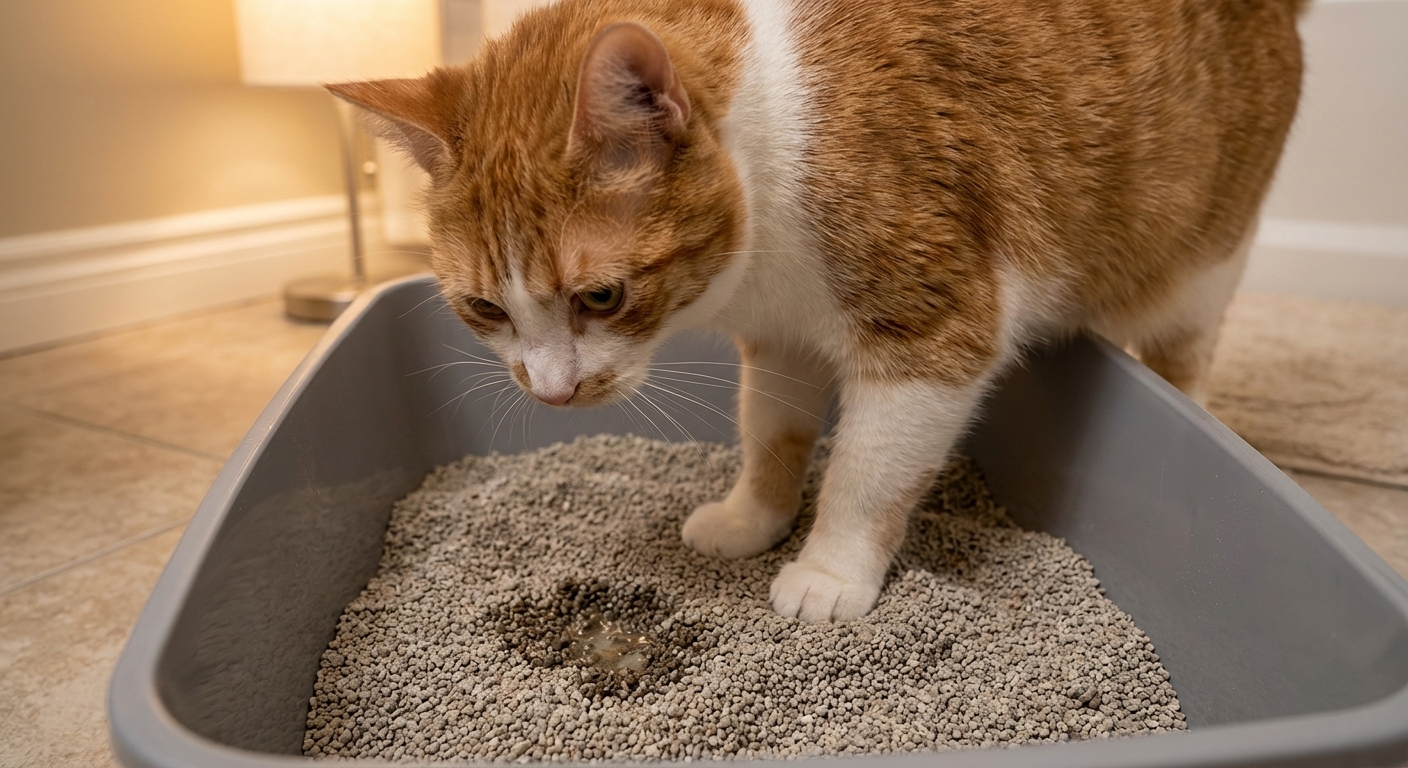
- Feline lower urinary tract disease (FLUTD): inflammation and pain in the bladder or urethra
- Urinary tract infection: less common in young, otherwise healthy cats, and more likely in older cats or cats with underlying health issues
- Urinary crystals or stones: can be painful and dangerous
- Skin irritation: fleas, allergies, or dermatitis near the tail base or groin
- Arthritis or back pain: sometimes odd repetitive behaviors are a response to discomfort
Red flags that mean “call the vet”
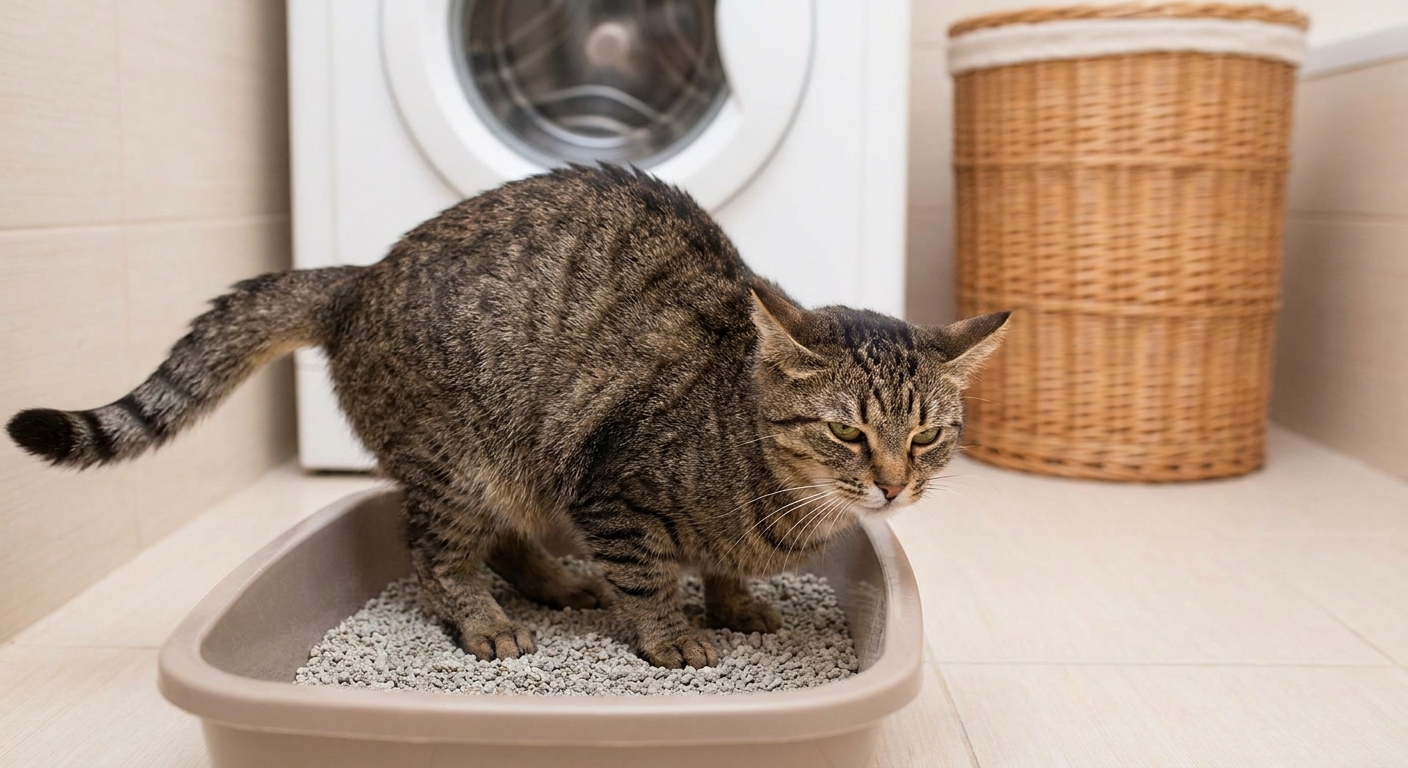
- Frequent trips to the litter box with little or no urine
- Crying out while urinating
- Blood in the urine
- Urinating outside the litter box
- Excessive licking of the genitals
- Sudden behavior change: hiding, irritability, decreased appetite
- Mounting that starts out of nowhere in an older cat
Emergency note: If a male cat is straining to urinate or cannot pass urine, that can be a life-threatening blockage. Do not wait. Seek emergency veterinary care right away.
What to do about blanket humping at home
If your cat is otherwise healthy and your veterinarian has ruled out medical causes, you can usually manage blanket mounting with a calm, practical approach.
1) Do not punish
Yelling, spraying water, or physically intimidating your cat can raise stress, and that often makes the behavior worse. It can also damage trust, which matters a lot with cats.
2) Do not handle them roughly
For your safety and your cat’s, avoid pulling your cat off the blanket by the hips or tail, and avoid touching the genitals. Cats can startle and bite or scratch when interrupted suddenly, even if they are sweet 99 percent of the time.
3) Redirect, then reward
When you see your cat gearing up, offer an alternative:
- Interactive wand toy for 3 to 5 minutes
- Toss a kicker toy they can bunny-kick
- Food puzzle or a small snack hunt
When your cat engages with the alternative, reward with praise, petting if they enjoy it, or a treat.
4) Create an “approved” outlet
Some cats do best if they have one specific object they are allowed to use, like a thick plush throw or a large stuffed toy. This can be especially helpful if the behavior seems self-soothing. You can keep it in a designated area and pick it up when guests are over.
5) Increase enrichment
Many repetitive behaviors improve when cats have more appropriate ways to express normal cat energy:
- Daily play that mimics hunt, chase, pounce
- Bird feeders outside a window (safe viewing)
- Cat trees and vertical climbing space
- Scratching posts in multiple rooms
If mounting starts to look compulsive (hard to interrupt, happening many times a day, or your cat seems “stuck” in the loop), that is another good reason to involve your veterinarian or a veterinary behavior professional.
If your cat is mounting another cat
When one cat mounts another, your job is to protect both cats’ comfort and prevent the relationship from deteriorating.
Step 1: Watch the response
- If the mounted cat is hissing, swatting, running away, or hiding afterward, intervene.
- If you see fear or persistent avoidance, this is not friendly play.
Step 2: Interrupt gently
Start with non-aversive interruption. Toss a toy, toss a treat away from the other cat, or call your cat to you. If noise works in your home, keep it mild and brief, and avoid startling a noise-sensitive cat.
Step 3: Resource and space check
Make sure your home is set up to reduce competition:
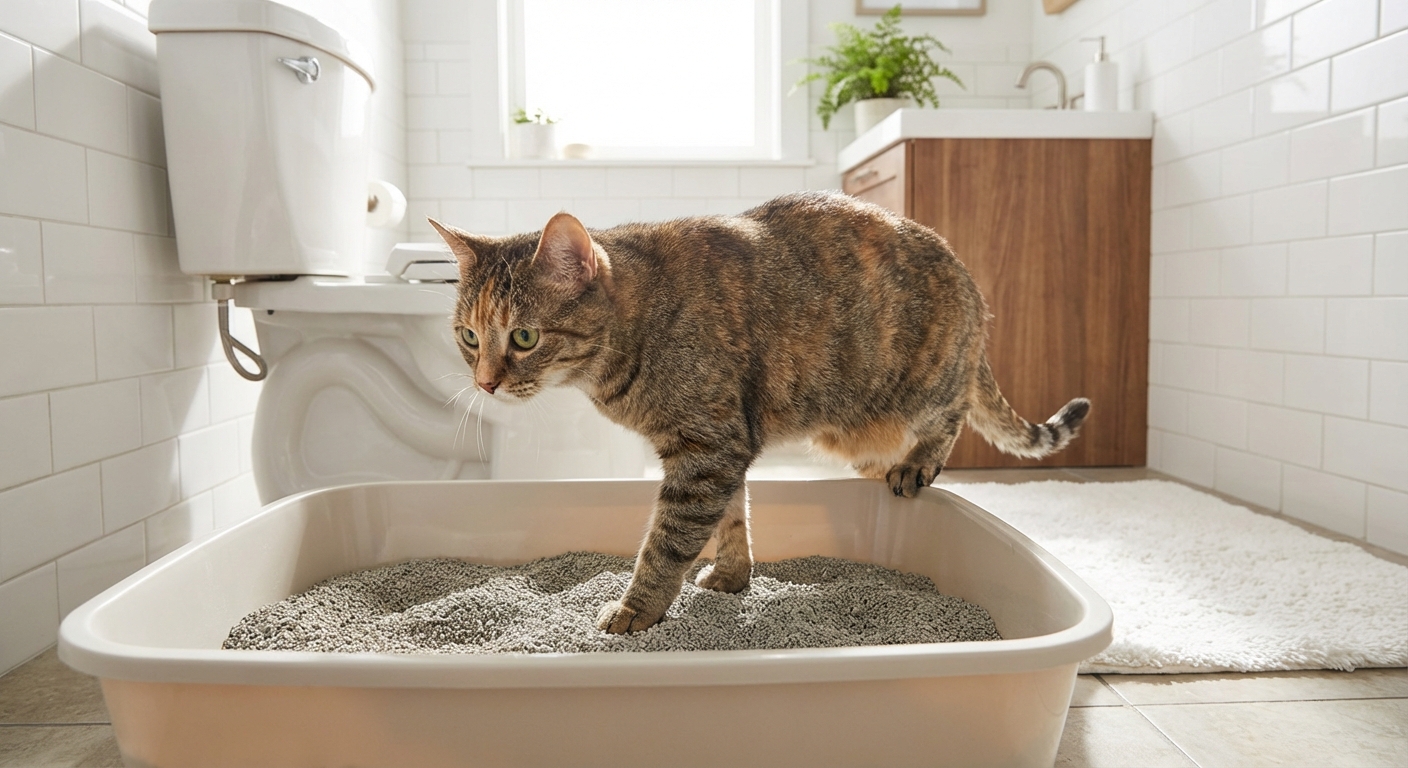
- Litter boxes: ideally one per cat plus one extra
- Multiple feeding and water stations
- Multiple resting spots, including elevated options
Step 4: Consider a behavior consult
If the mounting is frequent, targeted, or escalating into fights, your veterinarian can help you decide whether you need behavioral medication support, a structured reintroduction plan, or both.
FAQs
Is it normal for female cats to hump?
Yes. Female cats can mount blankets, toys, and other cats. In intact females it can be related to reproductive hormones and heat cycles. In spayed females it is more often excitement, habit, stress, or social tension.
Why does my neutered male cat hump a blanket and knead it?
Kneading and humping can overlap when a cat is highly relaxed, comfort-seeking, or emotionally aroused. If it is occasional and your cat is healthy, it is usually a benign self-soothing routine. If it becomes frequent, hard to interrupt, or coincides with urinary signs, get a vet check.
Should I take the blanket away?
Sometimes removing the trigger helps, but it can also increase frustration if your cat is using it to self-soothe. A middle ground is to offer a designated “approved” blanket or plush toy and keep it clean.
Can mounting mean my cat is in pain?
It can, especially if it is a sudden change or paired with other symptoms like litter box changes, genital licking, or vocalizing. On its own, mounting is not diagnostic, but it is a valid reason to look for other clues and talk to your veterinarian.
When tips are enough and when you need a vet
Behavior management may be enough if:
- Your cat is eating, drinking, and using the litter box normally
- The behavior is occasional and predictable (after play, during excitement)
- No one is getting hurt and no cat seems fearful
Schedule a veterinary visit if:
- The mounting is new, sudden, or escalating
- There are urinary signs, genital licking, or vocalizing in the litter box
- Your cat seems painful, withdrawn, or unusually irritable
- Cat-to-cat mounting is causing stress, hiding, or fights
My rule of thumb as a veterinary assistant is simple: if you are seeing mounting plus any hint of urinary discomfort, do not wait it out. Cats are masters at hiding pain, and early care can prevent bigger problems.