Wondering why your cat eats grass? Learn the top reasons, why some cats vomit, when it’s a red flag, and how to offer safe cat grass while avoiding toxic p...
Article
•
Designer Mixes
Why Do Cats Eat Grass?

Shari Shidate
Designer Mixes contributor
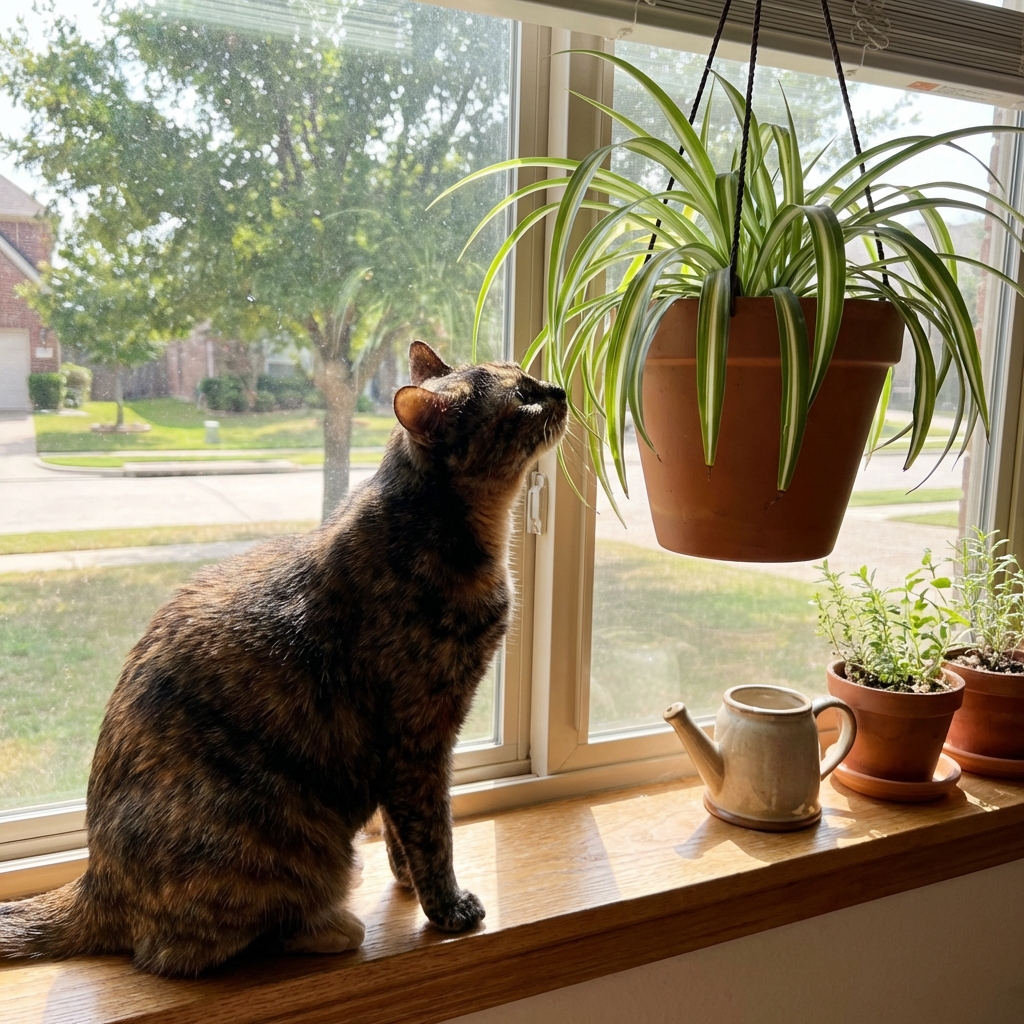
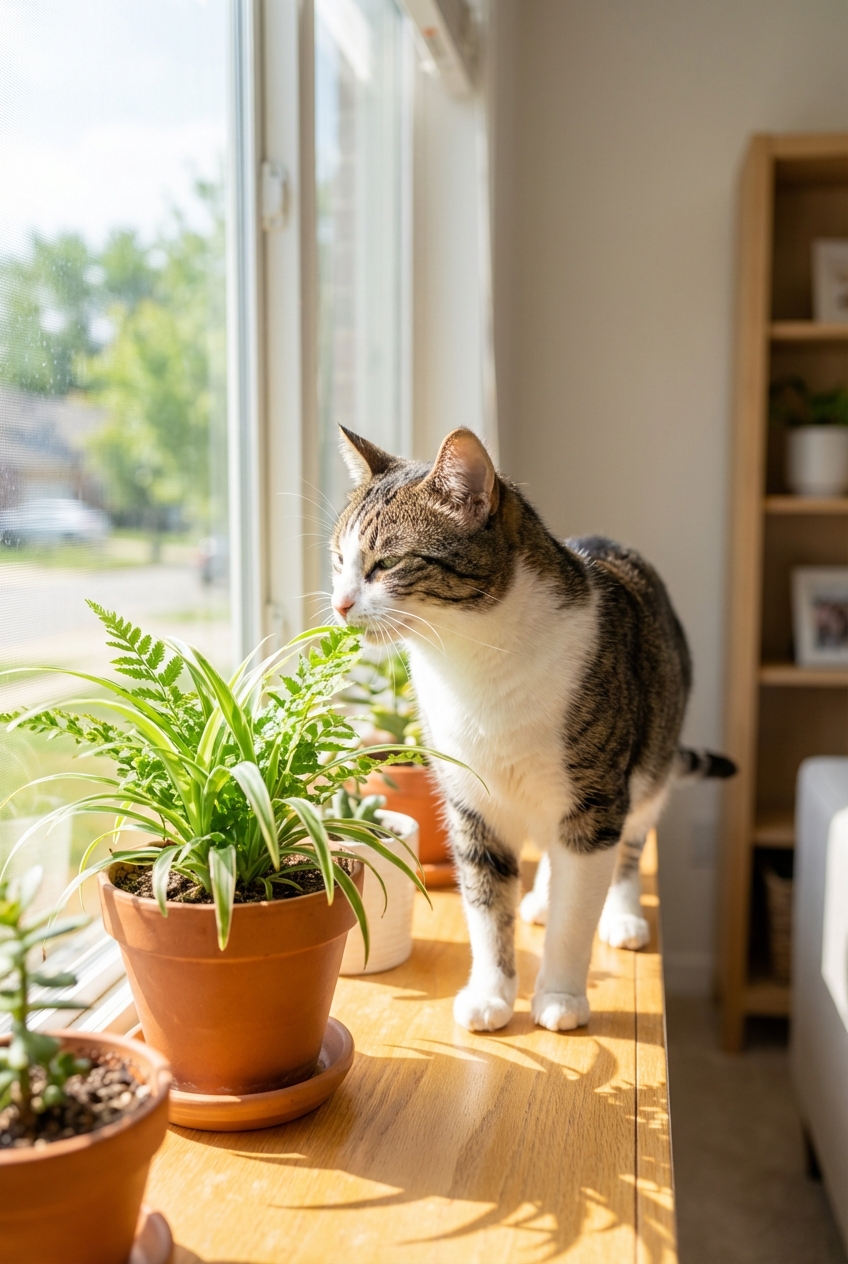
If you have a cat, you have probably seen it: your cat makes a beeline for a houseplant or nibbles on a patch of grass, and then, a little while later, vomits. It can look alarming, but in many cases this is a normal feline behavior.
That said, “normal” does not always mean “no big deal.” Let’s walk through the most likely reasons cats eat grass, why they often vomit afterward, and when it is time to call your veterinarian.
Why cats eat grass
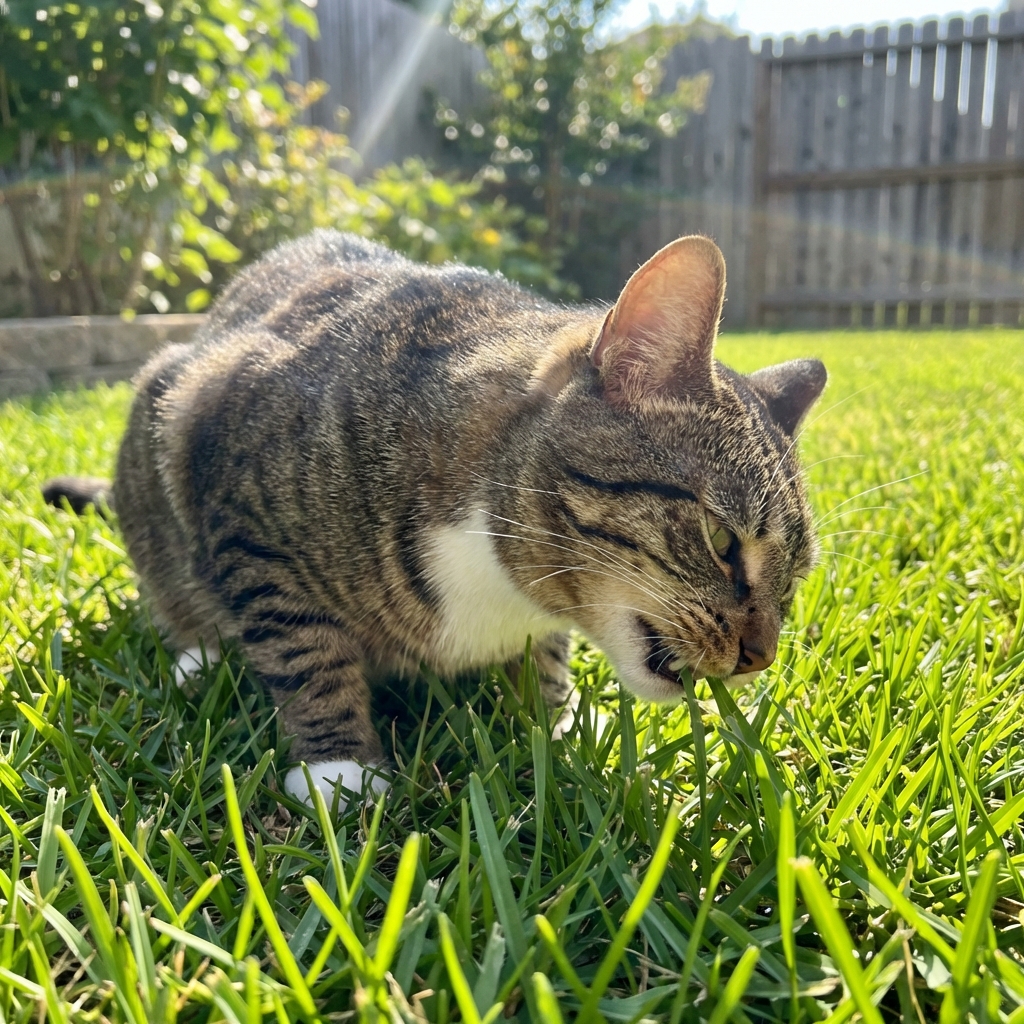
Veterinary medicine does not have one single, proven explanation that fits every cat, but there are a few evidence-based theories that make a lot of sense.
1) Instinct
Domestic cats are hunters, and their wild cousins have been observed eating plant material at times. When cats eat prey, they may also ingest partially digested plant matter from the prey’s stomach and intestines. So, a little greenery may be part of an instinctive “complete the meal” pattern, even for indoor cats eating from a bowl.
2) Stomach settling
Some cats seem to seek grass when they feel mildly nauseated. It is not always that the grass caused the upset stomach. Sometimes the stomach is already off, and grass is the cat’s attempt to self-soothe or trigger a purge.
3) Fiber-like effects
Grass is not a balanced fiber supplement, but it does contain rough plant material that can stimulate the gastrointestinal tract. In some cats, this may help move things along, including hair from grooming.
4) Curiosity and enrichment
Sometimes the simplest explanation is the right one: cats like the smell, texture, and movement of grass. For indoor cats, chewing on plants can also be a boredom buster. This is especially common in young cats and high-energy cats.
Why they vomit after
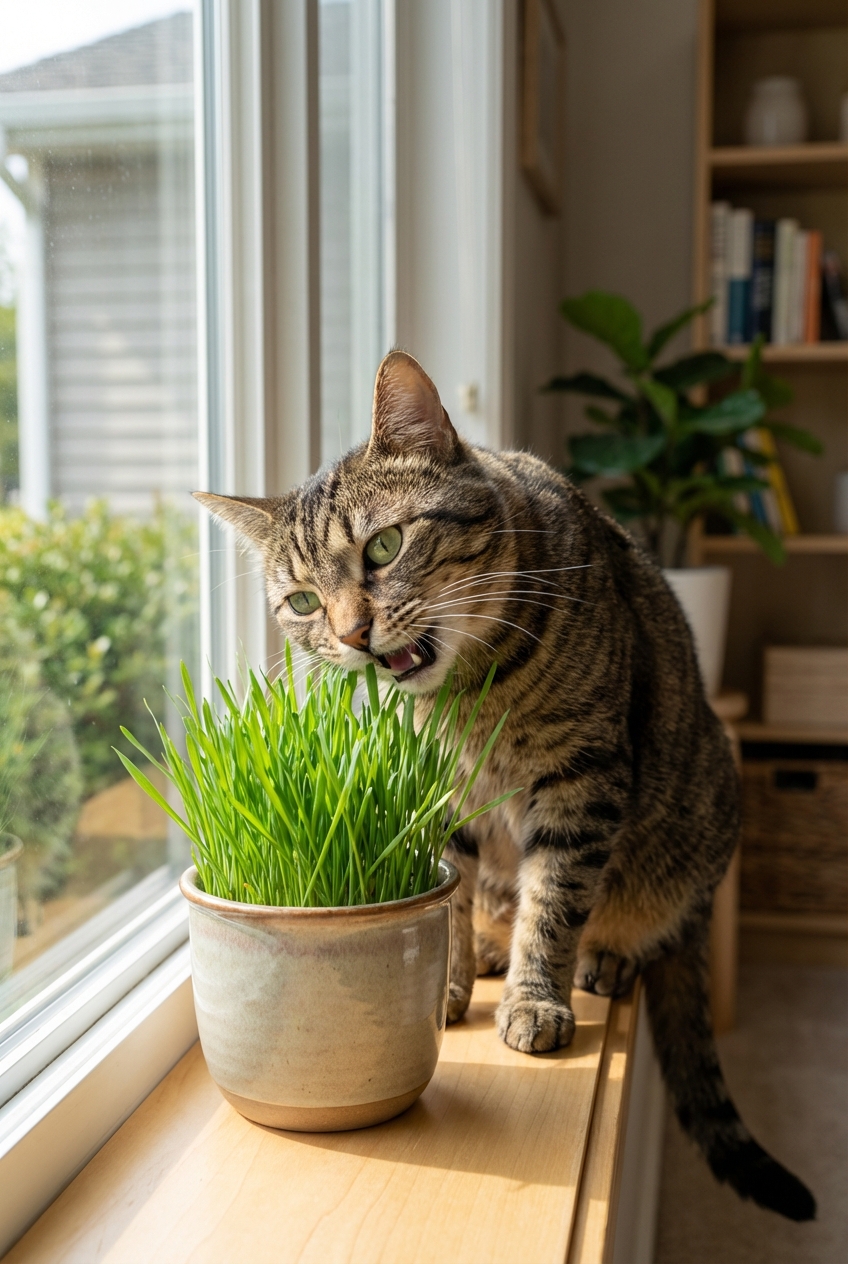
The “eat grass, vomit later” pattern happens because cats have a limited ability to digest grass well.
Limited ability to digest tough fibers
Cat digestive systems are designed for animal protein and fat. Grass contains coarse cellulose that is hard for them to break down. For some cats, that rough material can upset the stomach and lead to vomiting.
Mechanical irritation
Those long, stiff blades can also mechanically irritate the throat or stomach. Vomiting is a protective reflex that helps the body get rid of something it cannot process comfortably.
Hairballs may be involved
Hairballs are common, especially in long-haired cats and heavy groomers. Grass may help trigger vomiting when a hairball is “stuck,” although it is not a guaranteed or ideal solution. If your cat vomits frequently, hairballs should be part of the conversation with your vet.
Normal or a red flag?
Occasional grass eating with an occasional vomit can be normal. The key is frequency, intensity, and what else is going on.
Usually normal
- Your cat nibbles grass occasionally.
- Vomiting is very infrequent (more of a rare event than a recurring pattern).
- Your cat is otherwise eating, drinking, and acting normally.
- No blood is present, and the vomiting resolves quickly.
If vomiting is happening on any kind of schedule (even “about weekly”), it is worth discussing with your veterinarian. Ongoing vomiting can sometimes point to chronic issues like food sensitivity, inflammatory bowel disease, parasites, or other GI problems.
Call your veterinarian if you notice
- Repeated vomiting in a day, or vomiting that continues over 24 hours.
- Blood in the vomit, coffee-ground-looking material, or significant drooling.
- Lethargy, hiding, fever, or signs of pain (hunched posture, vocalizing).
- Diarrhea, weight loss, decreased appetite, or increased thirst.
- Your cat cannot keep water down.
- Suspected toxin exposure (plants, pesticides, fertilizers, chemicals).
- Vomiting plus straining, abdominal swelling, or no stool. Constipation and obstruction can look similar at home, and an obstruction can become urgent quickly.
As a veterinary assistant, I always tell pet parents this: if your gut says “this is different,” trust that instinct and call. It is better to ask early than to wait too long.
Safety: not all greens are safe
Many cats chew plants that are not actually grass. Some common houseplants are toxic to cats, and a few can be life-threatening. If you are not sure a plant is safe, assume it is not until you confirm it.
Lilies and daylilies
True lilies (Lilium species, like Easter lilies and tiger lilies) and daylilies (Hemerocallis species) are extremely dangerous for cats. Even small exposures can cause severe kidney damage. If you suspect lily or daylily exposure, treat it as an emergency.
Other common toxic plants
Other plants that can cause problems for cats include pothos, philodendron, and sago palm. If you want a quick reference, the ASPCA’s toxic and non-toxic plant list is a helpful place to start.
Outdoor grass risks
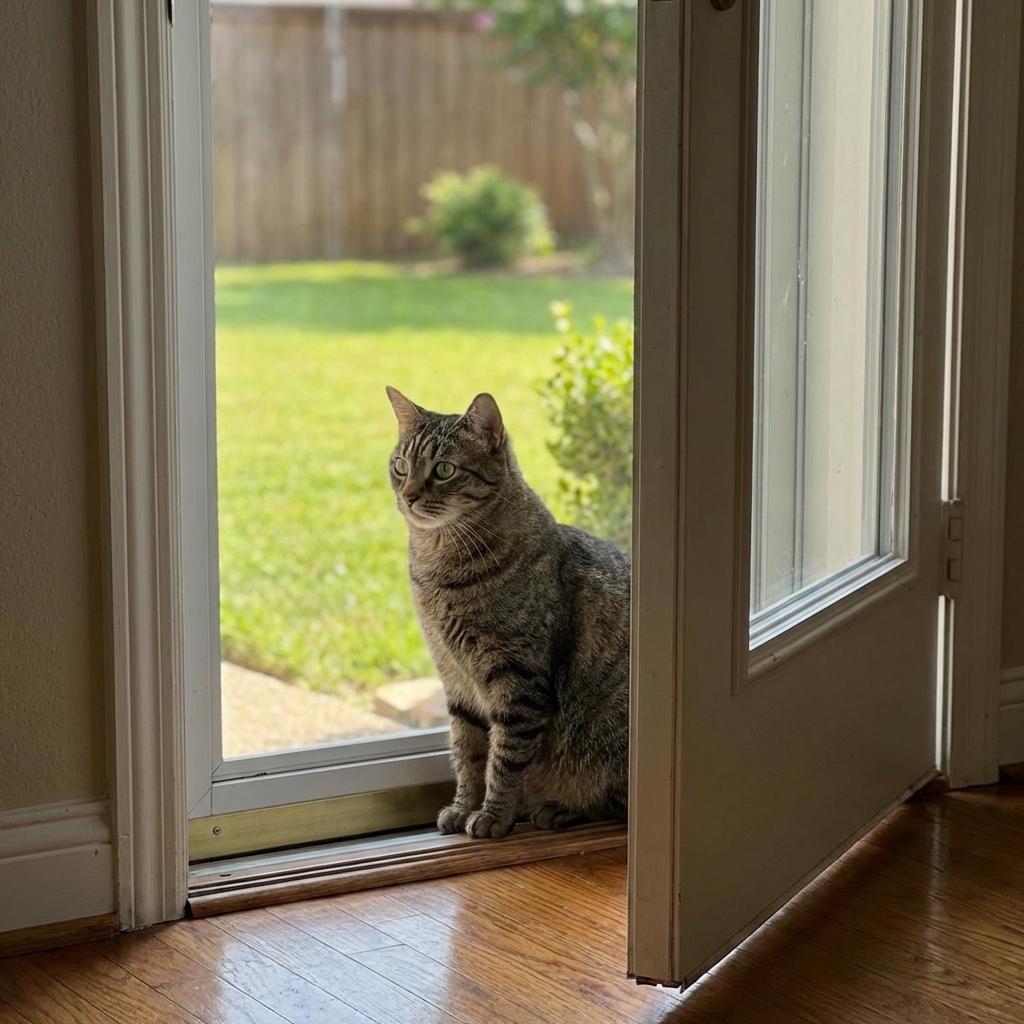
Lawn treatments can be a bigger problem than the grass itself. Herbicides, pesticides, slug bait, and fertilizers can irritate the GI tract or cause more serious toxicity. Outdoor grass can also be contaminated by wildlife or other animals, including parasite eggs or larvae in feces.
Safer alternatives
If your cat is a “grazer,” you can meet that need in a safer way.
Offer cat grass indoors
Cat grass is usually wheatgrass, oat grass, barley grass, or rye grass grown in a small pot. It is not magic, but it is a safer option than random houseplants or treated lawns. (Catnip is a different plant and not a grass, so it is not the same thing.)
- Place it in a bright spot, but not directly on a hot windowsill.
- Keep the soil lightly moist and trim or replace it when it gets moldy, droopy, or sparse.
- If the blades look dusty, you can gently rinse the blades and let them dry before offering it again.
- Supervise at first, especially if your cat tries to gulp long blades.
Reduce hairball triggers
If you suspect hairballs are the reason your cat seeks grass, focus on prevention:
- Brush regularly, especially during shedding season.
- Ask your vet about hairball diets or fiber support.
- Consider a vet-recommended hairball remedy if appropriate.
Reduce boredom chewing
- Rotate toys weekly to keep them “new.”
- Use food puzzles or slow feeders.
- Schedule short play sessions daily, even 5 to 10 minutes at a time.
Bottom line
Cats eat grass for a mix of instinct, stomach-related reasons, fiber-like effects, and plain curiosity. They often vomit because grass is hard for them to digest and can irritate the digestive tract.
Your job is to make the behavior safer by offering cat grass, keeping toxic plants out of reach, and watching for signs that vomiting is becoming frequent or abnormal. When in doubt, check in with your veterinarian, especially if anything about your cat’s behavior feels off or suddenly changes.