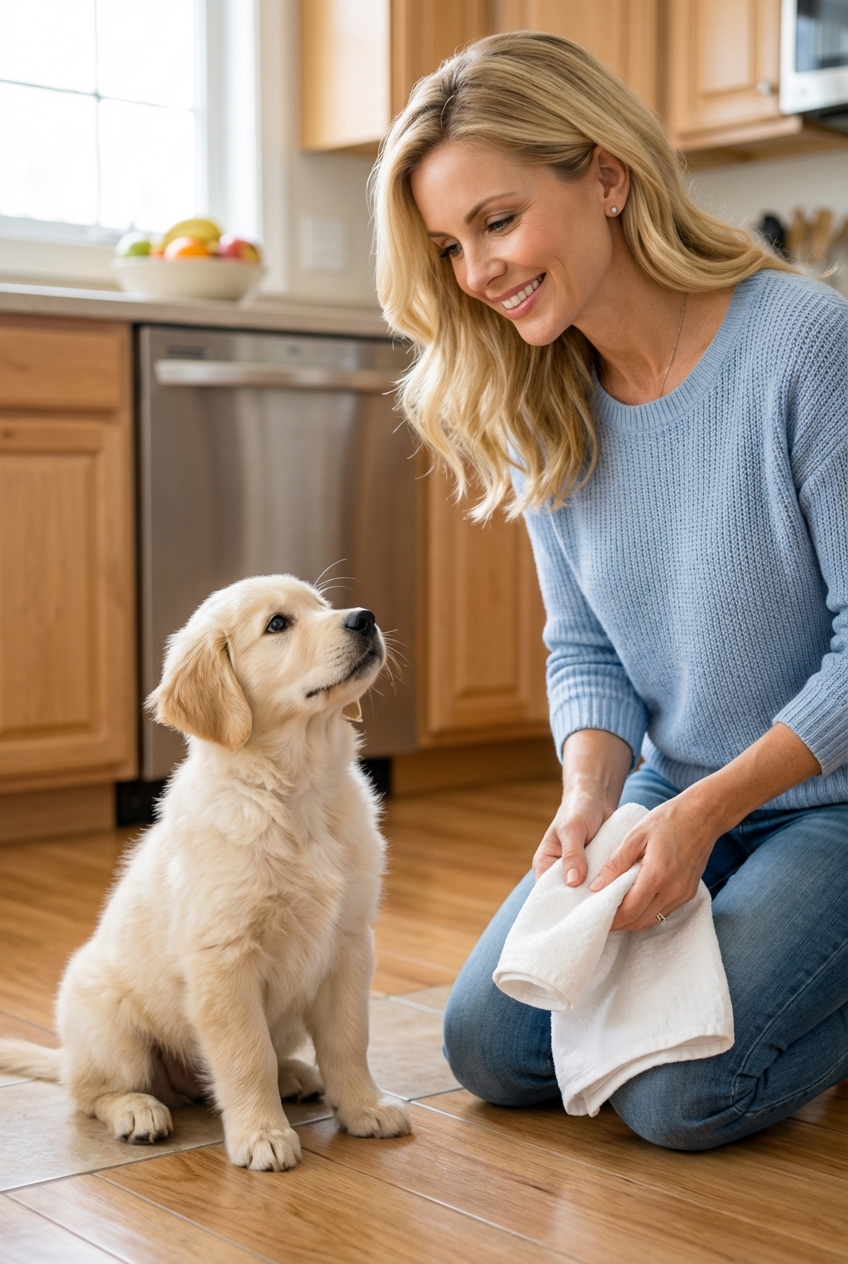
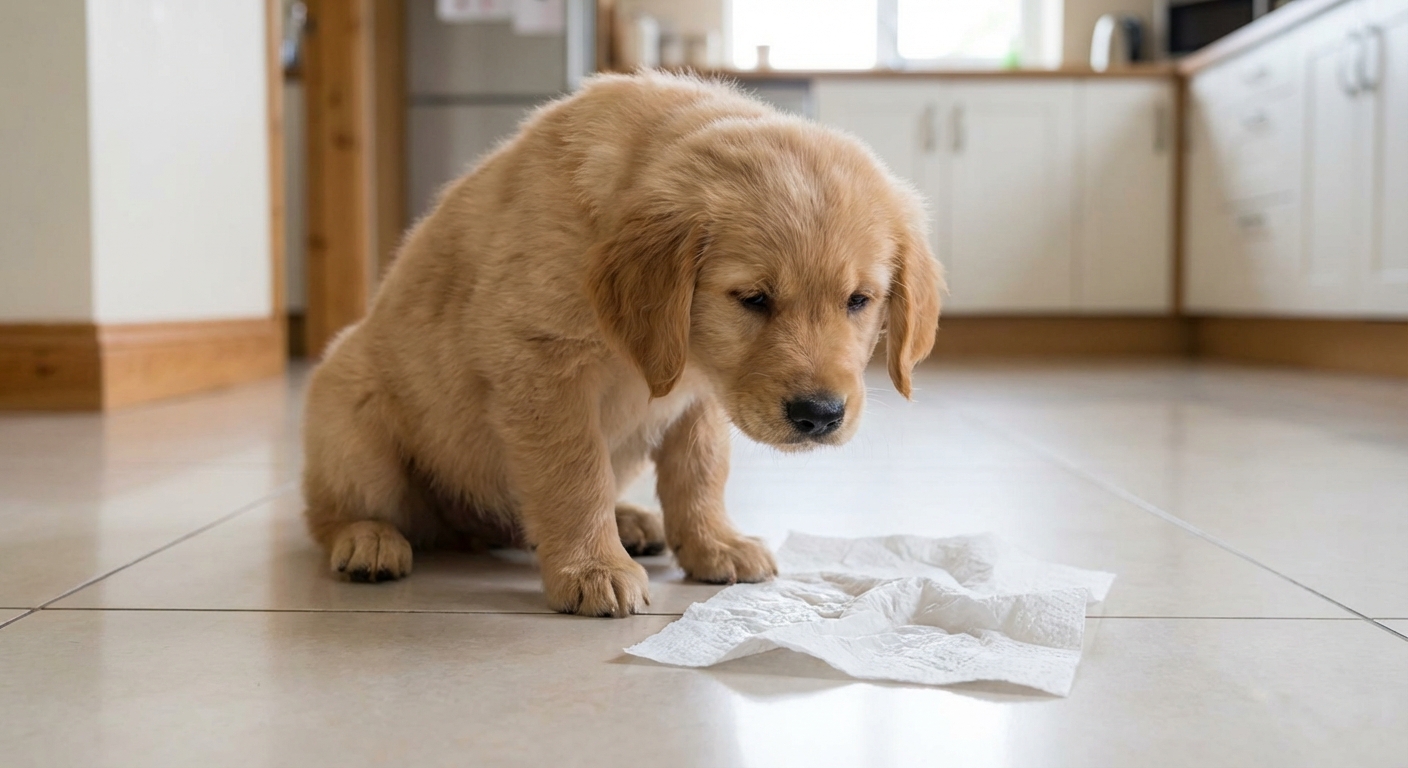
Step-by-step home care for mild dog diarrhea and vomiting: short food break, small sips of water, bland diet, pumpkin, probiotics, dehydration checks, and ur...
Article
•
Designer Mixes
Why Did My Puppy Throw Up?

Shari Shidate
Designer Mixes contributor
Puppy vomit is scary, especially when it seems to come out of nowhere. The good news is that many causes are mild and short-lived, like eating too fast or trying a new treat. But puppies can also get dehydrated quickly, and some causes of vomiting are urgent.
As a veterinary assistant here in Frisco, Texas, I like to keep it simple and evidence-based: focus on what the vomit looks like, how your puppy is acting, and how often it is happening. That combination tells you whether you can monitor at home or need to call your veterinarian right away.
This guidance is general education and not a substitute for an exam. When in doubt, call your veterinary clinic.
Vomit vs. regurgitation
This is one of the most helpful distinctions because it changes what we worry about and how quickly we act.
- Vomiting is an active process. You may see abdominal heaving, drooling, gagging, or your puppy looks nauseated before it happens. The material often looks partially digested.
- Regurgitation is more passive. Food or liquid comes up with little warning, often in a tubular shape, and it may look undigested. Regurgitation can point toward esophageal issues, eating too fast, or problems like megaesophagus.
Why it matters: regurgitation can increase the risk of aspiration (breathing stomach contents into the lungs), which can lead to aspiration pneumonia. If regurgitation is repeated, your puppy is coughing, breathing fast, or seems weak, contact your vet the same day.
If you are not sure, take a quick video for your vet. It helps more than you might expect.
Common reasons puppies throw up
Most puppy vomiting is caused by diet, parasites, infections, or eating something they should not. Here are the most common patterns I see.
Eating too fast
Many puppies inhale their meals. Fast eating can trigger vomiting shortly after a meal, especially if they gulp air.
- What you might notice: vomiting soon after eating, otherwise normal energy.
- What helps: smaller, more frequent meals, a slow feeder bowl, feeding in a calm space, and separating puppies from other pets during meals.
Diet change or rich treats
A sudden switch in food, new chews, table scraps, or very fatty treats can irritate a puppy’s stomach.
- What you might notice: vomiting with soft stool, gurgly tummy, normal or mildly reduced appetite.
- What helps: transition foods gradually over 7 to 10 days and keep treats under about 10% of daily calories.
Motion sickness
Some puppies vomit in the car due to motion sensitivity and stress.
- What you might notice: drooling, lip licking, vomiting during or right after travel.
- What helps: short positive car rides, good ventilation, and asking your vet about anti-nausea medication for longer trips.
Parasites
Roundworms, hookworms, and Giardia are very common in puppies. Whipworms can occur too, though they are less common in very young puppies. Parasites can cause vomiting, diarrhea, poor growth, and a pot-bellied look.
- What you might notice: intermittent vomiting, diarrhea, mucus in stool, weight loss, dull coat.
- What helps: a fecal test and vet-prescribed deworming. Preventive monthly medications are a big deal for puppies.
Viral and bacterial infections
Puppies can pick up stomach bugs from contaminated environments or other dogs. Parvovirus is the most serious concern in unvaccinated or incompletely vaccinated puppies.
- What you might notice: vomiting with diarrhea, lethargy, fever, refusal to eat.
- Why it matters: dehydration can happen quickly, and parvo can be life-threatening.
Foreign body or toxin ingestion
Puppies explore with their mouths. Socks, toys, corn cobs, bones, strings, mulch, and rocks can cause vomiting from irritation or intestinal blockage. Common toxins include xylitol, chocolate, grapes and raisins, rodenticides, some human medications, and certain plants.
- What you might notice: repeated vomiting, inability to keep water down, painful belly, lethargy, or sudden worsening.
- Urgency: this can be an emergency, especially if vomiting is persistent or the vomit has a foul, fecal smell.
Stress and overexcitement
New home, new schedule, too much activity after eating, or anxiety can upset a puppy’s stomach.
- What you might notice: vomiting after play or stressful events, appetite changes.
- What helps: routine, quiet rest after meals, and slow introductions to new experiences.
Less common, but important causes
These are not the most common, but they matter if vomiting is frequent or ongoing.
- Food allergy or intolerance
- Pancreatitis (can happen even in young dogs, often linked to fatty foods)
- Congenital issues such as liver shunts
- Metabolic problems that affect blood sugar or electrolytes
What the vomit can tell you
Color and texture are clues, not a diagnosis. Still, these patterns can help you describe what happened when you call your vet.
- Foamy white: often from an empty stomach, reflux, or mild stomach irritation. Can also happen with coughing or gagging.
- Yellow: often bile, commonly seen when the stomach is empty or after repeated vomiting.
- Green: can be bile, but it can also be grass, dyes, or other ingested material. If green vomiting is persistent or your puppy seems unwell, call your vet.
- Undigested food: could be fast eating, regurgitation, or vomiting soon after a meal.
- Brown with a foul or fecal odor: can happen with garbage or feces ingestion, but it can also signal a serious intestinal problem like an obstruction with feculent vomiting. This warrants urgent veterinary advice.
- Bright red blood: could be irritation from retching, but any blood should be treated seriously, especially in a puppy.
- Looks like coffee grounds: suggests digested blood and needs urgent or emergency evaluation.
If your puppy throws up and then acts completely normal, it is often mild. If your puppy throws up and looks unwell, that is the bigger concern.
When to call the vet right away
Puppies have less reserve than adult dogs. If you are on the fence, call. These are situations where I do not recommend waiting at home.
- Repeated vomiting (more than once), or ongoing vomiting for several hours
- Repeated vomiting and cannot keep water down
- Lethargy, weakness, collapse, or your puppy seems not themselves
- Diarrhea at the same time, especially if watery or bloody
- Swollen or painful belly, hunched posture, crying, or restlessness
- Nonproductive retching (trying to vomit but little or nothing comes up), especially with a distended belly
- Known or suspected foreign body ingestion (socks, toys, string, bones)
- Possible toxin exposure (xylitol, chocolate, grapes and raisins, meds, chemicals)
- Fever, pale gums, or signs of dehydration (tacky gums, sunken eyes)
- Very young puppy, small breed puppy, or unvaccinated puppy (call earlier)
If your puppy is vomiting and you are seeing dehydration, weakness, belly pain, blood, or repeated episodes, it is safer to get checked sooner rather than later.
If you suspect a toxin: call your vet right away. You can also contact ASPCA Animal Poison Control (fees may apply) or Pet Poison Helpline for time-sensitive guidance while you are arranging care.
What you can do at home for mild, one-time vomiting
If your puppy vomits once, then returns to normal energy, has no belly pain, and can keep water down, you may be able to monitor at home. Always follow your veterinarian’s advice for your specific puppy, especially if your puppy is tiny or very young.
Step 1: Pause food briefly, but be cautious
For many adult dogs, vets sometimes recommend a short rest from food. With puppies, we need to be more careful because they can develop low blood sugar.
- Call your vet for guidance if your puppy is very young, very small, or has other health issues.
- In general, focus on small amounts of water first and avoid a large meal right away.
Step 2: Offer small sips of water
Start with tiny amounts. If your puppy gulps, they may vomit again.
- Offer a teaspoon to a tablespoon at a time, depending on size.
- If tolerated for a few hours, gradually increase.
Step 3: Do a quick dehydration check
You do not need fancy tools to spot dehydration risk.
- Gums: they should feel slick and moist, not tacky or dry.
- Capillary refill time: gently press a finger on the gum until it turns pale, then release. Color should return quickly (about 1 to 2 seconds).
- Note: the skin tent test can be misleading in puppies, especially wiggly ones.
Step 4: Reintroduce a bland diet
Once vomiting has stopped and water stays down, bland, low-fat food is often recommended for 24 to 48 hours.
- Common vet-approved options include boiled skinless chicken with white rice, or a prescription gastrointestinal diet.
- Feed small portions more often.
- Homemade bland diets are not complete long-term, so plan to transition back to a balanced puppy food once your vet says it is safe.
Step 5: Transition back to normal food gradually
If your puppy has been symptom-free for 24 to 48 hours and your vet agrees, slowly mix their regular food back in over a few days. A sudden switch back can trigger another upset stomach.
Step 6: Watch the poop, energy, and appetite
Track what happens over the next day.
- Normal energy and improving stools are good signs.
- Vomiting again, new diarrhea, or acting sick means it is time to call.
What not to do
- Do not give human medications like ibuprofen or acetaminophen. They can be toxic to dogs. Products like bismuth (Pepto-Bismol) can also be risky and may mask symptoms, so only use them if your vet specifically instructs you.
- Do not force feed. Let the stomach settle and follow your vet’s guidance.
- Do not assume it is just a hairball. Dogs do not handle hairballs the way cats do, and repeated vomiting needs a real evaluation.
How your vet finds the cause
If you bring your puppy in, your veterinarian may recommend:
- A full physical exam and hydration assessment
- Fecal testing for parasites
- Parvo testing based on age, vaccine status, and symptoms
- Bloodwork to check hydration, electrolytes, blood sugar, and organ function
- X-rays or ultrasound if a foreign body or blockage is suspected
Treatment might include anti-nausea medication, fluids, probiotics, deworming, a GI-friendly diet, or urgent surgery if there is an obstruction.
Prevention tips that work
- Puppy-proof your home: put socks, kids’ toys, strings, and trash behind closed doors or in bins with lids.
- Keep up with vaccines and deworming: this reduces the risk of serious infections.
- Use slow feeding: especially for puppies who vacuum their bowl.
- Transition foods slowly: mix old and new food over a week or more.
- Choose safer chews: avoid items that splinter or are easily swallowed in chunks.
Quick questions before you call
When you call your veterinary clinic, having these details ready helps the team triage quickly.
- How old is your puppy and what is their current weight?
- How many times did they vomit and over what time period?
- What did it look like (food, foam, bile, green material, blood)?
- Any diarrhea, coughing, gagging, or repeated regurgitation?
- Are they drinking and peeing normally?
- Any chance they ate something unusual?
- Vaccination status and parasite prevention schedule
If you can, bring a photo of the vomit and a fresh stool sample to your appointment. It is not glamorous, but it is helpful.