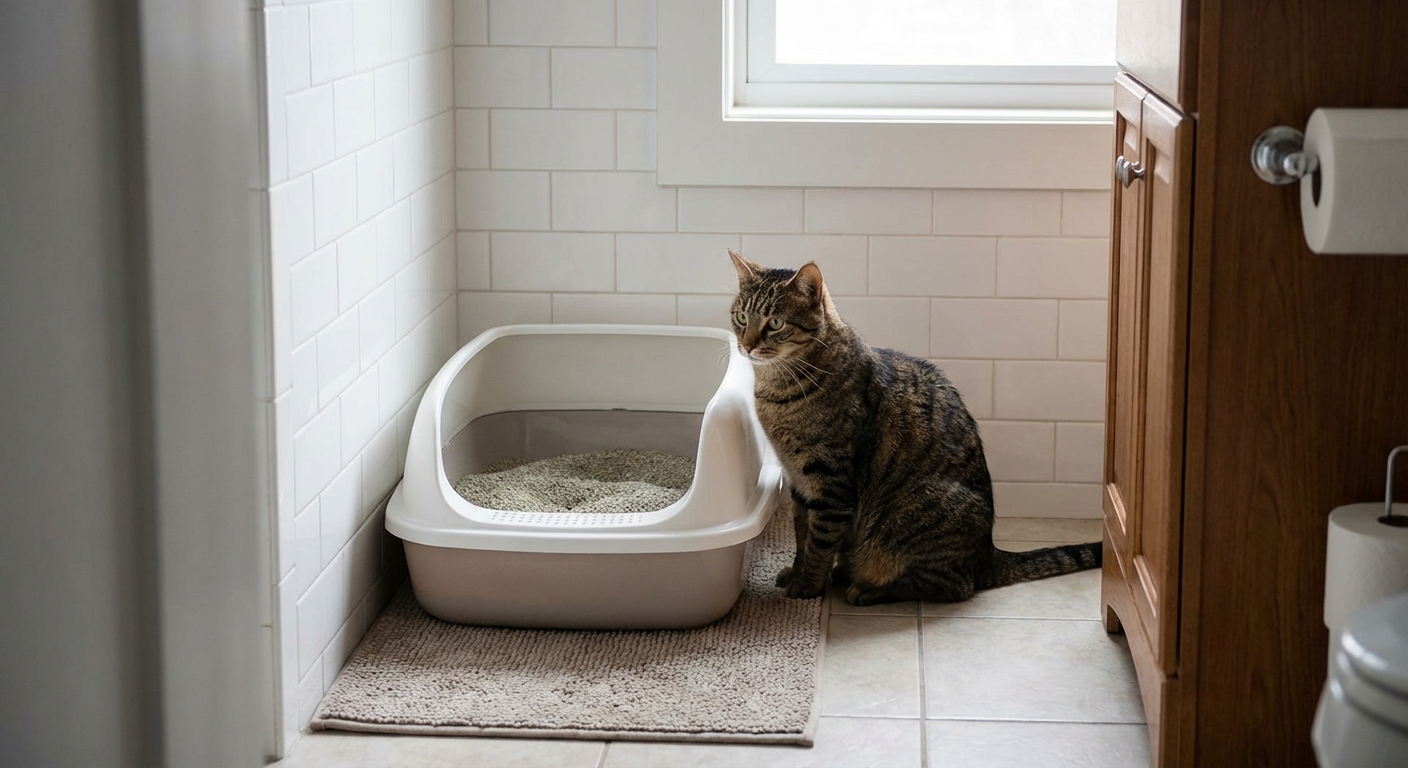
Find out why cats poop on beds and how to stop it. Covers medical red flags, litter box setup, stress triggers, proper cleaning, and a practical 10-day reset...
Article
•
Designer Mixes
Why Did My Cat Poop in My Bed?

Shari Shidate
Designer Mixes contributor
Finding cat poop in your bed is one of those moments that can make any cat parent feel confused, grossed out, and honestly a little hurt. I get it. Cats are usually very clean, and when they choose your bed, it is often not random.
The good news is that most of the time, this behavior is your cat communicating a problem you can solve. Let’s walk through the most common causes, what to do today, and how to prevent it from happening again in a way that is realistic for busy families.
First things first: is this an emergency?
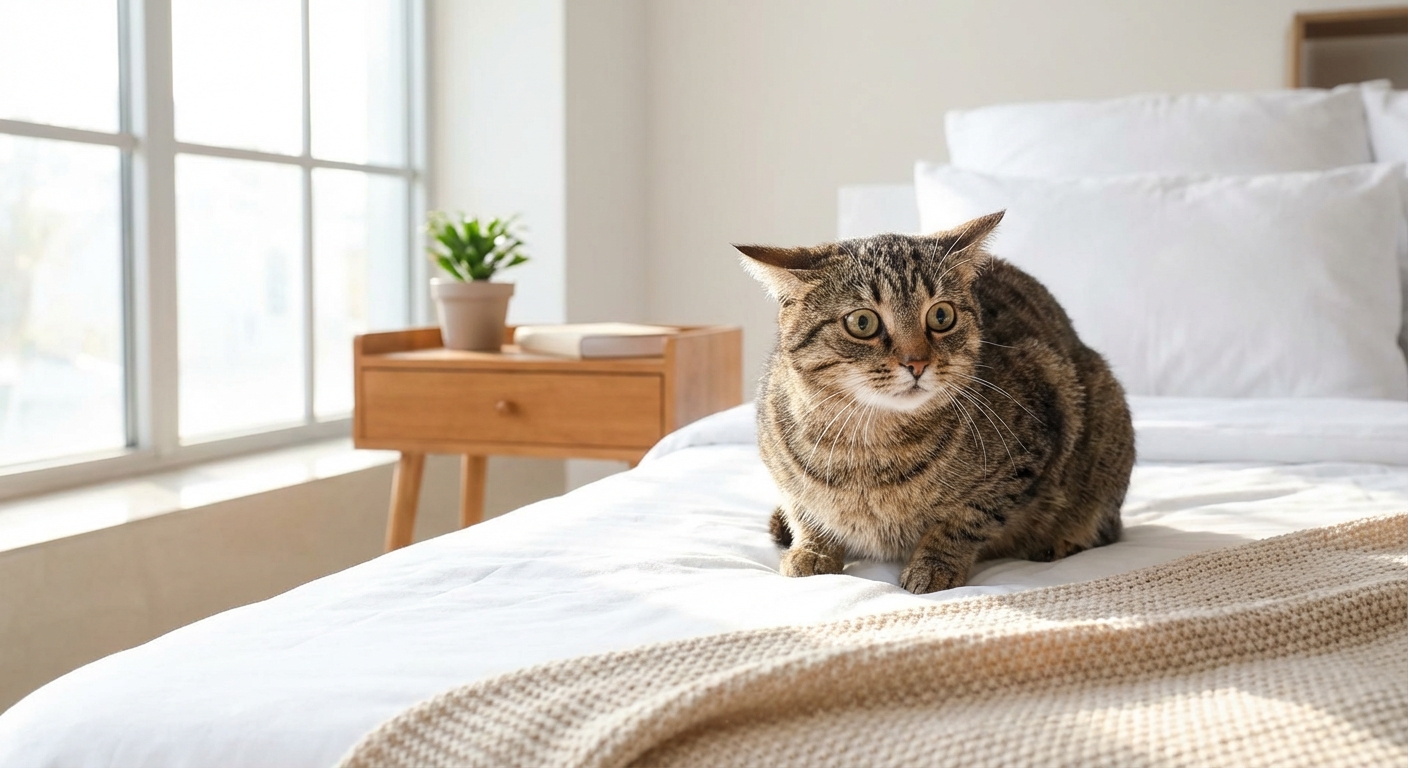
Sometimes inappropriate pooping is a true medical red flag, especially if it comes on suddenly.
Call your vet promptly if you notice
- Diarrhea, blood, or black tarry stool
- Straining, crying, or frequent trips to the litter box
- Vomiting, not eating, hiding, or obvious pain
- Constipation (hard, dry stool, repeated unproductive straining, or no stool for around 48 hours, especially if your cat seems unwell)
- A senior cat who suddenly stops using the box
Bed pooping can happen with issues like constipation, inflammatory bowel disease, parasites, food intolerance, stress-triggered GI upset, or pain that makes the box hard to use. A quick exam and fecal test often save a lot of guesswork.
Why the bed, specifically?
Cats pick locations for reasons that make sense to them. Your bed is soft, strongly scented like you, and often in a quiet spot. For some cats, your scent can feel comforting and safe when they are stressed or not feeling well. For others, it becomes a high-visibility place that increases the odds you will notice something is wrong.
Most common reasons cats poop outside the litter box
1) The litter box setup is not working
This is the most fixable category and the one I like to check first because it is so common.
- Box is too dirty: many cats will avoid a box that smells “used.”
- Not enough boxes: the general guideline is one box per cat, plus one extra.
- Wrong location: noisy laundry rooms, tight corners, or high-traffic areas can feel unsafe.
- Box is too small: cats should be able to turn around comfortably.
- Litter dislike: sudden changes in litter type, scent, or texture can trigger avoidance.
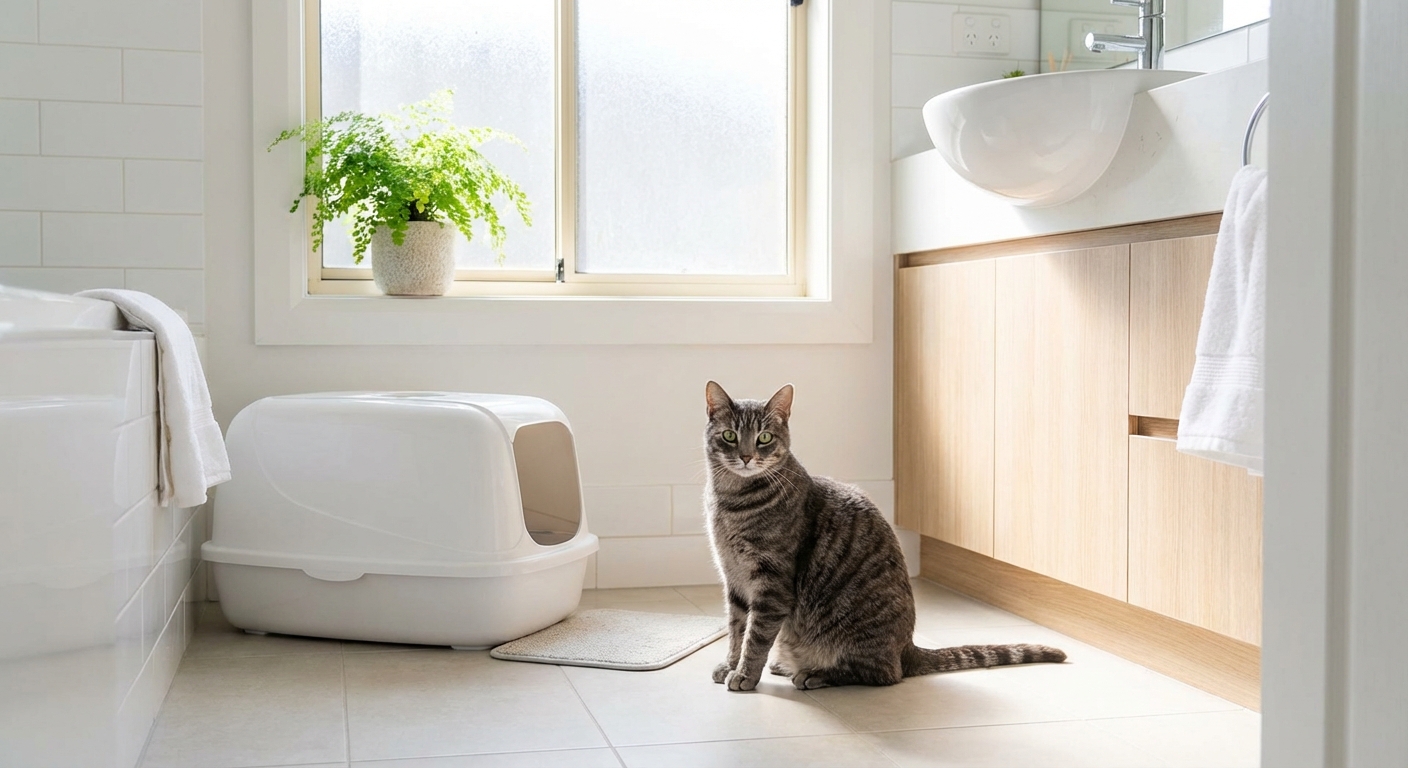
- Liners or hoods: covered boxes trap odor. Some cats hate that.
2) Stress, anxiety, or household changes
Cats are routine-loving creatures. A new baby, guests, another pet, moving furniture, construction noise, or even switching your schedule can be enough to trigger accidents. Pooping on your bed can be a “safe place” choice when they feel unsettled.
3) Pain or mobility issues
If your cat has arthritis, an injury, or general stiffness, stepping into a high-sided box can hurt. Beds are easy to access and soft to squat on. This is especially common in older cats.
4) Negative litter box experience
If a cat was startled while using the box (loud noise, another pet cornering them, a child grabbing at them), they may start avoiding that box or that room.
5) Medical causes
Even when the poop looks normal, medical issues can still be involved. Common culprits include intestinal parasites, constipation or megacolon, colitis, food intolerance, and inflammatory bowel disease. Less commonly, discomfort around the rear end (including anal sac issues) can play a role. A vet visit is especially important when this behavior is new or repeating.
6) It is not actually a behavior problem
Sometimes what looks like “pooping in the bed” is actually stool stuck to fur (often called dingleberries), especially in long-haired cats or cats with diarrhea. You might find a smear or small piece of stool where your cat was sleeping. If this keeps happening, your vet can check for GI causes, and a groomer or sanitary trim can help prevent it.
What to do today (step-by-step)
Step 1: Clean the bed the right way
Use an enzymatic cleaner made for pet waste on any affected fabric and mattress areas. Regular soap may remove the stain, but enzymes help remove the odor cues that can pull your cat back to the same spot.
- Wash bedding on the hottest safe setting.
- If possible, use a waterproof mattress protector for a few weeks while you troubleshoot.
- Avoid ammonia-based cleaners. This is a general best practice for pet messes because the scent can be confusing for some pets and may encourage repeat soiling in other contexts.
- Skip essential oils or strongly scented sprays around cats. Some can be irritating or unsafe, and heavy fragrance can add stress.
Step 2: Temporarily block access
If you can, close bedroom doors for a few days. This is not punishment. It is simply reducing opportunity while you reset the litter box routine.
Step 3: Do a fast litter box reset
- Scoop at least once daily, ideally twice for multi-cat homes.
- Add a second box if you only have one.
- Place boxes in quiet, easy-to-reach spots on different floors if needed.
- Use a large, uncovered box.
- Choose an unscented clumping litter and keep it consistent for now.
Step 4: Make changes slowly
If you need to switch litter or box styles, do it gradually. A simple approach is to add the new box next to the old one and let your cat choose for a week or two. If you are changing litter, mix a little of the new litter into the old and increase it over time. The goal is to avoid making the litter box feel “suddenly wrong.”
Step 5: Call your vet if this is new or repeating
Bring a fresh stool sample if you can. Ask your vet about stool testing, constipation and megacolon signs, diet options (many cats do better with added moisture like wet food, if appropriate), and pain evaluation, especially for seniors.
Family-friendly prevention tips that actually work
Make the litter box kid-proof and cat-friendly
- Teach kids that the litter box area is a “quiet zone.” No chasing, no loud play near boxes.
- Keep boxes away from dog food bowls and barking areas if possible.
- If a dog raids the litter box, use a baby gate with a small cat door cutout or place boxes in a laundry room with a cat-only entry.
Support a calmer cat
- Give your cat a predictable routine for feeding and play.
- Add vertical space like a cat tree or window perch.
- Provide one-on-one play sessions using wand toys to reduce stress and boost confidence.
Try low-risk calming tools
Some evidence suggests synthetic feline pheromone diffusers can help some cats during transitions (moving, new baby, new pet). These are not magic, but they can be a useful support alongside litter box fixes and veterinary care.
Common questions
Is my cat mad at me?
In my experience, cats are not “getting even.” They are usually responding to stress, pain, or a litter box issue. Thinking of it as communication helps you solve it faster.
Should I punish my cat?
No. Punishment often increases anxiety and makes litter box avoidance worse. Focus on cleaning thoroughly, improving the litter box setup, and checking for medical issues.
Why poop and not pee?
Some cats have very specific preferences. Others may be dealing with constipation, GI upset, or stress that shows up more in their bowel habits. Your vet can help you narrow this down.
A simple troubleshooting checklist
- Is this behavior sudden or new?
- Any diarrhea, blood, straining, or constipation?
- Do you have fewer boxes than cats (plus one extra), or are you scooping less than once a day?
- Did you change litter, box type, location, or cleaning products?
- Any household changes in the last 2 to 8 weeks?
- Could another pet be blocking access to the box?
If any item in that checklist stands out, you are likely very close to the cause.
When to bring in extra help
If your cat is medically cleared but the problem continues, ask your veterinarian for a referral to a board-certified veterinary behaviorist or a qualified cat behavior consultant. Chronic litter box issues can usually be improved with a targeted plan, and you do not have to figure it out alone.