Cat throwing up after meals? Learn the difference between vomiting and regurgitation, common causes (fast eating, hairballs, diet issues, illness), home step...
Article
•
Designer Mixes
Why Cats Throw Up Undigested Food

Shari Shidate
Designer Mixes contributor
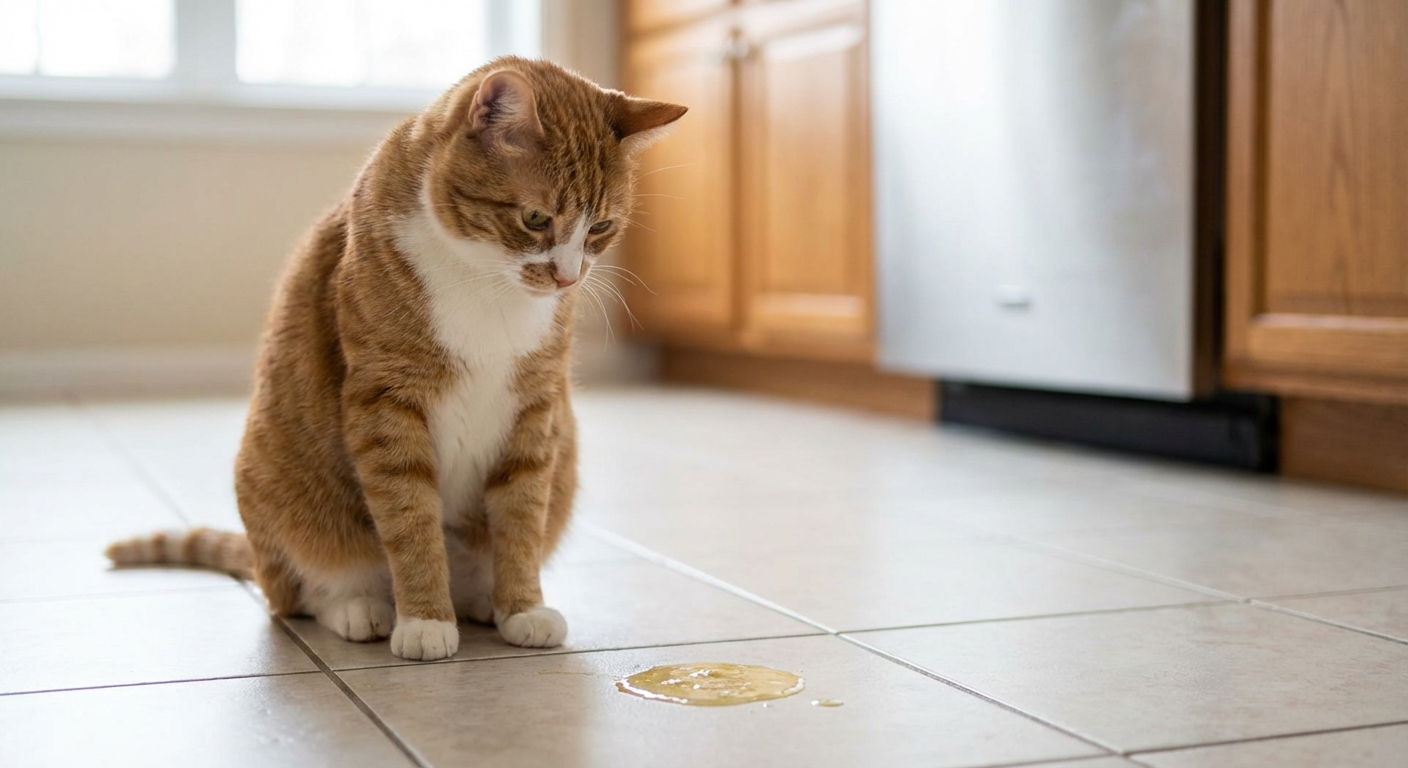
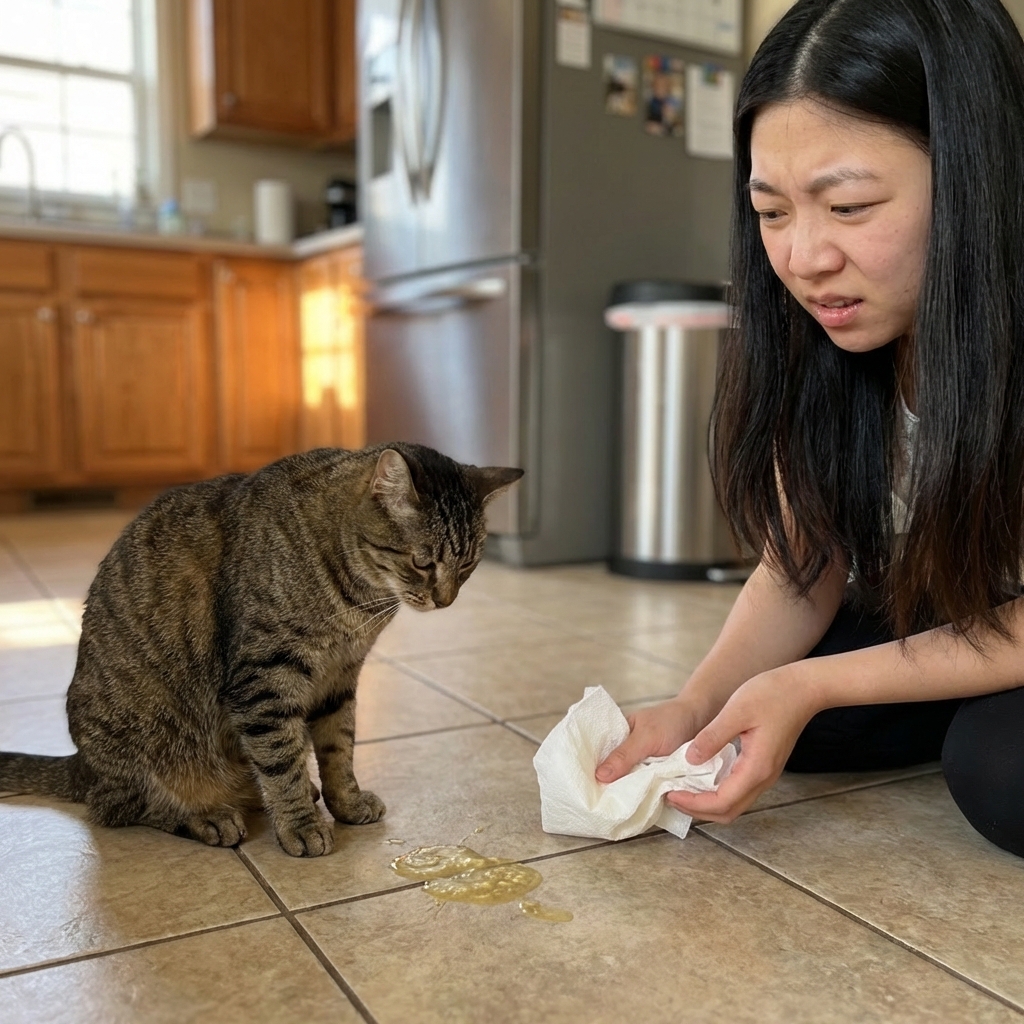
If you have ever walked into a room and found a pile of whole kibble or barely-chewed food, you are not alone. As a veterinary assistant, I can tell you this is one of the most common cat questions I hear. The tricky part is that bringing up undigested food can be as simple as eating too fast, or it can be an early sign of a health issue that needs attention.
This guide will help you tell the difference, know what to do at home, and recognize when it is time to call your veterinarian.
Quick note: This article is for educational purposes and is not a substitute for veterinary diagnosis or treatment.
Vomiting vs. regurgitation
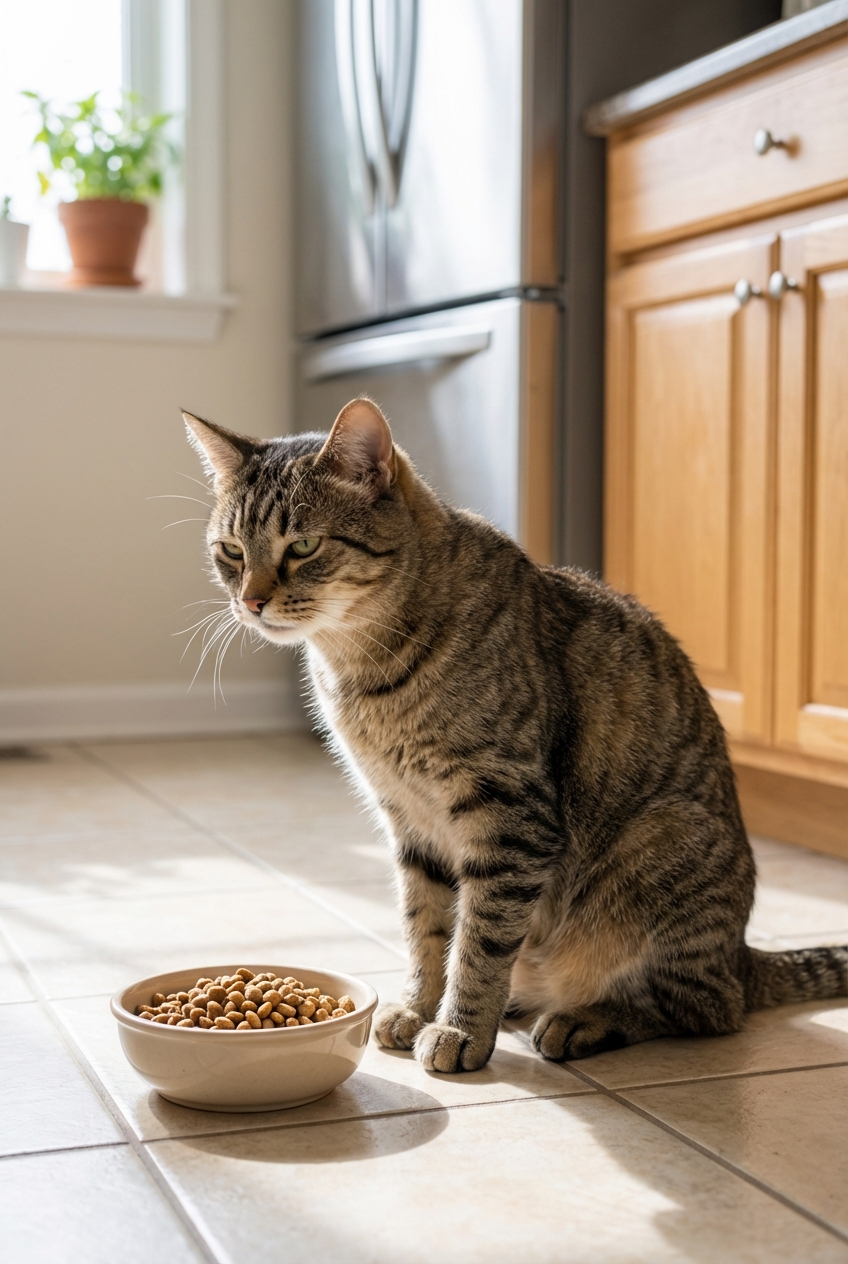
When people say their cat is “throwing up,” they often mean one of two things. Knowing which one you are seeing helps your vet narrow down the cause.
Regurgitation
- Timing: Usually within minutes of eating.
- Appearance: Food looks mostly unchanged, often in a tube or log shape.
- Effort: Little to no retching. It can seem like the food just “comes back up.”
- Common causes: Esophageal irritation or disease, strictures, swallowing problems, foreign material stuck in the esophagus. Sometimes a cat that eats very fast can bring up food quickly and it looks like regurgitation, even if it is actually vomiting.
Important: If the tube-shaped, no-retching pattern is happening more than once, or your cat is losing weight or struggling to swallow, call your veterinarian promptly. True regurgitation often points to an esophageal issue that needs evaluation.
Vomiting
- Timing: Can be right after eating or hours later.
- Appearance: Can include bile (yellow), foam, partially digested food, or fluid.
- Effort: Often includes drooling, lip-licking, heaving, and abdominal contractions.
- Common causes: Stomach or intestinal irritation, food intolerance, parasites, inflammatory bowel disease, pancreatitis, toxin ingestion, or systemic illness.
If you are not sure which you are seeing, take a quick video. That one clip can be incredibly helpful at your appointment.
Common causes of undigested food
1) Eating too fast
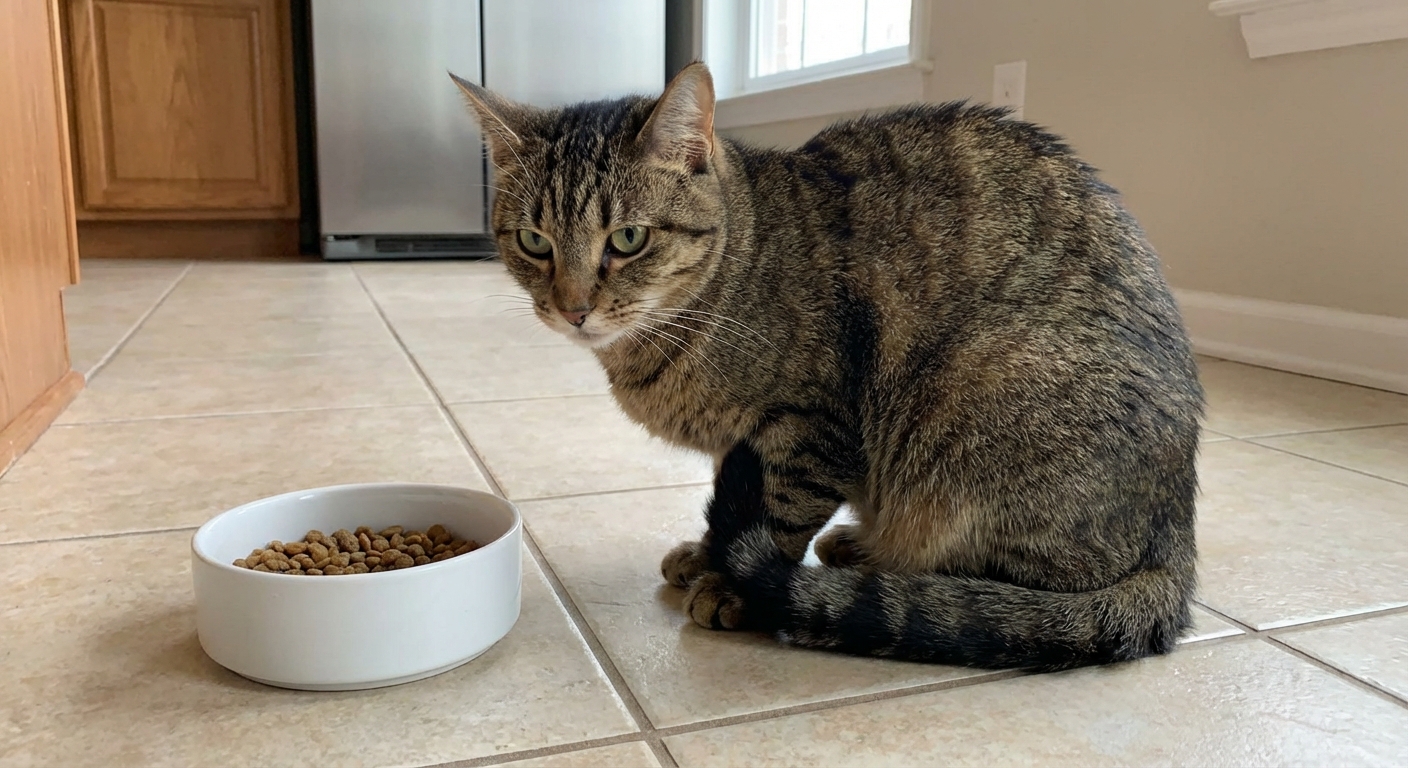
This is one of the most frequent causes, especially in multi-cat homes or cats that act like every meal is a race. When a cat gulps food quickly, it can trigger nausea and bring the meal back up soon after eating.
Clues: It happens right after meals, your cat acts normal afterward, and the food looks basically unchanged.
2) Hairballs
Hairballs can trigger vomiting that brings up food along with hair and clear or foamy fluid. Long-haired cats and heavy groomers are the usual suspects, but any cat can struggle during shedding seasons.
Clues: Frequent gagging or hacking, hair in the vomit, dull coat, or constipation.
One more detail: Not every “hairball” sound is actually a hairball. Some cats cough from asthma or airway irritation and it can look similar from across the room. If you are seeing frequent hacking with no hairball produced, a video for your vet is especially helpful.
3) Food change or sensitivity
Some cats do not handle sudden diet changes well. Others develop sensitivities to certain proteins or ingredients over time, which can cause vomiting, loose stool, itchy skin, or both.
Clues: Vomiting starts after a new food or treat, or you also notice diarrhea, gas, or skin and ear issues.
4) Non-food items (foreign body)
String, ribbon, hair ties, plastic, and even chunks of toys can irritate the stomach or cause a dangerous obstruction. This is an emergency risk, especially with string-like items.
Clues: Repeated vomiting, decreased appetite, hiding, painful belly, or you see string hanging from the mouth or rear (do not pull it).
5) Parasites or infections
Kittens and outdoor cats are more likely to pick up intestinal parasites, which can irritate the gastrointestinal tract.
Clues: Weight loss, soft stool, mucus in stool, pot-bellied appearance in kittens, or a history of fleas.
6) Toxins, plants, or medications
Cats can vomit after chewing plants or ingesting something irritating or toxic. Lilies are especially dangerous for cats, and many human medications can cause severe illness.
Clues: Sudden vomiting with drooling, pawing at the mouth, burns or redness around the mouth, tremors, weakness, or a known exposure to plants, cleaners, essential oils, or pills.
7) Chronic digestive disease
If vomiting becomes a pattern, we start thinking about chronic conditions such as inflammatory bowel disease (IBD), pancreatitis, or other digestive disorders. These often require testing, diet trials, and sometimes medication.
Clues: Recurring vomiting (for example, weekly or more often), weight loss, appetite changes, picky eating, or changes in stool quality.
8) Systemic illness
Kidney disease, hyperthyroidism, liver disease, diabetes, and other systemic problems can cause nausea and vomiting. Older cats are at higher risk, but any age can be affected.
Clues: Increased thirst and urination, weight loss, poor coat, changes in energy, or breath that smells unusual.
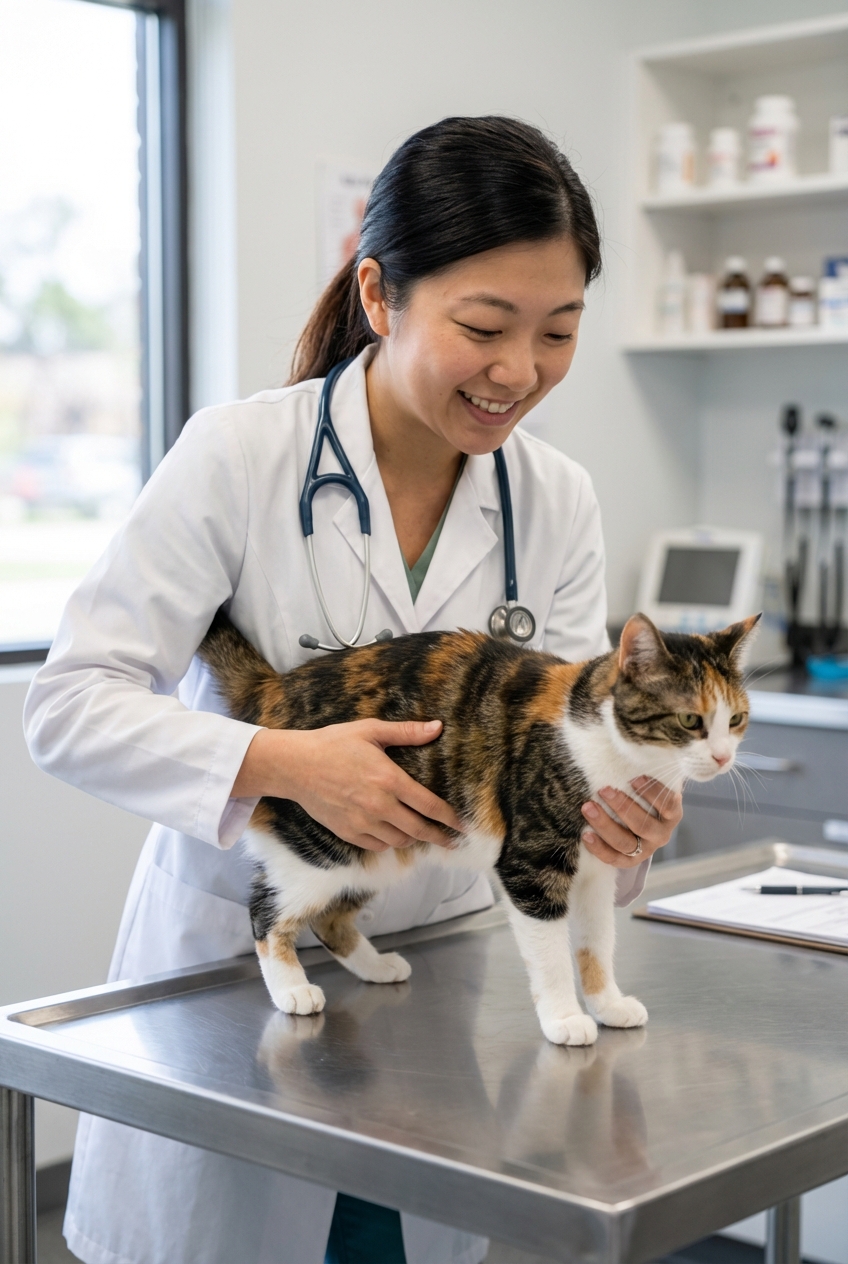
Call the vet right away
Occasional vomiting can happen, but certain patterns and symptoms should not be ignored. Contact your veterinarian urgently or seek emergency care if you notice:
- Repeated vomiting in a short period (for example, multiple times in a day)
- Blood in vomit (red or coffee-ground appearance)
- Severe lethargy, collapse, or weakness
- Refusing food for more than 24 hours (or 12 hours in a kitten)
- Known risks that warrant earlier contact: kittens, cats with diabetes or other chronic illness, or any cat that is already dehydrated or frail
- Signs of dehydration such as tacky gums, sunken eyes, or hiding and not drinking
- Suspected foreign body (string, ribbon, toy pieces, plastic)
- Pain such as crying when picked up, hunched posture, tense belly
- Weight loss or vomiting that continues for more than a few days
- Regurgitation pattern (tube-shaped food, no retching), especially if it is recurring
If your cat cannot keep water down, dehydration can happen fast. That is one of the biggest reasons we recommend prompt veterinary care for frequent vomiting.
What you can do at home
Step 1: Pause and observe
If your adult cat brings up food once, then immediately returns to normal behavior, you can often monitor at home. Make a note of:
- Time since the last meal
- What it looks like (whole food, foam, bile, hair)
- Any new foods, treats, plants, medications, or stressors
- Appetite, water intake, stool quality, and energy level
Step 2: Offer small amounts
If your cat seems comfortable and is not repeatedly vomiting, you can try:
- Water: Offer small amounts at a time. If your cat cannot keep water down, call your vet.
- Food: After a few hours with no further vomiting, offer a small meal of their regular diet. If that stays down, you can gradually return to normal portions.
Avoid long fasting unless your veterinarian specifically instructs it. Cats can develop hepatic lipidosis (fatty liver disease) when they stop eating, especially if they are overweight.
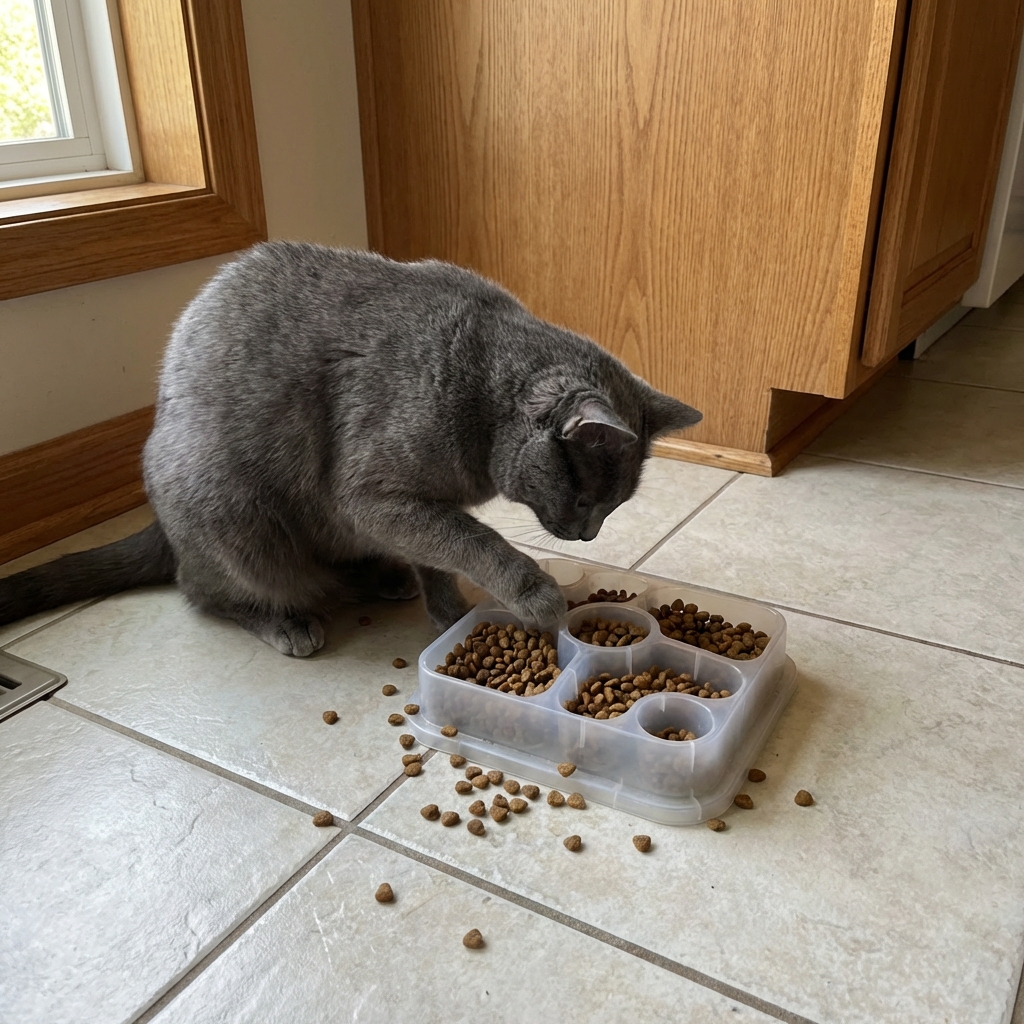
Step 3: Slow down meals
For fast eaters, slowing the pace can make a big difference.
- Offer smaller, more frequent meals.
- Try a puzzle feeder or a slow-feed bowl.
- For wet food, spread it thin on a plate to reduce gulping.
- In multi-cat homes, feed separately to reduce competition.
Step 4: Change food gradually
If you are transitioning diets, go slowly over 7 to 10 days.
- Days 1 to 3: 75% old, 25% new
- Days 4 to 6: 50% old, 50% new
- Days 7 to 9: 25% old, 75% new
- Day 10+: 100% new
Step 5: Support hairball control
- Brush more often, especially during shedding.
- Ask your vet about safe hairball remedies or diets if gagging is frequent.
- Encourage hydration with water fountains or extra wet food if appropriate.
Step 6: Skip risky home remedies
Do not give human medications (including Pepto-Bismol, aspirin, or ibuprofen). Pepto-Bismol can be dangerous because it contains salicylates (similar to aspirin), and cats are very sensitive to them. Also avoid essential oils or herbal products unless your veterinarian okays them.
What your vet may do
Your veterinarian will tailor testing to your cat’s age, symptoms, and physical exam. Common next steps include:
- Fecal testing for parasites
- Bloodwork to check kidney, liver, thyroid, blood sugar, and markers of inflammation
- Urinalysis (especially for older cats)
- X-rays or ultrasound to look for obstructions or intestinal changes
- Diet trial (often a prescription hydrolyzed or novel-protein diet) for suspected food sensitivity or IBD
- Anti-nausea medication and fluids when needed
If vomiting is chronic, your vet may also discuss vitamin B12 (cobalamin) levels, pancreatitis screening, or referral for internal medicine evaluation.
Quick FAQ
My cat brings up undigested food but acts fine. Should I worry?
If it happens rarely, and your cat is bright, eating, drinking, and using the litter box normally, it is reasonable to monitor and try meal-slowing strategies. If it becomes recurring (for example, weekly or more) or your cat loses weight or appetite, schedule an exam.
Is it normal for cats to vomit?
It is common, but “common” does not always mean “normal.” Cats are excellent at hiding illness. Repeated vomiting should be treated as a sign worth investigating.
Could this be a hairball even if I do not see hair?
Yes. Some cats gag and vomit from hair irritation without producing an obvious hairball. Also, some cats cough (not vomit) due to airway issues that can look similar. Increased brushing, a video, and a vet check are good next steps if the behavior is frequent.
The bottom line
Undigested food coming back up can be as simple as scarfing down dinner, but it can also be your cat’s early warning sign that something is off. Start by looking at timing, frequency, and your cat’s overall behavior. Then use simple fixes like smaller meals, slow feeding, and gradual diet transitions.
If vomiting is frequent, paired with weight loss, appetite changes, lethargy, a regurgitation pattern, or any hint of a foreign body or toxin exposure, trust your instincts and call your veterinarian. The sooner you get answers, the sooner your cat can feel better.