Cat throwing up after meals? Learn the difference between vomiting and regurgitation, common causes (fast eating, hairballs, diet issues, illness), home step...
Article
•
Designer Mixes
Why Cats Throw Up After Eating

Shari Shidate
Designer Mixes contributor
If you have ever watched your cat finish a meal and then suddenly vomit, you are not alone. As a veterinary assistant, I see this concern all the time. The good news is that many cases of vomiting after meals are caused by fixable issues like eating too fast or hairballs. The not so good news is that repeated vomiting can also be an early sign of gastrointestinal disease, parasites, food intolerance, or other medical problems that deserve a closer look.
Note: This article is educational and not a substitute for veterinary care. If your cat seems painful, lethargic, cannot keep water down, or is vomiting repeatedly, it is safest to call your veterinarian the same day.
What “after eating” means
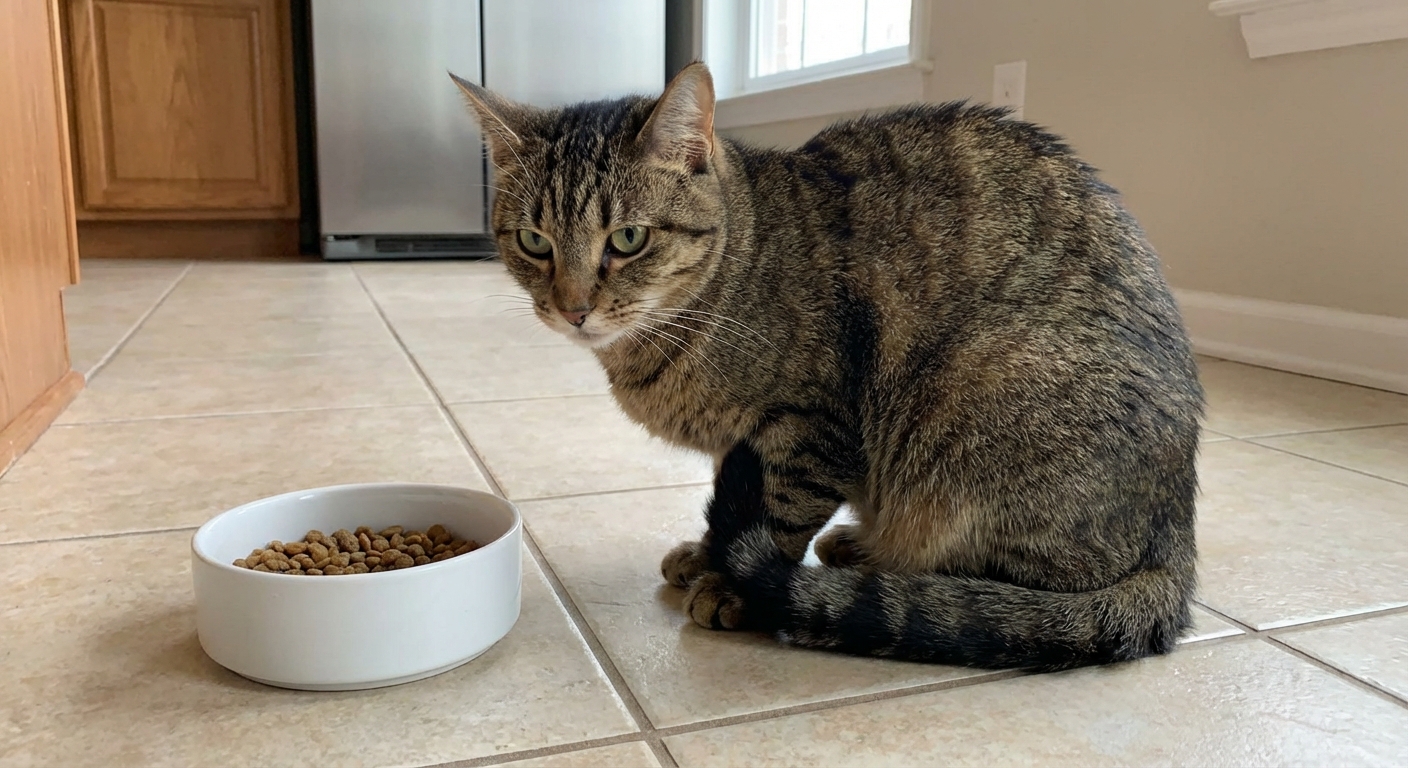
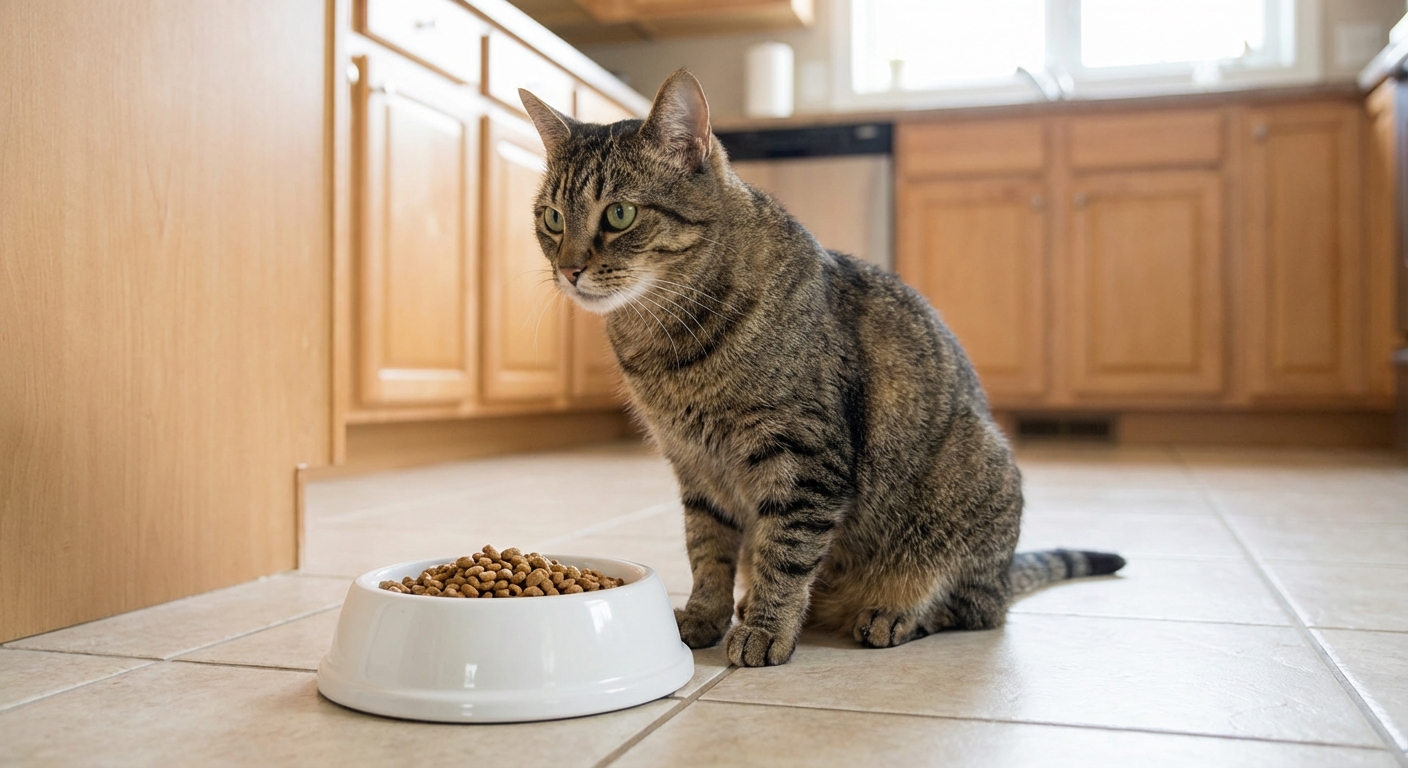
Timing and appearance matter, but timing alone cannot diagnose the cause. One of the first things your veterinary team will want to know is whether your cat is vomiting or regurgitating:
- Vomiting: active heaving, drooling, and abdominal effort. Material may be food, foam, bile, or fluid.
- Regurgitation: food comes back up with little effort, often soon after eating, and may look tube-shaped or like a pile of undigested kibble.
Here is how we often talk about “vomiting after meals” in a triage sense:
- Immediate (within minutes): often fast eating, gulping air, or regurgitation.
- Within 30 to 120 minutes: can be gastritis (stomach inflammation), diet sensitivity, hairballs, or underlying GI disease.
- Hours later or overnight: can still be food-related, but we also consider medical causes like pancreatitis, inflammatory bowel disease, kidney disease, hyperthyroidism, or toxin and medication exposure.
Common causes
Eating too fast
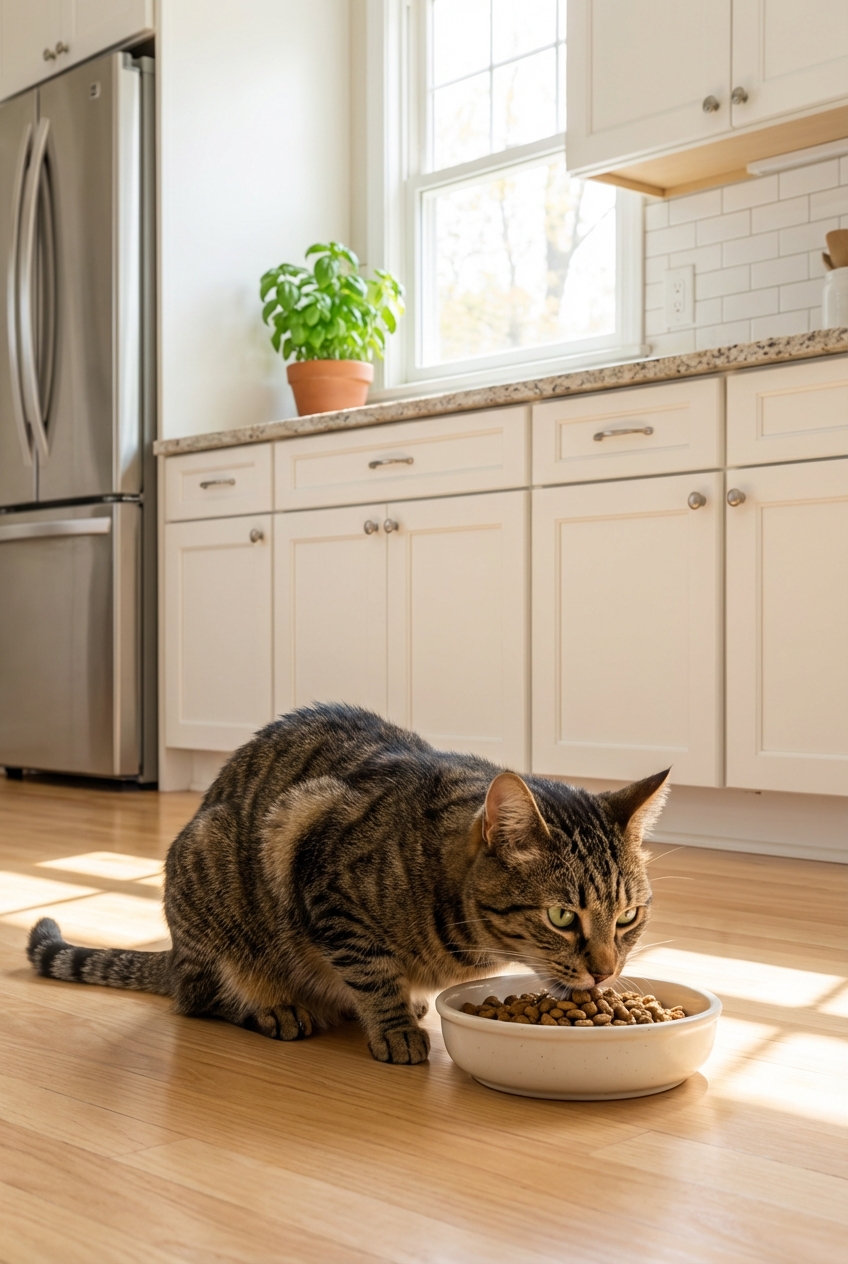
Cats that inhale food can vomit or regurgitate soon after a meal, especially if they eat large portions or compete with other pets. You may see a pile of mostly undigested kibble right after eating.
Hairballs
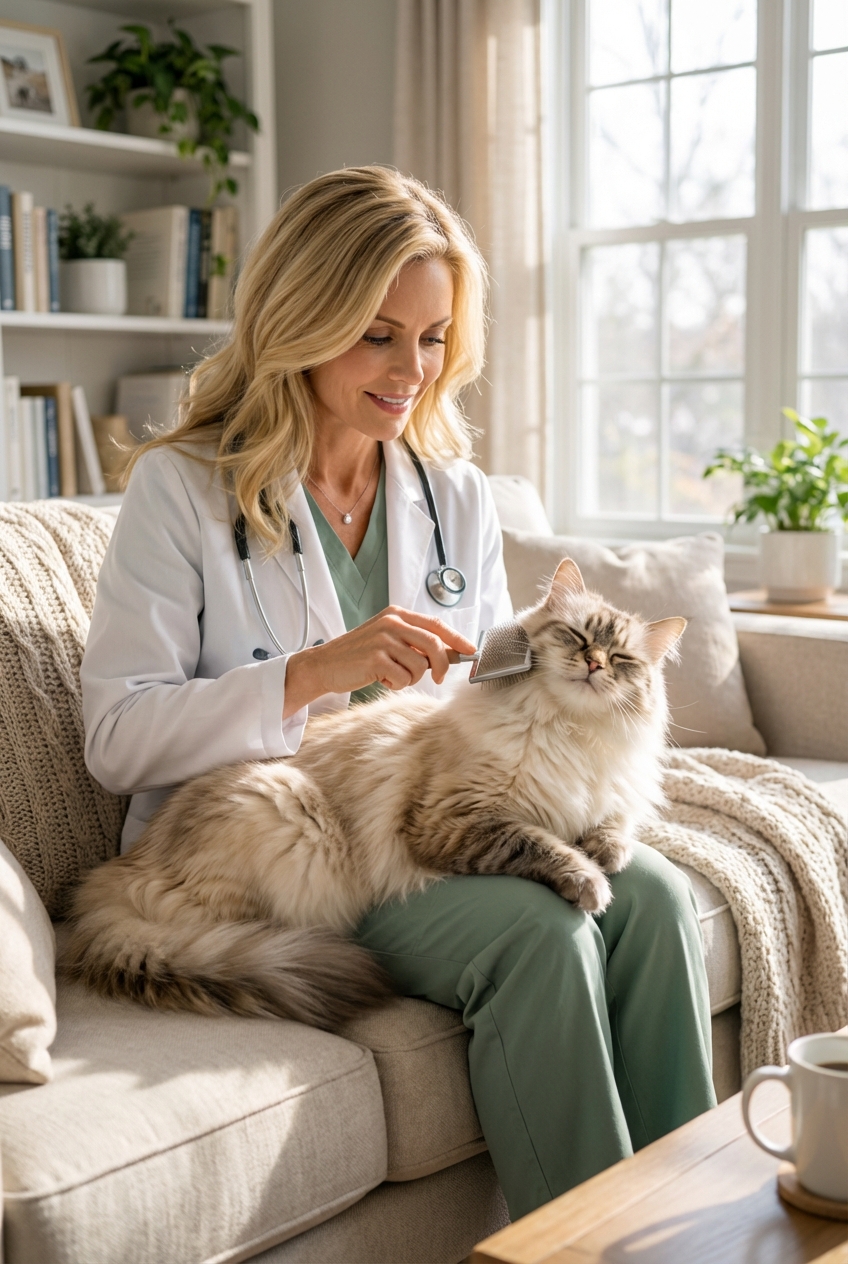
Hairballs are a frequent culprit, especially in long-haired cats or heavy groomers. Sometimes cats vomit food plus hair, or they may vomit clear fluid and then later bring up a hairball.
Diet change or food intolerance
Switching foods too quickly can upset the stomach. Some cats also have sensitivities to certain proteins, fats, or additives. Vomiting can happen with or without diarrhea, gas, or itchy skin.
Large dry meals and fast eating
Kibble absorbs moisture after it is eaten. For some cats, large dry meals, especially when eaten quickly, can make post-meal regurgitation or vomiting more likely. It is usually not that dry food “expands and causes vomiting” on its own. It is more that meal size and speed of eating set the stage.
Parasites
Intestinal parasites (like roundworms) are more common in kittens, outdoor cats, and recently adopted cats, but any cat can be affected. Vomiting may happen after meals, and stool may look normal or abnormal.
Chronic GI inflammation (IBD)
Inflammatory bowel disease is a common reason for repeated vomiting in cats, sometimes tied to meals. Some cats also lose weight, have a poor appetite, or develop intermittent diarrhea.
Pancreatitis
Feline pancreatitis can be subtle. Vomiting may occur, but cats more often show decreased appetite, hiding, lethargy, or “just not acting right.”
Foreign material or blockage
If a cat eats string, ribbon, toys, or other non-food items, vomiting after eating can be an early sign. This can become an emergency quickly.
Other medical causes
If vomiting is happening regularly, especially in middle-aged and older cats, your veterinarian may also look for conditions like kidney disease, hyperthyroidism, and reactions to medications or toxins (including some human foods, plants, and pest products).
When it is urgent
Please seek urgent veterinary care if you notice any of the following:
- Repeated vomiting (for example, more than 2 to 3 times in 24 hours), vomiting that is worsening, or vomiting that persists longer than a day
- Unable to keep water down, or vomiting that is forceful and progressive
- Blood in vomit (red streaks or coffee-ground appearance)
- Severe lethargy, collapse, or weakness
- Pain (hunched posture, crying, guarding the belly)
- Dehydration (tacky gums, sunken eyes, skin not snapping back)
- Not eating for 24 hours (and for kittens, call sooner since they can decline fast)
- Suspected string ingestion (do not pull string from the mouth or rectum)
- Weight loss or vomiting that becomes a pattern over weeks
In cats, “wait and see” is not always the safest plan. Cats can dehydrate quickly. Also, several days of not eating (sometimes even 2 to 3 days), especially in overweight cats, can increase the risk of hepatic lipidosis, a serious liver condition.
What you can do at home
If your cat is bright, comfortable, and only vomited once, these steps are generally safe while you monitor closely. If you are unsure, call your veterinary clinic for guidance.
1) Slow down meals
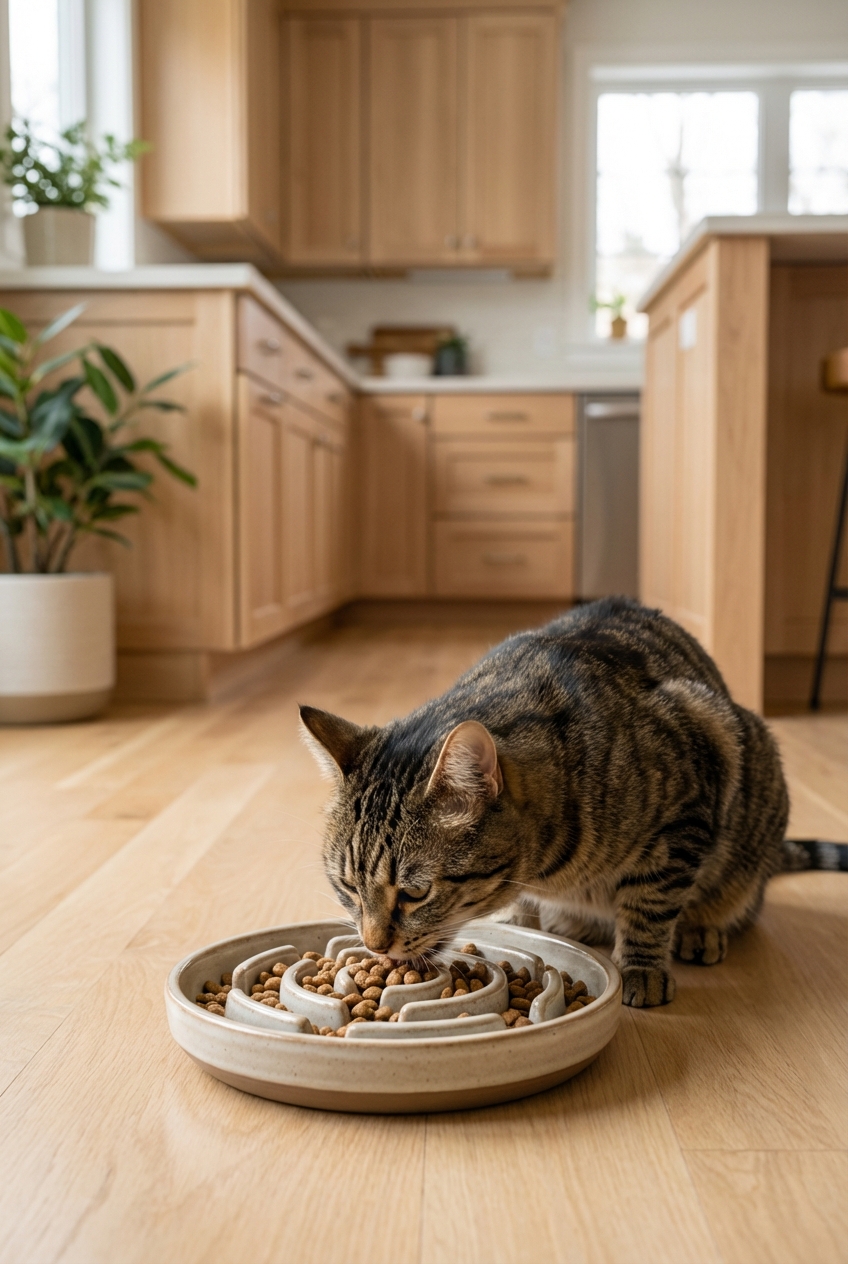
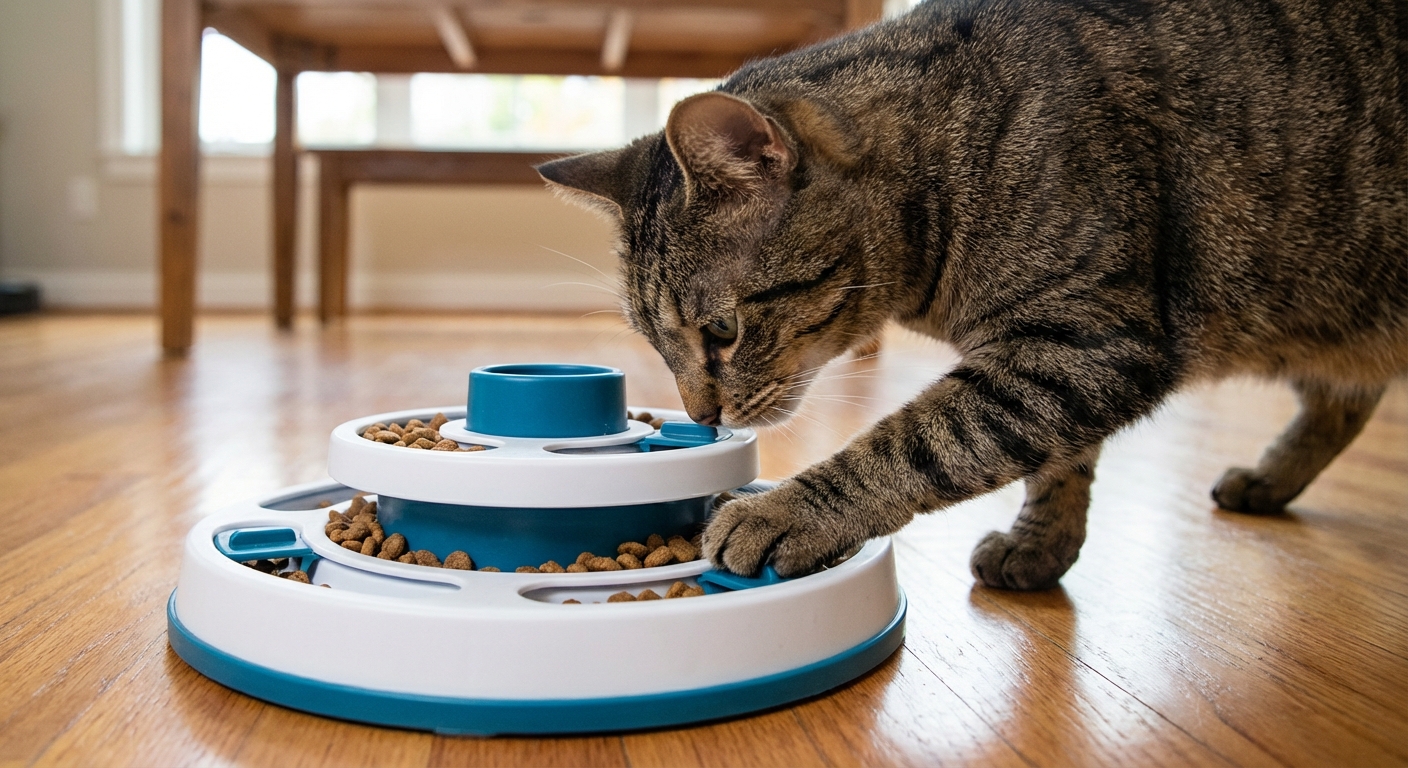
- Use a puzzle feeder or slow feeder bowl.
- Offer smaller meals more often (3 to 5 mini-meals instead of 1 to 2 large meals).
- If you have multiple cats, feed separately to reduce competition and stress.
2) Support hairball control
- Brush regularly, especially during shedding seasons.
- Ask your vet about appropriate hairball diets or supplements.
- Make sure your cat is well-hydrated, since hydration supports healthy gut movement.
3) Transition food slowly
If you are changing foods, go gradually over 7 to 10 days:
- Days 1 to 3: 75% old, 25% new
- Days 4 to 6: 50% old, 50% new
- Days 7 to 9: 25% old, 75% new
- Day 10+: 100% new
4) Add moisture safely
Many cats do better with more moisture in their diet.
- Consider adding a tablespoon or two of warm water to wet food.
- If your cat eats kibble, talk to your vet about mixing in some wet food for better hydration.
- Try a cat water fountain if your cat prefers running water.
5) Track patterns
Keep a simple log for a week:
- What food and how much was eaten
- How fast your cat ate
- Time to vomiting or regurgitation
- What it looked like (undigested food, foam, hair, bile)
- Stool quality and appetite
This information is incredibly helpful for your veterinarian and can shorten the time to a real answer.
6) What not to do
- Do not give human medications (including anti-nausea meds, antacids, or pain relievers) unless your veterinarian specifically tells you to. Some are dangerous for cats.
- Do not pull string if you see it. Keep your cat from chewing more and go in urgently.
- Do not force a fast without veterinary guidance. Cats are not small dogs, and prolonged poor appetite can become a serious problem.
What your vet may do
If vomiting is frequent or your cat has any red-flag symptoms, your veterinarian may recommend:
- Physical exam with abdominal palpation and hydration assessment
- Fecal testing for parasites
- Bloodwork to evaluate organ function, inflammation, and dehydration
- Urinalysis for overall metabolic health
- X-rays or ultrasound if obstruction, inflammation, or masses are suspected
- Diet trial for suspected intolerance or IBD
Diet trials work best when they are strict. Many plans require feeding only the prescribed diet for 6 to 8 weeks with no other treats, flavored supplements, or table food. Your veterinarian will tell you what is realistic and safe for your cat.
If you can, bring a photo of the vomit or a fresh stool sample in a sealed bag. It may feel a little awkward, but it can be genuinely useful.
Daily vomiting is not normal
Occasional hairball vomiting can happen. But daily vomiting is a signal that something is irritating the stomach or intestines, or that food is not being tolerated well. Even when your cat seems fine otherwise, chronic vomiting can lead to dehydration, poor nutrient absorption, weight loss, and a lower quality of life.
If your cat vomits daily, it is time to schedule a veterinary visit. You are not overreacting. You are catching a problem early, when it is often easier to treat.