Stop couch scratching without punishment. Learn why cats scratch, how to choose and place scratchers, use safe deterrents, reward good behavior, and follow a...
Article
•
Designer Mixes
Why Cats Scratch Furniture

Shari Shidate
Designer Mixes contributor
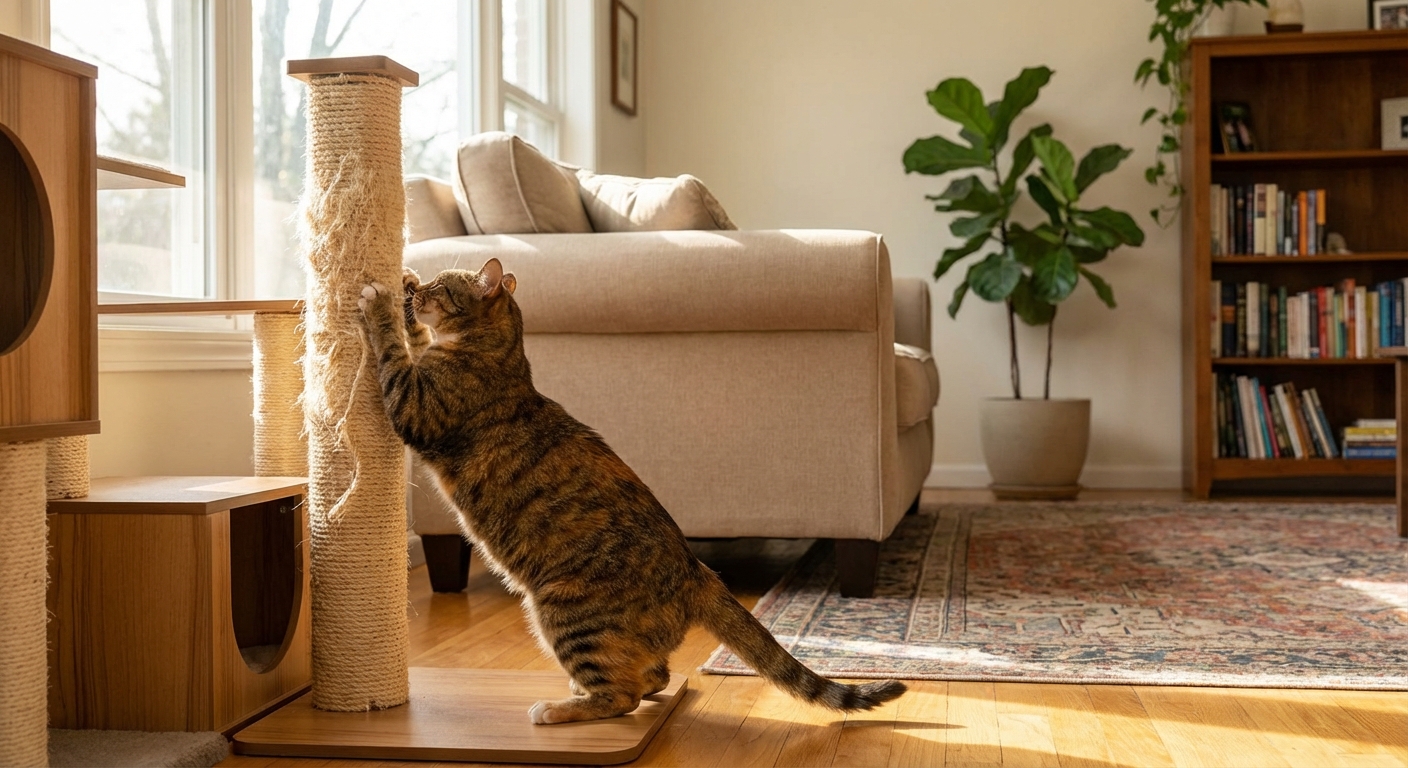
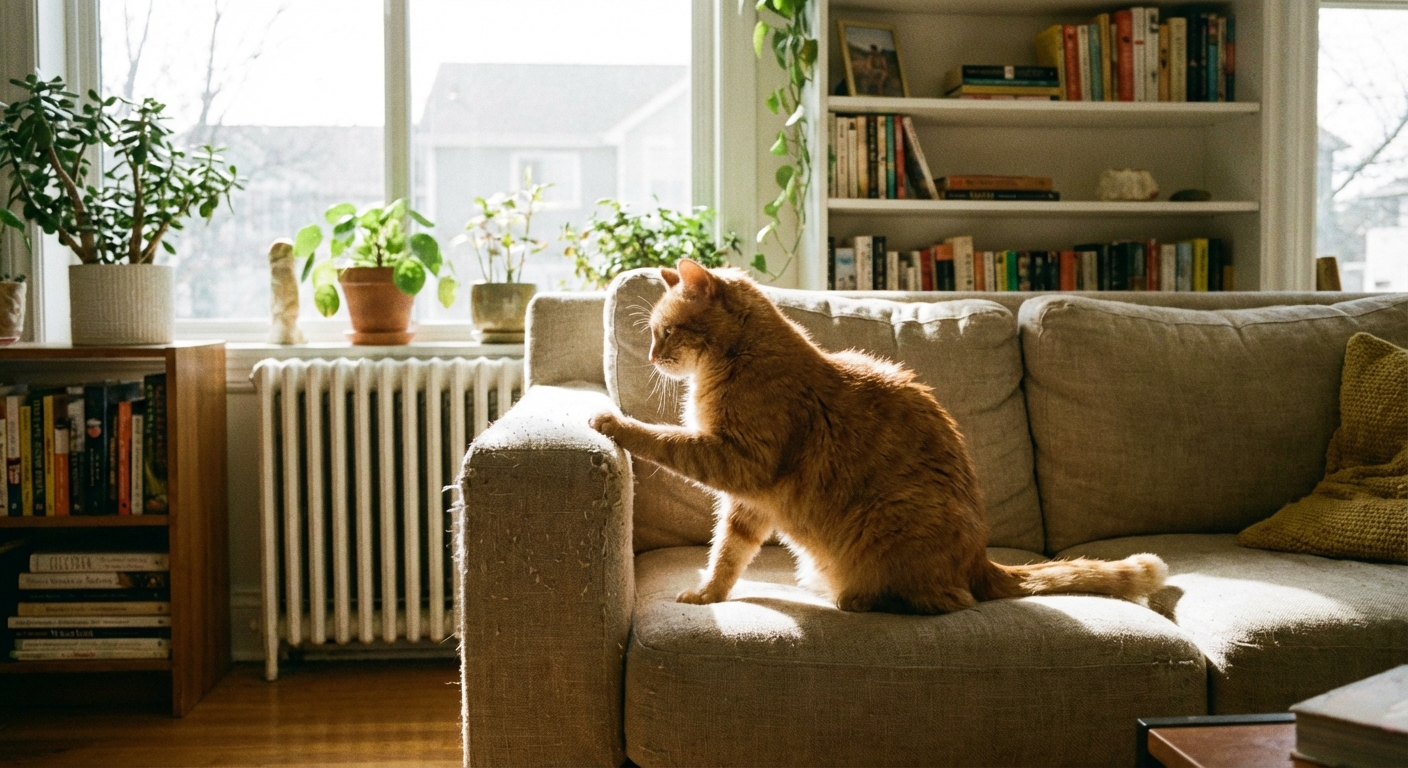
If your cat is scratching your couch like it personally offended them, you are not alone. As a veterinary assistant, I can tell you that in most cases this is not “bad behavior.” Scratching is a normal, healthy feline need. The good news is you can protect your furniture without fighting your cat’s instincts. You just have to redirect them to a better option and make that option irresistible.

Why cats scratch
Cats scratch for several well-established reasons. Most cats are doing some combination of all of these, which is why a single quick fix often fails.
- To maintain claw health: Scratching helps remove the outer sheath of the claw and keeps claws functional.
- To stretch and strengthen: That long reach and pull is a full-body stretch for shoulders, back, and legs.
- To mark territory: Cats leave both a visible mark and a scent signal. They have scent glands in their paws, so scratching is also communication.
- To release stress and excitement: Many cats scratch more when they are anxious, bored, overstimulated, or revved up after play.
Once you accept that scratching is a need, the goal becomes simple: give your cat an acceptable “yes” that feels better than your furniture.
Why furniture wins
From a cat’s perspective, your sofa is basically a luxury scratching station.
- It is stable: Wobbly scratchers are a common reason cats ignore them. Furniture does not move.
- It is tall enough: Many cats prefer a full-body stretch. Short scratchers can be a dealbreaker.
- It is in a social area: Cats often scratch where the family spends time because scratching is partly communication.
- It already smells like home: Familiar scent makes it a safe place to mark again.
What the spot tells you
The location of the damage can point you toward the right solution.
- Near doors or windows: Territorial marking and marking key entry points. Add a scratcher near that spot.
- Next to the couch where people sit: Social marking and attention. Place an appealing scratcher directly beside the couch.
- In the bedroom at night: Stress, boredom, or a learned habit. Add an evening play routine and a scratcher nearby.
- One specific chair only: Texture preference. Your cat may love that fabric. Match the texture with a better scratcher.
Step-by-step plan
1) Pick the right scratcher
First, a quick definition: when I say scratcher, I mean any scratching option, like a tall post, a horizontal pad, or an angled scratcher.
Most cats prefer one of these setups:
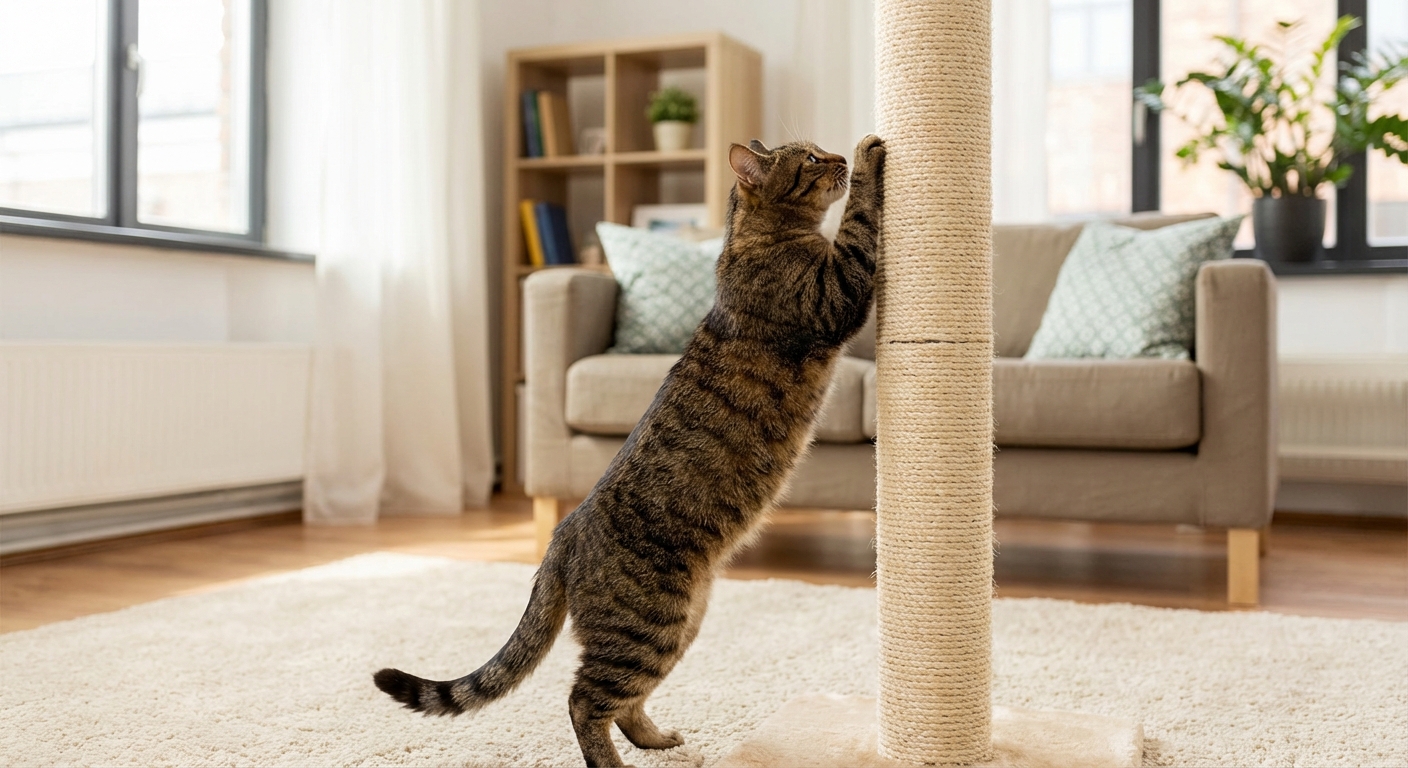
- Tall vertical post: At least 28 to 32 inches high, very stable, wrapped in sisal.
- Long horizontal scratcher: Great for cats who scratch carpet or low furniture edges.
- Angled scratcher: A good compromise if your cat likes both.
Stability matters more than price. If it wobbles, many cats will choose the couch every time.
Texture matters, too. Some cats are die-hard sisal fans, others want cardboard, and some prefer wood. If your cat is scratching carpet, avoid carpet-style scratchers during training so you are not accidentally reinforcing the same feel.
2) Put it where your cat scratches
Scratching is location-based. Place the scratcher within 1 to 2 feet of the problem area first. After your cat reliably uses it, you can slowly slide it to a more convenient spot over days or weeks.
3) Make the scratcher the best deal in the room
- Rub a little catnip on the scratcher if your cat responds to it.
- Try a cat pheromone diffuser in the room if stress seems to be driving scratching.
- Lure and reward: toss a treat at the base, then on the scratcher, and praise the moment they touch it with paws or claws.
- Praise and treat when your cat uses the scratcher. Keep it calm and immediate.
- Try interactive play near the scratcher, then let your cat “cool down” by scratching.
Skip punishment. Yelling or spraying can raise stress, damage trust, and it does not teach your cat what to do instead.
4) Protect the furniture during retraining
Think of this as management, not defeat. You are buying time while the new habit forms.
- Double-sided tape on the scratched area is often very effective.
- Furniture covers or a tightly tucked blanket can reduce texture satisfaction.
- Plastic guards can work for corners and arms, especially on fabric sofas.
Safety note: Make sure tape, guards, and covers are secure, do not create loose pieces that could be chewed, and will not damage your upholstery when removed.

5) Support healthy nails and paws
- Trim nails as needed. Every 2 to 4 weeks is common, but some cats need more or less. If you are unsure, ask your vet team to demonstrate.
- Watch for discomfort like limping, overgrooming paws, or sudden aggression when touched. Pain can change scratching patterns.
- Consider soft nail caps for some cats, especially during training. Ask your veterinarian if they are appropriate for your cat.
6) Reduce boredom and stress
Scratching can spike when cats have excess energy or feel uncertain.
- Two short play sessions daily, even 5 to 10 minutes each, can help.
- Add vertical space like a cat tree near a window.
- Offer foraging toys or puzzle feeders for mental work.
- Keep routines steady when possible, especially in multi-cat homes.
If you have more than one cat, plan on multiple scratching stations in different areas so no one has to compete for access.
7) A quick note on declawing
If you are feeling desperate, talk with your veterinarian before considering declawing. In many places it is restricted or banned, and it can lead to pain and behavior problems. In most cases, the combination of the right scratcher, smart placement, and reward-based training gets you where you want to go without taking away a normal behavior.
Common mistakes
- Too short or wobbly: This is the number-one issue I see.
- Hidden in a corner: Cats often want to scratch in important social areas.
- Only one option: Many cats do best with at least two stations in different rooms.
- Trying to scare them: It may stop scratching in the moment, but it often increases stress and does not build the habit you actually want.
When to call your vet
Scratching is normal, but a sudden change can be a clue that something else is going on. Reach out to your veterinarian if you notice:
- Sudden increase in scratching along with hiding, aggression, or appetite changes
- Overgrooming, hair loss, or itchy skin that suggests allergies or parasites
- Limping, stiffness, or difficulty jumping that could indicate pain
- Inappropriate urination plus scratching, especially in stressful multi-cat homes
Behavior is communication. If something feels off, trust that instinct and ask for help.
Quick reset
- Place a tall, stable sisal post right beside the most-scratched furniture spot.
- Add double-sided tape to the furniture where your cat scratches.
- Reward scratcher use with a small treat or a favorite toy.
- Do one short play session daily for a week, then reassess.
With consistency, some homes see improvement in 1 to 2 weeks, and stronger habits often build over the next month or two. Longer timelines are normal, especially if the scratching has been happening for a long time. Your cat is not trying to ruin your space. They are trying to feel secure, stretched, and at home. Let’s give them a better way to do it.