Wondering if your cat loves you? A vet assistant explains 12 bond and trust signals—slow blinks, bunts, purring, greetings, sleep habits—plus stress look...
Article
•
Designer Mixes
Why Cats Put Their Butts in Your Face

Shari Shidate
Designer Mixes contributor
If you have ever been relaxing on the couch and your cat suddenly backs up into your personal space, you are not alone. As a veterinary assistant, I can tell you this behavior is usually normal cat communication, not your cat being “rude.” Cats use scent, body language, and social rituals that feel a little strange to us humans.
Below is a step-by-step look at what it often looks like in the moment, why cats do it, and how to set gentle boundaries without damaging trust.
Step by step: what it looks like
Step 1: Your cat approaches calmly
Many cats do this with people they feel comfortable around. In general, a cat that chooses to come close and turn away from you is showing a level of ease, even if they also use “turning away” as a way to de-escalate when they feel unsure.
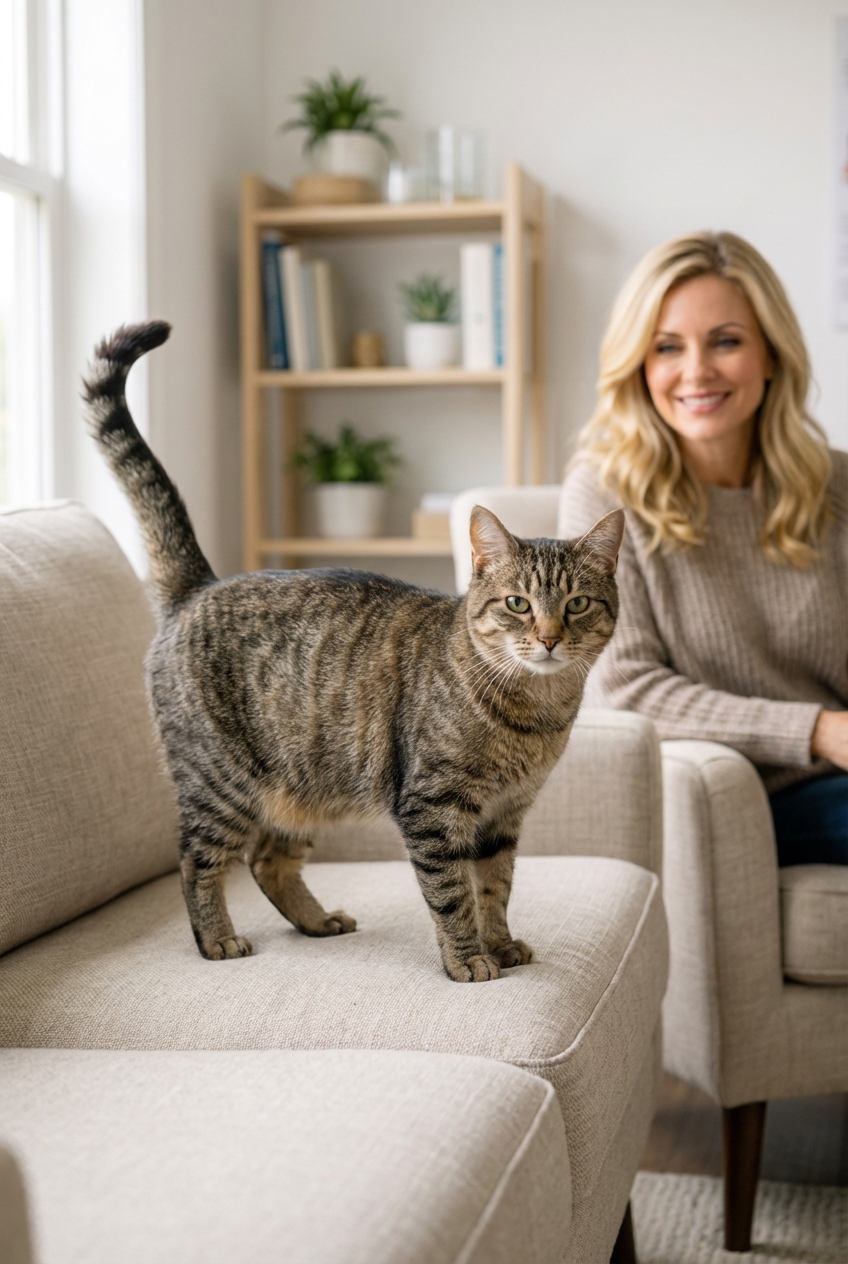
Step 2: The tail goes up
A tail held upright is a classic friendly greeting in cat language.
Step 3: The rear end turns toward you
This is the part that makes humans laugh or cringe. Your cat may back up, pause, and “present” their hindquarters close to your face or hands.
Step 4: You might see a tail quiver
Some cats do a little tail quiver during an excited greeting. If the quiver happens while your cat is backed up to a wall or furniture, especially with a strong urine smell or wet spots, that can be marking or spraying instead of affection.
Step 5: Your reaction shapes what happens next
If you laugh, pet, or give attention, your cat may repeat the behavior because it worked. If you gently redirect, your cat can learn a different way to say hello.
Why cats do this
Reason 1: It is a cat-style greeting
Cat-to-cat greetings can include an “I trust you, you can sniff me” posture. Your cat is not trying to be gross, they are offering what makes sense in their social script.
Reason 2: Scent is a big part of cat communication
Cats rely heavily on scent and have scent glands on the face, paws, and around the base of the tail. Getting close, rubbing nearby, and sharing space are ways cats build a familiar “group scent.”
Reason 3: They are asking for attention
Some cats learn that backing up toward you leads to petting, especially near the lower back or base of the tail.
Reason 4: They like base-of-tail scratches
Many cats enjoy gentle scratches there, but not all. If your cat’s skin ripples, their tail lashes, their ears go back, or they suddenly whip around, they may be getting overstimulated. That is your cue to pause and switch to head or cheek rubs instead.
Reason 5: Age and confidence can play a role
Kittens and young cats can be extra clumsy and enthusiastic with greetings. Confident, social adult cats may also do it more often, including to guests.
Is it ever a sign something is wrong?
Most of the time, this behavior is completely normal. That said, I always encourage pet owners to watch for changes. If your cat suddenly starts doing this more intensely, seems uncomfortable, or you notice a new odor, it is worth taking a closer look.
Red flags to watch for
- Strong fishy smell or a sudden new odor (can be stool residue, skin infection, or less commonly anal sac issues)
- Scooting, excessive licking under the tail, or swelling
- Diarrhea, messy stool stuck to the fur, or frequent accidents outside the litter box
- Hair loss, redness, or scabs around the tail base or rear end
- Signs of pain when touched, hiding, decreased appetite, or behavior changes
- Possible spraying: backing up to vertical surfaces with tail quivering plus urine odor or wet spots (especially in intact cats, but it can happen in any cat)
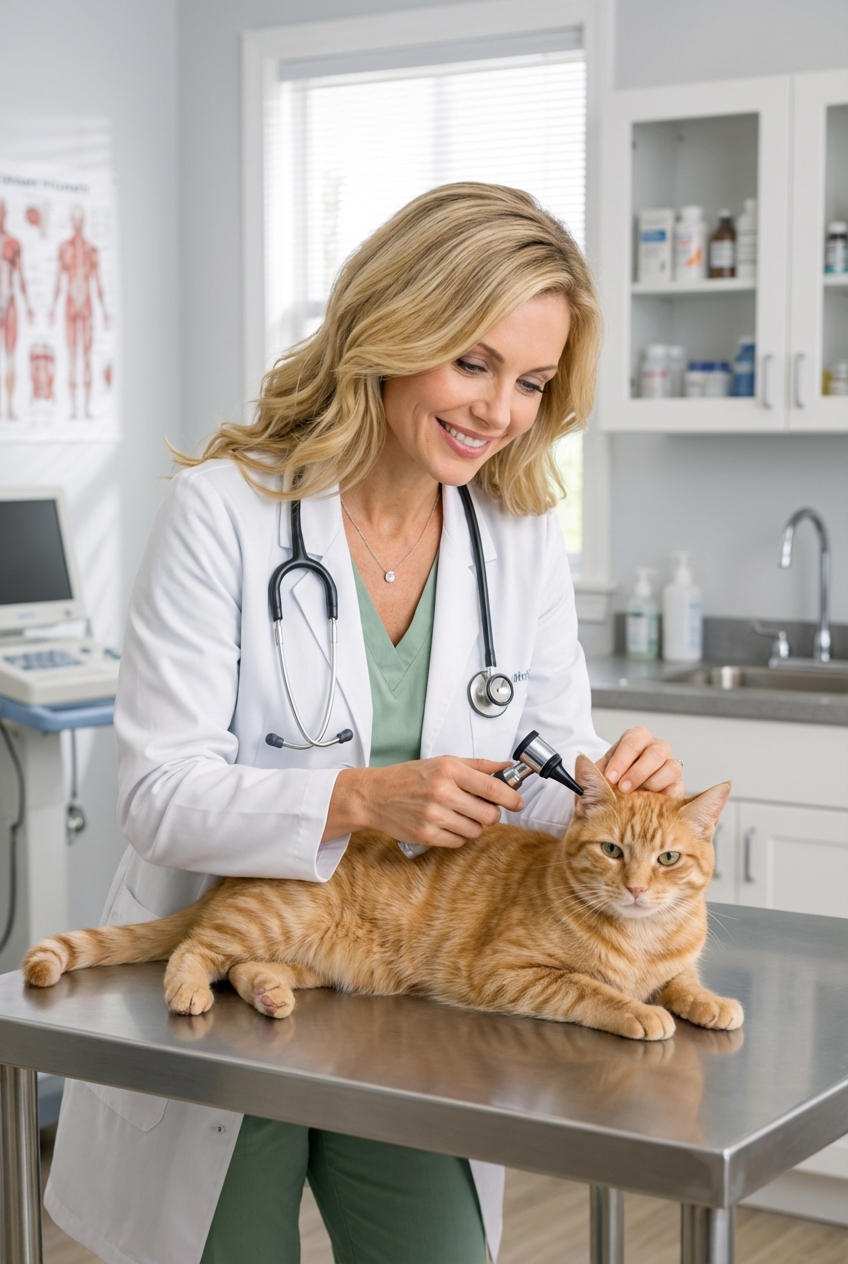
If you notice any of the above, schedule a vet visit. Cats are masters at masking discomfort, and a quick exam can rule out common problems like parasites, constipation, skin irritation, and other medical causes. If spraying is involved, your veterinarian can also help you sort out medical versus stress-related triggers.
How to respond kindly
You do not have to accept a face-full-of-butt to have a loving relationship. The key is calm, consistent redirection.
Try these gentle steps
- Lean back or turn your head so the behavior does not get rewarded with attention.
- Stand up and pause attention for a moment if your cat keeps backing up. Then re-engage when they offer a preferred greeting.
- Offer a hand for a head rub instead. Many cats will happily switch to cheek rubbing, which is closer to true “bunting” (rubbing with facial scent glands).
- Redirect to a perch or bed nearby, then reward with a treat or petting when they settle.
- Use a simple cue like “over here” and guide them to sit beside you.
- Avoid yelling or pushing. Harsh reactions can create stress and may increase attention-seeking behaviors.
If your cat is very persistent, add more enrichment during the day. Many in-your-face moments are a bored cat’s way of saying, “I need interaction.”
Quick FAQ
Do cats do this only with people they love?
Often, yes. It is most common with trusted humans. Some very social cats will also do it to guests, especially if they are confident and curious.
Is my cat trying to dominate me?
In most cases, no. Dominance is not a helpful lens for typical cat household behaviors. This is usually social greeting plus scent-based bonding.
Should I be worried about hygiene?
Healthy cats are generally clean. Still, if your cat has long hair, soft stool, or a history of digestive issues, hygiene can become a real concern. Keep the litter box clean, consider a sanitary trim for long-haired cats, and talk with your veterinarian if stool quality is frequently loose.
The bottom line
When your cat puts their butt in your face, it is most often a friendly, trusting greeting and a scent-based social habit. You can appreciate the affection while still setting boundaries with calm redirection. And if anything looks irritated, smells strongly unusual, your cat seems uncomfortable, or the behavior comes with spraying signs, a veterinary check is the safest next step.