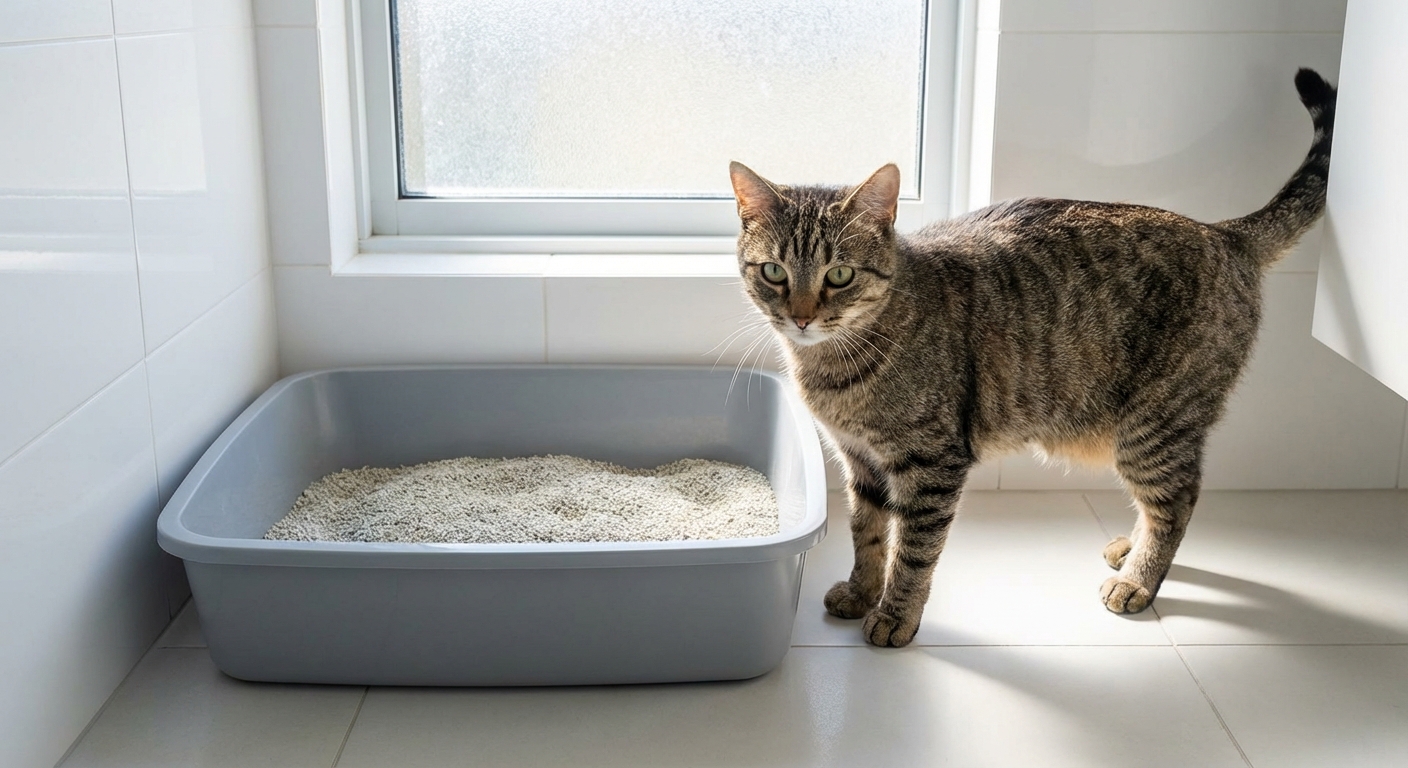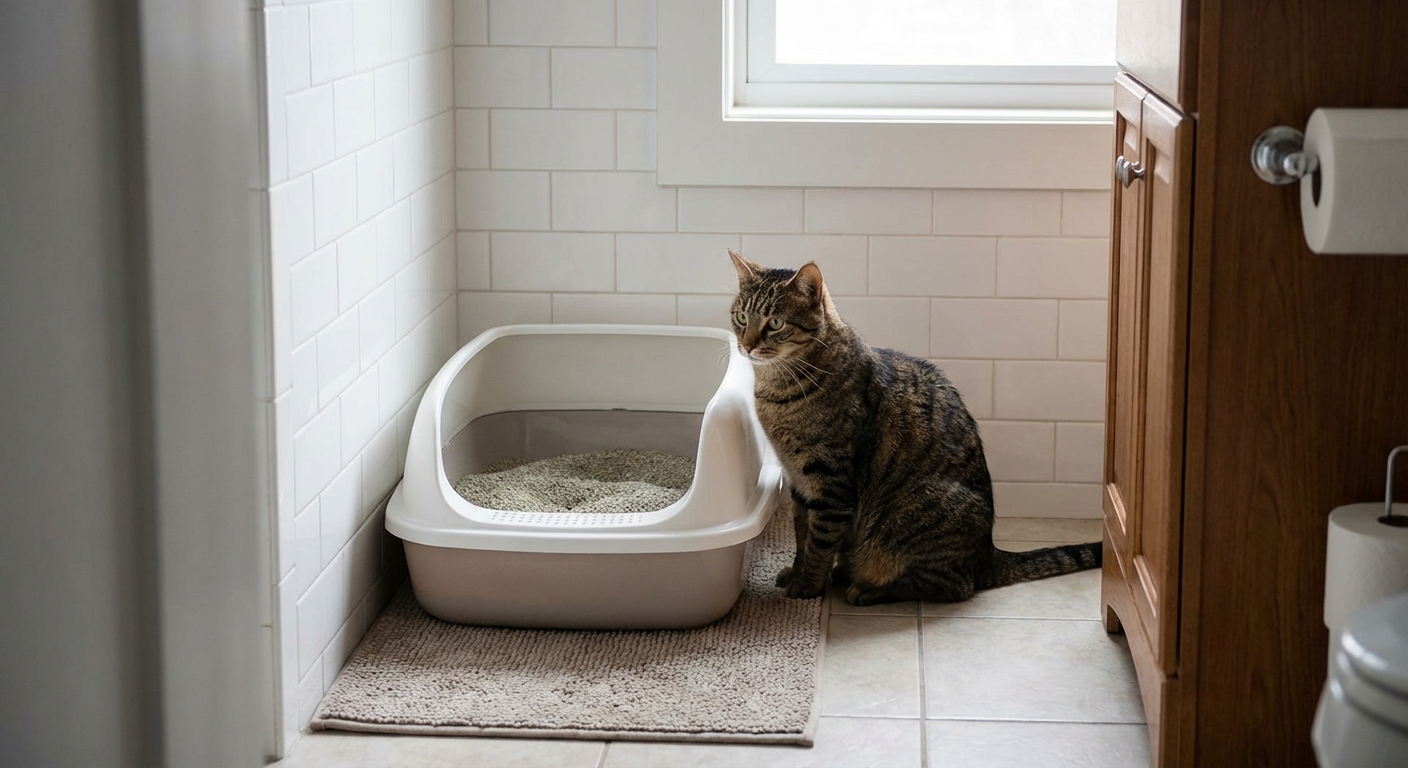
Poop outside the litter box is usually a clue—not a “bad cat.” Learn medical red flags, common causes (pain, diarrhea, stress, box setup), and practica...
Article
•
Designer Mixes
Why Cats Poop Outside the Litter Box

Shari Shidate
Designer Mixes contributor
If your cat is pooping outside the litter box, it is easy to feel frustrated or worried. I get it. As a veterinary assistant, I can tell you this behavior is usually your cat’s way of saying, “Something is off.” The good news is that most causes are fixable once you narrow down whether the issue is medical, litter box related, or stress related.
Quick note: Many people also worry about peeing outside the box. This article focuses on stool accidents. If your cat is straining to urinate, crying in the box, or producing little to no urine (especially a male cat), treat that as urgent and contact a veterinarian right away.
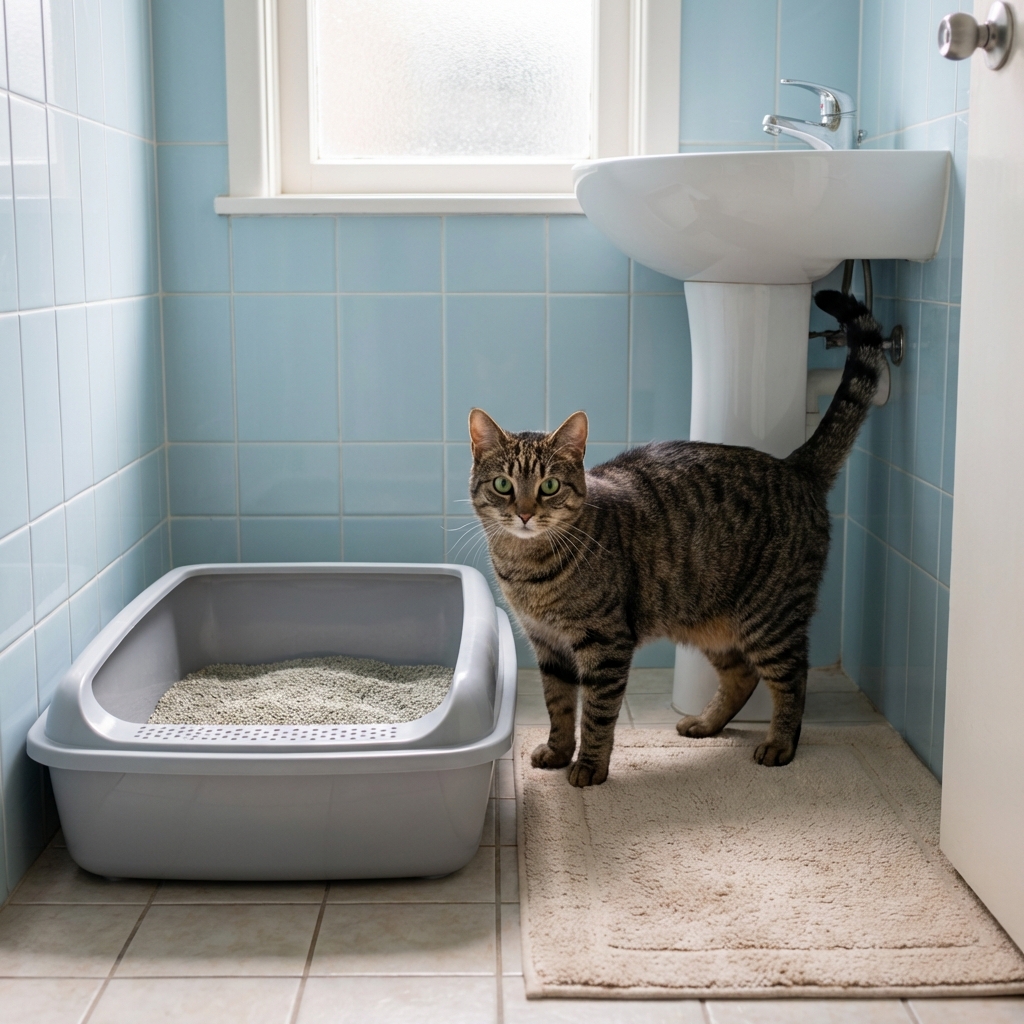
First: When to call your veterinarian
Any sudden change in bathroom habits deserves a medical check, especially if your cat has been reliable with the box until now. Pooping outside the box can be caused by pain, GI upset, or mobility issues. If a cat associates the litter box with discomfort, they may avoid it.
Go to the vet promptly if you notice
- Blood or mucus in the stool
- Diarrhea that lasts more than 24 to 48 hours, or any diarrhea sooner in kittens, seniors, or cats who seem unwell
- Straining, crying out, or frequent trips with little output
- Vomiting, lethargy, reduced appetite, or weight loss
- No stool for 48 hours, or hard, dry stool
- Sudden accidents in a senior cat, especially with stiffness or trouble jumping
Seek urgent care if
- Your cat strains repeatedly with little or no stool (or seems painful while trying)
- Your cat seems very weak, dehydrated, or collapses
- You suspect a foreign body (string, toys, vomiting plus no stool, or sudden severe symptoms)
Tip: If possible, bring a fresh stool sample in a clean container. A fecal test can help identify common intestinal parasites and guide treatment, even though it cannot rule out every cause of GI upset.
Common medical reasons cats poop outside the box
Even when the poop looks “normal,” there can still be an underlying health issue. Some of the most common medical culprits include:
- Constipation from dehydration, low fiber, pain, or underlying disease. Cats may leave small hard stools outside the box or avoid the box after straining.
- Diarrhea or inflammatory bowel disease (IBD) where urgency makes it hard to reach the box in time.
- Parasites like roundworms, hookworms, Giardia, or coccidia, especially in kittens or newly adopted cats.
- Food intolerance or diet changes that upset the gut. Even a “small” switch can trigger loose stools.
- Arthritis or mobility pain in older cats that makes stepping into a high-sided box uncomfortable.
- Anal gland or rectal discomfort (less common in cats than dogs, but possible).
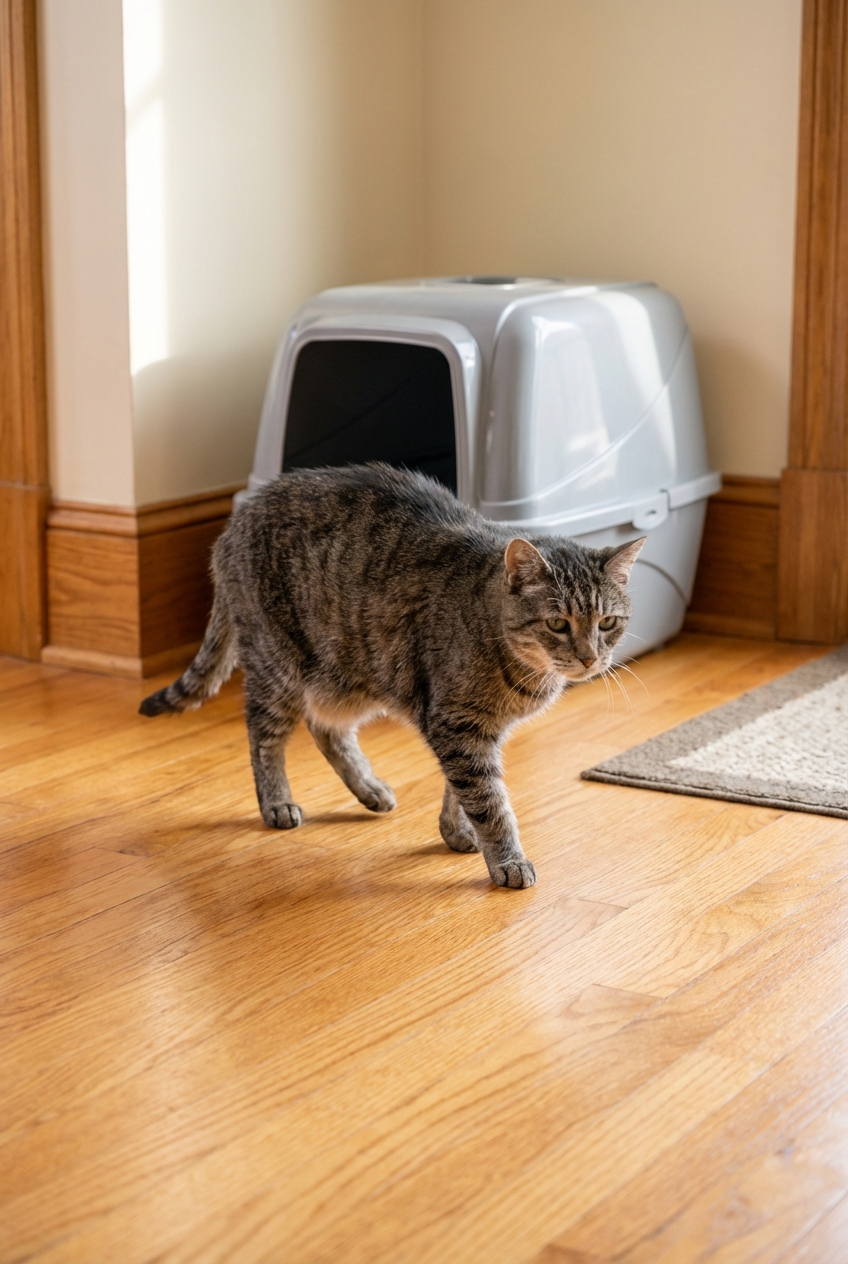
If your vet rules out illness, your next best step is to treat this like a litter box set-up problem until proven otherwise.
The litter box setup is often the real issue
Cats are wonderfully particular. A litter box that seems “fine” to us may be a dealbreaker to them. Here are the most common setup problems I see in homes.
1) The box is not clean enough
Many cats refuse a box that smells used. Some will poop beside the box as a protest, not out of spite, but because the box feels unacceptable.
- Scoop at least once daily (twice is even better in multi-cat homes).
- Wash the box with mild soap and water every 1 to 2 weeks.
- Avoid strong cleaners. Heavy fragrances can drive cats away.
2) Wrong litter texture or scent
Many cats prefer an unscented, fine-grained clumping litter because it feels natural under their paws. Some cats strongly dislike scented litter and will avoid the box when the smell changes.
- Try switching to an unscented litter and give it 1 to 2 weeks.
- If you must change litter, do it gradually by mixing old and new.
3) Box location and privacy
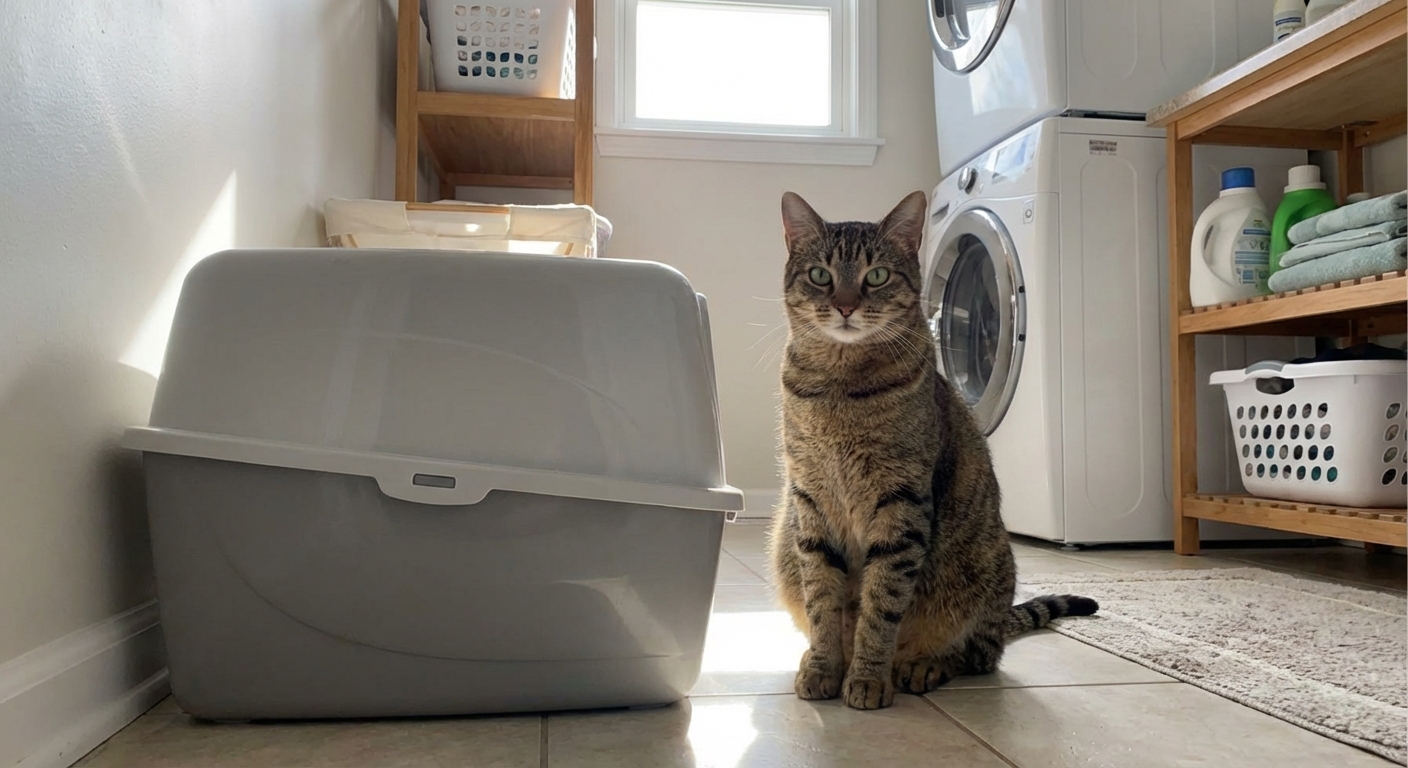
A litter box needs to be easy to access and feel safe. If the box is next to a noisy washer, in a high-traffic hallway, or where another pet ambushes the cat, accidents are more likely.
- Choose a quiet spot with a clear escape route.
- In multi-level homes, put a box on each level.
- Keep boxes away from food and water bowls.
4) Covered boxes and liners can backfire
Some cats love a covered box. Many do not. Covers reduce ventilation and can make odors stronger inside the box, and some cats dislike feeling “trapped” with only one way out. Liners can also bunch up or snag claws, which some cats hate.
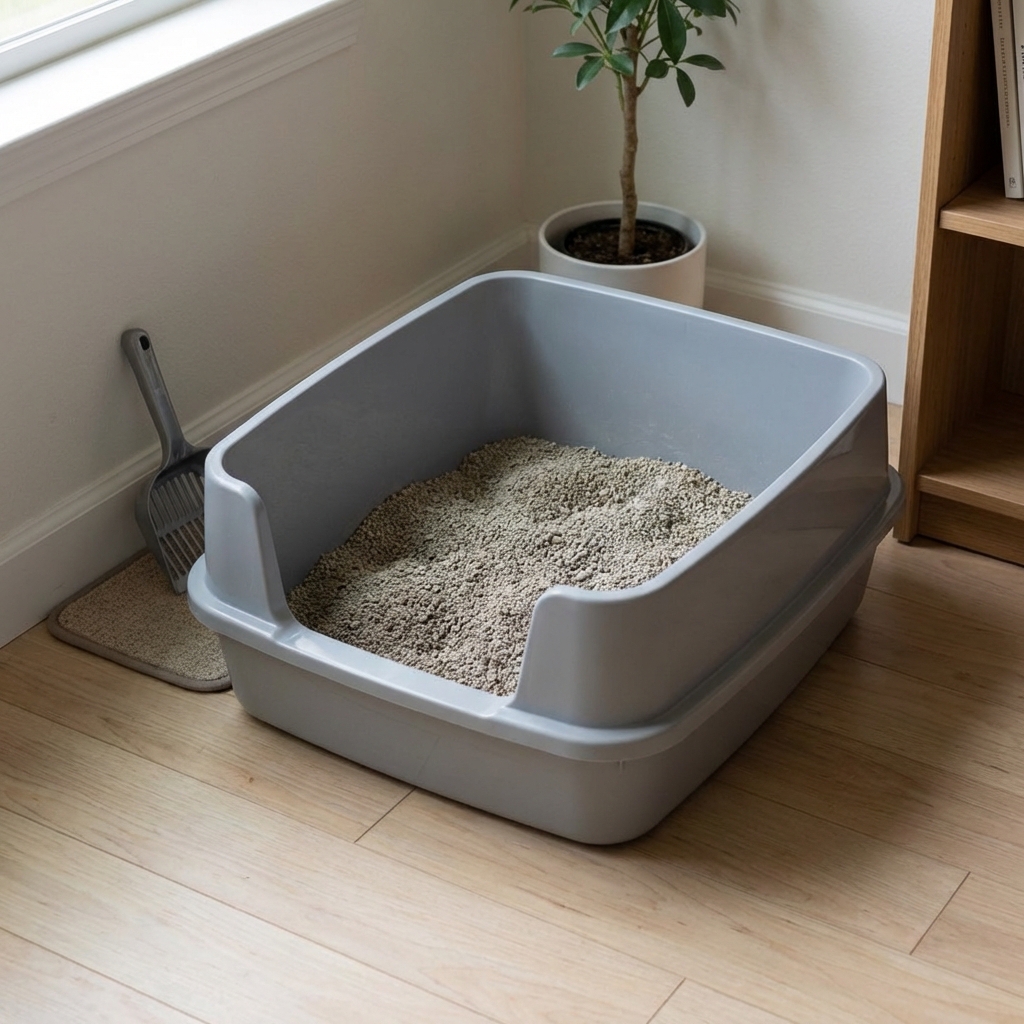
If your cat is pooping outside the box, consider a large, uncovered box as a reset.
5) The box is too small or hard to enter
A good rule of thumb is that the box should be about 1.5 times your cat’s body length (nose to base of tail). Senior cats and large breeds often need extra-large boxes with a low-entry side.
Stress and behavior triggers you might not notice
Cats are sensitive to changes, and stress can show up as litter box trouble. Pooping outside the box is sometimes a communication signal that the environment feels unsafe or unsettled.
Common stressors
- A new cat, dog, baby, or roommate
- Moving furniture or changing routines
- Construction noise or loud visitors
- Conflict between cats (even subtle staring or blocking)
- Neighborhood cats visible through windows
If multiple cats live in the home, tension is a big one. A cat may avoid the box if another cat guards it or has claimed the area.
Simple care tips that work in many homes
Here is a step-by-step approach I recommend because it is practical and tends to get results quickly.
1) Add boxes, do not just move the existing one
The classic guideline is one box per cat, plus one extra. Spread them out, not all in one spot.
- Avoid lining boxes up side by side if one cat tends to block access.
- Avoid dead-end locations where a cat could feel cornered.
- In multi-cat homes, aim for multiple routes in and out of each litter area when possible.
2) Make the preferred bathroom spot “less appealing”
- Clean accidents with an enzymatic cleaner designed for pet waste.
- Block access temporarily if possible.
- Place a litter box near the accident area for a week, then slowly shift it toward your preferred location.
3) Choose a litter that supports comfort
If your cat has softer stools or is older, consider a gentle, low-dust litter. Dust can irritate airways and make the box less inviting. If your cat has mobility issues, use a low-entry box and keep litter depth moderate.
4) Reduce stress with predictable routines
- Feed at consistent times.
- Provide daily play sessions (even 10 minutes helps).
- Create vertical space like cat trees or shelves.
- Use separate resources for each cat: food, water, scratching posts, resting spots, and litter boxes.
- Ask your vet about pheromone diffusers for household stress, especially during transitions.
5) Support gut and joint comfort with your vet’s guidance
Sudden diet changes can cause GI upset. If your vet recommends a diet trial, go slow and follow the plan closely. In some cases, prescription GI diets, added moisture, probiotics, fiber support, stool softeners, or pain control for arthritis can make a big difference. Always use these with veterinary guidance.
6) How to transition food or litter
- Food: Mix in the new diet gradually over 7 to 10 days (longer for sensitive cats), unless your vet instructs otherwise.
- Litter: Mix the new litter in slowly over 1 to 2 weeks, or offer a second box with the new litter so your cat can “vote.”
What not to do
These well-meaning responses often make the problem worse:
- Do not punish your cat. It increases fear and avoidance.
- Do not rub your cat’s nose in it. This does not teach litter habits and can damage trust.
- Do not use ammonia-based cleaners. The smell can resemble urine and encourage repeat accidents.
A quick checklist
- Was this behavior sudden or gradual?
- Any diarrhea, constipation, blood, vomiting, or appetite changes?
- Any recent litter, box, or location changes?
- Is the box large, uncovered, and scooped daily?
- Do you have enough boxes for the number of cats?
- Any new pets, schedule changes, or household stress?
If you work through this list and your cat is still having accidents, your veterinarian can help you go deeper with fecal testing, diet trials, pain management (especially for seniors), and behavior support.
Most cats are not being “bad.” They are trying to be understood. When we meet them halfway with comfort, cleanliness, and calm routines, litter box habits often return.