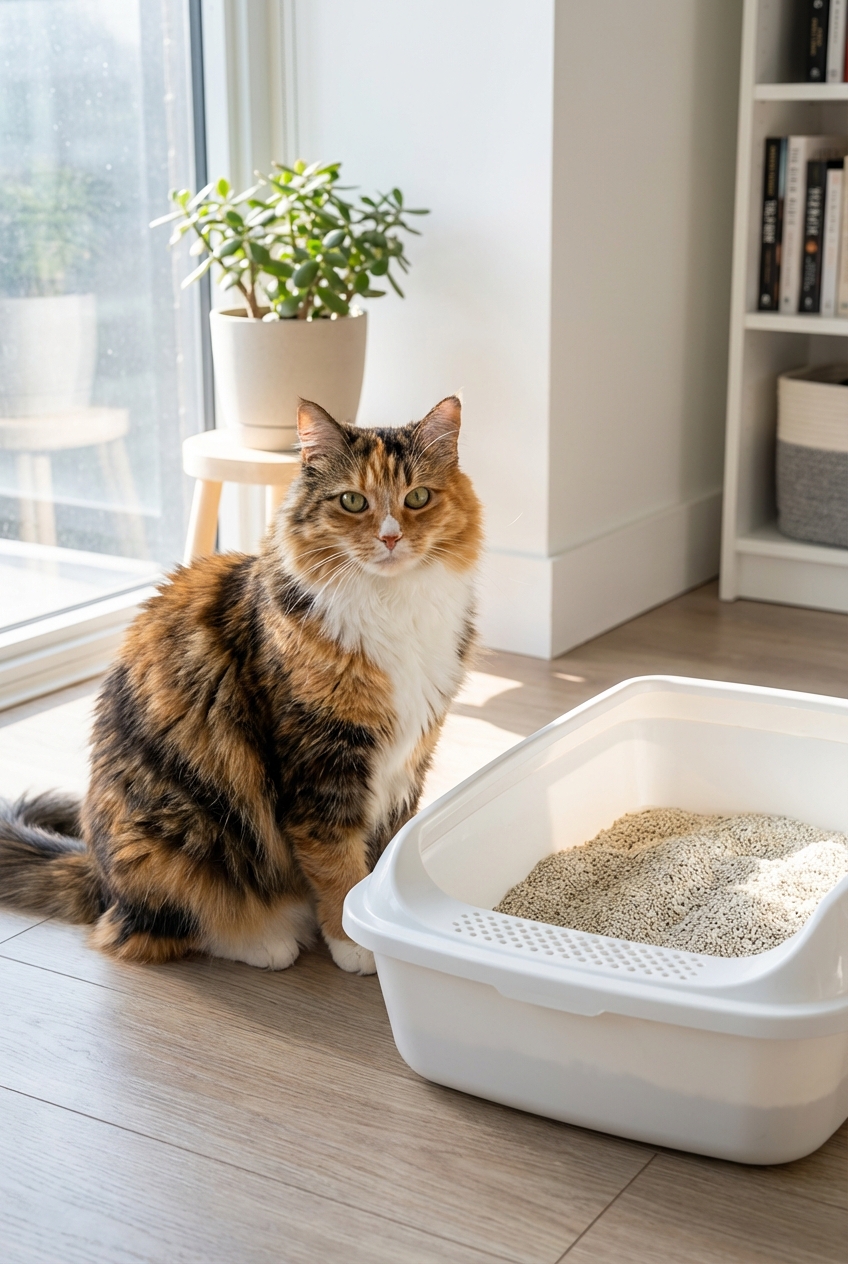
A practical guide to helping a constipated cat at home: hydration tips, plain pumpkin, vet-guided Miralax (PEG 3350), fiber, hairball support, red flags, and...
Article
•
Designer Mixes
Why Cats Poop Outside the Litter Box

Shari Shidate
Designer Mixes contributor
If your cat is pooping outside the litter box, I want you to hear this first: this is very rarely “spite.” Cats are consistent creatures. When they stop using the box, they are usually telling us something is off with their body, their setup, or their stress level. Punishment almost always makes anxiety and avoidance worse.
This guide walks you through the most common, evidence-based reasons cats of all ages poop outside the litter box, what you can do today at home, and when it is time to call your veterinarian.
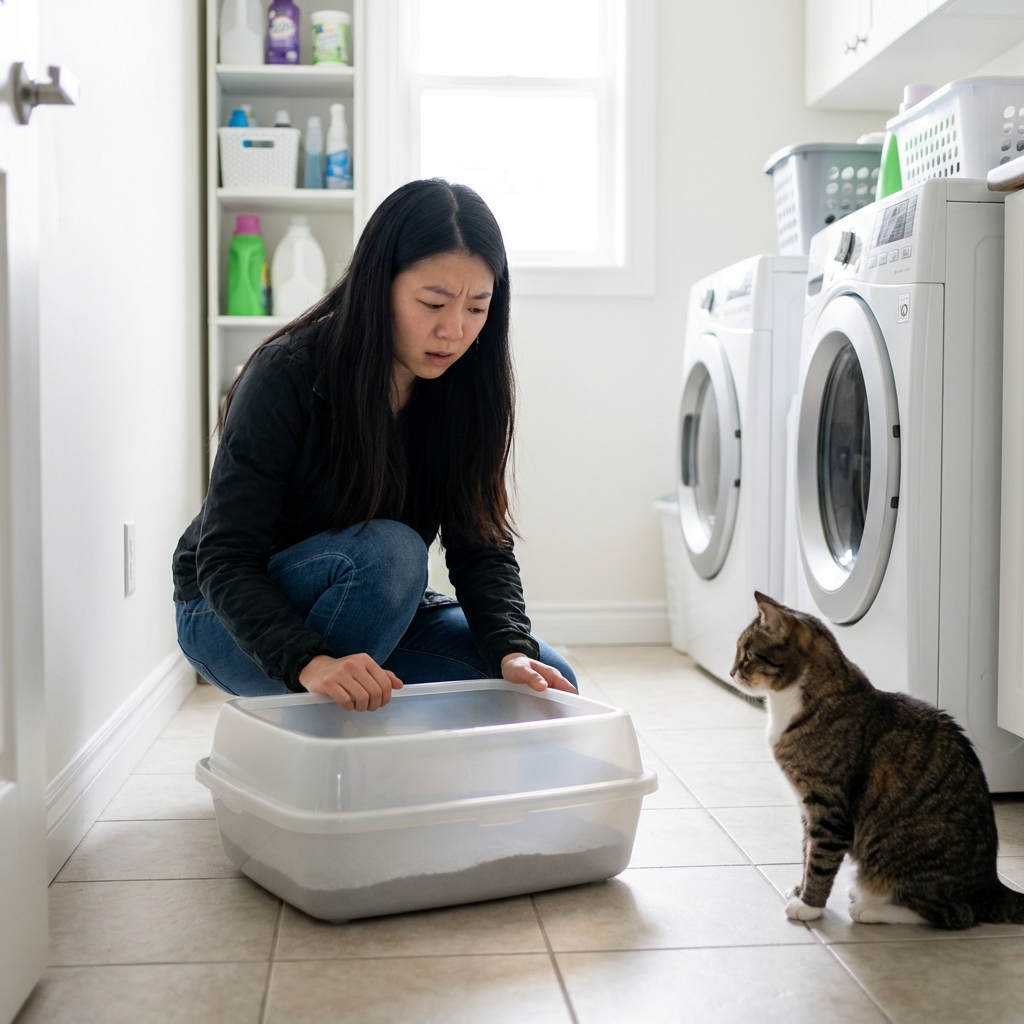
First step: Is this urgent?
Some litter box problems can wait a day or two. Others should be treated as urgent, especially if your cat is older, has chronic disease, or is acting “not like themselves.”
Call your vet ASAP if you notice:
- No poop for more than 48 hours, or any straining, crying, or signs of pain while trying to poop
- Blood in stool, black tarry stool, or sudden severe diarrhea
- Vomiting, not eating, hiding, obvious pain, or a swollen belly
- Very young kittens with diarrhea or dehydration signs (kittens can go downhill quickly)
- Any cat with weakness, weight loss, or new accidents plus increased thirst or urination
Important note: If you are seeing straining in the litter box, also watch for urinary issues. Straining to pee can look similar to straining to poop, and urinary blockages are a true emergency in cats.
Patterns that offer clues
Where and how it happens can hint at the why:
- Right next to the box: often a box issue (too dirty, too small, hard to enter), or pain and urgency where they could not quite make it
- Far from the box: more often stress, avoidance, or access problems (blocked path, stairs, mobility)
- Only poop outside, but pee in the box: commonly constipation, painful stool, or a litter or box preference
- Not covering stool: can be normal for some cats, but can also show discomfort, mobility issues, or feeling rushed or unsafe in the box
Why cats poop outside the box
In veterinary medicine, we generally group causes into three buckets: medical, litter box logistics, and behavior or stress. Often, more than one is happening at the same time.
1) Medical causes (common)
When a cat associates the litter box with pain, they may avoid it even if they were perfectly trained before. Medical causes can also make it hard to “make it in time.”
- Constipation: Hard stools can hurt to pass, and cats may choose a different spot. Dehydration, low activity, obesity, arthritis, kidney disease, and some medications can contribute.
- Diarrhea or colitis: Urgency leads to accidents. Common triggers include sudden diet changes, food intolerance, parasites, stress, or infections.
- Arthritis and mobility problems: Older cats may struggle to step into high-sided boxes or travel to another room.
- Orthopedic or back pain: Hip pain, spine pain, prior pelvic injury, and post-surgical soreness can make squatting or stepping into a box uncomfortable.
- Anal gland or rectal discomfort (less common in cats): Scooting, licking under the tail, or crying out can point to pain.
- Inflammatory bowel disease or other chronic GI disease: These can cause recurring loose stool, mucus, or urgency.
2) Litter box setup issues (common)
Cats are picky for a reason. Their instinct is to eliminate in a place that feels safe, clean, and easy to access.
- Not enough boxes: Many cats do best with one box per cat, plus one extra.
- Dirty box: Some cats will refuse a box that smells “used.”
- Wrong litter: Strong scents, harsh textures, or sudden changes can turn a cat away.
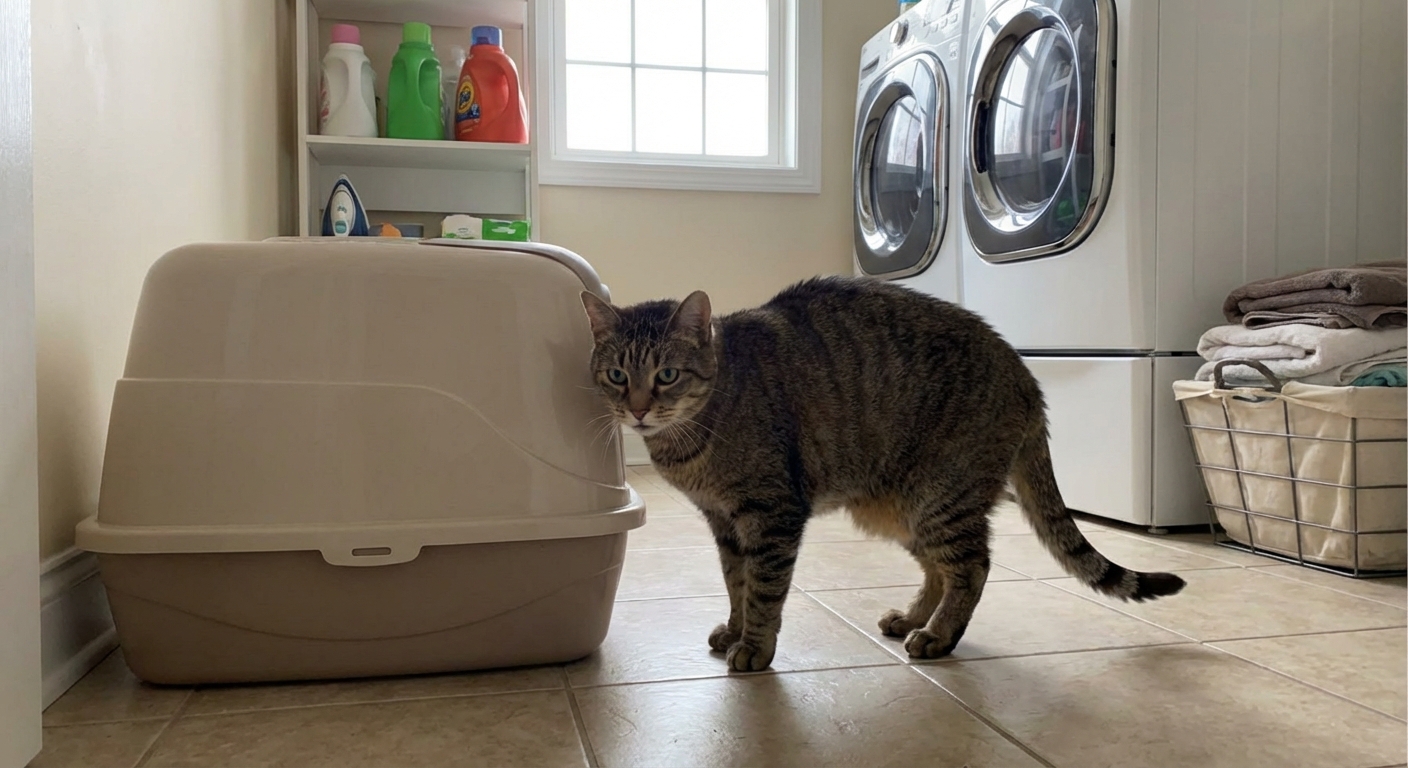
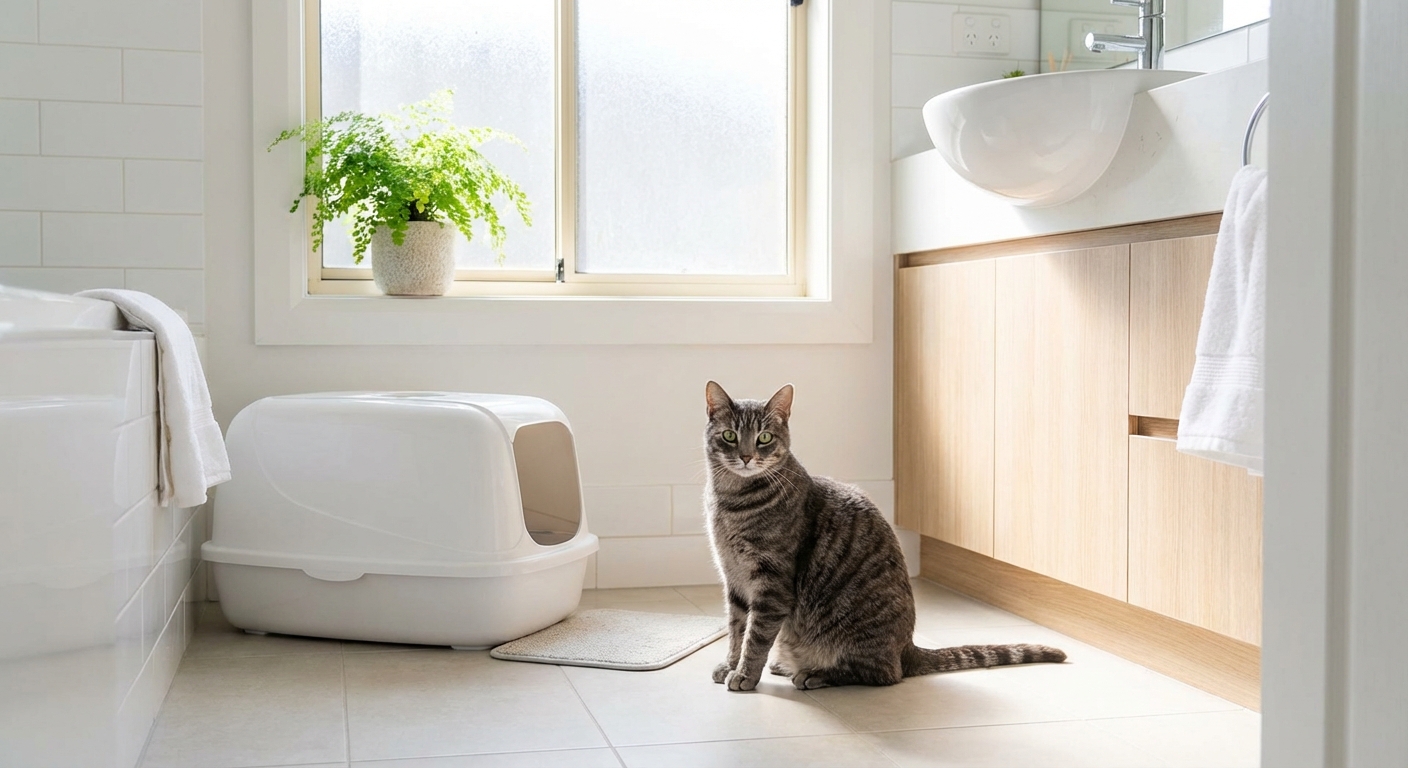
- Box style: Some cats dislike covered boxes because odors build up or they feel cornered. Others like them. If you are unsure, offer one covered and one uncovered to learn your cat’s preference. High sides can be painful for senior cats.
- Bad location: Loud laundry rooms, tight corners, or places where a cat can be ambushed by another pet can cause avoidance.
3) Stress and household changes
Cats show stress through body language and through habits. A new cat, baby, guest, dog, moving furniture, construction noise, travel, or even changes to your work schedule can be enough to disrupt litter box routines.
Multi-cat homes are a big one. Sometimes the issue is not aggression you can easily see. It can be subtle resource guarding where one cat “owns” the hallway to the box, or a cat feels trapped because there is only one way in and out.
There is also “negative-event aversion.” If something scary happened while your cat was in the box (a loud bang, another pet rushing them, a painful bowel movement), they may avoid that box or that location afterward.
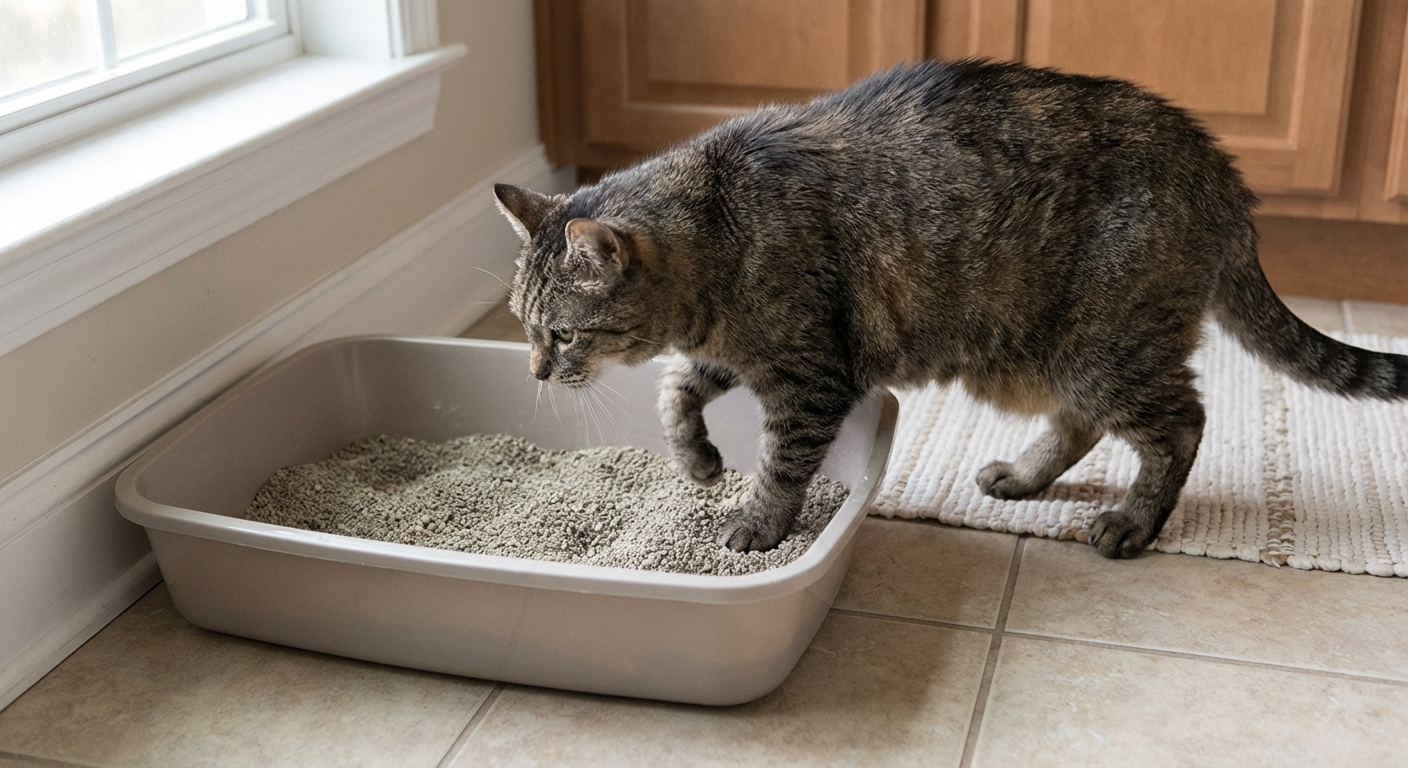
Age by age
Kittens
Kittens usually have three main hurdles: they are learning, they have tiny bladders and bowels, and their stool can change quickly with diet shifts.
- Keep the box very close to where the kitten spends time.
- Use a low-entry box they can easily climb into.
- Stick with one litter type while training. Unscented, fine-grain litters are often best tolerated.
- Ask your vet about stool testing and deworming schedules if diarrhea appears.
Adult cats
In healthy adults, accidents are commonly caused by a box preference issue, stress, or a medical problem like constipation or colitis. Sudden changes deserve attention even if your cat seems “fine” otherwise.
Senior cats
For older cats, think comfort and access. Arthritis, cognitive changes, kidney disease, and dehydration can all play a role.
- Add a low-entry litter box.
- Place boxes on the same floor where your cat spends most of their day.
- Talk to your vet about hydration strategies and pain management if mobility is declining.
What to do today
If your cat is stable and acting normal, you can start with these simple steps while you schedule a vet visit if needed.
1) Reset the litter box basics
- Number of boxes: One per cat, plus one extra.
- Scoop: At least once daily. Twice daily is even better for picky cats.
- Litter depth: About 2 to 3 inches is a good starting point.
- Litter type: Choose unscented. If you need to change, do it slowly by mixing old and new over 1 to 2 weeks.
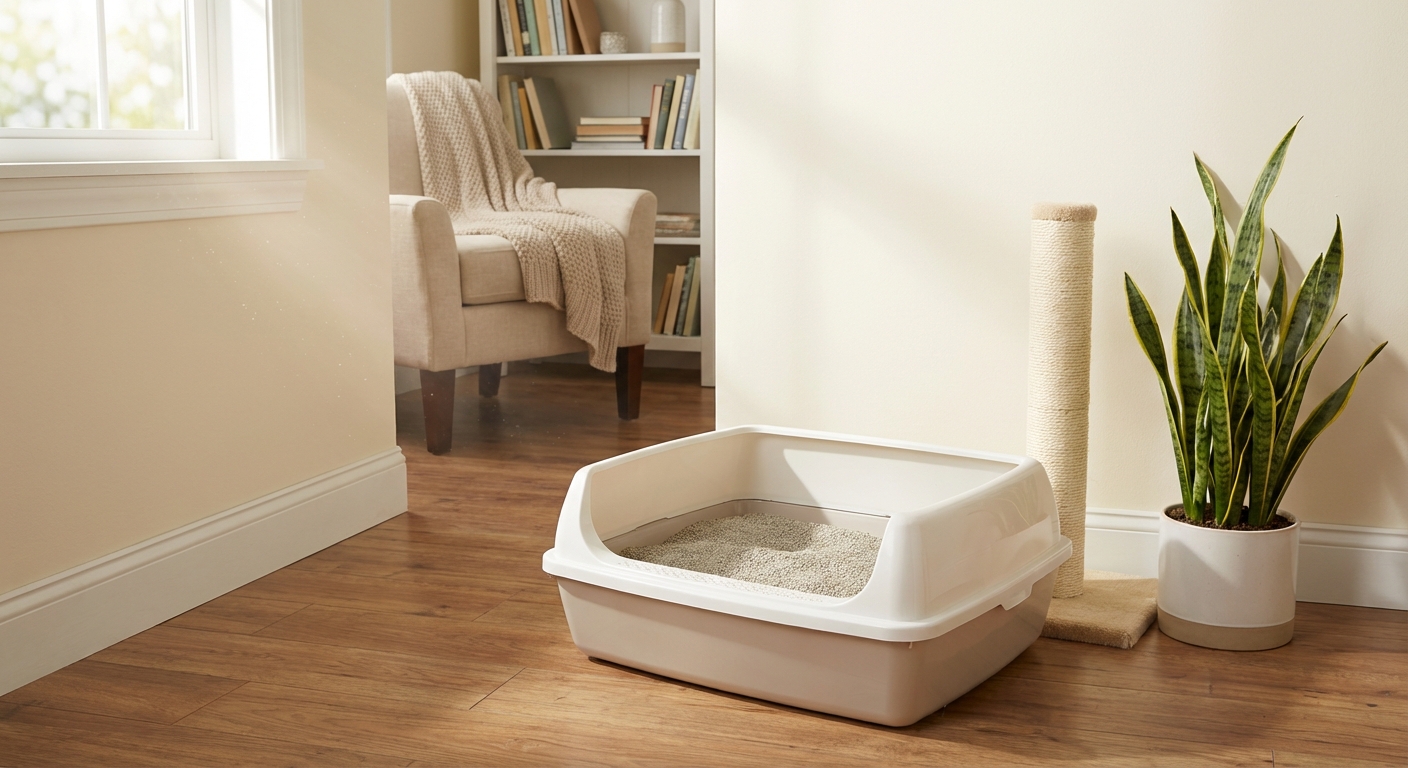
- Box style: Try one large, uncovered box. Many cats prefer open visibility and airflow. If you have a covered box now, consider offering both so your cat can vote with their feet.
- Location: Quiet, easy access, and not near loud appliances. In multi-cat homes, spread boxes out so one cat cannot block them all. If possible, choose spots with more than one escape route so a cat does not feel trapped.
2) Clean accidents the right way
Use an enzymatic cleaner made for pet waste. Regular soap or ammonia-based cleaners can leave smells that encourage repeat accidents.
- For soft surfaces, blot first, then use enzymatic cleaner per label directions. Launder washable items with an enzyme laundry additive if needed.
- If accidents keep happening, use a blacklight at night to find missed spots so you can fully neutralize odors.
After cleaning, temporarily block the area or place a box nearby to break the habit loop.
3) Reduce stress signals
- Keep feeding times and play sessions predictable.
- Add vertical spaces like cat trees or shelves so cats can move around each other.
- Consider pheromone diffusers in the areas where your cat spends time.
- Make sure each cat has separate resources: food, water, resting spots, and litter boxes.
4) What not to do
- Do not punish, yell, or rub your cat’s nose in it. This increases stress and can worsen avoidance.
- Do not confine your cat to a small space unless there is a clean, easy-to-access litter box inside.
- Do not change litter, box style, box location, and diet all at once. Make one or two changes, then reassess.
- Do not give human medications for constipation or diarrhea unless your vet has specifically directed you.
When to involve your vet
If pooping outside the box is new, frequent, or paired with stool changes, a veterinary visit is a smart move. Cats are experts at hiding discomfort, so we often rely on the litter box history as a major clue.
Bring this information
- How long it has been happening and how often
- Stool appearance: hard, small, soft, watery, mucus, blood
- Any vomiting, appetite change, weight change, or behavior change
- Diet details and any recent food or treat changes
- Photos of stool if you can safely capture them
- A fresh stool sample, if your clinic requests one
Common tests your vet may recommend
- Physical exam, including abdominal palpation
- Fecal testing for parasites
- Bloodwork to look for dehydration, inflammation, kidney disease, or metabolic issues
- Urinalysis (especially in older cats, or if there is any straining confusion)
- X-rays if constipation, obstruction, or megacolon is suspected
- Diet trials for suspected food sensitivity
Please avoid giving human medications for constipation or diarrhea unless your vet has specifically directed you. Some products are unsafe for cats or can make the problem worse.
Prevention tips
The goal is to make the litter box the easiest, safest, most comfortable option every single day.
- Keep boxes generous: Bigger is usually better. Many cats prefer a box that is at least 1.5 times their body length.
- Support hydration: Cats evolved to get much of their water from prey, and many have a low thirst drive. Wet food can help some constipation-prone cats. If you use broth, choose low-sodium and make sure it is onion and garlic free.
- Feed for gut consistency: Sudden diet changes can trigger diarrhea. Transition foods slowly over 7 to 10 days.
- Move more: Daily play supports normal gut motility, weight control, and stress relief.
- Plan for aging: Add a low-entry box before your cat is struggling, not after.
Most litter box problems improve fastest when we address both sides: rule out pain or illness, and make the box setup truly cat-friendly.
Quick FAQ
Is my cat doing this out of revenge?
It is very unlikely. Cats repeat what works. If the box feels painful, unsafe, or unpleasant, they choose a different spot.
Should I punish my cat?
No. Punishment increases stress and can make the problem worse. Focus on medical evaluation, environment fixes, and positive routines.
My cat pees in the box but poops outside. What does that mean?
That pattern often points to constipation, stool pain, or a preference issue like litter texture or box size. It is a great clue to share with your vet.