Poop outside the litter box is usually a clue—not a “bad cat.” Learn medical red flags, common causes (pain, diarrhea, stress, box setup), and practica...
Article
•
Designer Mixes
Why Cats Poop Outside the Litter Box

Shari Shidate
Designer Mixes contributor
If your cat is pooping outside the litter box, I know how upsetting and confusing that can feel. The good news is that this behavior is very common, and in most cases there is a clear reason behind it. Many veterinarians and cat behavior professionals treat this as a clue, not a “bad cat” moment. Cats are typically fastidious about elimination, so when they stop using the box, they are usually telling us something about pain, stress, the litter setup, or their environment.
Below are commonly recommended, vet-aligned reasons cats poop outside the box, plus practical care and training tips you can start today.
Quick note: This article focuses on pooping outside the box. If your cat is straining or making frequent trips with little output, that can sometimes look like constipation but may also be a urinary emergency. When in doubt, call your veterinarian right away.
First: rule out medical causes
Any sudden change in bathroom habits deserves a vet check, especially if your cat was reliably using the box before. Cats are experts at hiding discomfort, and litter box avoidance can be a sign that something is off.
Common medical reasons
- Constipation (straining, small hard stools, crying in the box, or frequent unproductive trips)
- Diarrhea (may not make it to the box in time, or may start associating the box with urgency)
- Arthritis or mobility pain (older cats may struggle to step into a high-sided box)
- Inflammatory bowel disease or food sensitivity (chronic soft stool, mucus, intermittent vomiting)
- Intestinal parasites (more common in kittens, newly adopted cats, and outdoor cats)
- Anal gland discomfort (scooting, licking, discomfort when passing stool)
- Other contributors (for example: dehydration, diet changes, new medications, or dental disease that reduces eating and drinking, which can contribute to constipation)
When to call your veterinarian urgently
- No stool for 48 hours, or sooner if your cat seems uncomfortable, is vomiting, stops eating, or is unusually lethargic
- Repeated straining with little or no stool, or crying out in the box (this can be serious and can also be confused with urinary problems)
- Blood in stool, black tarry stool, vomiting, or marked appetite loss
- Sudden behavior change in a senior cat
Helpful tip: Bring a fresh stool sample if you can, and take a quick photo of the stool and location. Also note how long this has been happening, any recent diet or litter changes, parasite prevention status, and whether you saw straining (a short video can help).
References (for further reading): AAFP and ISFM resources on feline house-soiling and litter box management offer guidance that aligns with many of the recommendations below.
Non-medical reasons (and fixes)
Once health issues are addressed, most out-of-box pooping comes down to the box setup, stress, or territory concerns.
1) The box is not cat-friendly
Cats can have strong preferences about texture, cleanliness, space, and privacy.
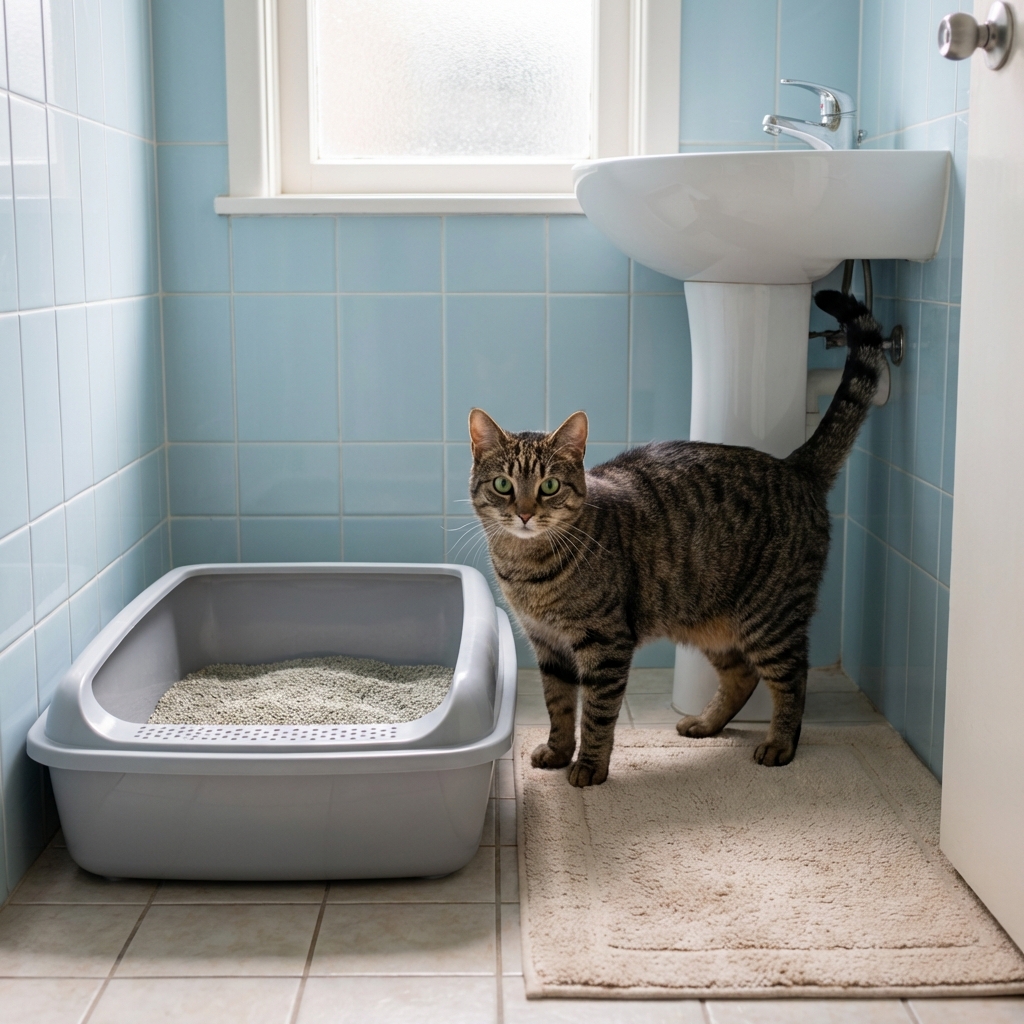
- Too small: Many store-bought boxes are undersized. A helpful rule of thumb is about 1.5 times your cat’s body length (nose to base of tail).
- Not clean enough: Some cats will refuse a box with even one or two stools sitting in it.
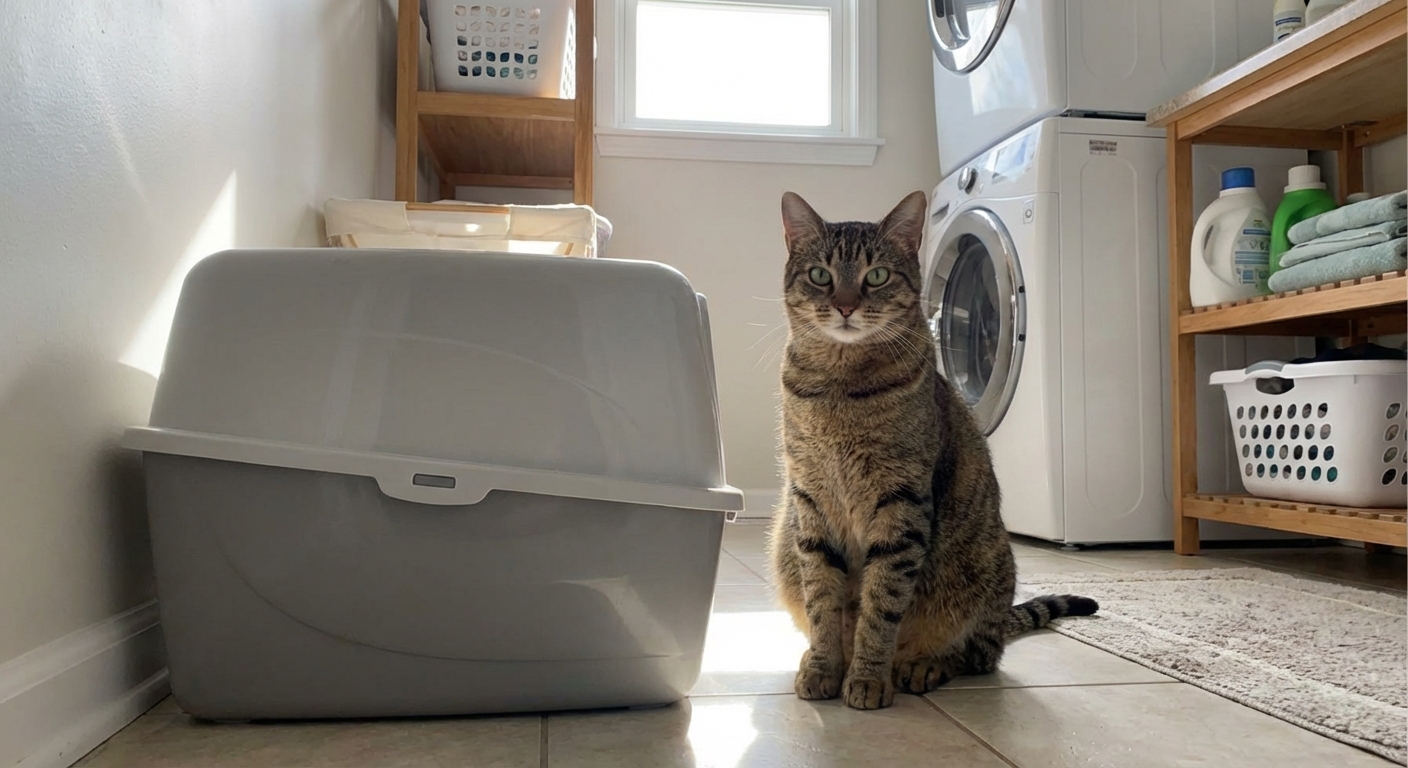
- Covered vs open: Many cats dislike covered boxes because odor builds up and the space can feel confining. Some cats prefer a cover for privacy. If you are unsure, offer one open box and one covered box and see what your cat chooses.
- Liners or scented litter: Fragrance is often a deal-breaker for cats.
Try this first: Use a large, open box with unscented litter and scoop at least once daily, ideally twice.
2) Location problems
Imagine being asked to use the bathroom next to a washing machine that suddenly bangs and beeps. Cats often avoid boxes that feel unsafe.
- Avoid loud laundry rooms, busy hallways, and areas where another pet can ambush them.
- Choose a quiet, low-traffic spot with easy access day and night.
- If you have a multi-level home, provide a box on each level.
3) Not enough litter boxes
A well-supported guideline used by many cat behavior pros is: number of cats + 1 litter boxes, placed in different locations. Sharing can create stress, especially in multi-cat households where one cat quietly guards the box.
4) Litter depth or texture is wrong
Many cats prefer about 2 to 3 inches of litter, but preferences vary. If your cat is pooping right next to the box, it can be a strong hint that the location is acceptable but the litter feel is not.
- Try a “litter cafeteria” by placing two boxes side by side, each with a different unscented litter type (for example: clumping vs non-clumping, fine grain vs larger pellets).
- Keep everything else the same while you test. One change at a time makes it easier to identify what your cat prefers.
5) Stress and routine changes
Cats are sensitive to change. New pets, a new baby, visitors, construction noise, moving, or even a schedule change can lead to bathroom behavior changes.
- Provide predictable meal times and daily play sessions.
- Add vertical space like cat trees and shelves to increase security.
- Make sure each cat has separate resources: food, water, beds, and litter areas.
6) Conflict or territory concerns
Pooping outside the box can sometimes be a communication behavior when a cat feels threatened. This is more likely if you notice staring, blocking, chasing, or one cat avoiding certain rooms.
What helps: Spread resources out, add additional boxes, and consider a structured reintroduction if conflict is persistent.
Care and training tips
Training a cat is about making the correct choice easy and the incorrect choice boring, while protecting your cat’s sense of safety.
Step 1: Set up a reset station
- Choose a large open box in a quiet area.
- Add unscented litter, about 2 to 3 inches deep.
- Scoop daily. Wash the box with mild soap weekly. Avoid harsh smells and strong cleaners.
Step 2: Add boxes strategically
If your cat is choosing one particular corner or room, add a box near that spot temporarily. This is not “giving in.” It is meeting your cat where they are, then gradually moving the box a few feet every few days if needed.
Step 3: Clean accidents correctly
- Remove solids, then use an enzymatic cleaner designed for pet waste.
- Avoid ammonia-based products, which can smell like urine and encourage repeat visits.
- If possible, block access for a couple of weeks or place a food bowl there. Many cats are less likely to eliminate where they eat.
Step 4: Skip punishment
Do not yell, rub a cat’s nose in it, or chase them to the box. Punishment increases fear and can worsen the problem. Instead, reward success with calm praise and a small treat when you see your cat use the box.
Step 5: Make it easy for seniors
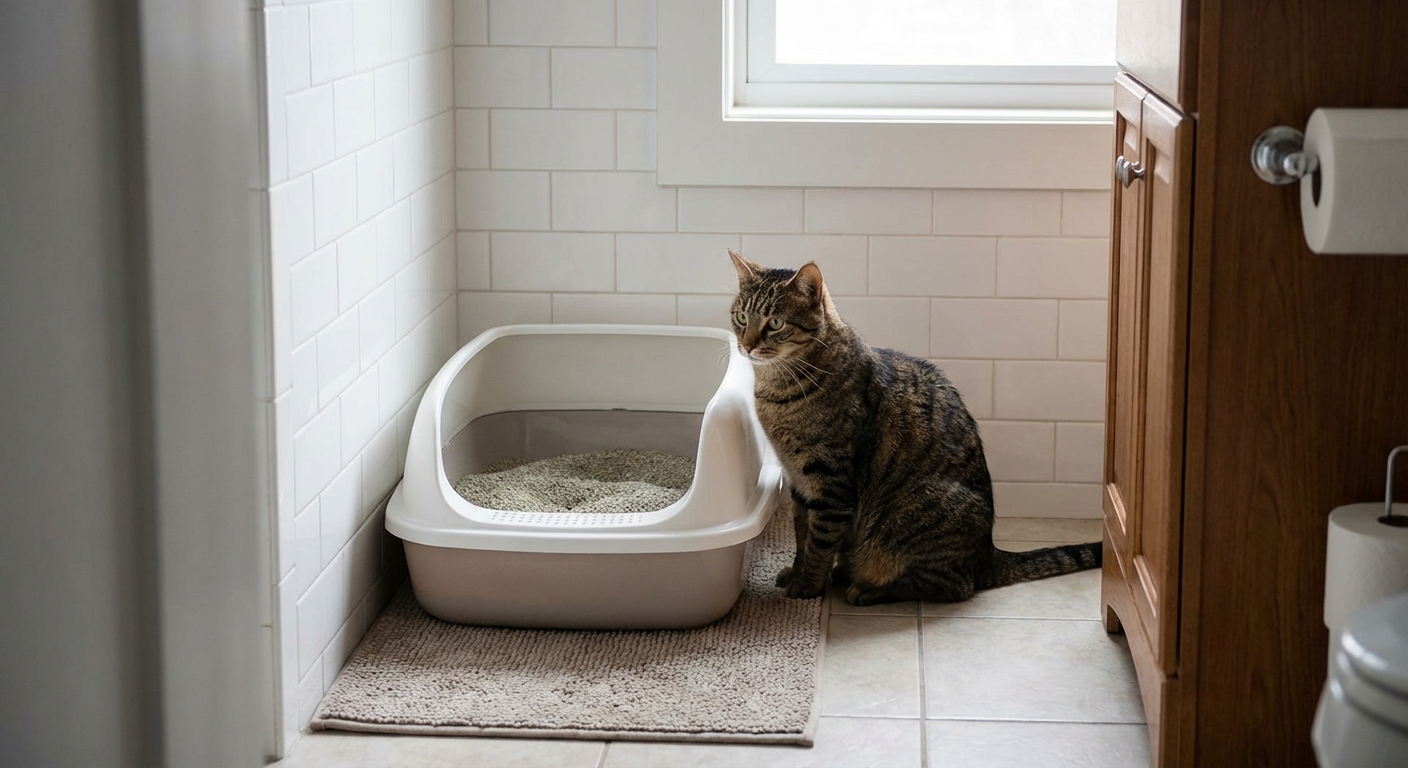
- Use a low-entry box or a storage tote with a cut-out doorway.
- Add a runner or non-slip mat for traction.
- Keep boxes on the main living level to reduce stair climbing.
Step 6: Support healthy stools
Digestive discomfort can drive litter box avoidance. Ask your veterinarian whether your cat would benefit from increased moisture (wet food), fiber support, probiotics, or a diet trial. Make diet changes gradually.
When a cat associates the litter box with pain or urgency, they may avoid it. The fix is often part medical, part environment, and part routine.
Step 7: Age and situation considerations
- Kittens: Consider extra boxes, easy access, and parasite screening, especially in newly adopted kittens.
- Adults: Watch for household changes, subtle conflict, and litter preference shifts.
- After surgery or medication changes: Pain, cones, and new meds can affect posture and comfort. A larger low-entry box can help during recovery.
Quick checklist
- Is your cat straining, vocalizing, vomiting, or having diarrhea? If yes, call your vet.
- Did anything change recently: litter brand, box type, location, new pet, new roommate, new medication?
- Do you have enough boxes: cats + 1?
- Are boxes large, accessible, and scooped daily?
- Is there a cat or dog blocking the box path?
- Are accident areas fully cleaned with enzymatic cleaner?
If you have tried these steps for 2 to 3 weeks with no improvement, it is time for a deeper behavior plan with your veterinarian or a qualified cat behavior professional. You do not have to figure this out alone.