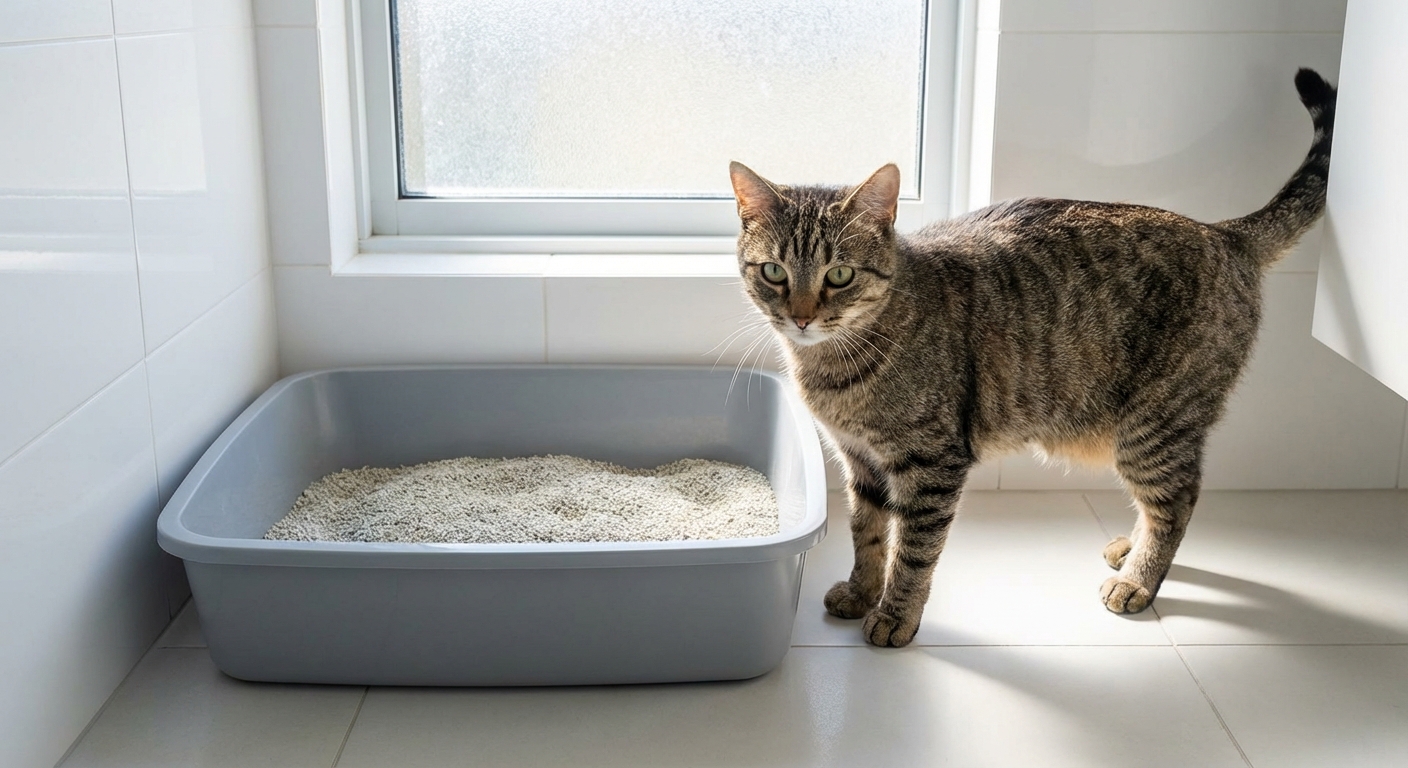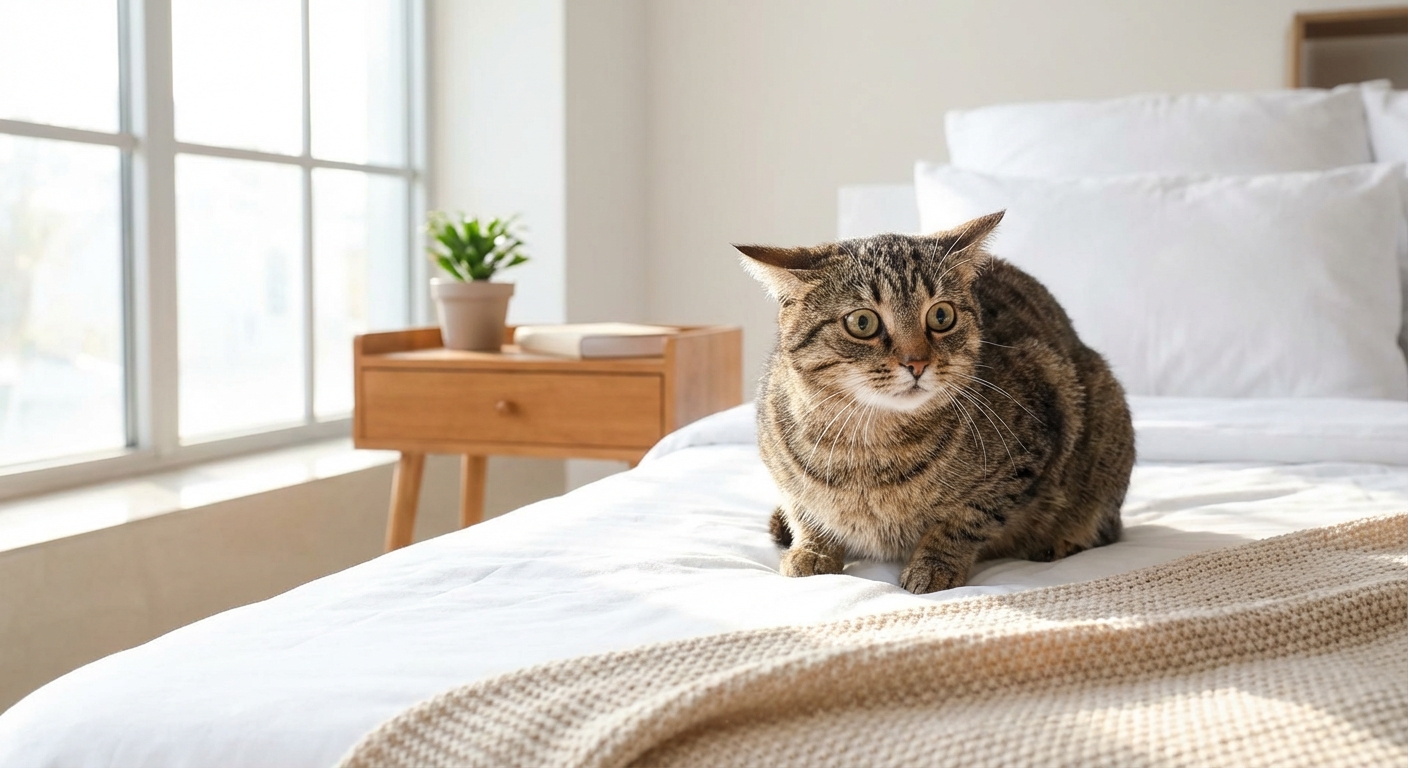
Find out why cats poop on beds and what to do next. Covers vet red flags, litter box reset steps, stress and pain causes, cleaning tips, and family-proof pre...
Article
•
Designer Mixes
Why Cats Poop on the Bed

Shari Shidate
Designer Mixes contributor
Finding cat poop on your bed can feel personal, but in most cases it is not “spite.” As a veterinary assistant here in Frisco, Texas, I can tell you that this behavior is usually your cat’s way of communicating a problem: medical discomfort, stress, litter box aversion, or a change in their environment.
The good news is that once you figure out the “why,” many cats stop quickly with a few targeted changes and, when needed, veterinary care.
Quick triage: A one-off accident can happen. Repeated accidents, or any signs of illness, mean it is time to troubleshoot right away and loop in your veterinarian.
This article is educational and not a substitute for a veterinary exam or diagnosis.
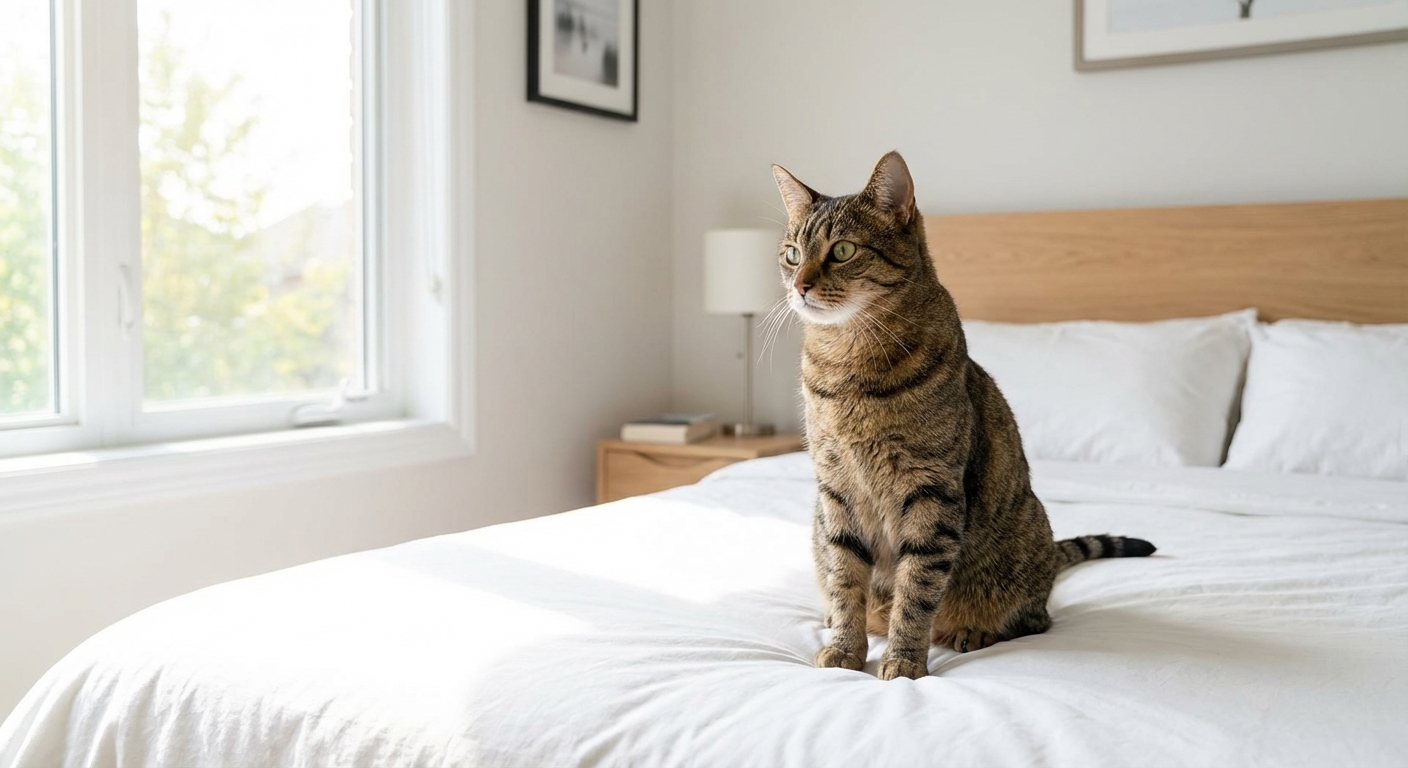
What it often means
Cats are naturally clean, routine-driven animals. When they choose a soft, high-value spot like a bed, it often points to one of these themes:
- Pain or urgency (they could not make it to the box in time, or using the box hurts)
- Litter box aversion (something about the box, litter, location, or cleanliness is unacceptable to them)
- Stress or insecurity (the bed smells strongly like you, which can feel safer)
- Mobility or access issues (especially in kittens, seniors, or cats with arthritis or stiffness)
Let’s walk through the most common causes and what to do next.
Medical causes
If your cat is suddenly pooping outside the litter box, treat it like a health concern until proven otherwise. Many medical issues change stool quality, create urgency, or make squatting painful.
Diarrhea, parasites, and GI upset
Loose stool is harder to “hold,” and cats may go where they are when the urge hits. Bed accidents can happen when they are resting and cannot get to the box in time.
- Possible triggers include dietary changes, food intolerance, stress colitis, intestinal parasites, infections, or chronic issues like inflammatory bowel disease.
- Watch for mucus, blood, increased frequency, appetite changes, or accidents that happen soon after meals.
Constipation and painful pooping
Cats with constipation may associate the litter box with discomfort and avoid it. You might notice small, hard stools, straining, crying, or repeated trips to the box with little output.
For chronic constipation, your vet may discuss underlying problems like dehydration, orthopedic pain, or conditions such as megacolon.
Arthritis, back pain, or neurologic pain
Jumping into a high-sided box, stepping into a hooded box, or walking to a distant litter area can be tough for older cats or cats with back or hip pain. If the bed is easier to access, they may choose it.
Anal gland or rear-end pain
While more common in dogs, cats can have anal sac discomfort, wounds, or inflammation around the rear end that makes toileting unpleasant.
- Signs can include scooting, excessive licking under the tail, swelling, or a strong odor.
Cognitive changes in seniors
Older cats can become disoriented and forget box location or routines, especially at night.
Call your vet promptly if you see: new accidents plus vomiting, lethargy, blood in stool, sudden weight loss, dehydration, repeated straining, obvious pain, or no stool for around 48 hours (sooner for kittens, seniors, or any cat that seems uncomfortable).
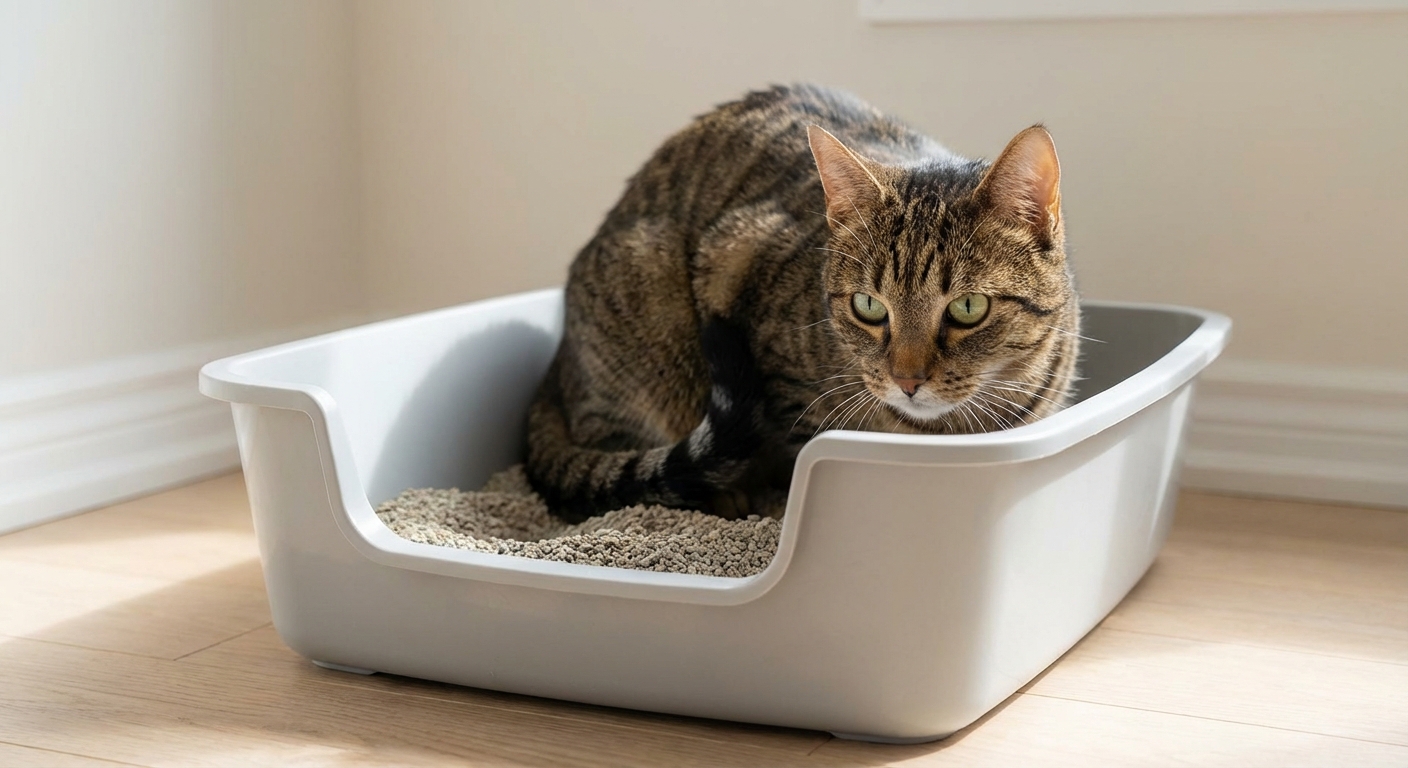
Litter box issues
Even healthy cats will avoid a litter box they dislike. Cats have strong preferences, and small changes matter.
Not enough boxes
A classic rule that works in many homes is: one box per cat, plus one extra. In multi-cat homes, guarding and conflict around the box can be subtle. One cat may block another without you ever seeing a “fight.”
If you have a multi-level home, spread boxes out across rooms and floors. Avoid creating one “litter station” where one confident cat can control access.
Dirty box or strong smells
Many cats will not tolerate a box that is not scooped often enough. If you can smell it, your cat can likely smell it even more.
- Scoop at least once daily. Twice daily is even better.
- Wash the box with mild soap and warm water regularly, and avoid strong fragrances.
Litter texture or scent
Scented litters, rough pellets, dusty formulas, or sudden brand switches can cause refusal. Many cats prefer a fine-grain, unscented litter, but individual preferences vary. If your cat has asthma or seems sneezy, a low-dust option can help.
Box style and size
Many commercial boxes are too small. A good box lets your cat turn fully and dig comfortably. High sides may help with scatter, but can be a barrier for seniors or painful joints.
Location
Cats prefer quiet, predictable locations. Avoid putting boxes next to loud appliances, in tight corners where they feel trapped, or far from where the cat spends time.
Your cat is not trying to ruin your day. They are telling you the litter box setup is not working for them.
Stress and territory
The bed is soft, absorbent, and heavily scented like you. For a stressed cat, it can feel like the safest place in the house.
Common triggers
- New pet, new baby, or visiting animals
- Moving homes or rearranging furniture
- Schedule changes, travel, or you being away more than usual
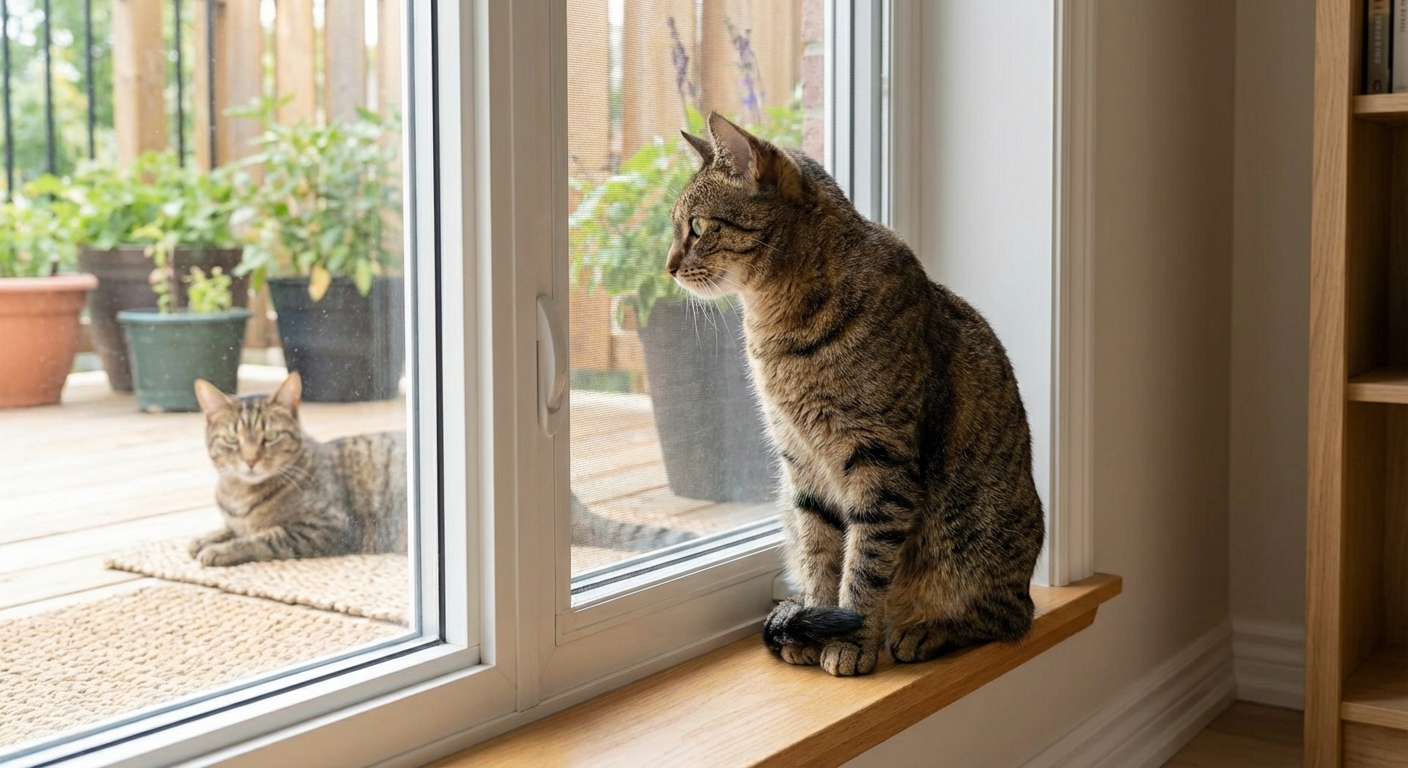
- Outdoor cats visible through windows
- Conflict between cats in the home
Why poop, not just pee?
Urine marking gets the spotlight, but stool can also serve as a “message.” In some cats, defecating on a high-value area is a sign of territorial insecurity or fear. In others, stress triggers GI upset, and the accident happens during rest.
What to do today
1) Protect the bed
- Temporarily restrict access if you can (close bedroom doors, use a baby gate, or keep your cat in a comfortable “safe room” when unsupervised).
- Use a washable waterproof mattress cover and a spare top blanket you can launder easily.
- Make the right choice easy: add a litter box closer to the bedroom or along their usual path.
2) Clean the right way
Use an enzymatic cleaner designed for pet waste. Regular soap may remove the stain but leave odor cues that cats can still detect.
- Avoid ammonia-based cleaners, which can smell similar to urine and may attract repeat soiling.
- Launder bedding thoroughly. If the fabric allows, a warm or hot wash plus fully drying can help remove odors. Follow the care label.
3) Do a fast litter box reset
- Add an extra box in a quiet area today.
- Use an unscented litter, and avoid sudden big changes if your cat is sensitive. If you need to switch litter, mix old and new over 7 to 10 days.
- Try a large, open, low-entry box if your cat is older, stiff, or hesitant.
- Scoop daily and keep the area calm.
4) Lower stress
- Keep routines predictable: feeding, play, and sleep schedules.
- Add vertical space (cat tree or shelves) to increase security.
- Provide separate food, water, and litter areas in multi-cat homes.
- Consider a feline pheromone diffuser in common areas.
5) Schedule a vet visit if it is new or repeating
If this is new behavior, if it is happening more than once, or if you see any stool changes, a vet exam and fecal test are a smart next step. Catching issues early is often simpler and less expensive.
Long-term prevention
Once the accidents stop, prevention is about keeping your cat’s bathroom routine easy and stress-free.
- Maintain hygiene: scoop daily, deep clean regularly.
- Offer choice: at least two box locations, especially in larger homes and on multiple floors.
- Keep it comfortable: big box, easy entry, and a litter your cat consistently uses.
- Support gut health: avoid sudden diet changes and ask your vet about fiber, hydration strategies, or probiotics if stool is inconsistent.
- Reduce conflict: in multi-cat homes, distribute resources so one cat cannot “own” them.
- Get extra help when needed: if you have tried medical workup plus a solid box reset and stress reduction for a couple of weeks without improvement, talk with your vet about next steps. A feline behaviorist can also help, and some cats benefit from short-term behavior medication as part of a plan.
Quick checklist
- Is this new or sudden? If yes, rule out medical causes.
- Any diarrhea, constipation, straining, blood, vomiting, or appetite change? Vet.
- How many boxes do you have, and are they spread out (especially in multi-cat homes)?
- Has the litter brand, box type, location, or cleaning routine changed?
- Any new stressors in the home, even small ones?
- Is your cat older, stiff, or hesitant to jump or squat?
If you take away one idea, let it be this: behavior is information. When we respond with curiosity instead of frustration, we usually find a fix that helps both you and your cat feel safe again.