Find out why cats pee on beds—FLUTD/cystitis, pain, stress, or litter box issues. Learn emergency red flags, vet tests to request, cleanup tips, and a 7-da...
Article
•
Designer Mixes
Why Cats Pee on the Bed

Shari Shidate
Designer Mixes contributor
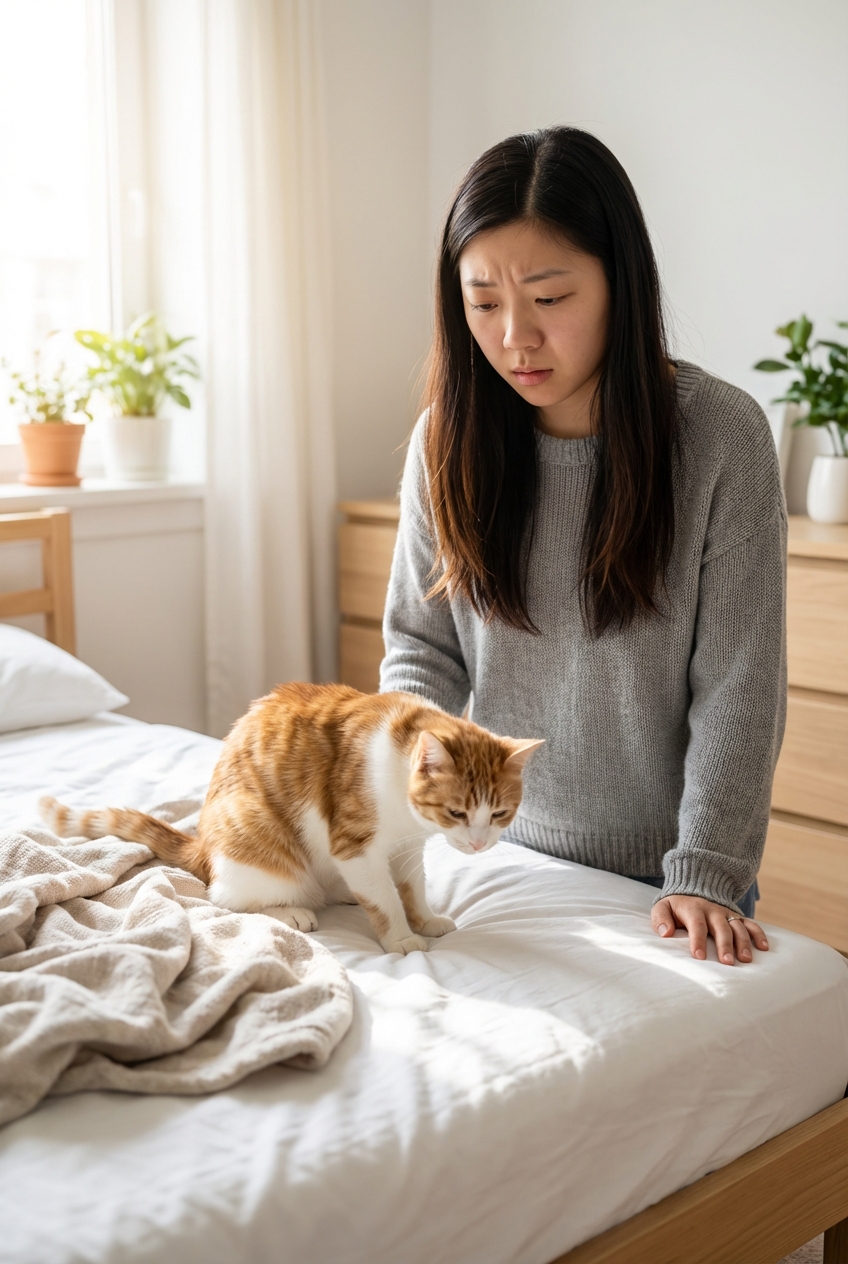
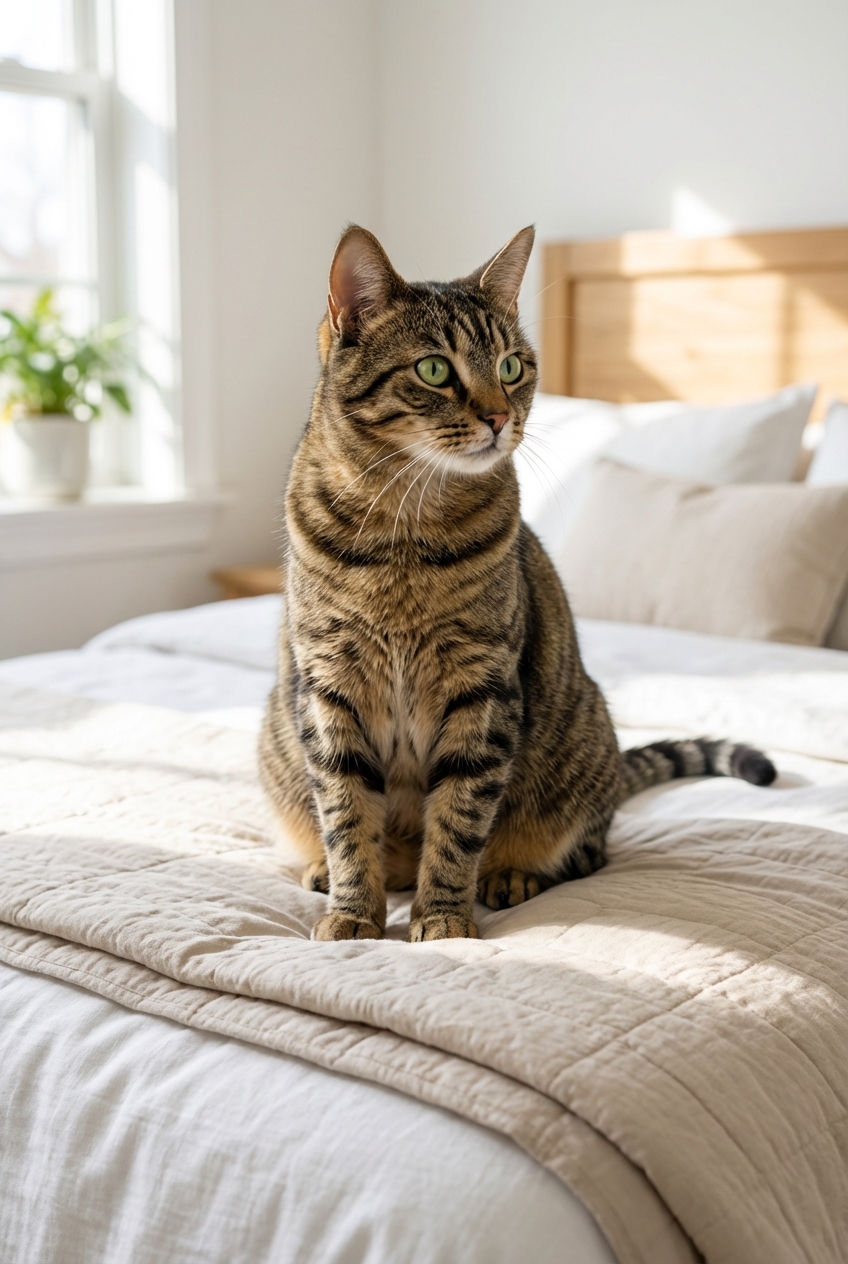
If your cat is peeing on the bed, please know this first: they are not being “spiteful.” In vet medicine, we treat bed-peeing as a big, blinking sign that something is off, either medically, emotionally, or in the home setup. Because the bed smells strongly like you, it can become a comfort spot for an anxious cat. And because it is soft and absorbent, it can become an easy “alternative litter box” when something hurts or feels unsafe.
This guide will walk you through the most common causes, what to do today, and when to get your veterinarian involved. This article is educational and not a substitute for veterinary care.
First, confirm what you are seeing
Before you troubleshoot, it helps to be sure the behavior is actually urination.
- Urinating usually creates a larger wet spot on bedding. The odor may be mild when fresh, but often becomes a noticeable urine or ammonia-like smell as it dries.
- Spraying is usually a smaller amount. Many cats spray standing up with a stiff posture and tail quivering, aiming at a vertical surface. Some cats will spray on bedding if it is piled up or propped. Spraying is commonly tied to stress or territory.
- Other messes can also show up on bedding and may look like “accidents,” such as diarrhea, vomit, or (less commonly in cats) anal sac issues or leakage.
If you are unsure, a quick call to your vet with a description can save a lot of time.
Once you know what you are dealing with, your next step is simple: rule out health issues first.
Medical causes to rule out (most important)
From my experience as a veterinary assistant, sudden peeing outside the litter box is a “rule out medical first” situation, especially if it started quickly or your cat seems uncomfortable. Many medical issues make cats associate the litter box with pain, so they choose a different location next time.
Common medical reasons
- Feline lower urinary tract disease (FLUTD): A broad term that includes bladder inflammation, crystals, and other urinary issues.
- Idiopathic cystitis (stress-related bladder inflammation): Very common in adult cats with lower urinary tract signs, and often triggered by stress changes at home.
- Urinary crystals or stones: Can cause straining, blood in urine, and repeated trips to the box.
- Bacterial urinary tract infection (UTI): Possible, but true bacterial UTIs are more common in older cats or cats with underlying conditions. Many “UTI-like” signs in otherwise healthy adult cats are actually sterile inflammation (like idiopathic cystitis).
- Kidney disease: Increased urination and thirst may lead to accidents.
- Diabetes: Can increase urine volume and accidents outside the box.
- Hyperthyroidism: Common in senior cats and can increase thirst and urination.
- Arthritis or pain: Cats may avoid a box with high sides or a location that requires stairs.
- Constipation: Straining, discomfort, or box avoidance can look like a urinary issue at home and may contribute to accidents.
Red flags that need urgent veterinary care
Call your veterinarian promptly if you notice any of the following:
- Straining to urinate or crying in the litter box
- Very frequent trips with little or no urine produced
- Blood in the urine
- Lethargy, vomiting, hiding, or loss of appetite
- Male cats with any signs of blockage (this can become life-threatening quickly)
If you suspect a blockage (repeated straining, little or no urine, worsening distress), do not wait for a regular appointment. Go to an emergency veterinarian immediately.
What your vet may recommend: a urinalysis, urine culture (if infection is suspected), and sometimes bloodwork or imaging depending on history.
Behavior and environment causes (when health checks out)
If your cat is medically cleared or the issue is ongoing even after treatment, the next step is looking at the home environment and litter box setup. Cats are wonderfully sensitive creatures, and small changes can feel huge to them.
Stress and routine changes
Cats often choose the bed because it smells like you and feels safe. Common stress triggers include:
- Moving homes or rearranging furniture
- New baby, new partner, new roommate
- New pet or neighborhood cats visible through windows
- Construction noises or guests
- Schedule changes that reduce attention or playtime
Litter box problems (a top culprit)
- Box is too dirty: Some cats will not tolerate clumps or strong odors.
- Not enough boxes: A good rule is one box per cat, plus one extra.
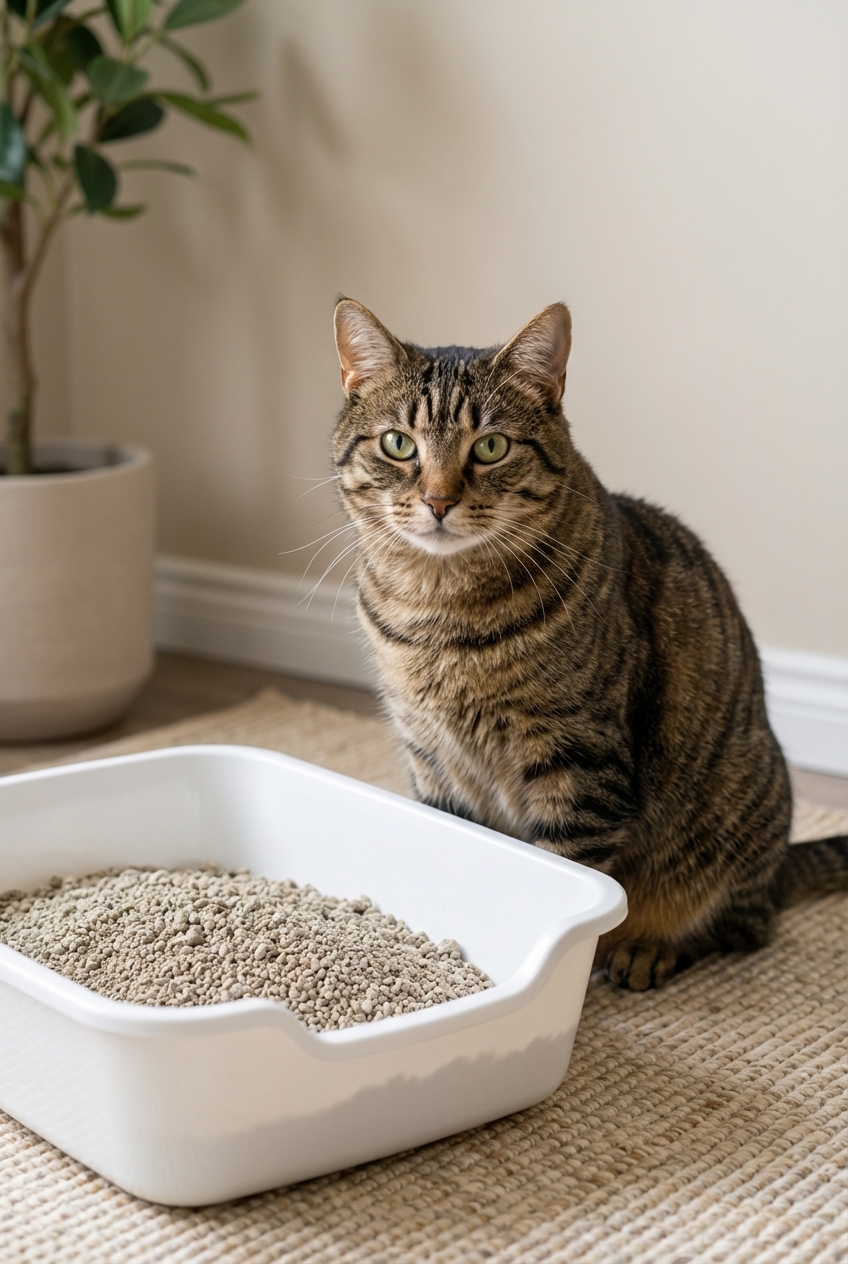
- Box is too small: Many cats do best with a box about 1.5 times their body length (not counting the tail), so they can turn and dig comfortably.
- Bad location: Noisy laundry rooms, near barking dogs, or areas with trapped corners can make cats feel unsafe. Aim for easy access, a clear view, and more than one way out.
- Wrong litter type: Strongly scented litters, pellet litters, or sudden brand changes can be a deal-breaker.
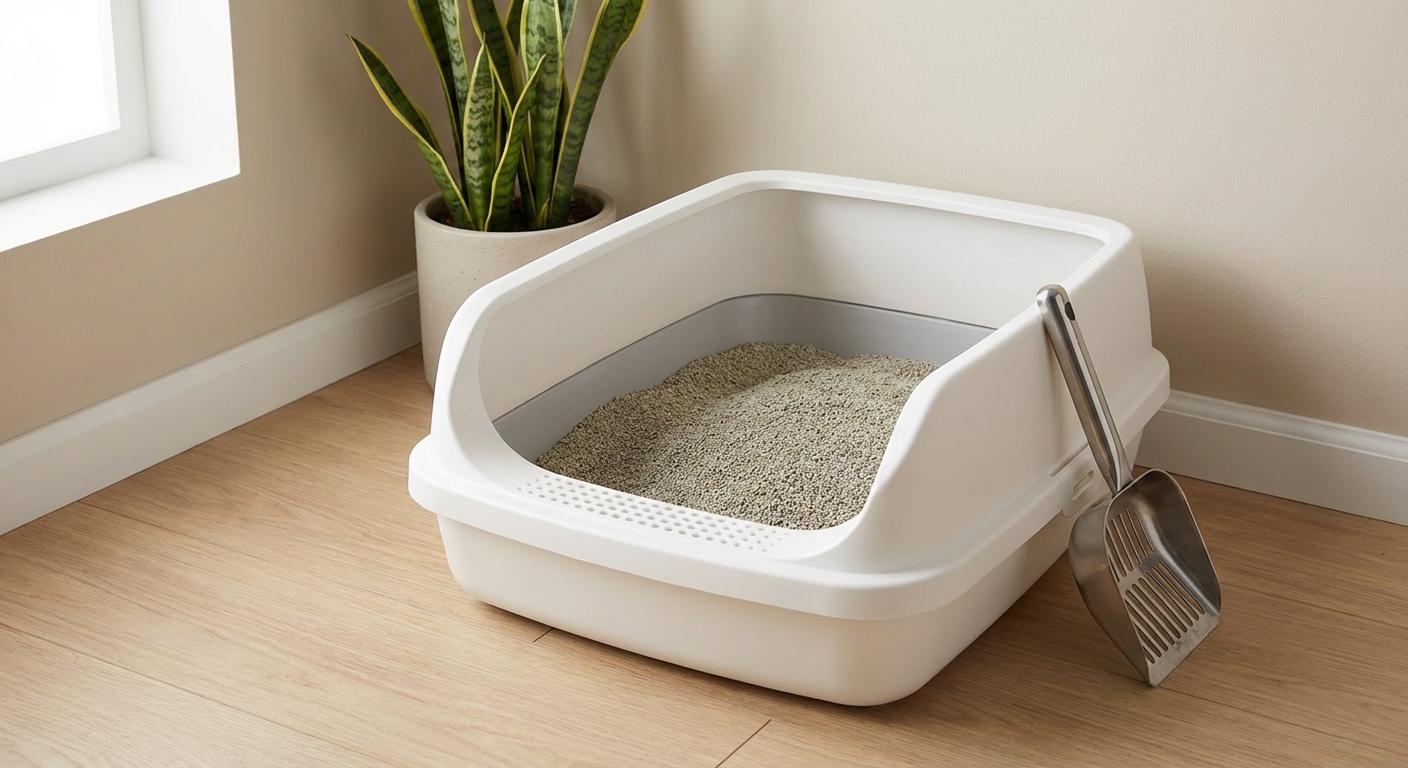
- Box style mismatch: Covered boxes can trap odors. High-sided boxes can be painful for seniors. Some cats prefer large, open, low-entry boxes.
- One per floor: In multi-level homes, add a box on each level so your cat is not forced to travel far.
Territorial marking and multi-cat tension
Even cats who “seem fine” together may be experiencing subtle bullying: blocking hallways, staring, guarding the litter box, or chasing. If the litter box feels contested, the bed may become the alternate.
What to do today: a calm, step-by-step plan
1) Schedule a vet visit if this is new or worsening
If the behavior is new, assume medical until proven otherwise. Bring notes: when it started, frequency, changes at home, diet, water intake, and whether the urine seems large or small in volume.
2) Clean the bed the right way
Regular detergent often leaves behind scent that cats can still detect. Use an enzymatic cleaner designed for pet urine.
- Blot, do not rub.
- Follow product directions and allow enough dwell time.
- Launder bedding and consider an enzymatic pre-soak.
- If urine soaked through, clean the mattress thoroughly or use a waterproof mattress protector afterward.
3) Protect the bed (without fear or punishment)
This is not punishment. It is simply removing the “option” while you reset habits.
- Close the bedroom door when you cannot supervise.
- Use a waterproof cover or mattress protector to prevent repeat soaking.
- Keep extra blankets or comforters put away if your cat tends to target soft piles.
- Consider a temporary litter box near the bedroom if the issue happens at night or during stressful periods, then gradually move it to the preferred location.
4) Upgrade your litter box setup
- Add boxes: # of cats + 1.
- Scoop at least once daily, twice is even better.
- Use a large open box with low entry for seniors.
- Choose an unscented, fine-grain clumping litter (often the most accepted).
- Place boxes in quiet, separate areas so one cat cannot guard them all.
5) Reduce stress and rebuild confidence
- Keep feeding and play on a predictable schedule.
- Add vertical space: cat trees, shelves, window perches.
- Provide private resting areas in multiple rooms.
- Use daily interactive play (5 to 10 minutes) to lower anxiety and build routine.
- Consider a feline pheromone diffuser in the main living area or bedroom.
What not to do
- Do not punish (yelling, spraying water, rubbing nose in it). This increases anxiety and can make the problem worse.
- Do not move the litter box repeatedly in frustration. Make thoughtful changes and give your cat time to adapt.
- Do not use ammonia-based cleaners. They can smell like urine and encourage repeat behavior.
- Do not “wait it out” if your cat is straining or producing little urine.
Special situations
Senior cats
Older cats may have arthritis, cognitive changes, kidney disease, diabetes, or hyperthyroidism. Help them by providing low-entry litter boxes, placing boxes on every level of the home, and offering soft ramps if stairs are difficult.
New cat or recent adoption
New environments can be overwhelming. Start with a smaller “safe room” with litter box, food, water, and bedding. Once litter habits are consistent, slowly expand their space.
Male cats and urinary blockage risk
Male cats are at higher risk for obstruction. If your male cat is repeatedly attempting to urinate with little output, treat it as an emergency and contact an emergency veterinarian.
When to call a veterinary behaviorist
If medical issues have been ruled out and you have optimized the litter box setup but the behavior persists for more than a few weeks, a veterinary behaviorist or a cat-savvy behavior consultant can help you identify triggers and create a tailored plan. This is especially helpful in multi-cat homes with tension that is easy to miss.
Quick checklist
- New peeing on the bed: vet visit first.
- Use enzymatic cleaner and protect the mattress.
- Add litter boxes: cats + 1 (and one per floor when possible).
- Unscented clumping litter and daily scooping.
- Quiet box locations with a clear exit route.
- Reduce stress with routine, play, and safe spaces.
The bottom line: bed-peeing is communication. When we listen with a medical-first, calm approach, many cats improve, though some cases take a few weeks and may need a more structured behavior plan.