Cats don’t pee on the bed out of spite. Learn how to tell urine vs spraying, rule out FLUTD/UTIs, improve litter box setup, reduce stress, and clean properly.
Article
•
Designer Mixes
Why Cats Pee on the Bed

Shari Shidate
Designer Mixes contributor
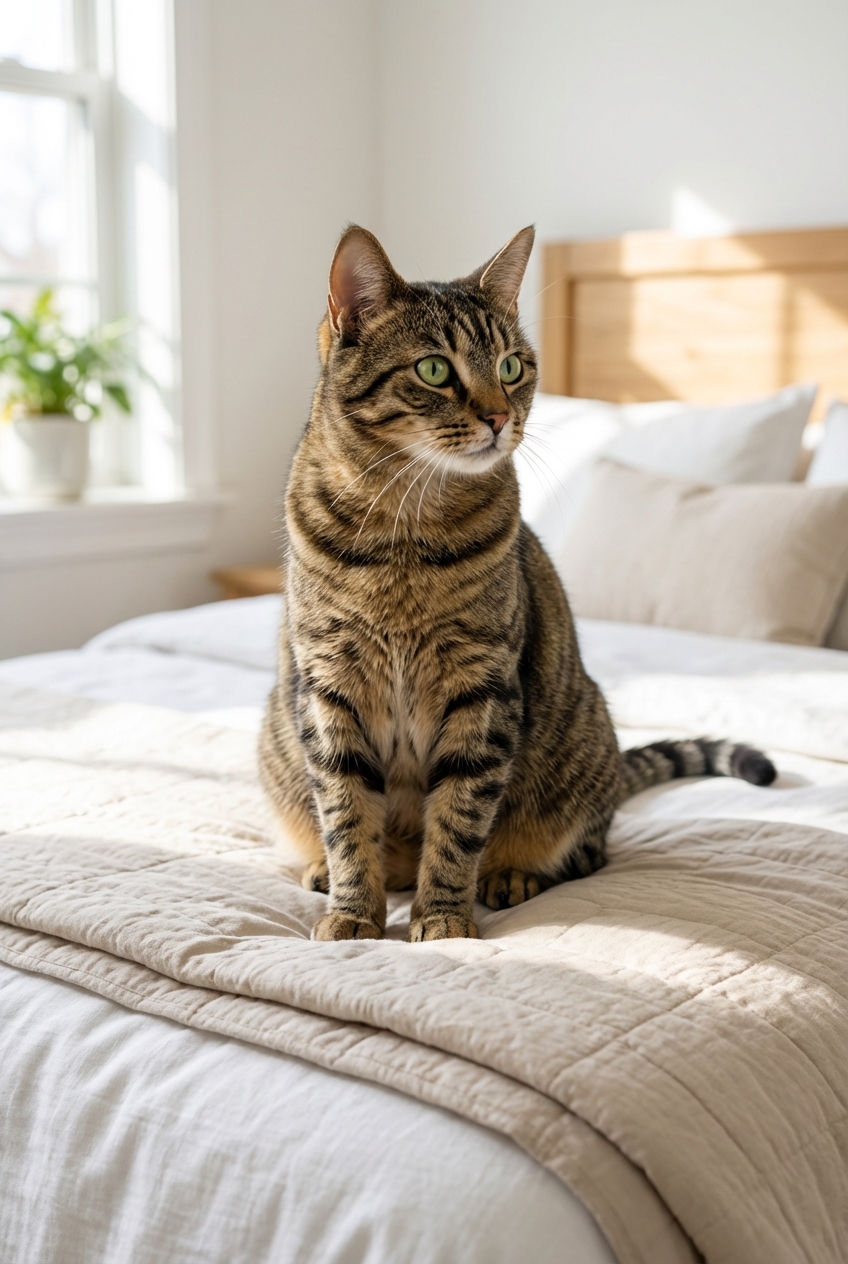
If your cat has peed on your bed, I know it feels personal. It is also one of the most common panic moments I hear from pet parents. But in most cases, this is not “spite.” Cats usually urinate outside the litter box for a reason that falls into two big buckets: a medical problem or a stress or environmental problem.
The good news is that once you figure out the main driver, the next steps become much clearer. Below are practical, evidence-based actions you can start today, plus the red flags that should send you straight to your veterinarian.
First, rule out a medical cause
When a cat urinates on soft items like bedding, we have to think about discomfort and urgency. A bed can feel absorbent, safe, and easy to access when a cat feels like they cannot hold it.
Even if your cat seems “fine,” a sudden change in bathroom habits is a good reason to schedule a vet visit.
Common medical reasons
- Feline lower urinary tract disease (FLUTD) including inflammation of the bladder (often called feline idiopathic cystitis or FIC).
- Urinary tract infection (UTI) which is relatively uncommon in young, otherwise healthy cats, but becomes more likely in older cats, especially with kidney disease, diabetes, or other chronic conditions.
- Urinary crystals or stones which can cause pain and, in male cats especially, can become life-threatening if they block urine flow.
- Kidney disease or diabetes, which can increase thirst and urine volume.
- Arthritis or mobility issues that make getting into a litter box painful.
Call a vet urgently if you notice any of these
- Straining to urinate, crying, or frequent trips to the box with little output
- Blood in urine
- Vomiting, hiding, refusing food
- A male cat that cannot pass urine at all (this is an emergency)
Tip: If possible, take a photo or short video of the litter box behavior and bring a fresh urine sample if your clinic requests one. Diagnostics like urinalysis and sometimes imaging are often what finally answers the question.
If it is behavioral, it is still real
When medical issues are ruled out or treated and accidents continue, the next most common cause is stress, litter box setup, or territory changes. Cats are generally fastidious and may avoid a box that feels unsafe, painful, or unpleasant.
Why the bed, specifically?
- It smells like you. Your scent can be comforting, so a stressed cat may choose the bed.
- It is soft and absorbent. Some cats prefer fabric when the litter texture is uncomfortable.
- It is a safe vantage point. Cats that feel threatened may avoid a litter box located in a corner, a noisy room, or an area where another pet can ambush them.
Daily tips that help prevent bed peeing
Consistency is your best friend here. Think of these as small daily inputs that create a calmer cat and a better litter box experience.
1) Scoop at least once daily
Many cats will avoid a dirty box. In multi-cat homes, twice daily is even better.
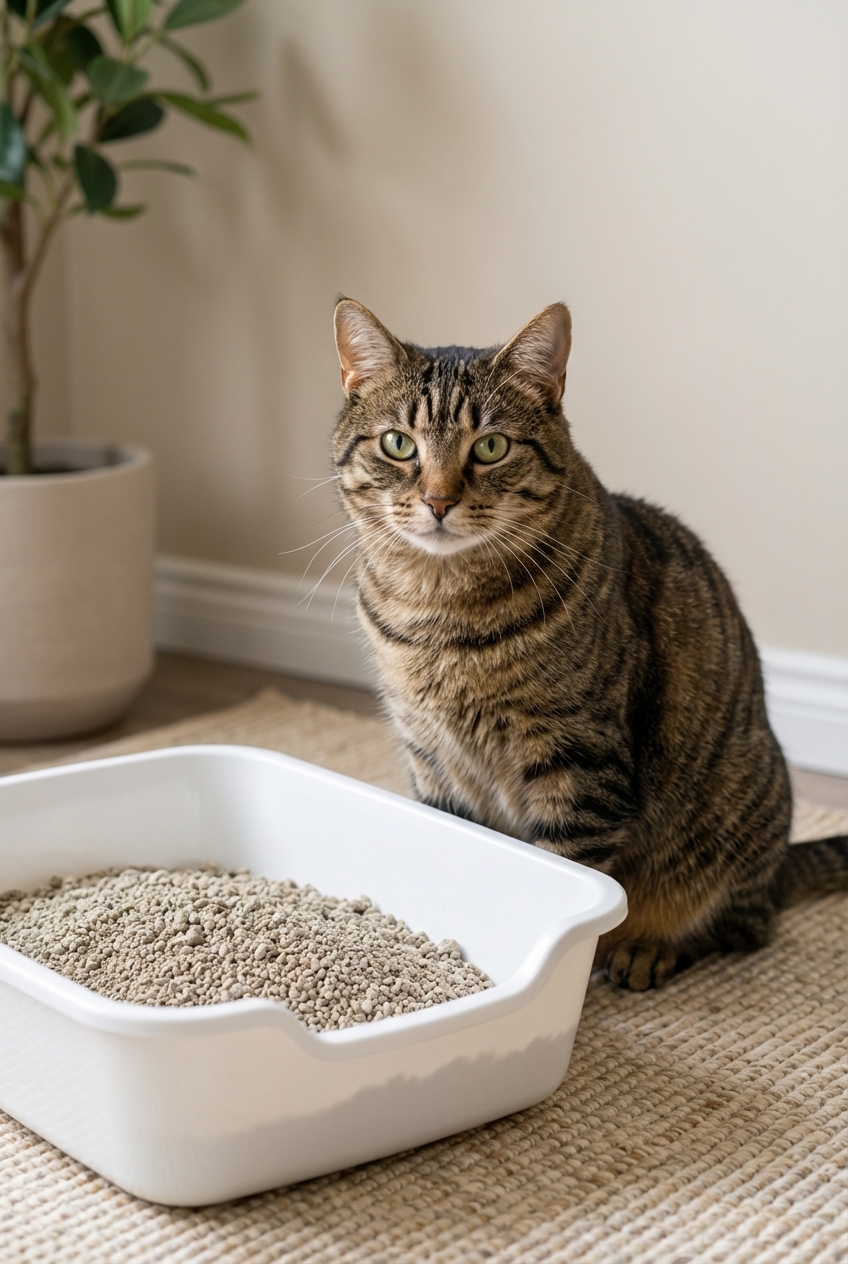
2) Make the litter box easy to use
- Number of boxes: Aim for one per cat plus one extra.
- Box size: Bigger is usually better. A good target is about 1.5 times your cat’s body length (not counting the tail) so they can turn comfortably.
- Location: Quiet, low-traffic, and not next to loud appliances. In multi-cat homes, spread boxes out so one cat cannot guard them all.
- Access: Low entry for seniors or cats with pain.
- Privacy without trapping: Covered boxes can trap odors and make some cats feel cornered.
- Litter depth: Many cats do well with about 2 to 3 inches of litter, but preferences vary.
3) Choose a litter most cats accept
Unscented, clumping litter with a sand-like texture is often the easiest starting point. Strong scents can be a deal-breaker for sensitive cats.
4) Clean accidents the right way
Use an enzymatic cleaner designed for pet urine. Regular soap or vinegar may not fully remove odor markers that tell your cat, “This is a bathroom spot.”
Safety note: Never mix cleaning products. For example, bleach mixed with ammonia can create dangerous fumes.
5) Reset litter box hygiene weekly
In addition to daily scooping, many households do best with a regular “reset.” Dump and replace the litter and wash the box with mild, unscented soap and warm water. Avoid strong fragrances that can turn a cat off the box.
6) Reduce access to the bed while you retrain
- Close the bedroom door when you cannot supervise.
- Use a waterproof mattress protector and wash bedding promptly.
- Create an inviting alternative nearby, like a soft bed or blanket that is yours but not the sleeping bed.
7) Consider a temporary box near the problem spot
If your cat keeps choosing the bed, adding a litter box in or near the bedroom can be a surprisingly effective short-term management step. Once your cat is using it reliably, you can gradually move it to your preferred location.
8) Do not punish
Scolding or rubbing your cat’s nose in it usually backfires. It can increase stress and make litter box avoidance worse. Focus on making the box easier to use and the environment calmer.
Stress triggers to look for
In my experience, bed peeing often starts after a change that humans think is minor. This pattern is also commonly reported in veterinary and behavior settings. For cats, it can be huge.
Common triggers
- A new cat, dog, or baby
- Guests or construction noise
- Moving homes or rearranging furniture
- Changes in schedule, travel, or a new job
- Outdoor cats seen through windows
Simple, daily stress reducers
- Predictable routines: meals and play at the same times each day.
- Play therapy: 10 to 15 minutes of wand-toy play, then food or a treat to “complete the hunt.”
- Vertical space: cat trees or shelves so your cat can feel secure.
- Safe zones: one quiet room with a box, water, and a resting spot.
If there is conflict between cats, add more litter boxes and separate key resources (food, water, resting spots, and scratching areas) so one cat cannot control everything. Watch for subtle bullying like blocking hallways, staring, swatting, or preventing access to the box.
Marking vs peeing
Yes, because the plan can change.
- Urinating is typically a full puddle on a horizontal surface, like bedding.
- Spraying is often a small amount on a vertical surface, like a wall, usually with a raised tail and twitching.
Spraying is more associated with territorial stress and social tension. Urinating on the bed is more often litter box aversion, anxiety, or a medical issue.
These patterns are not perfect. Some cats squat-spray, and some accidents do not follow the classic rules. Your veterinarian can help confirm what is going on.
When to get extra support
If you have done the basics for 2 to 4 weeks and your cat is still peeing on the bed, it is time to level up support rather than waiting it out.
Options your vet may discuss
- Pain control if arthritis is suspected
- Urinary diet for crystals or bladder health support
- Hydration strategies like canned food and water fountains
- Anxiety medications for severe stress or persistent inappropriate urination
- Referral to a veterinary behaviorist for complex cases
Bed peeing is a symptom, not a character flaw. With a little detective work and the right plan, most cats can get back to reliable litter box habits.
Quick daily checklist
- Scoop the box (1 to 2 times daily)
- Confirm there are enough boxes in safe locations
- Offer fresh water, consider more wet food
- Do a short play session and reward with a small meal
- Use enzymatic cleaner immediately on any accident
- Track patterns: time of day, stressors, which room, which box
If your cat is straining, vocalizing, or making frequent unproductive trips to the litter box, do not wait. That is a same-day vet situation. For male cats, any concern about a blockage is an emergency.