Cats can’t make enough taurine, so diet matters. Learn AAFCO minimums, top taurine-rich foods (heart, dark meat, seafood), cooking losses, and deficiency s...
Article
•
Designer Mixes
Why Cats Need Taurine

Shari Shidate
Designer Mixes contributor
If you have ever wondered why cat foods talk so much about taurine, you are not alone. Taurine comes up a lot for a reason. It is not a trendy add-on for cats. It is a true nutritional must-have. As a veterinary assistant here in Frisco, Texas, I have seen how the right nutrition can support a cat’s energy, vision, heart health, and overall quality of life.
Let’s walk through what taurine is, why cats cannot live without it, and how to make sure your cat is getting enough.
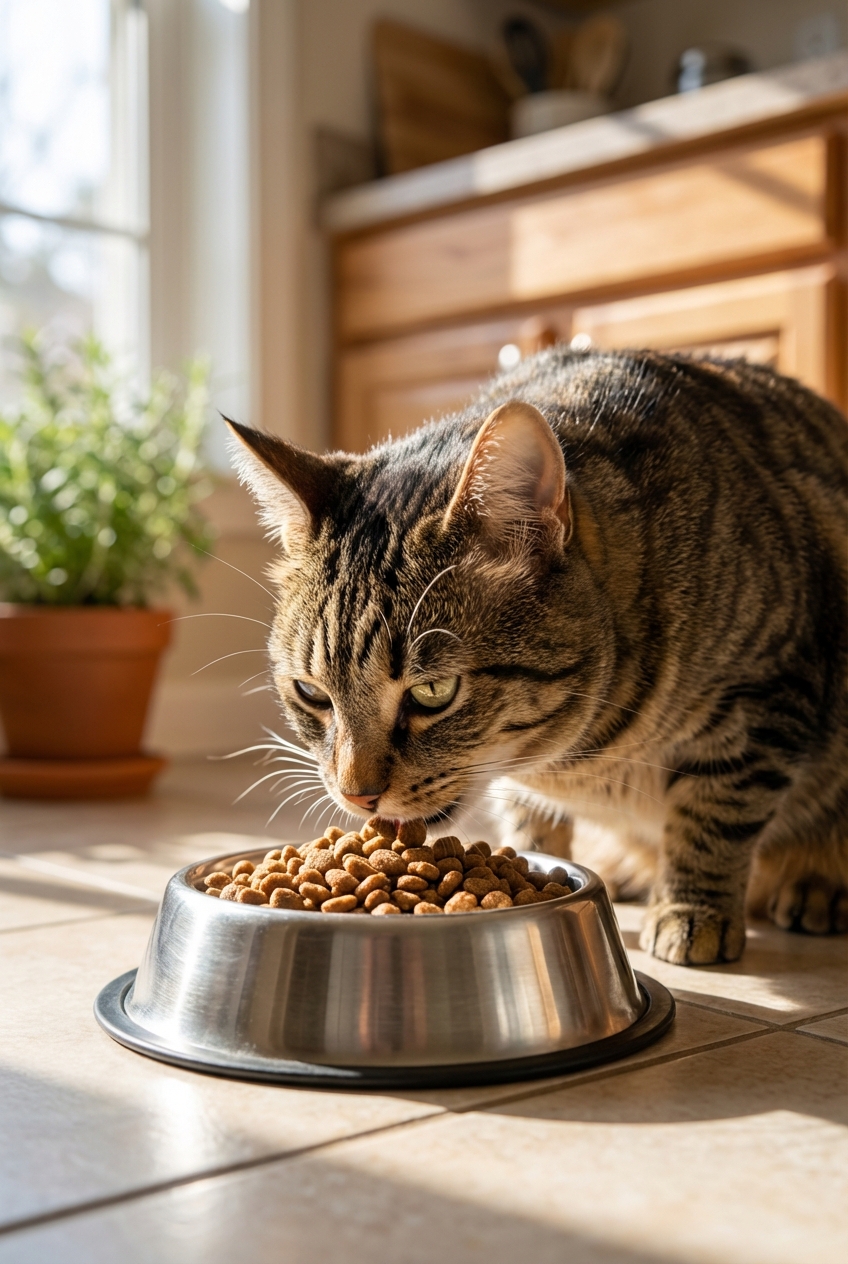
What is taurine?
Taurine is an amino acid-like compound found primarily in animal-based tissues. It is especially concentrated in organs and muscle meats. For cats, it is essential because they cannot reliably make enough on their own.
In simple terms: taurine helps cats’ cells function normally, especially in hard-working tissues like the heart, eyes, and reproductive system.
Why cats need taurine
Cats are obligate carnivores. Their bodies are designed to run on nutrients found in prey animals, and taurine is one of the clearest examples of that.
Cats cannot make enough taurine
Many animals can synthesize taurine from other amino acids (methionine and cysteine). Cats can do this only in very limited amounts. On top of that, cats use taurine to form bile acids for fat digestion, which increases their ongoing taurine losses through the digestive tract. Together, this creates a steady dietary requirement.
What about dogs?
Most dogs can make enough taurine and do not require it as an essential dietary nutrient in the same way cats do. That said, taurine can be conditionally important for some dogs depending on factors like breed, certain heart conditions, and some diet patterns. The big takeaway is still this: taurine is non-negotiable for cats.
It is not optional
For cats, taurine is considered an essential nutrient. Without enough taurine in the diet, deficiency can develop over time, even if a cat appears fine at first.
What taurine does
Taurine has several critical roles. Here are the big ones that matter most for everyday cat health.
1) Heart function
Taurine supports normal heart muscle contraction. A long-term taurine deficiency can lead to a serious condition called dilated cardiomyopathy (DCM), where the heart becomes enlarged and pumps less effectively.
2) Vision and retina health
Taurine is vital for the retina. Deficiency can cause retinal degeneration and can lead to irreversible vision loss. This is one of the reasons taurine is treated as non-negotiable in feline nutrition.
3) Reproduction and kitten development
Taurine supports normal reproduction and healthy fetal and kitten development. Queens (female cats) who are taurine-deficient can have reproductive problems, and kittens may have poor growth and development.
4) Digestion and bile acids
Cats use taurine to form bile salts, which help digest fats and absorb fat-soluble vitamins. Heart and eye issues are the classic deficiency concerns, but low taurine can also make overall nutrition harder for the body to manage over time.
5) Immune and nervous system support
Taurine is also involved in normal immune function and nervous system activity. While heart and eye issues are the most recognized deficiency signs, taurine’s influence is broader than many people realize.
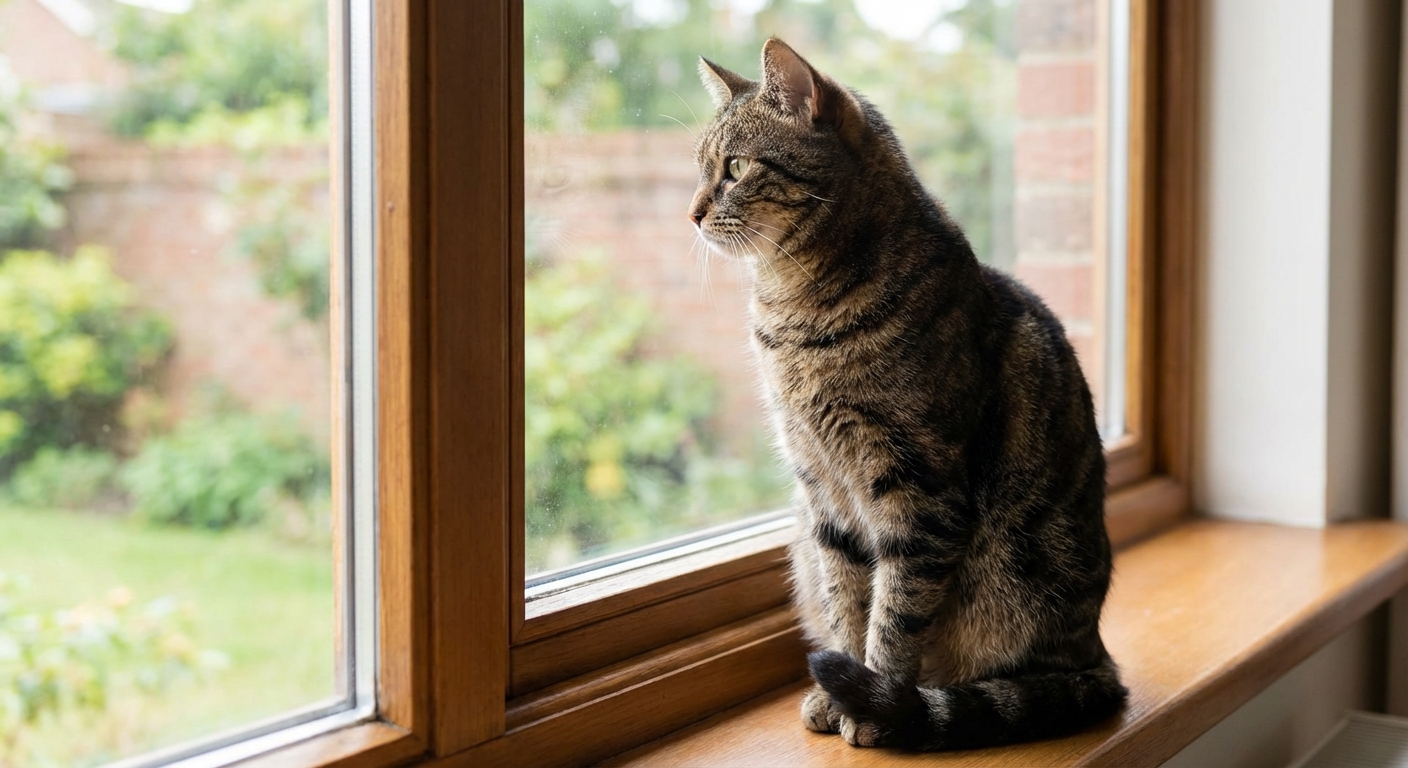
Signs of deficiency
Taurine deficiency is often slow to show up. Symptoms can take months, sometimes longer, depending on the cat and the diet.
Also important: these signs are not specific to taurine deficiency. They can overlap with many other conditions, so a veterinary exam is the safest next step.
Potential signs your veterinarian may look for include:
- Vision changes (bumping into things, trouble tracking toys)
- Heart issues (exercise intolerance, rapid breathing, weakness, fainting)
- Poor growth or development in kittens
- Reproductive problems in breeding cats
- Dull coat or low energy in some cases
Quick scope note: this article is general education, not a diagnosis. If you are worried about symptoms or diet gaps, your veterinarian can help you sort out what is going on.
Where taurine comes from
Animal-based foods
Taurine occurs naturally in animal tissues, especially:
- Heart (very taurine-rich)
- Dark poultry meat
- Fish and shellfish
- Organ meats in general
Plant ingredients do not naturally provide taurine in meaningful amounts. Cats on plant-based diets are at high risk of deficiency unless the diet is precisely formulated and supplemented, with close veterinary guidance and careful monitoring.
Commercial cat foods add taurine
Reputable commercial cat foods are formulated to meet established nutrient profiles (such as AAFCO in the United States). Taurine is typically supplemented to ensure consistency, since processing (especially heat) and ingredient variability can affect taurine levels and availability.
How to pick a taurine-adequate food
If you want a quick, practical way to evaluate a diet, here is what I recommend looking for:
- “Complete and balanced” on the label
- An AAFCO statement for your cat’s life stage (growth and reproduction for kittens and pregnant or nursing cats; adult maintenance for adult cats)
- Cat food, not dog food: feeding dog food long-term is a real-world way cats can end up taurine-deficient
- Consistency: avoid frequently switching between untested recipes or homemade plans without professional formulation
Homemade cat food
I love when pet parents want to do better for their animals, but cats are less forgiving than dogs when it comes to homemade diets. Taurine is one of the biggest reasons why.
Common pitfalls
- Using mostly muscle meat without organs: Many homemade recipes do not include enough taurine-rich organ meats.
- Cooking losses: Taurine is water-soluble, so boiling and discarding cooking water can reduce taurine content.
- “Human healthy” does not equal “cat complete”: A meal can look wholesome and still be deficient in taurine and other essentials (like vitamin A, arachidonic acid, calcium, and certain B vitamins).
If you want to feed homemade
If homemade is your goal, work with a board-certified veterinary nutritionist or use a veterinarian-approved recipe plus an appropriate supplement formulated for cats. For cats, “close enough” can become “not enough” over time.
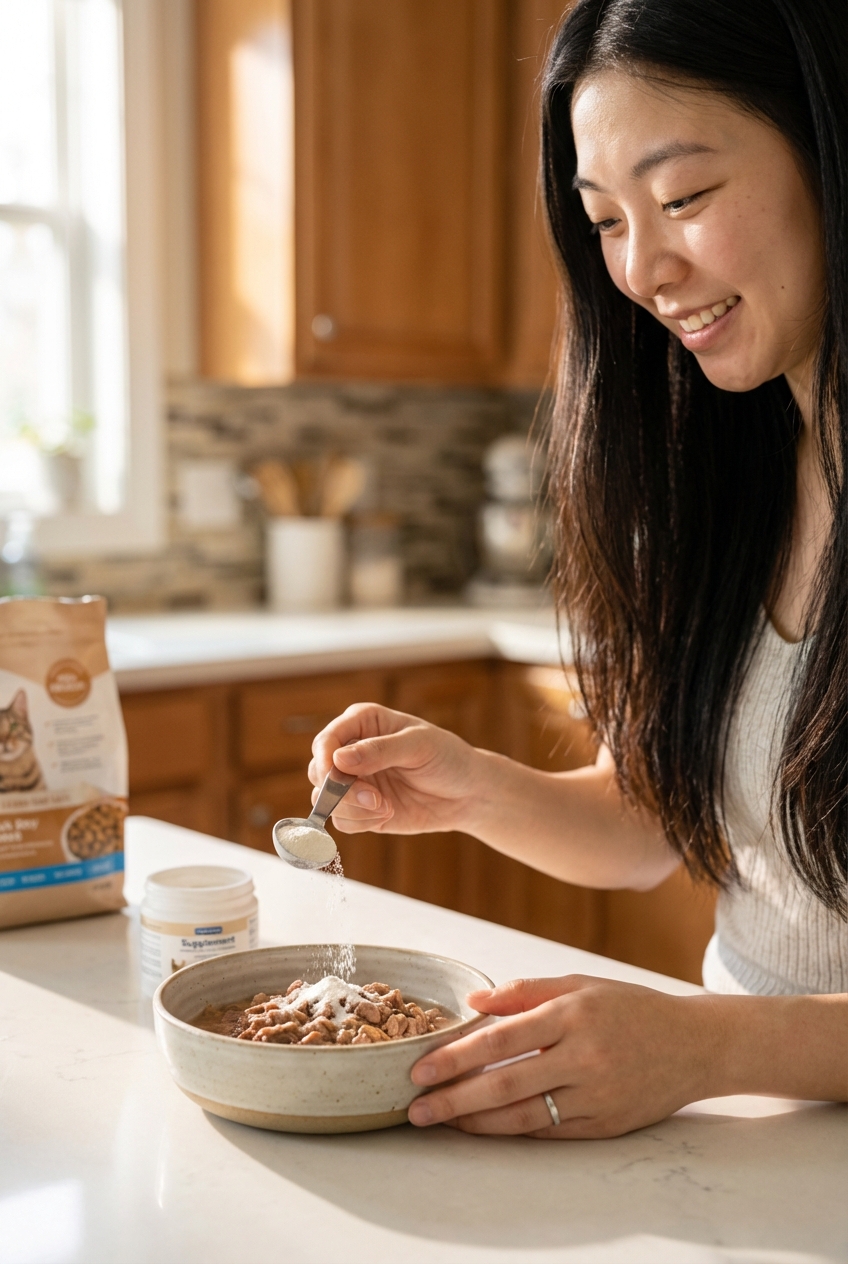
Do cats need supplements?
Most cats eating a complete and balanced commercial cat food do not need extra taurine beyond what the food already contains. Adding supplements randomly can unbalance the diet or cause digestive upset.
However, taurine supplementation may be discussed with your veterinarian in certain situations, such as:
- Home-prepared diets that need balancing
- Cats with certain medical conditions where a vet recommends it
- Diet histories that suggest long-term nutritional gaps
If you are unsure, bring the exact food brand, formula, and any treats or supplements to your vet visit. That information is incredibly helpful.
Wet vs dry
Both wet and dry cat foods can provide adequate taurine if they are complete and balanced. The more important factors are:
- Quality control: Choose established brands with strong formulation and testing practices.
- Life stage: Kittens, adults, and seniors have different needs.
- Medical needs: Some cats need special diets for kidney disease, urinary issues, allergies, or weight management.
If your cat has a medical condition, ask your veterinarian which diet is best and whether taurine levels are a consideration for that particular case.
How vets check taurine-related concerns
If your veterinarian is concerned about taurine deficiency or taurine-related disease, they may recommend a mix of diet history plus targeted testing, such as:
- Eye exam (to look for retinal changes)
- Heart evaluation (often chest imaging and an echocardiogram if indicated)
- Blood taurine testing in some cases
The best approach depends on your cat’s symptoms, age, and diet.
Bottom line
Cats need taurine because their bodies cannot make enough of it, and taurine is essential for heart health, vision, digestion support, and normal development. Feeding a complete and balanced cat food is the simplest way to meet that requirement. If you want to feed homemade, do it with professional guidance so your cat gets the nutrition they truly need to thrive.
If you would like, I can help you build a practical checklist for evaluating your cat’s current food and treats to make sure taurine and other key nutrients are covered.