Why do cats love boxes? Discover 7 science-backed behavior reasons, plus safe box setup ideas, enrichment upgrades, and warning signs that mean a vet visit.
Article
•
Designer Mixes
Why Cats Love Boxes

Shari Shidate
Designer Mixes contributor
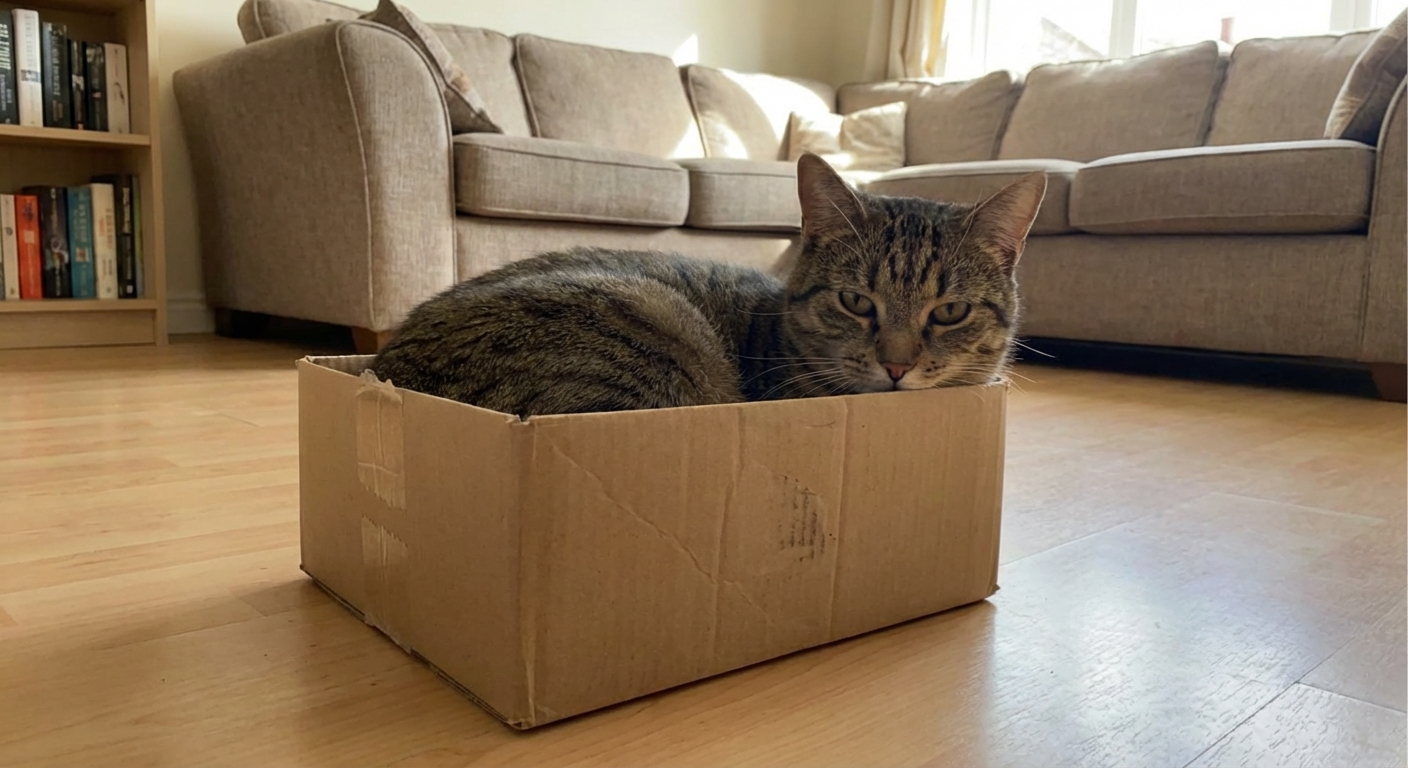
If you have ever brought home a package and watched your cat ignore the expensive toy to climb straight into the box, you are not imagining things. Many cats are strongly drawn to tight, enclosed spaces. The famous feline motto, “If it fits, I sits,” has real behavior and biology behind it.
As a veterinary assistant, I see this in the clinic, too. Many cats choose the smallest carrier, the coziest cubby, or a simple cardboard box over wide-open spaces. Let’s break down why boxes feel so irresistible, what it can tell you about your cat’s emotional needs, and how to use boxes safely as everyday enrichment.
Note: This article is general education and not a substitute for veterinary advice for your individual cat.
Boxes feel safe
Domestic cats may be excellent hunters, but they are also small enough to be hunted by larger animals. That “in-between” status shapes their behavior. Enclosed spaces can provide a sense of security because the cat can watch the environment while keeping their body protected.
- Protected sides and back: A box reduces the number of directions a potential threat could approach.
- Control and choice: A cat in a box can decide when to engage and when to retreat.
- Stress support: Hiding is a normal coping strategy for cats, especially in busy homes or new situations. In shelter settings, access to hiding spaces (including boxes) has been associated with lower stress.
In practical terms, a box can act like a tiny “safe room.” When cats have a secure place to retreat, many become more confident and social overall.
It is a perfect ambush spot
Cats love to stalk, pounce, and surprise, even if they are only hunting a feather wand or your sock. A box is an instant hiding blind. The walls hide their body, and the opening gives them a clear line for a pounce.
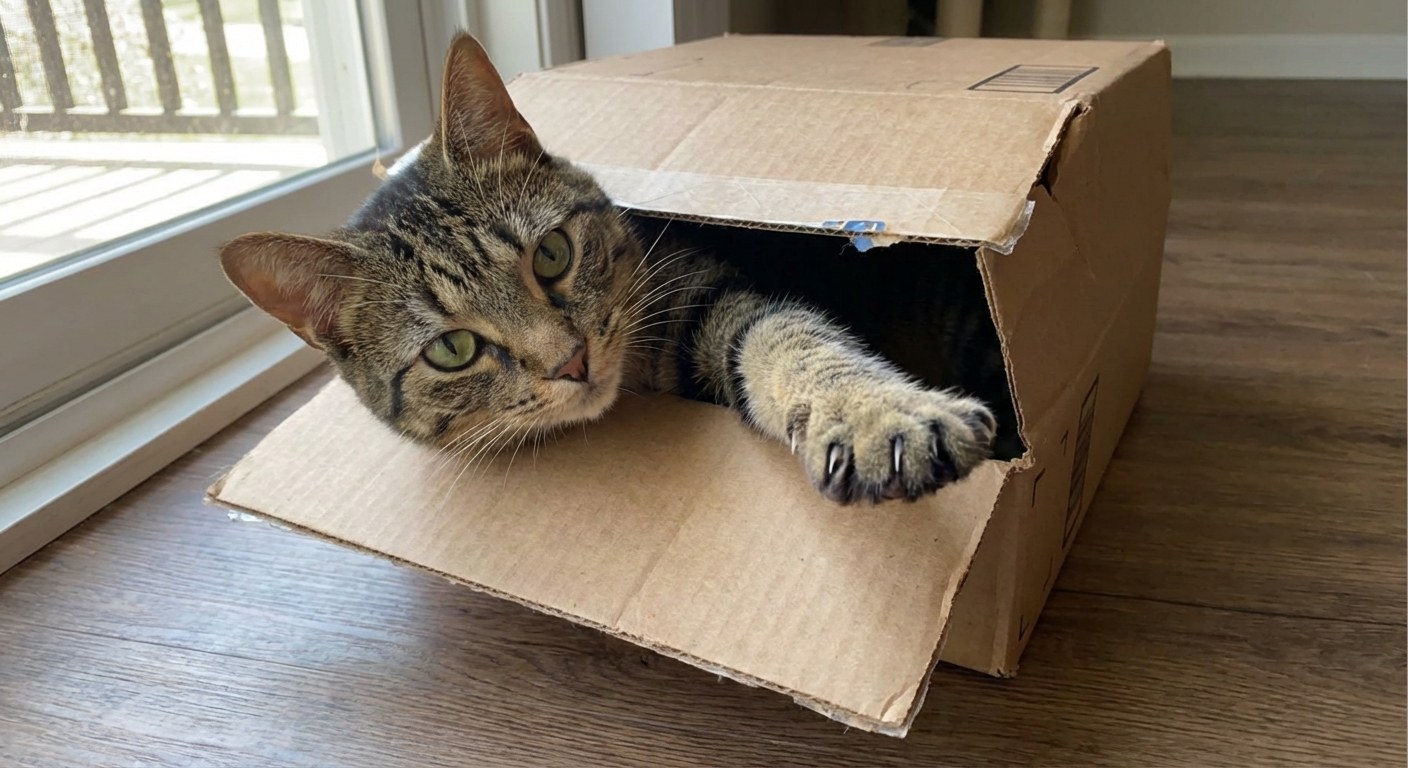
If your cat “attacks” from a box, that is usually healthy play behavior, not aggression. It is their natural predatory sequence showing up in a safe, indoor-friendly way.
Boxes can help with warmth
Cardboard is a surprisingly good insulator. Cats also tend to prefer warmer resting spots than most humans, and their thermoneutral zone is commonly cited as higher (often around 30 to 38°C, or 86 to 100°F). A small enclosed space may help retain body heat, which can feel extra cozy and secure.
You may notice box obsession increases in winter, in air-conditioned homes, or with senior cats who seek warmth more often.
“If it fits” can be soothing
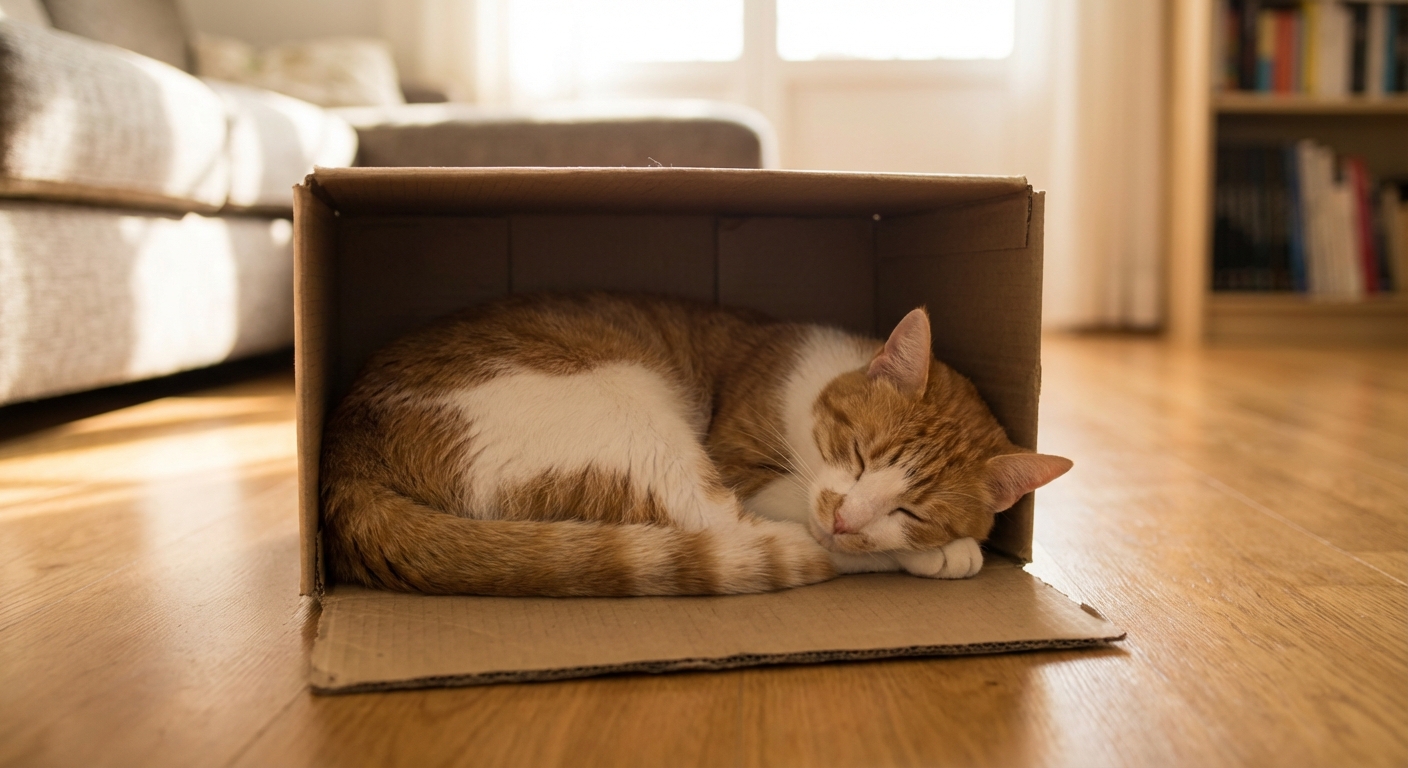
Many cats seem to enjoy gentle pressure against their sides, similar to how some pets prefer snug beds. A box provides firm boundaries. For some cats, that pressure plus reduced visual stimulation can feel calming. You will often see this with shoe boxes, small shipping boxes, or even a laundry basket that hugs their shape.
This is one reason you might see a cat choose a box that looks too small. The tight fit can be the whole point.
Novel smells add enrichment
Cats experience the world through scent. New cardboard often carries unfamiliar smells from shipping, stores, and the outdoors. Investigating that scent is enriching, like a mini adventure delivered to your living room.
Once your cat rubs their cheeks on the edges, they are also doing something important: depositing facial pheromones. That is a normal marking behavior that helps the environment feel like “theirs.”
Boxes as enrichment
You do not need fancy equipment to support your cat’s mental health. A few thoughtfully placed boxes can reduce boredom and tension, especially in multi-cat homes.
Simple ideas
- Create a “box trail”: Place two or three boxes in quiet areas so your cat can move between them.
- Add a soft layer: Put a small towel or fleece inside for comfort and warmth.
- Add an extra exit: Cut a second opening so your cat has another way out (this can help shy cats feel safer and can reduce cornering in multi-cat homes).
- Turn it into a hunting game: Toss a treat inside or drag a wand toy past the opening.
- Offer vertical options: Put a box on a sturdy low shelf or cat tree platform for cats who prefer height.
Placement tips
- Go quiet: Try a calm corner where your cat can watch the room without being in the middle of foot traffic.
- Skip the “busy zones”: Keep boxes away from the litter box and, for many cats, away from the food and water area.
- Spread resources out: In multi-cat homes, place boxes in multiple locations so one cat cannot guard them all.
Tip from the clinic: In multi-cat homes, offer more “safe spots” than cats. Multiple boxes in multiple locations, ideally with two exits, can help reduce conflict. If you notice guarding, add more options and spread them farther apart.
Box safety checklist
Most box time is harmless, but a few quick safety habits go a long way.
- Remove packing materials: Strings, plastic wrap, packing straps, rubber bands, ribbons, and foam can be choking hazards or cause intestinal blockage.
- Watch for staples and sharp tape: Pull them off or choose a different box. Avoid tape loops that can stick to fur or be swallowed.
- Keep the box clean and dry: Replace it if it becomes damp, moldy, or heavily soiled.
- Avoid strong odors or residues: Skip boxes with strong chemical smells or possible contamination (for example, oil, solvents, pesticides, or unknown residues).
- Avoid handle cutouts: Heads can get caught in handle holes.
- If you cut windows, smooth the edges: Trim cleanly and tape over rough edges so they are not sharp.
- Supervise chewers: If your cat eats cardboard or fabric, remove the box and ask your veterinarian about possible pica or GI risk.
When hiding may be a problem
Choosing a box is normal. But if your cat suddenly starts hiding much more than usual, or is difficult to coax out for meals, that can be a sign of stress or illness.
Call your veterinarian if you notice
- Reduced appetite or skipping meals
- Lethargy or weakness
- Vomiting or diarrhea
- Changes in litter box habits
- Hiding paired with growling, pain, or unusual sensitivity to touch
Cats are masters at masking discomfort, so behavioral shifts matter. If something feels off, trust that instinct and get guidance.
The takeaway
Cats love boxes because boxes can meet real feline needs: safety, warmth, stress relief, sensory comfort, and a perfect place to play hunter. The good news is that you can use this simple preference to support your cat’s well-being at home. A clean, safe box in a quiet corner is not clutter. For many cats, it is peace of mind.