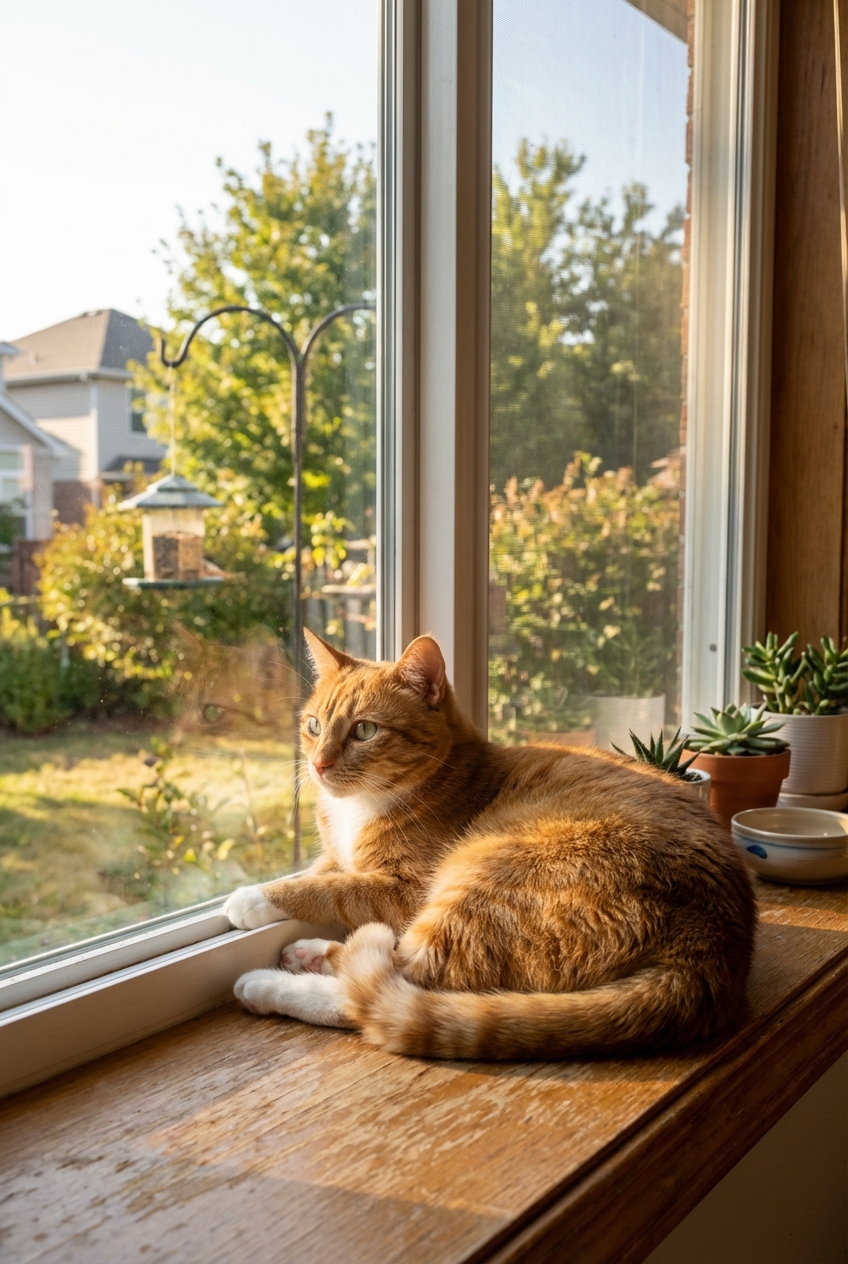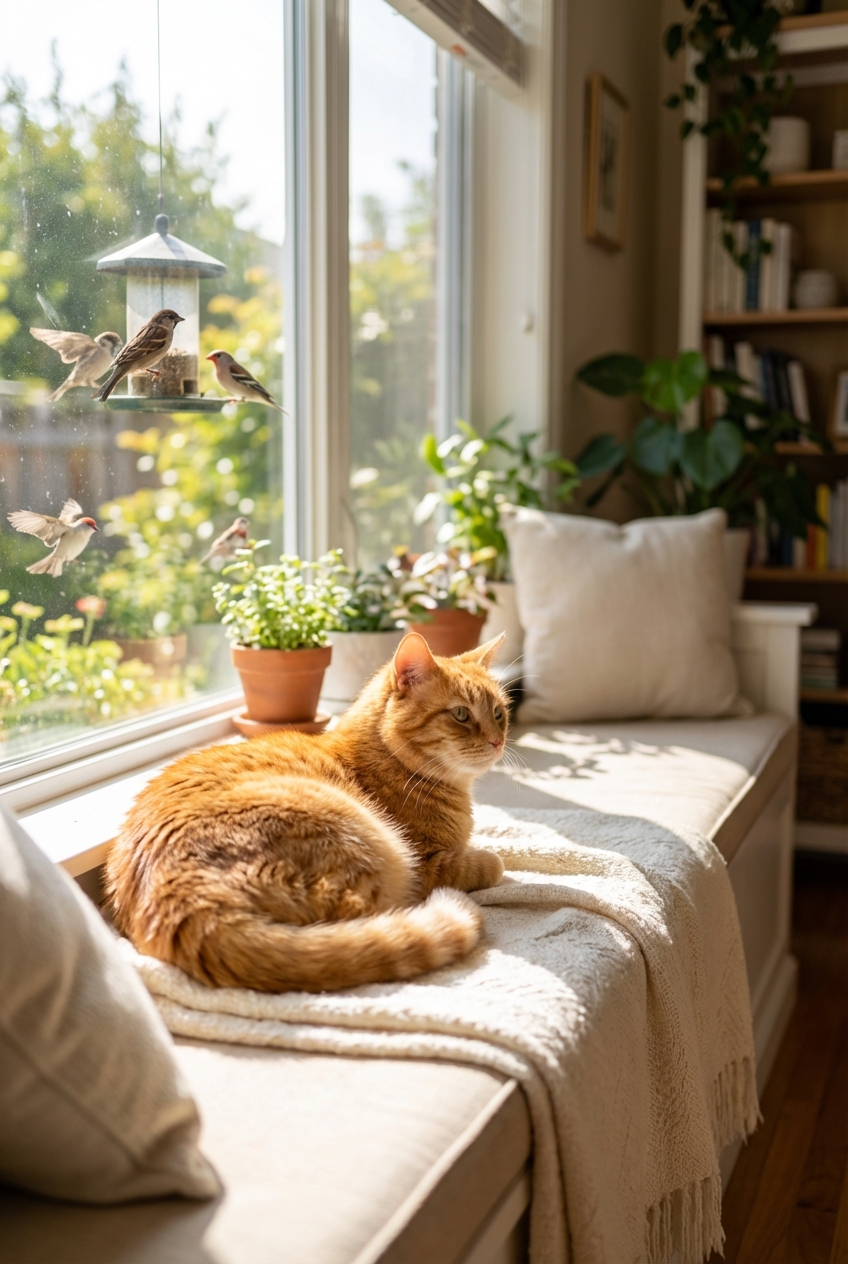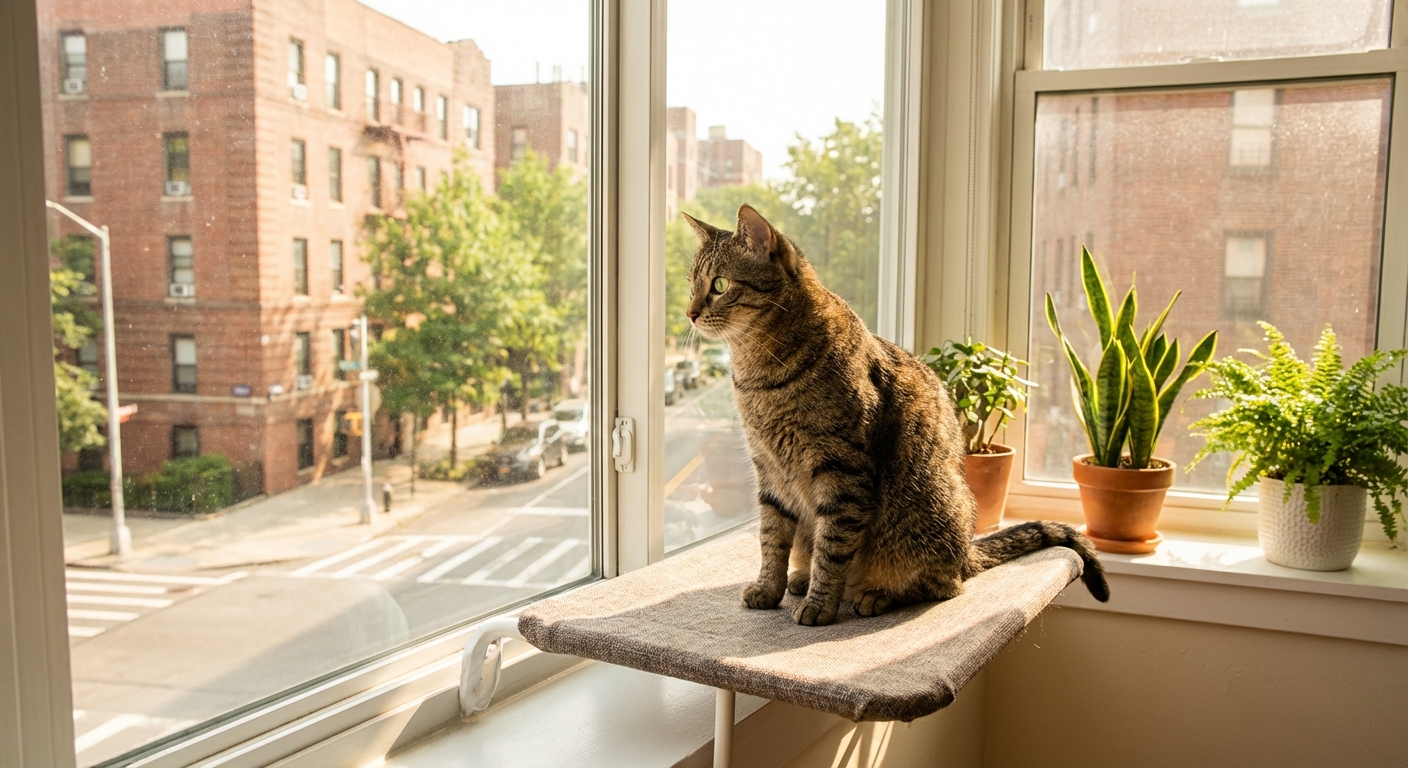
Help your indoor cat thrive in a small apartment with smart enrichment: vertical routes, window perches, puzzle feeders, prey-style play, scratch zones, quie...
Article
•
Designer Mixes
Why Cats Knock Things Off Tables

Shari Shidate
Designer Mixes contributor
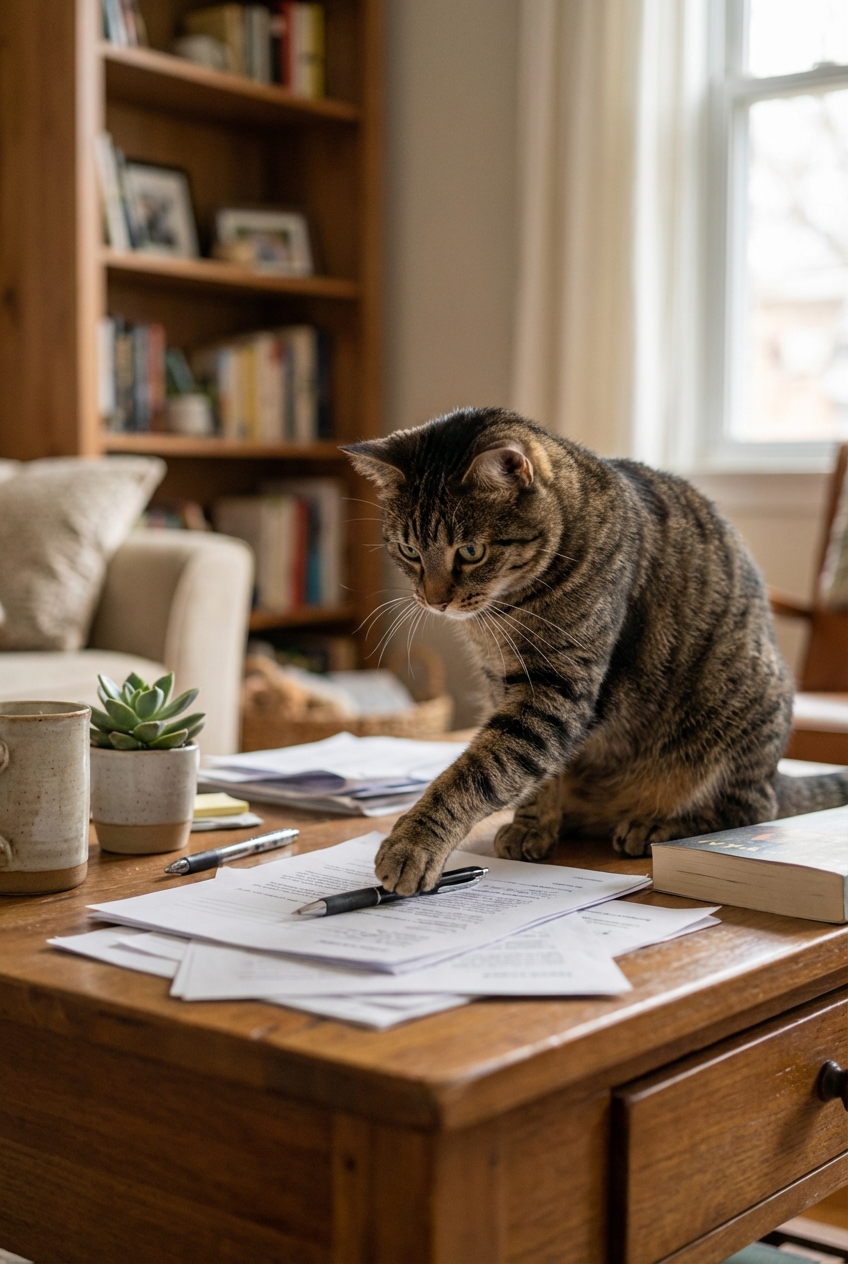
If you live with a cat, you have probably watched it happen in slow motion. A paw reaches out. Your cat looks you right in the eyes. And then your keys, your pen, or your glass of water goes over the edge.
It is tempting to call this “spite,” but in most cases, it is not personal at all. It is your cat doing what cats are wired to do: explore, test, hunt, and get results.
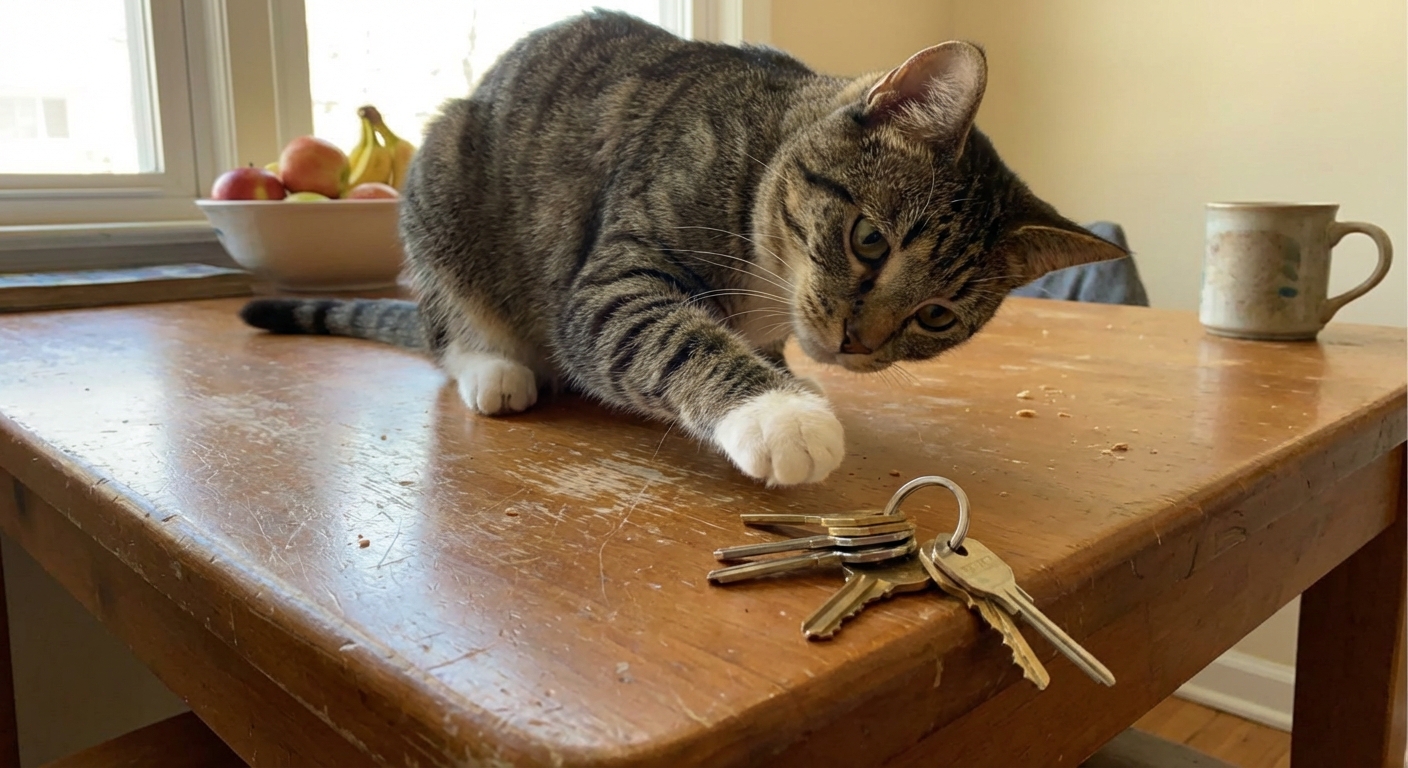
It is usually not spite
Spite implies a very human-style motive: “I am angry, so I will punish you.” Cats do have emotions and they can form strong preferences, but we cannot read intent the way we do with people. What we can do is look at patterns: what happens right before the behavior, and what payoff follows it.
In clinic settings, I like to frame it this way: behavior that gets a payoff tends to repeat. And knocking things down often comes with a payoff.
Why cats push objects off edges
1) Curiosity and cause-and-effect learning
Cats are natural investigators. When your cat bats an object, it moves. When it moves off the edge, it falls. That predictable cause-and-effect can be fascinating, especially for smart indoor cats who are looking for stimulation.
Some cats also enjoy the sound: a clink, a thud, a crash. That feedback is part of the “reward.”
2) Play behavior and hunting instinct
Many cats, especially younger ones, practice hunting skills through play. Batting something with a paw is similar to how a cat might test prey. Even well-fed cats still have those instincts, because instinct is not the same thing as hunger.
Light objects that slide easily, like pens, hair ties, and bottle caps, are particularly tempting because they mimic quick movement.
3) Attention, even “negative” attention
If knocking something down reliably makes you jump up, talk, chase, or look at your cat, many cats learn that this is a great way to start interaction. Attention can be reinforcing, even if you are saying “No.”
This is especially common in homes where the cat is under-stimulated or where playtime is inconsistent.
4) Boredom and lack of enrichment
Indoor cats need outlets for climbing, stalking, scratching, and problem-solving. If those needs are not met, cats invent games. The tabletop “gravity test” is an easy one, and it happens to work every time.
5) Seeking height, control, or access
Sometimes your cat is not trying to knock items over as much as it is trying to clear a path to a preferred spot. Cats like stable perches with a good view. A cluttered table can feel like a crowded ledge, so your cat makes it usable.
6) Sensory preferences
Cats are sensitive to textures and smells. If something is sticky, crinkly, dangling, or scented, it can trigger pawing. Objects near edges are simply more likely to fall once they get batted.
How to stop it
The goal is not to “win.” The goal is to make the unwanted behavior unrewarding and give your cat a better, more appropriate outlet.
Step 1: Remove the reward
- Stay neutral. If safe, avoid rushing in dramatically. Big reactions can be reinforcing.
- Pick items up quietly. If the object is not dangerous, calmly reset the environment.
- Do not turn it into a game. Chasing your cat or repeatedly engaging right after the swat can teach, “This works!”
Step 2: Make surfaces safer
- Keep breakables, sharp items, and liquids away from edges.
- Use closed containers for small objects like hair ties and pens.
- Use a heavier water glass or a travel mug with a lid if your cat targets drinks.
- Lock up medications, supplements, and anything toxic (including essential oils and certain human foods) so it cannot be batted to the floor and eaten.
- Tidy cords and blind strings where possible, especially on desks and nightstands.
Step 3: Add enrichment that matches the instinct
- Daily play sessions are a great start. Try 5 to 10 minutes, 1 to 2 times a day with a wand toy, then adjust based on your cat’s age and energy level.
- Food puzzles or treat balls help satisfy the “work for it” part of feline hunting.
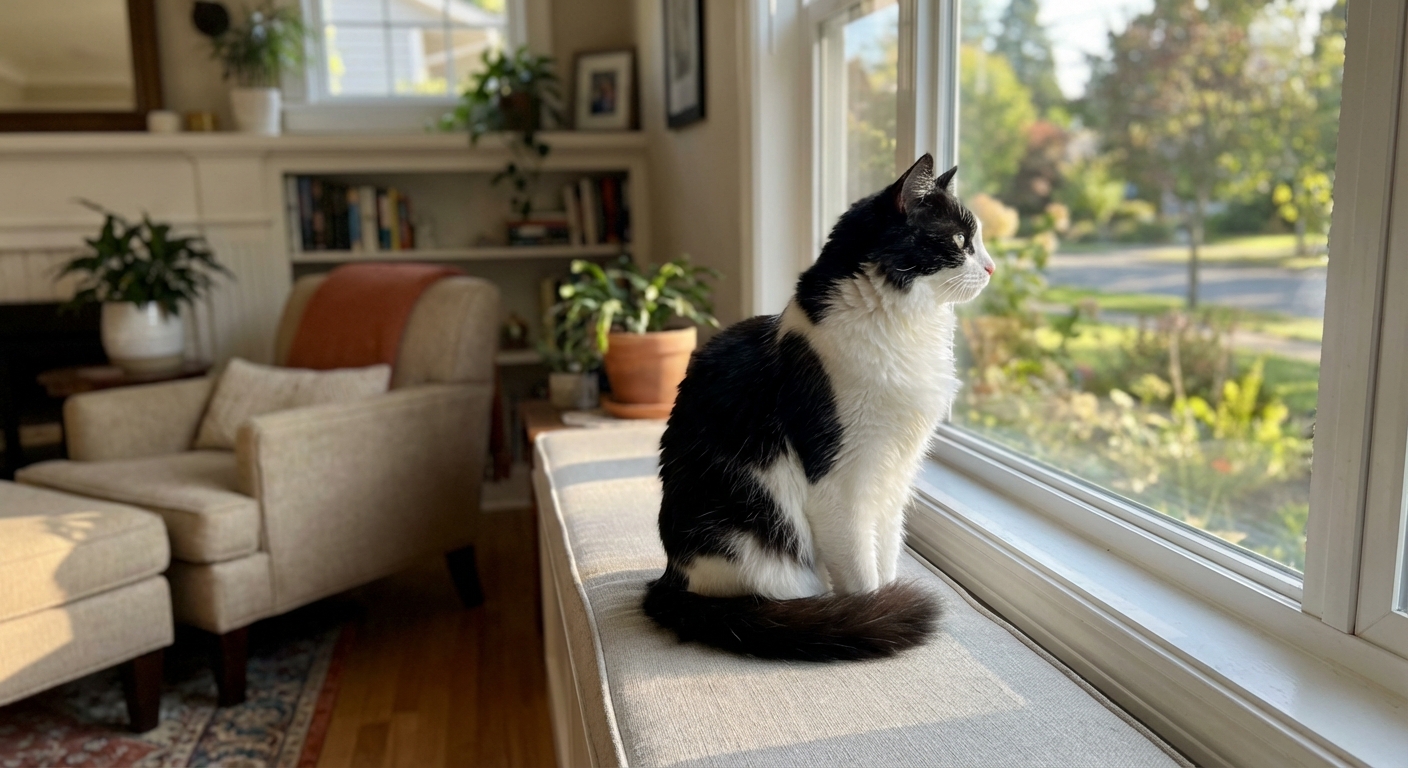
- Vertical space like a cat tree, wall shelves, or a window perch gives your cat a better place to be.
- Rotation of toys prevents boredom. Put half away for a week, then swap.
- Create a “yes” spot near where you work or relax, like a perch, shelf, or mat, so your cat has a nearby place to choose instead of the tabletop.
Step 4: Teach an alternative behavior
If your cat is knocking items down to get you moving, you can train a replacement routine.
- Before problem times, offer play or a puzzle feeder.
- Reward calm behavior on a designated perch or mat near you.
- Use a consistent cue like “Up here” and reward when your cat chooses the perch.
- If your cat enjoys training, a clicker or a short marker word (like “Yes”) can help you reward the exact moment your cat makes the right choice.
Positive reinforcement works well for cats when rewards are small, immediate, and consistent.
What not to do
- Avoid yelling, scolding, or spraying water. Punishment can increase stress and may teach your cat to do it when you are not around.
- Avoid physically moving your cat off the surface repeatedly. It often turns into attention or a game, which keeps the cycle going.
When to worry
If your cat suddenly starts knocking items down more than usual, seems restless at night, vocalizes more, or acts “off,” consider a medical or stress trigger.
- Vision changes can make a cat misjudge space and bump items.
- Cognitive dysfunction in senior cats can increase repetitive or disoriented behaviors.
- Thyroid disease (common in older cats) can cause hyperactivity and agitation.
- Pain or arthritis can make cats irritable, restless, or more reactive, especially if jumping and landing are uncomfortable.
- Stress from changes in the home, new pets, or schedule shifts can show up as nuisance behaviors.
If you notice a sudden shift, pairing behavior troubleshooting with a veterinary checkup is the most evidence-based approach.
Bottom line
Most cats are not being mean. They are being cats. Knocking objects off tables is often a combination of curiosity, play, and learned rewards.
With a little prevention, better enrichment, and calmer responses, you can protect your belongings and give your cat healthier ways to burn energy and satisfy its instincts.