Wondering if your cat loves you? A vet assistant explains 12 bond and trust signals—slow blinks, bunts, purring, greetings, sleep habits—plus stress look...
Article
•
Designer Mixes
Why Cats Groom Each Other

Shari Shidate
Designer Mixes contributor
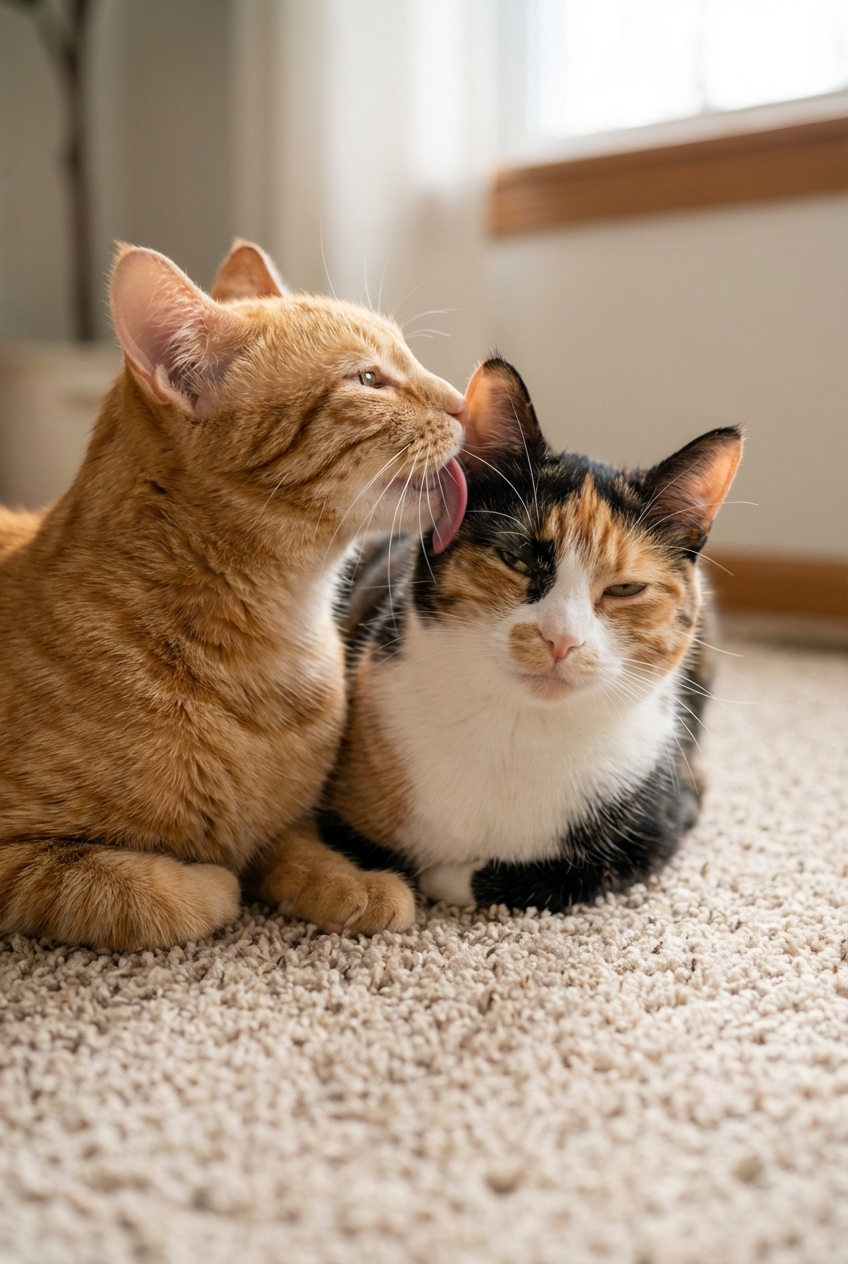
If you have more than one cat, you have probably seen it: one cat leans over the other and starts licking their head like a tiny salon appointment. It looks sweet, and often it is. This behavior is called allogrooming, and it is one of the clearest ways cats show social bonding and maintain comfort in a shared home.
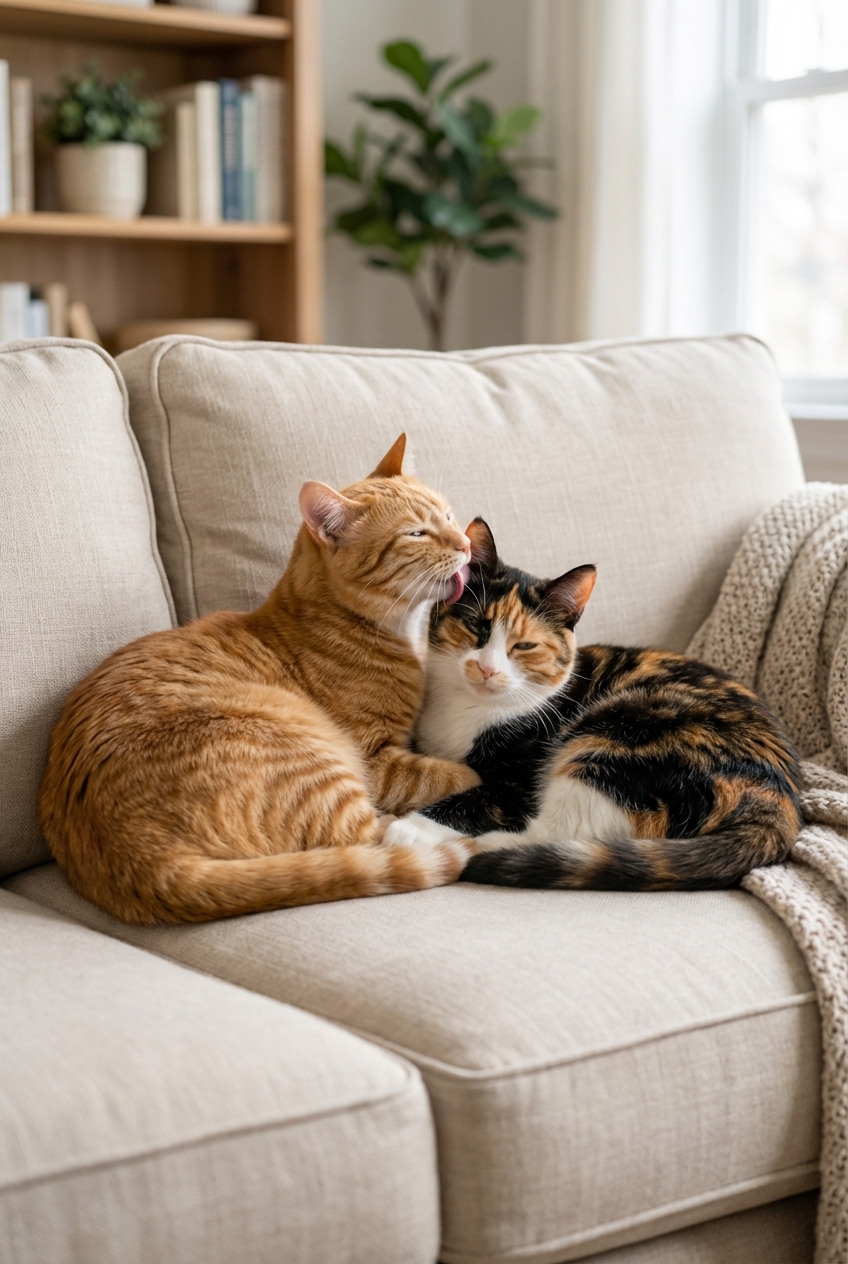
As a veterinary assistant, I like to remind pet parents that grooming is not just about cleanliness. In cats, it can also be a language: comfort, friendship, group belonging, and sometimes a way to ease social tension.
What is allogrooming?
Allogrooming means one cat grooming another. The most common targets are areas that are harder to reach or awkward to groom solo, like the top of the head, around the ears, and under the chin. You will often see the “recipient” cat relax, lean in, and close their eyes, which is a strong sign of trust.
In multi-cat groups, allogrooming tends to happen between cats who already have a positive relationship, especially cats who sleep near each other, play without escalating, and share space without tension.
Main reason: bonding
At its heart, cats grooming each other is usually about strengthening their social connection. Researchers and behaviorists commonly describe allogrooming as an affiliative behavior, meaning it helps build and maintain friendly relationships.
Here are the biggest social reasons cats do it:
- It reinforces “we are safe together.” Grooming is a vulnerable activity. When a cat grooms another, and the other allows it, both cats are signaling comfort and low threat.
- It helps create a shared group scent. Cats rely heavily on scent to understand their world. Grooming transfers saliva and scent, which may help cats smell more alike. In many households, this “family scent” may support smoother sharing of space.
- It may help reduce tension. You may notice grooming after an exciting moment, like guests arriving, a vacuum running, or a minor disagreement. A lot of this is observational, but many cats seem to use grooming as a calming ritual.
- It can be a social reward. Some cats groom after play or cuddling, almost like a “good job, friend” gesture.
Why head and ears
Most cats can handle the bulk of their own coat care, but the head, face, and ears are more difficult to groom thoroughly. Grooming partners fill in those gaps. It is practical, but it is also intimate: face and head grooming is typically reserved for trusted companions.
If you see one cat grooming another cat’s neck, shoulders, or back, it can still be friendly. Sometimes, though, grooming shifts to a more intense, one-sided interaction. The key is context and body language, which brings us to an important point.
Is it always friendly?
Most allogrooming is affectionate, but sometimes it becomes overbearing. Rather than thinking in strict “dominance hierarchy” terms, it is more accurate to watch for signs of social tension, control, or a cat pushing an interaction longer than the other cat wants.
Signs it is friendly
- Both cats look relaxed, with soft eyes and loose bodies
- The recipient leans in, purrs, or returns grooming
- It ends naturally without chasing or swatting
- They rest together afterward
Signs it may be tense
- The grooming becomes rough, fast, or repetitive
- The recipient’s ears go back, body stiffens, or tail flicks
- The groomer keeps the other cat in place and the other tries to leave
- It regularly escalates into biting, wrestling, or yowling
- One cat always initiates and the other never reciprocates
A little “groom then wrestle” can be normal, especially in young or playful cats. But if one cat consistently looks trapped or stressed, it is worth stepping in to prevent the relationship from souring.
If it escalates
If grooming turns into wrestling or bullying, try to intervene in a way that does not add fear or create a negative association.
- Redirect, do not punish. Toss a soft toy, start a wand toy session a few feet away, or lure one cat to a treat station.
- Interrupt from a distance. A gentle clap or calling their names can break the moment without you putting hands in the middle.
- Avoid grabbing. Picking up an upset cat can lead to scratches and can increase stress. If you must separate, use a pillow, blanket, or a barrier like a baby gate.
- Give decompression space. Separate them briefly and offer calm zones with water, litter, and a hiding spot or perch.
If you are seeing frequent escalation or one cat seems to be avoiding rooms, food, or litter boxes because of the other cat, it is time to ask for help.
Why some cats do not
If your cats do not allogroom, that does not automatically mean they dislike each other. Some cats simply prefer more personal space. Others were not properly socialized with cats during kittenhood, which can reduce social behaviors later in life.
Common reasons you might not see mutual grooming include:
- Different social styles. One cat is affectionate, the other is more independent.
- Resource tension. Competition for food, litter boxes, or resting spots can keep cats from fully relaxing.
- Pain or sensitivity. A cat with arthritis, skin irritation, dental pain, or ear issues may avoid being touched or groomed.
- Stress in the environment. New pets, renovations, outdoor cats at the window, or inconsistent routines can raise tension.
When it is a problem
Most of the time, allogrooming is harmless. But there are a few situations where it can signal a health or behavior concern in either cat.
Red flags to watch
- Hair loss, scabs, or skin redness where the cat is being groomed
- Ear scratching, head shaking, or foul odor (ear infections can make grooming around the ears feel painful)
- Sudden change in behavior, such as cats who used to groom and now avoid each other
- Growling, hissing, or hiding after grooming sessions
- Persistent genital-area licking (this can occasionally be normal, but ongoing focus can point to urinary discomfort or skin irritation in the cat being licked, or anxiety and compulsive grooming behavior in the cat doing the licking)
If you see injuries, repeated bullying, or a sudden shift in your cats’ relationship, it is a good idea to check in with your veterinarian. Pain, skin disease, and ear problems often show up as “behavior issues” first.
If medical issues are ruled out and the pattern keeps repeating, a qualified cat behavior professional can help you build a plan that fits your home.
Help cats bond
You cannot force cats to be best friends, but you can absolutely make it easier for them to feel safe enough to bond. Here are a few evidence-based, cat-friendly steps that help reduce tension and support positive social behaviors like grooming.
- Provide enough key resources. A common guideline is one litter box per cat, plus one extra, and multiple feeding and water stations to reduce competition.
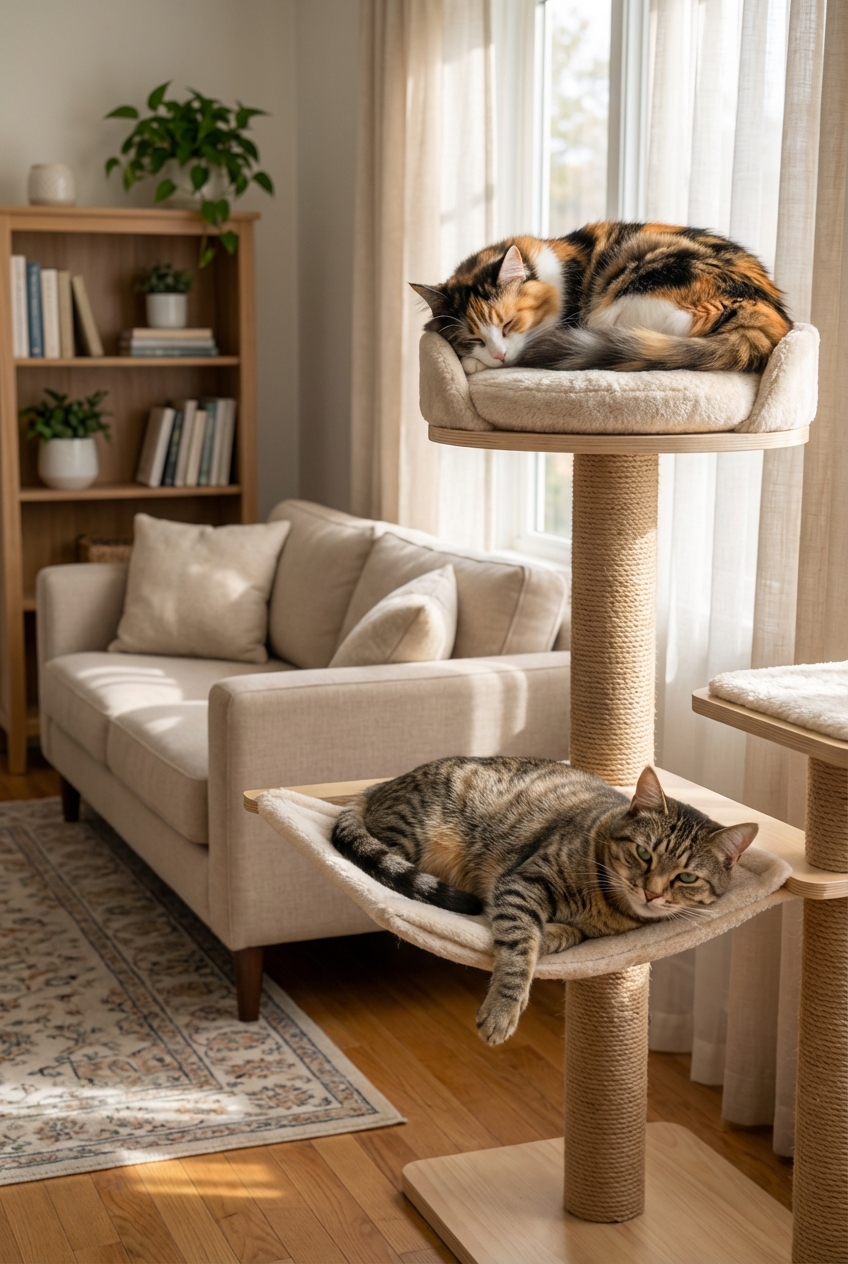
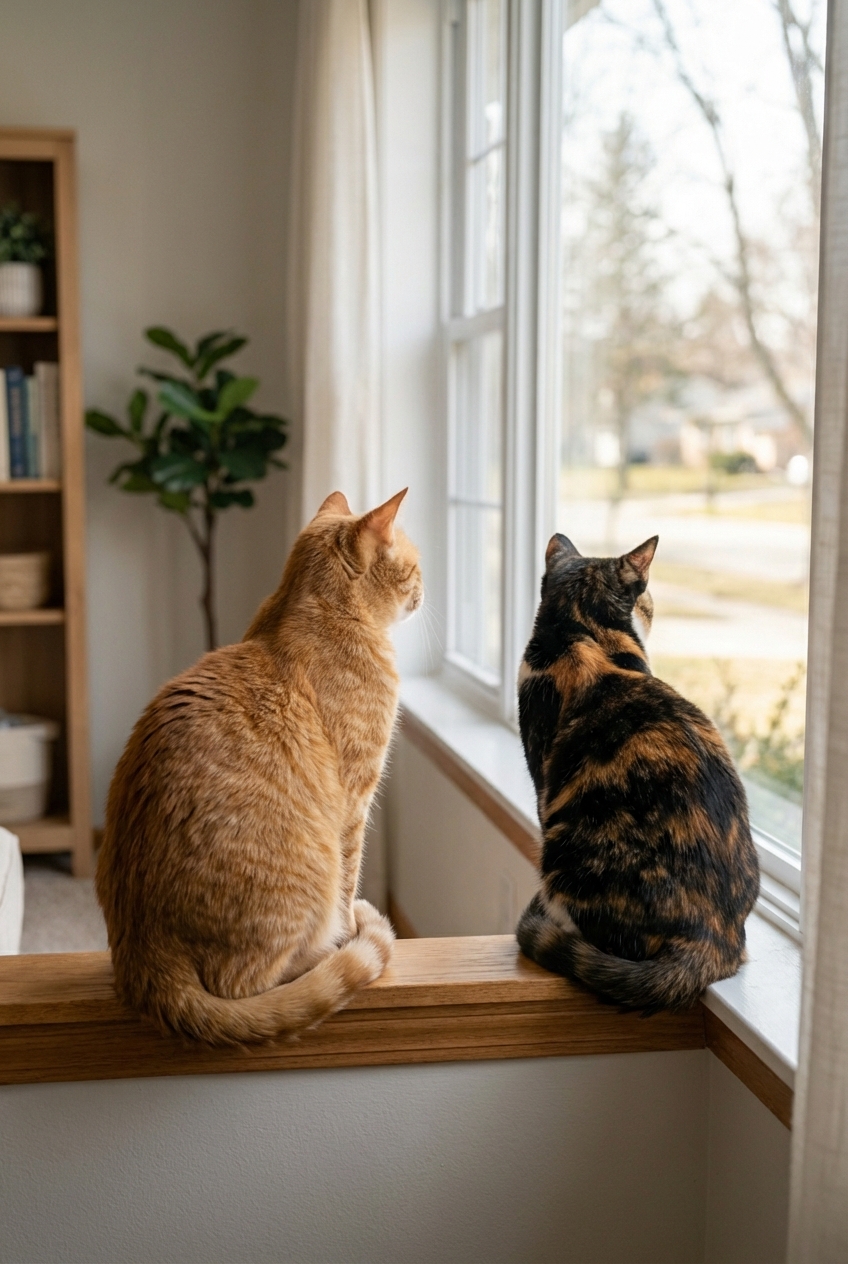
- Create vertical space. Cat trees, shelves, and window perches let cats share a room without sharing the exact same spot.
- Protect rest time. Make sure each cat has at least one cozy sleeping area where they can nap undisturbed.
- Use play as social glue. Short daily wand-toy sessions help cats burn stress and associate the home with calm routines.
- Consider feline pheromones. For some households, veterinarian-recommended pheromone diffusers may help take the edge off while relationships settle.
And one gentle reminder: if your cats are grooming each other and both seem relaxed, that is a very good sign. It often means they have formed a real social bond, not just learned to tolerate each other.
Bottom line
Cats groom each other primarily to strengthen social bonds, share scent, and support calm co-living. Most of the time it is a sweet sign of trust, especially when both cats look relaxed and the behavior is mutual. Keep an eye out for rough grooming, skin changes, or stress signals, and talk to your vet if anything seems painful, persistent, or suddenly different.
In a multi-cat home, these little grooming moments are more than cute. They are your cats saying, in their own quiet way, “You are safe with me.”