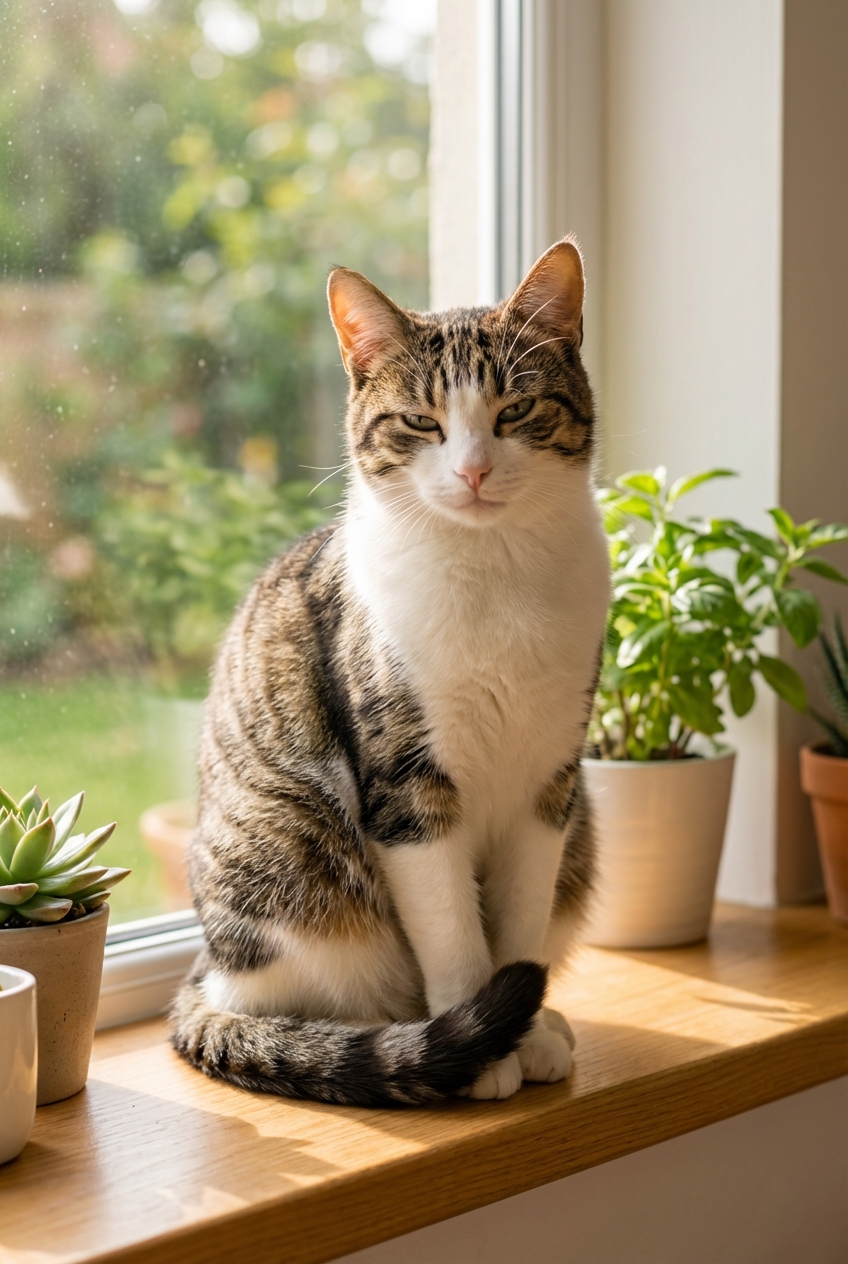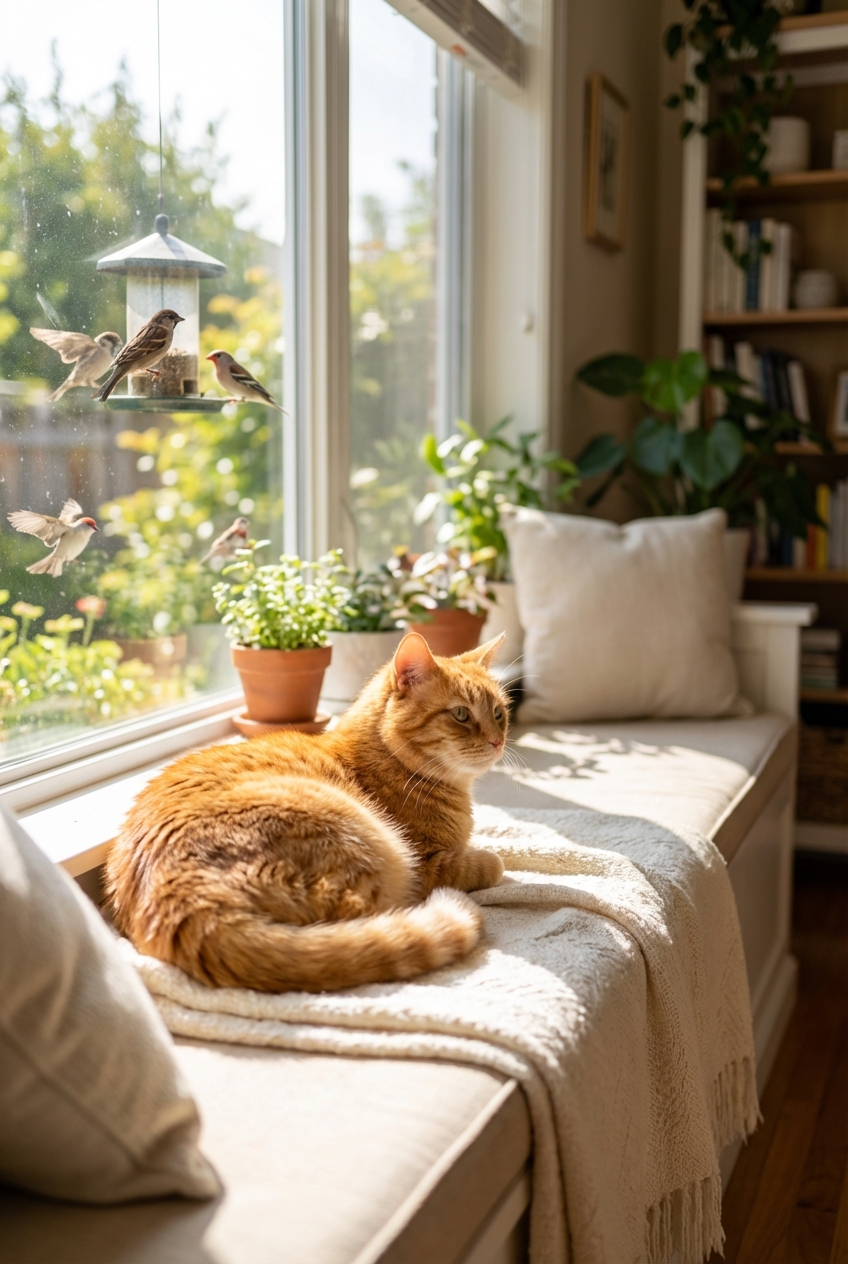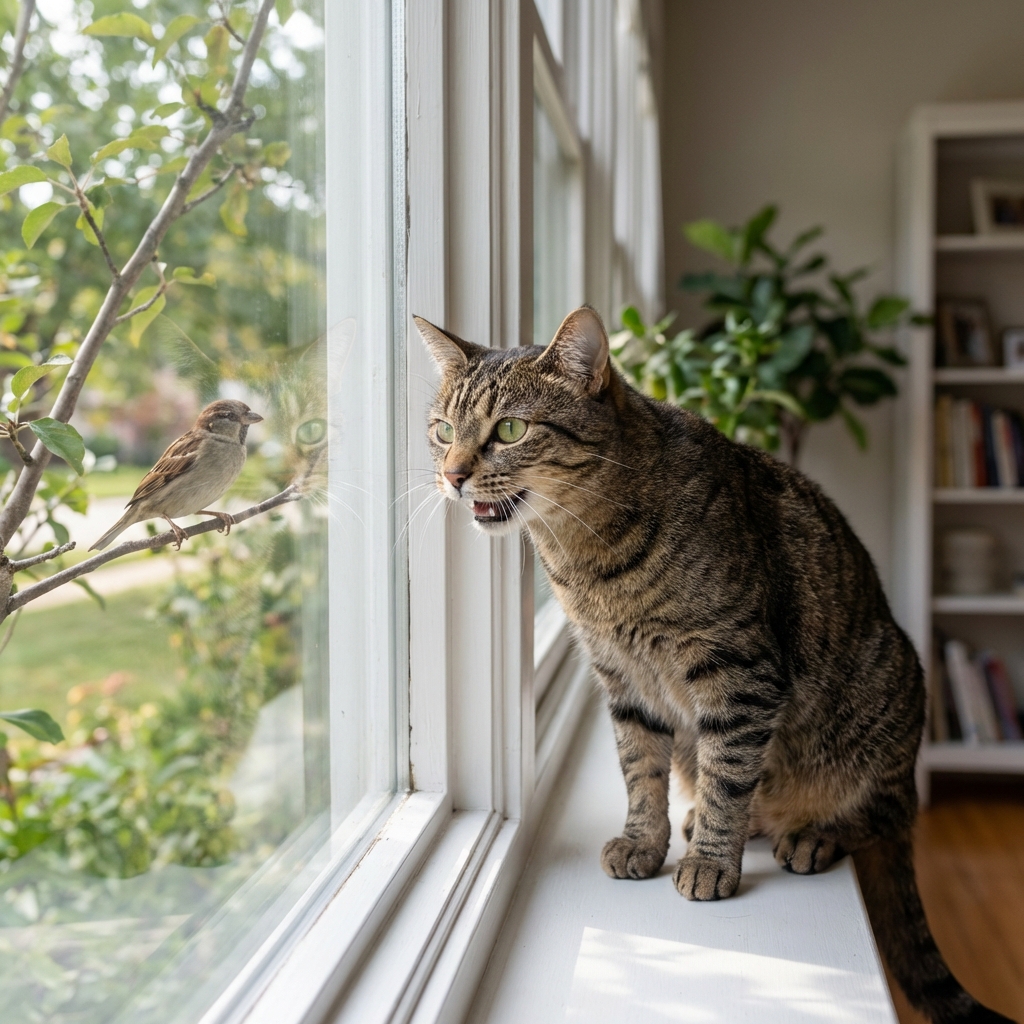
That rapid “ch-ch-ch” sound is usually prey drive and frustration when your cat can’t reach a target. Learn the top theories, normal vs. concerning sig...
Article
•
Designer Mixes
Why Cats Chirp at Birds Through the Window

Shari Shidate
Designer Mixes contributor
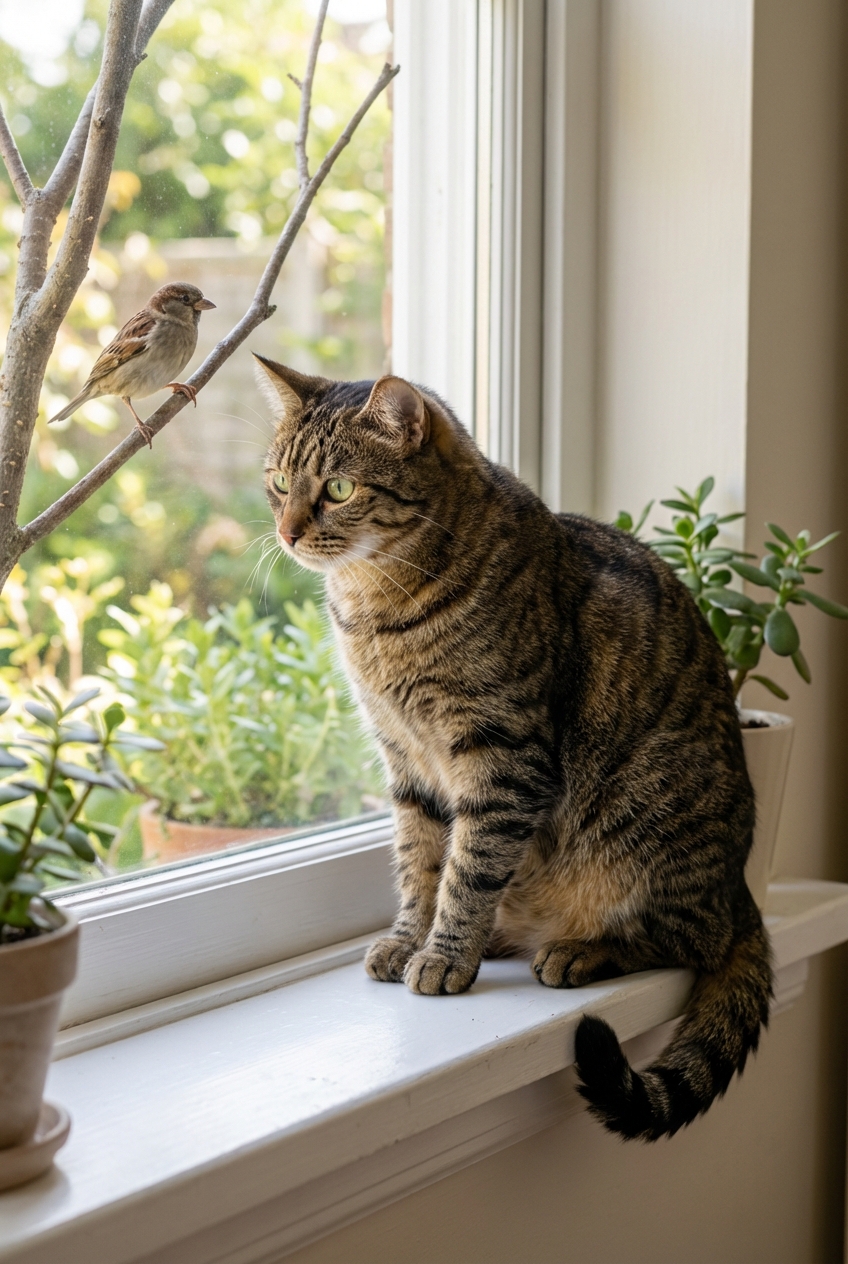
If you have ever watched your cat sit at the window, intently focused on a bird outside, you may have heard it: that rapid little “chitter-chitter” or “chirp” that can sound almost like a tiny squeaky toy. As a veterinary assistant, I hear this question a lot, and the good news is that for most cats, this chirping or chattering is a normal, instinct-driven behavior.
It can be adorable, but it can also feel mysterious. Is your cat frustrated? Excited? Trying to hunt? The answer is often “a little of all of the above.”
What chirping is
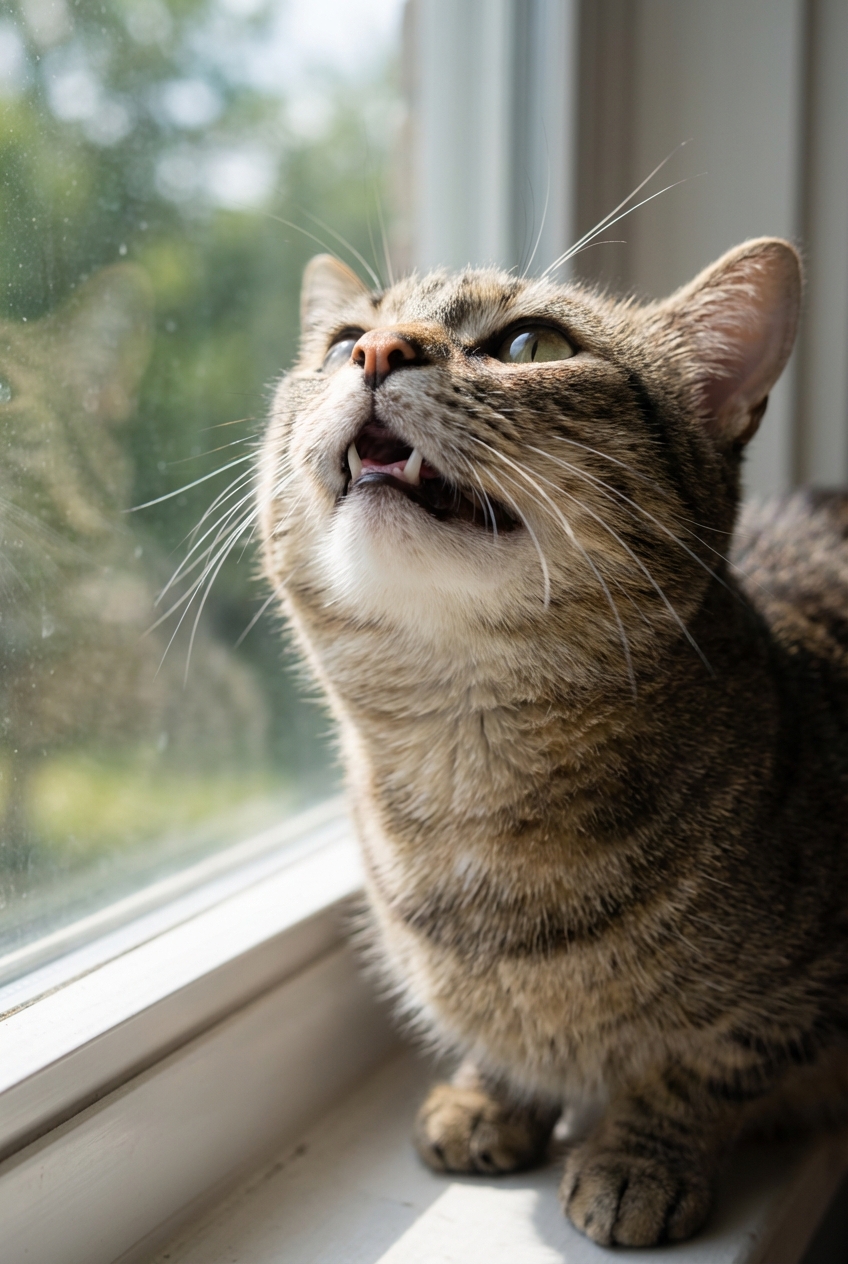
Cat chirping usually shows up as short, staccato sounds, sometimes mixed with teeth chattering. It is most commonly triggered by prey your cat can see but cannot reach, like birds, squirrels, or even insects on the other side of the glass.
Many behaviorists describe it as part of a prey-response sequence. In other words, your cat is in hunting mode: watching, tracking, and getting ready to act, even if they cannot follow through.
Why cats chirp at birds
1) Hunting instinct kicks in
Cats are natural predators. Even the sweetest indoor lap cat still has the same basic hunting toolkit: stalking, pouncing, grabbing, and delivering a killing bite. When a bird flutters by, it can flip that switch instantly.
Chirping often happens when your cat is intensely focused, almost like they are locked on to the target.
2) Excitement plus frustration
Chirping is often described as a mix of arousal and frustration. Your cat sees prey, wants to act, but a closed window blocks the hunt. That energy has to go somewhere, and it can come out as vocalizing and jaw chatter.
If you notice tail twitching , a stiff posture, and wide pupils, your cat is likely highly stimulated.
3) Jaw movement as practice
You might notice your cat’s teeth chatter as they chirp. One hypothesis is that this jaw movement could be a kind of motor rehearsal for the bite used to dispatch prey. Evidence is limited, but it is a common theory for why the “chatter” component shows up so reliably in hunting situations.
4) Attention and “call” sounds
Some cats also use chirps as general attention-getting sounds with people, kittens, or other cats. When directed at birds, it may simply reflect intense focus and excitement, or a “get closer” sort of urge.
We cannot say with certainty that cats are trying to mimic birds, but chirping is very commonly linked to prey watching and high arousal.
Is chirping a stress sign?
Usually, no. Chirping itself is typically normal and not harmful. That said, watching wildlife can wind some cats up so much that it turns into ongoing frustration.
Signs your cat may be getting overly stressed or overstimulated include:
- Persistent yowling or growling at the window
- Redirected aggression (swatting at you or another pet after watching birds)
- Obsessive pacing between windows
- Not eating or not settling afterward
If you see these patterns, it is worth adjusting the environment and, if needed, discussing it with your veterinarian.
How to help (keep it fun)
Set up safe “cat TV”
If your cat loves birds, you can lean into it in a healthy way.
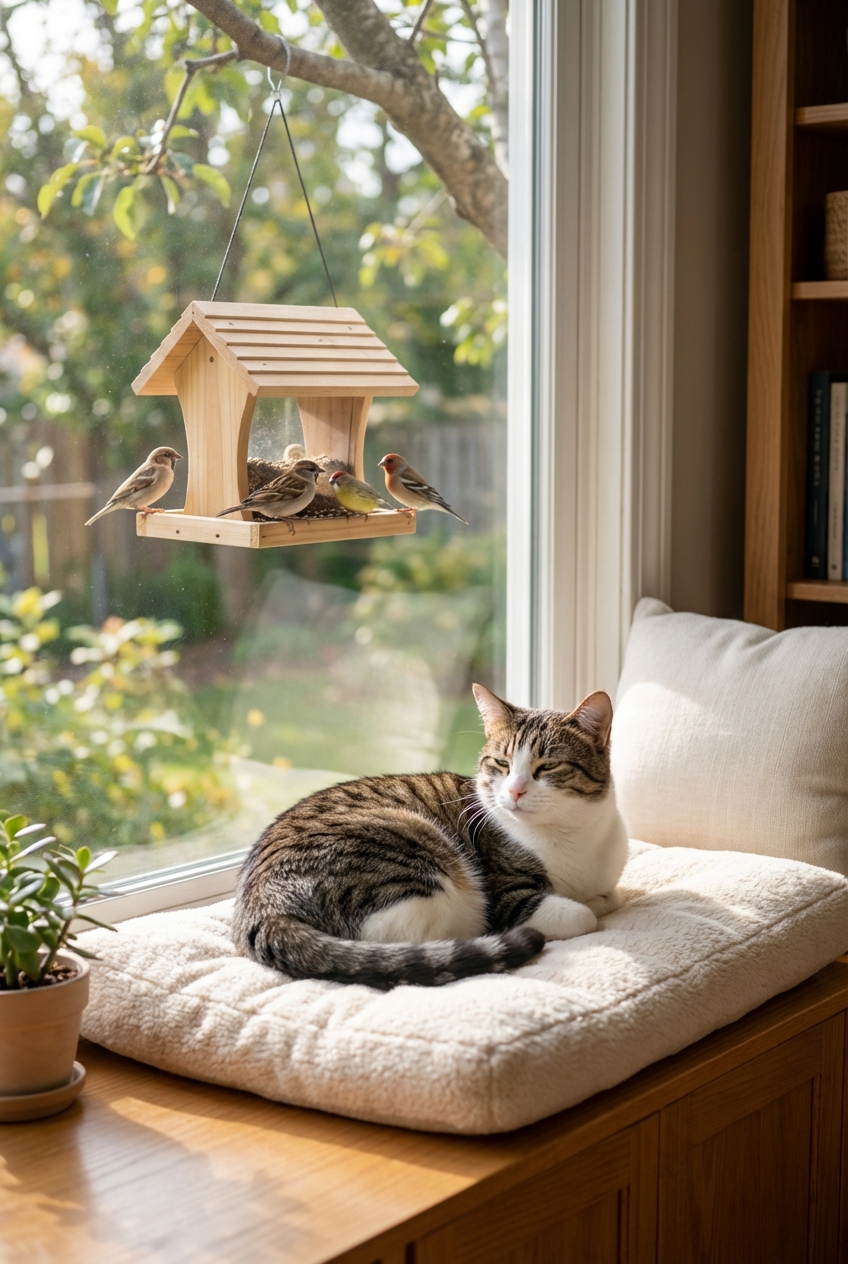
- Add a sturdy perch: A window hammock or cat tree gives your cat a comfortable viewing spot.
- Use screens wisely: Screens are not a safety barrier by default. Make sure they are secure, especially in upper floors, since cats can push through loose ones.
- Place bird feeders thoughtfully: Keep birds safe and reduce window collisions by placing feeders very close to the window (within about 3 feet) or far enough away (often cited as 10 feet or more). Also position feeders where your cat cannot reach through a screen or open window.
If you add a feeder, consider your local wildlife, too. Keeping cats indoors is one of the most meaningful ways to protect birds.
Give hunting energy an outlet
Indoor cats still need to complete the “hunt cycle.” Try this simple routine once or twice a day:
- 2 to 5 minutes of stalking play (wand toy or feather lure)
- 1 to 2 minutes of fast chase
- Let your cat “catch” the toy at the end
- Offer a small meal or treat afterward to mimic “eat after hunt”
This can reduce frustration and help your cat settle.
Prevent redirected aggression
If your cat is chirping intensely and looks keyed up, avoid petting or picking them up right then. Some cats will startle and swat, not because they are “mean,” but because their nervous system is in full prey mode.
Instead, calmly toss a toy away from the window or use a wand toy to redirect attention.
What not to do
- Do not punish chirping or chattering
- Do not bang on the window to “snap them out of it”
- Do not force handling when they are highly aroused
When to call your vet
Chirping is almost always a normal behavior, but contact your veterinarian if you notice:
- Sudden behavior changes (new aggression, hiding, or panic at windows)
- Compulsive fixation that disrupts eating or sleeping
- Any breathing difficulty, coughing, or open-mouth breathing while excited
Open-mouth breathing in cats is not typical and deserves prompt veterinary attention. The items above are not “just chirping” and are worth a medical or behavioral check.
Takeaway
When cats chirp at birds outside, they are usually expressing instinct: excitement, focus, and that built-in hunter brain doing what it was designed to do. With a safe perch, enriching play, and a little awareness of overstimulation, you can keep this behavior fun and healthy for your cat and for you.
If your cat chirps at birds, you are seeing a very normal part of feline behavior: a tiny predator enjoying one of the best kinds of indoor entertainment.