A vet assistant explains why cats bite and the best toys to stop boredom nipping—wand toys, puzzle feeders, kicker toys, track toys, and smart play routines.
Article
•
Designer Mixes
Why Cats Butt Wiggle Before Pouncing

Shari Shidate
Designer Mixes contributor
If you have ever watched your cat lock eyes on a toy (or your ankle), crouch low, and then do that unmistakable little butt wiggle, you are seeing a tiny, adorable piece of feline athletic preparation. It can look silly, but it is actually a smart, instinct-driven behavior that helps cats hunt and play with precision.
As a veterinary assistant, I love this topic because it is one of those everyday cat quirks that has real biology behind it. Let’s break down what is happening, what it means, and when it might signal something more than play.
The short answer
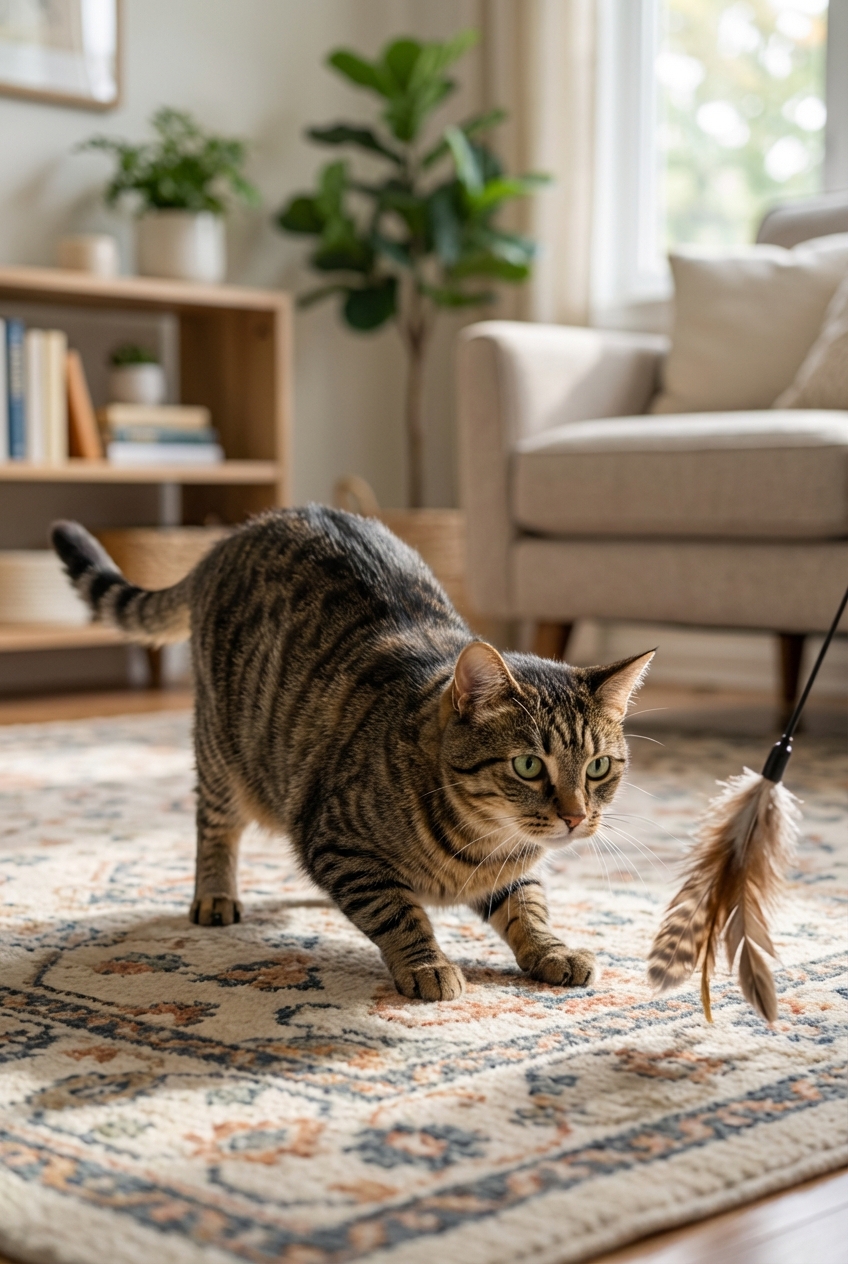
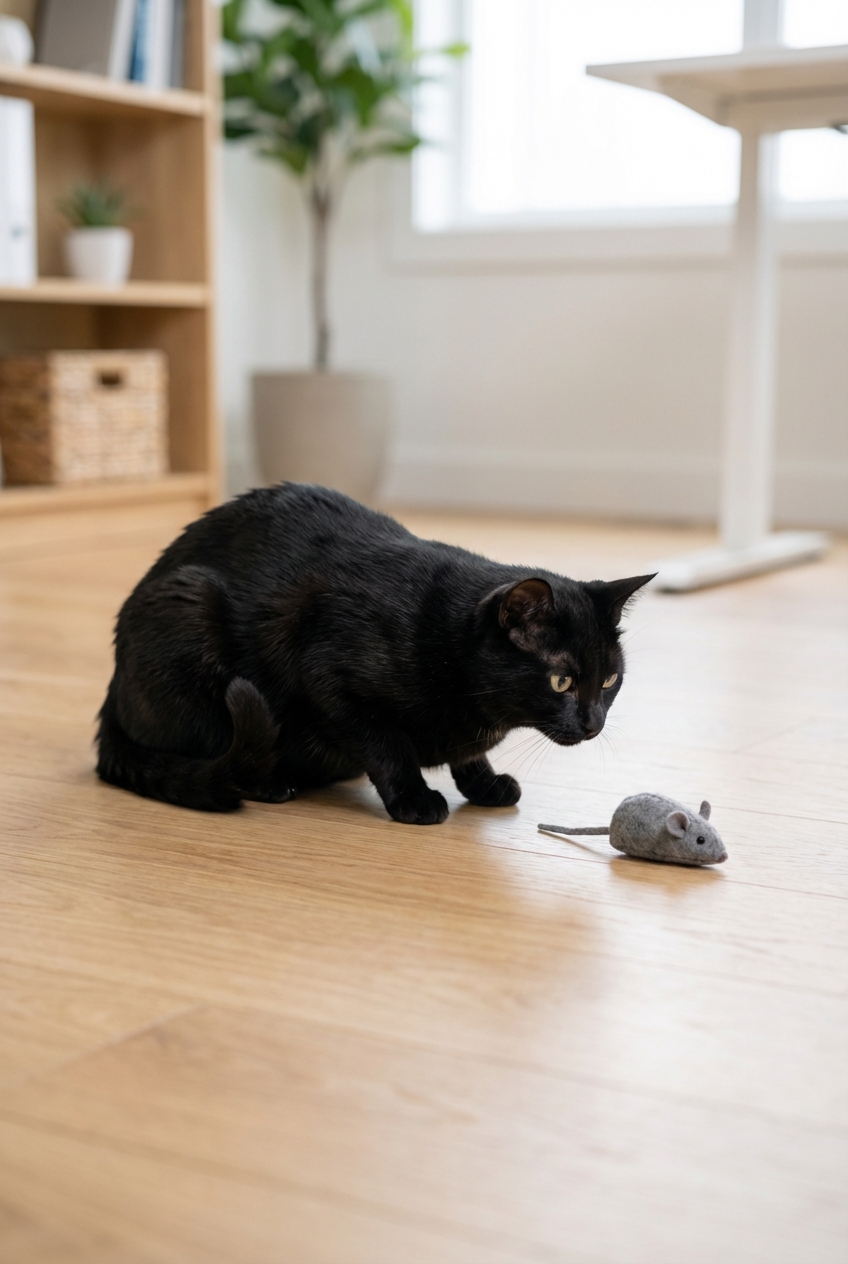
Cats wiggle their butt before pouncing to position their back feet, load their hind-leg muscles, and fine-tune their balance so they can launch forward quickly and accurately.
Think of it like a sprinter settling into the starting blocks. The wiggle is your cat’s last-second setup for takeoff.
What the butt wiggle does
The “wiggle” can range from a tiny weight shift to a full-on hip shimmy. Either way, it is usually part of the same pre-pounce checklist.
1) Setting the rear-wheel drive
Cats are built for explosive bursts of speed. Most of the power for a pounce comes from the hindquarters, especially the large muscles of the thighs and hips. The wiggle may help your cat tuck their feet under their body and find better traction on the surface they are standing on.
2) Shifting weight for balance
Before a pounce, a cat lowers the front end and shifts weight backward. That can make the body more stable and reduce the chance of slipping. The wiggle is often part of that weight shift, helping the cat feel centered and ready to spring.
3) Aiming the launch
Predatory behavior is all about timing and accuracy. A small adjustment in foot placement can change the direction of the jump. The wiggle can be a micro-correction, like lining up a shot.
4) Coiling for takeoff
Many animals use a quick pre-movement to prime muscles and tendons. In cats, the crouch and wiggle can help load the hind legs so the pounce is fast and powerful.
Hunting or play?
Both, because play is practice. Domestic cats still have the same basic hunting sequence as their wild relatives:
- Stalk (quiet movement, low body posture)
- Freeze (intense focus)
- Prep (sometimes includes a butt wiggle)
- Pounce (the burst)
- Grab and kick (sometimes followed by a “bunny kick”)
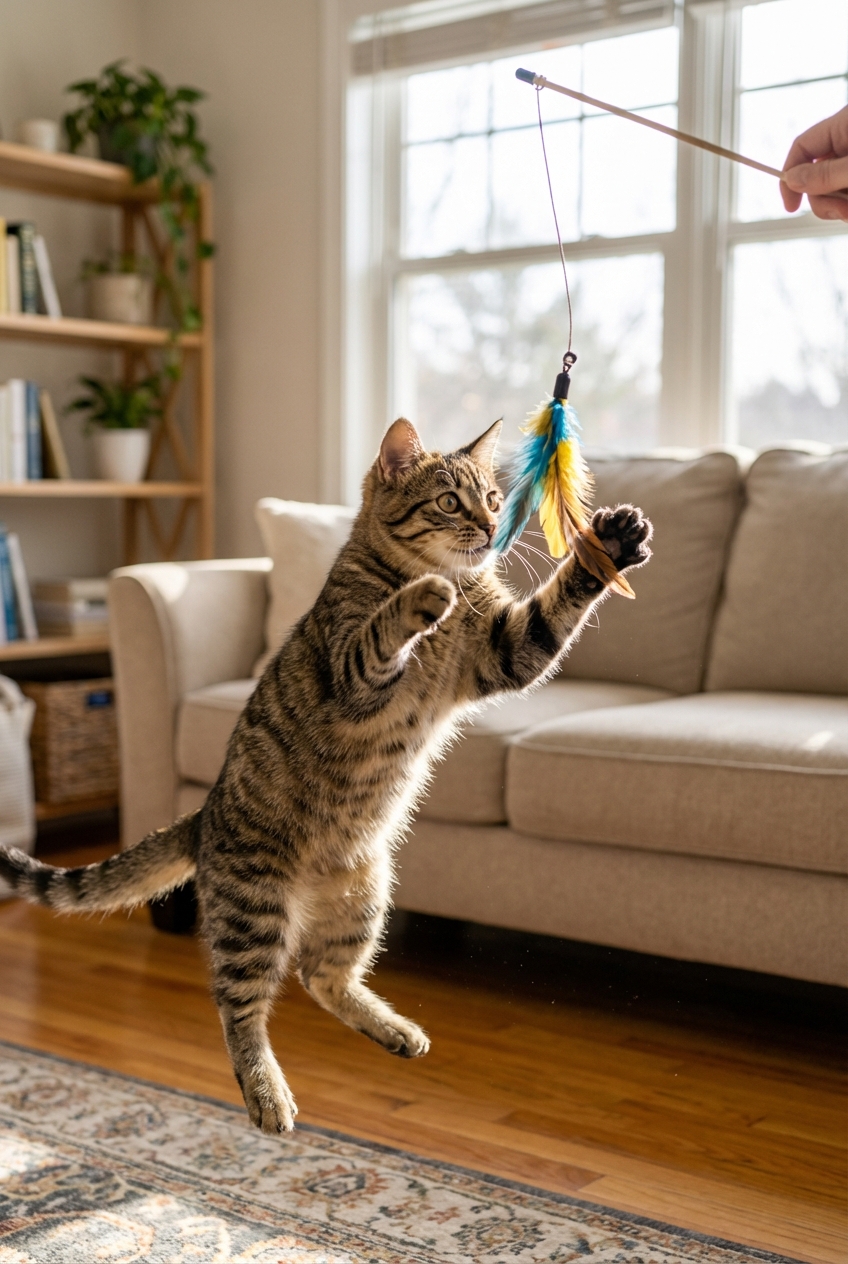
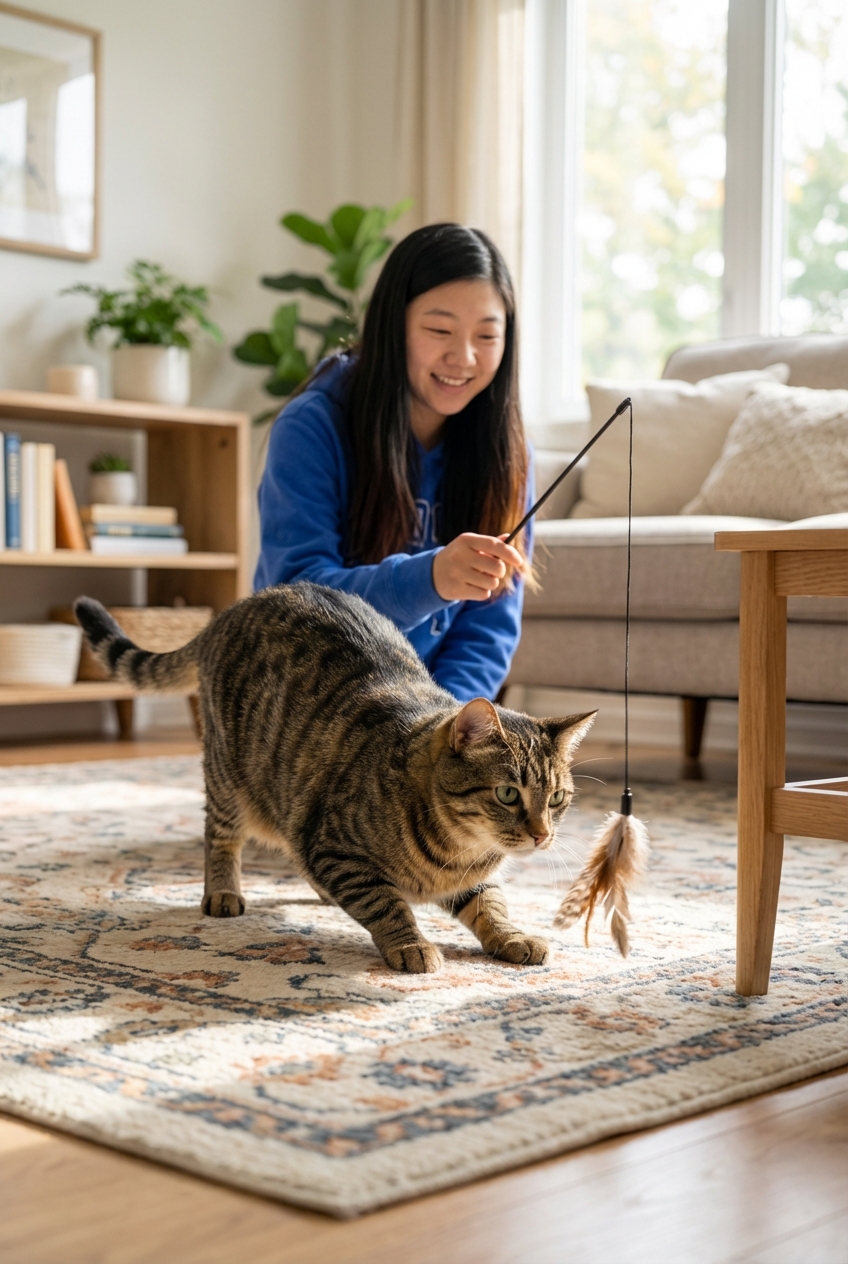
When your cat does this with a wand toy, they are rehearsing instincts that would help them catch prey. That is also why interactive play is so enriching because it speaks your cat’s natural language.
Why some cats wiggle more
Not every cat does a big, dramatic wiggle. Differences are normal and can depend on:
- Personality and confidence: Some cats are more deliberate hunters, others are more impulsive.
- Body type and conditioning: A cat who is less fit or carrying extra weight may adjust more before jumping.
- Surface traction: Slick floors can lead to more repositioning for grip.
- Distance to the target: A longer pounce may require a more careful setup.
- Age: Kittens often exaggerate movements while they learn coordination.
- Excitement level: Some cats get extra wiggly when they are really “locked in” on the target.
When to worry
Usually, it is completely normal. But because the movement involves the hips, knees, spine, and paws, it is worth paying attention to your cat’s overall comfort and any sudden changes.
Call your vet if you notice
- Stiffness, limping, or reluctance to jump
- Sudden sensitivity when you touch the hips or lower back
- Wobbliness in the rear legs
- Crying out during jumping or play
- Less playfulness paired with hiding or irritability
- Changes in litter box habits (this can be pain-related, but it can also signal urinary, digestive, or stress issues, so it is worth checking out)
Cats are masters at masking discomfort, so a subtle decrease in jumping or play can be an early clue that something is off.
Note: This article is for general education and is not a substitute for veterinary advice. If you are concerned about pain or a behavior change, contact your veterinarian.
Healthy pouncing at home
If your cat loves the wiggle-then-pounce routine, you can encourage it in ways that are safe and enriching:
- Use interactive toys: Wand toys let your cat stalk, chase, and “catch” in a satisfying way.
- Let them win sometimes: Ending play with a successful catch helps prevent frustration.
- Choose paw-friendly surfaces: Add rugs or runners if you have lots of slippery flooring.
- Keep play sessions flexible: Many cats do well with a couple of short sessions a day (like 5 to 10 minutes), but adjust based on your cat’s age, health, and energy.
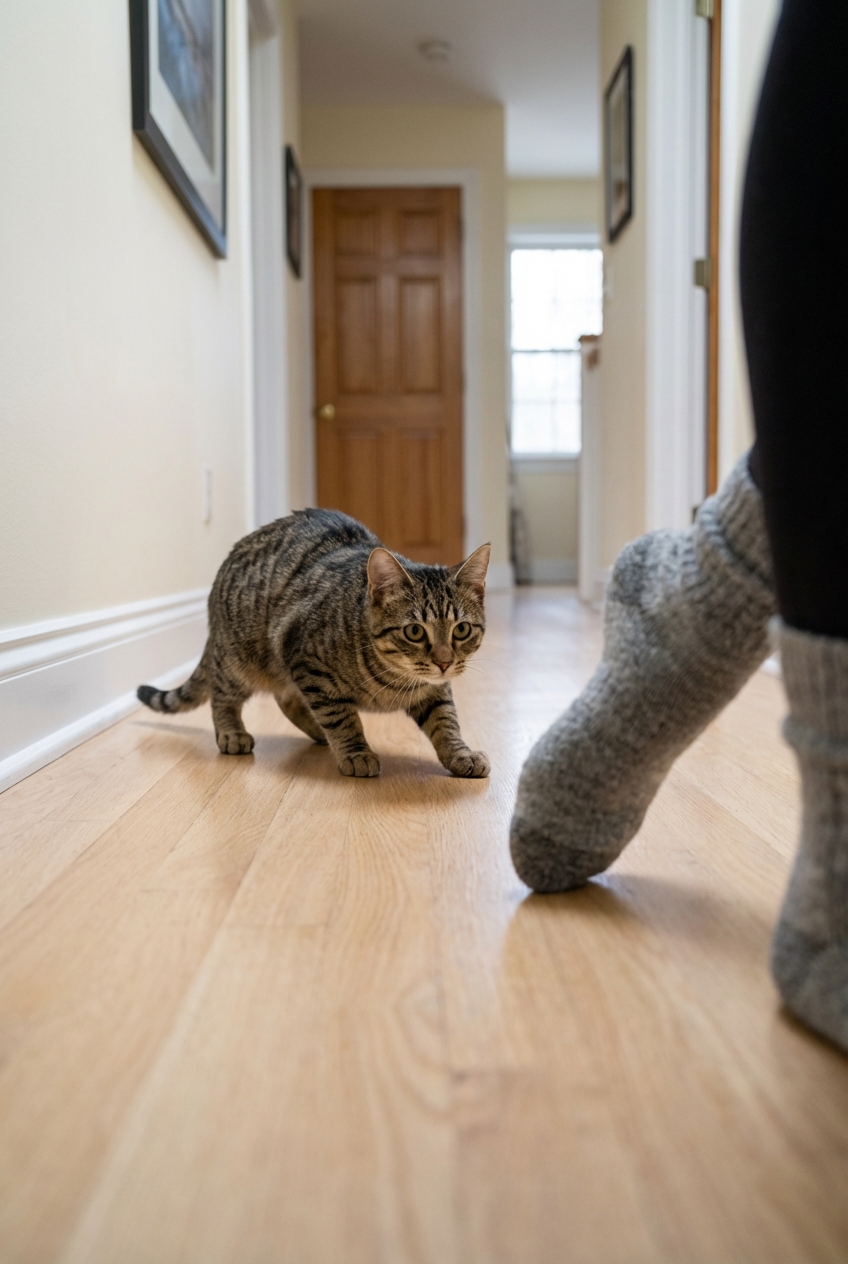
- Redirect ankle ambushes: If your cat is pouncing on feet or hands, shift that energy to a toy right away so you do not accidentally teach them that human ankles are prey.
- Watch weight and conditioning: A healthy body condition makes jumping and landing easier on joints.
Bottom line
That butt wiggle is not random at all. It is your cat’s pre-launch routine, adjusting foot placement, balance, and muscle tension so the pounce can be quick and accurate. Most of the time, it is simply a sign your cat is feeling playful, focused, and ready to engage.
If the wiggle is paired with stiffness, limping, or hesitation to jump, it is worth a conversation with your veterinarian. Otherwise, enjoy the show, and maybe keep your toes out of range.