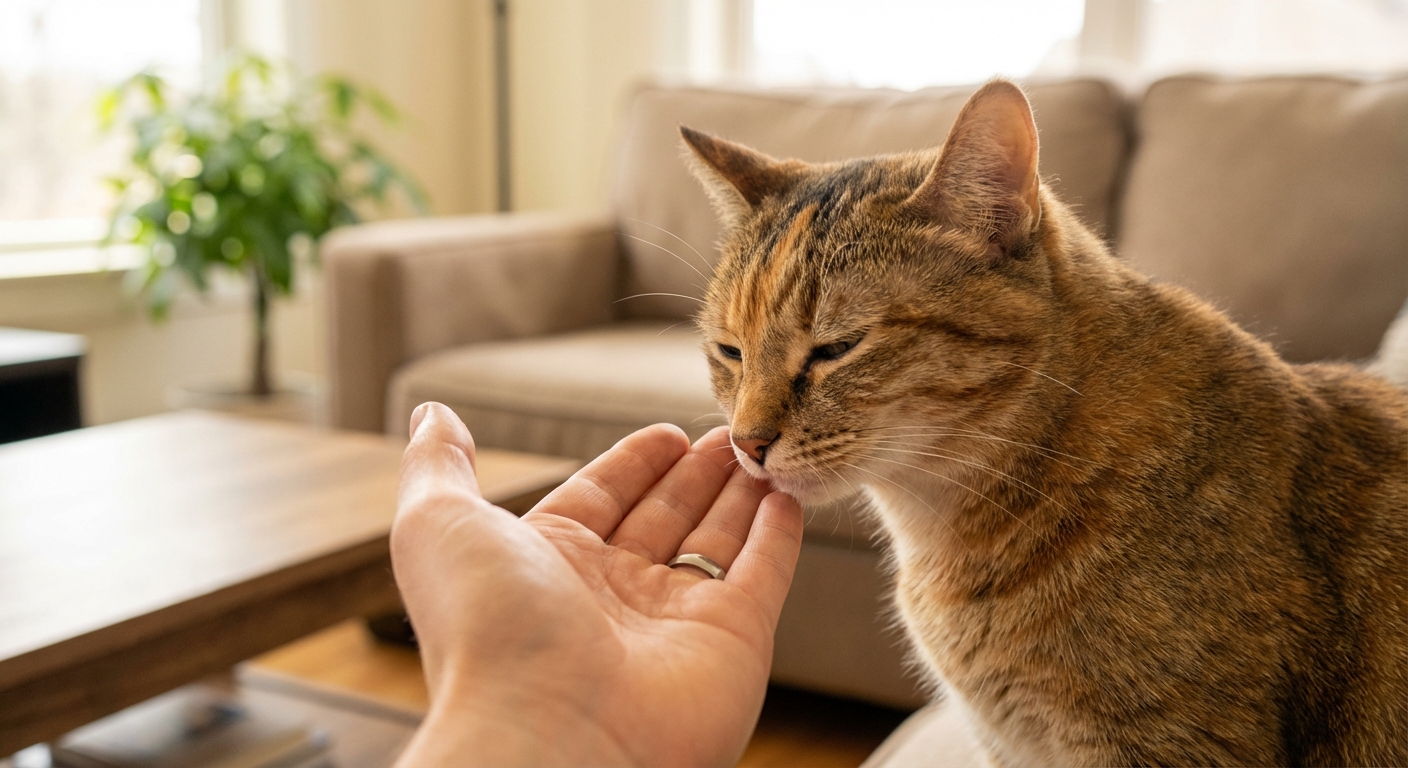
Stop cat biting by matching the bite to the cause—play, overstimulation, fear, pain, or redirected aggression. Get in-the-moment steps, training tips, and ...
Article
•
Designer Mixes
Why Cats Bite: Common Causes and How to Stop It

Shari Shidate
Designer Mixes contributor
Cat biting can feel confusing. It often happens in the middle of what seems like a “good moment” like petting on the couch, playtime with a wand toy, or even a friendly hello. The truth is, most cats are not being “mean.” They are communicating, protecting themselves, or practicing natural hunting behaviors. Once you learn what your cat is trying to say, you can respond in a way that builds trust and reduces biting over time.

What cat bites usually mean
A bite is information. Cats bite for different reasons, and the most effective solution depends on the “why” behind the behavior.
Most cat bites fall into a few major categories:
- Play and hunting behavior
- Overstimulation from petting
- Fear or feeling cornered
- Pain or medical discomfort
- Stress, frustration, or redirected aggression
- Attention-seeking or learned habits
Top causes of cat biting
1) Play biting and “hunter mode”
Cats are predators by nature. Even the sweetest indoor cat has instincts to stalk, pounce, grab, and bite. When hands or feet become the “toy,” cats learn that human body parts are fair game.
Common clues: biting happens during energetic moments, your cat’s body is loose and playful, and there may be pouncing or bunny kicking.
Kitten note: kittens are especially bitey while learning boundaries. Teaching gentle play early makes a big difference long-term.

2) Petting-related overstimulation
Some cats enjoy affection, but only in small doses. After a certain point, touch can start to feel irritating or overwhelming. A bite that seems to come out of nowhere is often a sign your cat’s tolerance threshold has been reached.
Common clues: tail flicking, skin ripples, ears rotate back, pupils widen, or your cat turns their head toward your hand right before biting.
3) Fear biting
If a cat feels threatened, trapped, or startled, biting can be a defensive choice. This is especially common with cats who are shy, newly adopted, under-socialized, or exposed to rough handling.
Common clues: crouched posture, flattened ears, tense body, hiding, hissing, swatting, or biting when approached.
4) Pain or underlying medical issues
When a normally gentle cat starts biting, pain should be on your short list. Dental disease, arthritis, skin irritation, and internal discomfort can make touch feel unpleasant. Cats are masters at masking symptoms, so behavior changes are often an early sign that something is off.
Common clues: new biting in an adult or senior cat, sensitivity when picked up, reluctance to jump, changes in appetite, drooling, bad breath, or hiding more than usual.
5) Stress and redirected aggression
Sometimes the bite is not really “about you.” A cat may see another cat outside, hear a loud noise, or get flooded with arousal, then lash out at the nearest target, which could be your hand or leg. This is called redirected aggression.
Common clues: biting follows a trigger like a doorbell, vacuum, unfamiliar visitor, or seeing animals through a window.
6) Gentle mouthing, “love bites,” and attention biting
Some cats use gentle mouthing as part of social interaction. This is not the same as a true bite. A “love bite” should not break skin. Other cats learn that biting gets a response, so they repeat it to demand food, play, or attention.
Common clues: light pressure with no defensive body language, or biting at predictable times such as near mealtimes.
How to stop cat biting
Once you can name the likely cause, you can match your response to it. That is how you avoid accidentally rewarding the bite or missing an early warning sign.
Step 1: Identify the pattern
Take a quick mental note of what happened right before the bite. Ask:
- Was I petting, playing, or picking my cat up?
- Did something stressful happen nearby?
- Was my cat sleeping and I startled them?
- Is this new behavior or a long-term habit?
This “bite context” is your best tool for choosing the right fix.
Step 2: Stop using hands as toys
If your cat bites during play, switch immediately to toy-based play. Use wand toys, toss toys, and puzzle feeders. If your cat grabs your hand, calmly freeze, then redirect to a toy. Avoid jerking your hand away fast, which can intensify chase instincts.
- Do: provide daily play sessions, 10 to 15 minutes, 1 to 2 times per day.
- Do: end play with a small meal or treat, which can help mirror a natural hunt-then-eat sequence.
- Do not: wrestle with your hands or let kittens practice biting skin.
Step 3: Teach bite inhibition
If teeth touch skin during play, treat it like an instant “game over.” Calmly stop, stand up, and remove attention for 30 to 60 seconds. Then offer an appropriate toy and restart gently. Over time, your cat learns that gentle play keeps the fun going, and biting makes it end.
If you have a kitten, consistency matters even more. Everyone in the household should follow the same rule: teeth on skin ends play.
Step 4: Learn and respect petting limits
If biting happens during cuddles, you are likely seeing overstimulation. Keep petting sessions shorter and stop before your cat reaches their limit.
- Pet in areas many cats tolerate well, like cheeks, chin, and head.
- Pause every 10 to 15 seconds and see if your cat leans in for more.
- Watch for early signs like tail flicking, tense muscles, or ears turning back.
Think of this as building trust through predictability. Your cat learns you will listen before they need to escalate.
Step 5: Reinforce calm behavior
Reward what you want to see. When your cat interacts gently, offer a treat, praise, or a short play session. If biting has become attention-seeking, teach an alternative behavior, such as touching a target stick or sitting nearby, to earn attention.
Step 6: Create a low-stress environment
Stress increases reactivity. Small upgrades in your cat’s environment can make a big difference:
- Vertical space: a sturdy cat tree or shelf to climb and observe.
- Hiding options: a quiet bed, covered cubby, or open closet spot.
- Routine: consistent mealtimes and playtimes.
- Separate resources: in multi-cat homes, provide multiple litter boxes, water stations, and resting spots.
- Basic handling support: regular nail trims can reduce accidental scratches if your cat grabs or bunny-kicks during play.

Step 7: Use safe interruptions, not punishment
Yelling, hitting, scruffing, or spraying water can increase fear and worsen biting. Instead:
- Calmly stop interaction and step away.
- Redirect with a toy if your cat is in play mode.
- If needed, place a pillow, folded blanket, or thick towel between you and the cat to safely create space.
Consistency matters. The message should be: biting ends attention, gentle behavior earns it.
What to do when a cat bites
If your cat bites your hand or arm, focus on staying safe and avoiding escalation:
- Do not yank away, which can tear skin and intensify grabbing.
- Go still for a beat, then gently disengage if you can do so safely.
- Create space using a pillow, blanket, or towel as a barrier if your cat is keyed up.
- Redirect with a toy only if your cat is clearly in play mode and not fearful or defensive.
- End the interaction if your cat is overstimulated or frightened, and give them time to settle.
If your cat is latched on, prioritize separation over “winning.” Use a barrier (blanket, towel, pillow) to protect your skin, and disengage as safely as possible. Avoid physical battles.
When to get help
Because pain and illness can show up as behavior changes, it is wise to get veterinary input if biting is new, escalating, or paired with other changes.
- See a vet soon if biting starts suddenly, your cat seems sensitive to touch, or you notice appetite, litter box, sleep, or mobility changes.
- Consider a qualified feline behavior professional if bites are frequent, severe, unpredictable, or linked to aggression between pets.
Get help sooner if you are seeing high-risk patterns like stalking and ambush attacks, bites to the face, repeated unprovoked bites, or fights that are escalating quickly in a multi-cat home.
Early support can prevent a pattern from becoming ingrained.
Safety note about cat bites
Cat bites are high-risk for infection because their teeth can cause deep punctures that trap bacteria under the skin. If a bite breaks the skin, wash the area right away with soap and running water.
Seek medical care the same day for any puncture wound, especially bites on the hand, wrist, near a joint, or if the bite looks deep. Do not wait for redness or swelling to appear. Many people are advised to receive preventative treatment because infections can develop quickly.
Also ask a clinician about whether you need a tetanus booster and whether a rabies risk assessment is needed based on the cat’s vaccination status and the circumstances. Seek urgent care right away if you have spreading redness, swelling, warmth, drainage, fever, worsening pain, numbness, trouble moving a finger, or you are immunocompromised.
A simple plan to start today
Small, consistent habits compound into remarkable results over time. If you want a realistic starting point, focus on these three steps for the next 7 days:
- Daily play: 10 minutes with a wand toy, then a small treat.
- Shorter petting: stop while your cat is still enjoying it.
- Reward gentle choices: treats for calm greetings and soft paws.
With patience and a little detective work, most cats can learn healthier ways to communicate, and you can feel confident around them again.