Ankle biting is often play, boredom, stress, or learned attention-seeking. Learn how to read the signs, stop rewarding bites, redirect to toys, and build a d...
Article
•
Designer Mixes
Why Cats Bite Ankles and How to Stop It

Shari Shidate
Designer Mixes contributor
If you have ever walked past your cat only to feel a quick chomp on your ankle, you are not alone. As a veterinary assistant, I can tell you this behavior is common, usually fixable, and rarely about “being mean.” Most ankle biting is a mix of normal cat instincts, communication, and learned habits. The key is figuring out why your cat is doing it, then responding in a way that does not accidentally reward the bite.

What ankle biting usually means
Cats use their mouths the way we use our hands. A nip can mean excitement, frustration, overstimulation, or a predatory reflex kicking in. The same behavior can look identical on the outside, but the motivation matters because the solution changes.
1) Predatory play
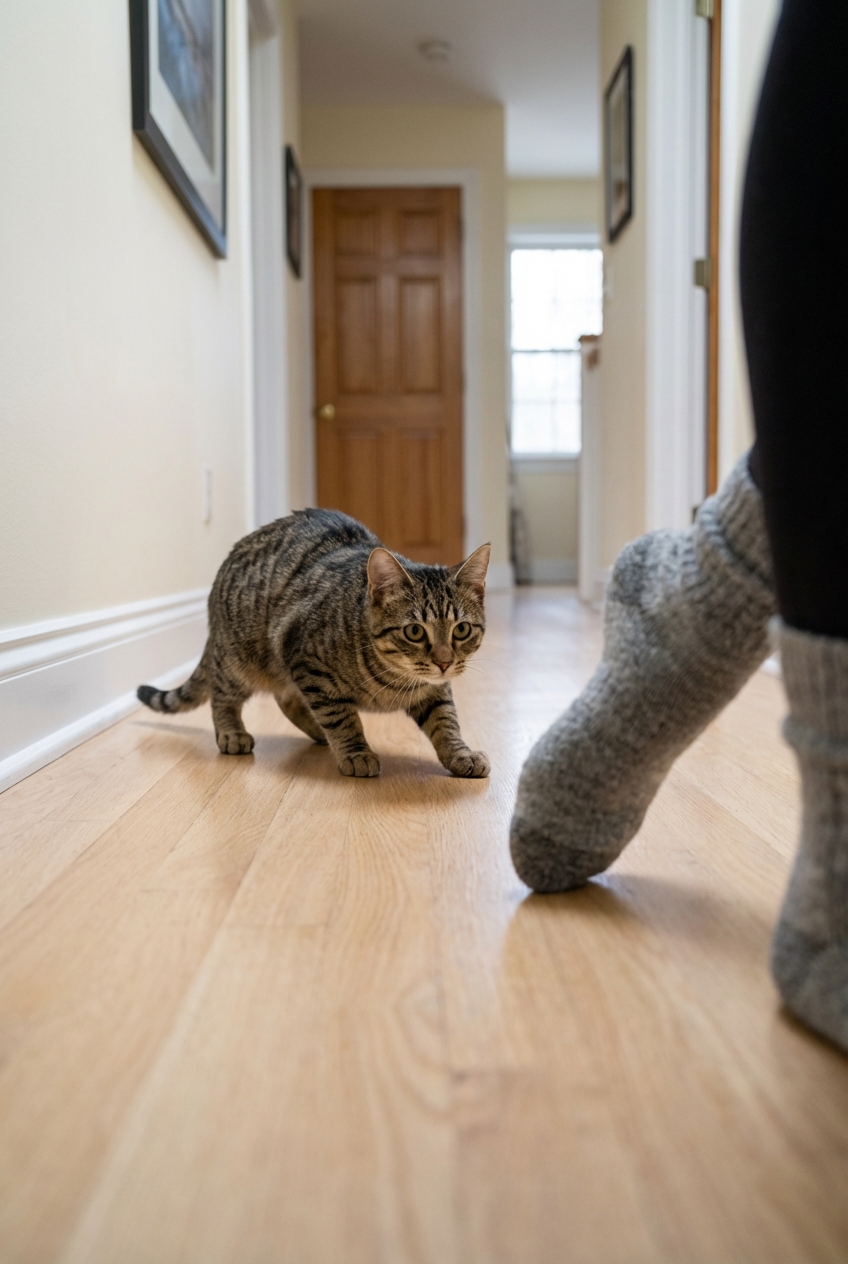
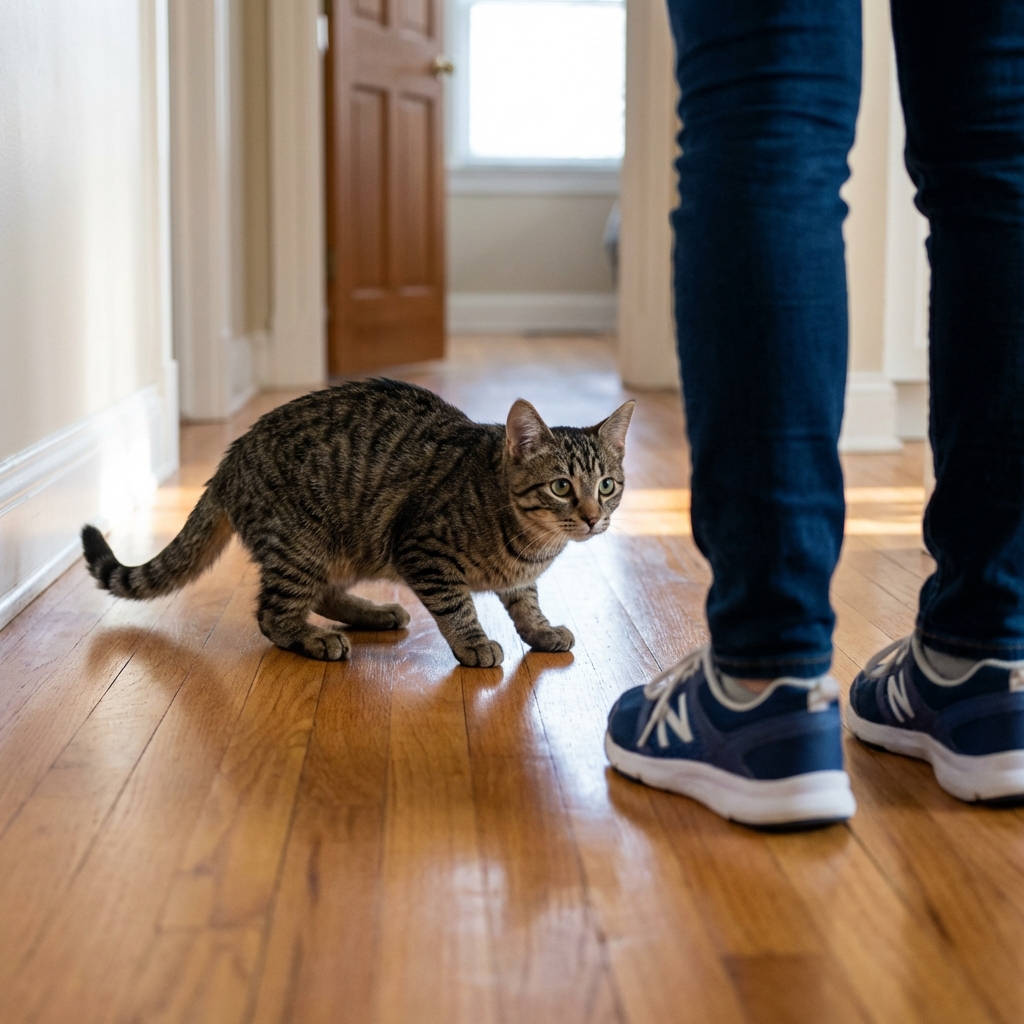
Moving feet look like prey. Many cats, especially young cats and indoor cats with lots of energy, get triggered by the quick motion of ankles passing by. If your cat crouches, wiggles, stalks, then pounces, that is classic predatory play behavior.
2) Attention seeking (and it works)
If biting your ankles makes you talk, look, bend down, or chase, your cat may learn that biting is an efficient way to start interaction. Even negative attention can be rewarding to an under-stimulated cat.
3) “I’m overstimulated” or “I’ve had enough”
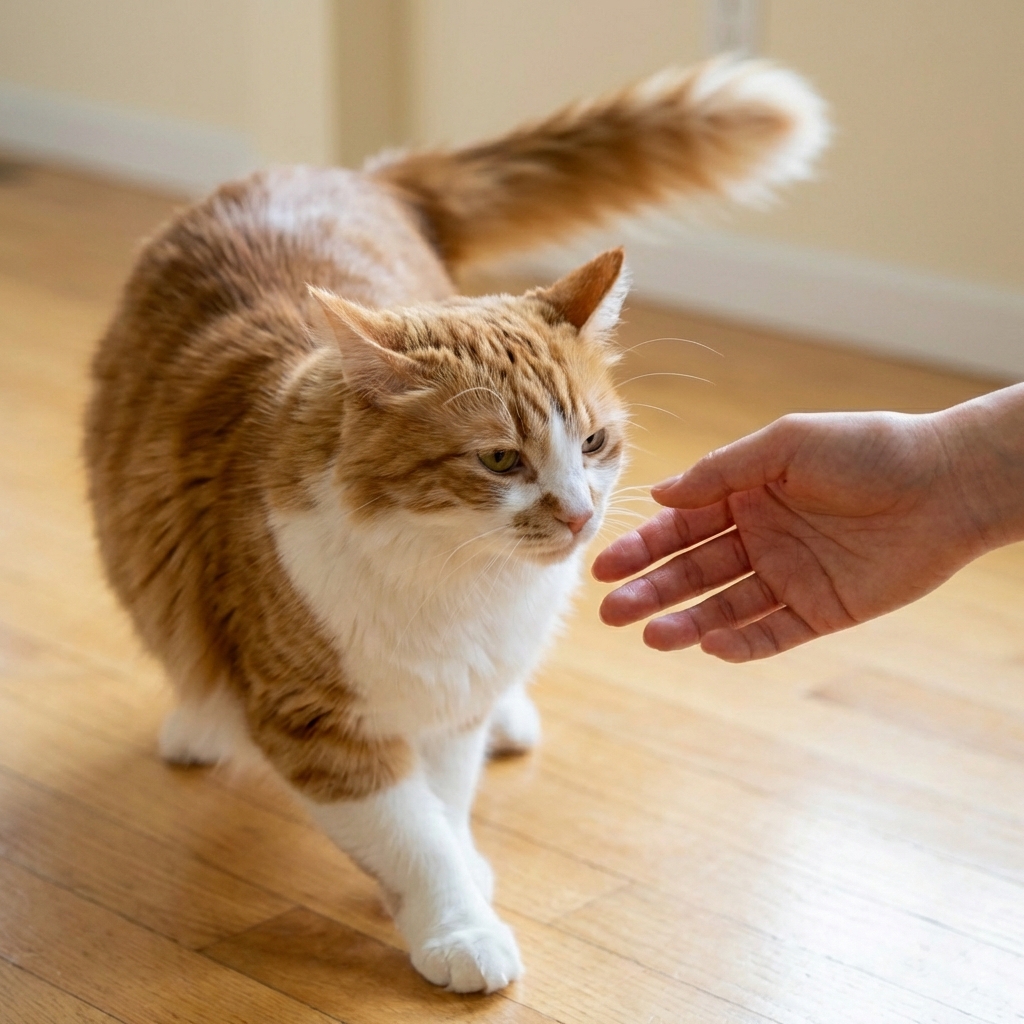
Some cats bite during or after petting, or when they are already keyed up. If the bite follows tail swishing, skin twitching, ears turning sideways, or sudden tension, your cat is likely overstimulated and trying to end the interaction.
4) Frustration, routine, or hunger
Cats are routine-driven. If you are late with food, play, or waking up, an ankle bite can become a demanding “reminder.” This is especially true if the biting happens at specific times of day.
5) Pain or medical causes
Sudden new biting, crankiness, or biting when touched can be linked to pain or illness. Dental disease, arthritis, and skin irritation can all change behavior. Medical issues that affect energy or mood, such as hyperthyroidism, can also contribute to restlessness or irritability. If the biting is new, escalating, or paired with other changes, it is worth a veterinary visit.
Quick checklist: read the context
Try to notice what happens in the 30 seconds before the bite. This helps you pick the right plan.
- Stalking, pouncing, grabbing with front paws: predatory play.
- Meowing, circling your legs, walking you to the kitchen: wants something (often food or attention).
- Tail swishing, ears back, tense body: overstimulation or irritation.
- Biting only when you touch a certain area: possible pain.
How to stop ankle biting
The goal is simple: remove the reward for biting, and give your cat a better outlet that reliably works.
Step 1: Stop using your body as the toy
No hands, feet, or wiggling fingers under blankets. If your cat has learned that human limbs are “prey,” the habit can stick. Toys create healthy distance and teach appropriate targeting.
Step 2: Freeze, disengage, then redirect
When the bite happens, do not jerk your foot (that triggers more chasing). Also avoid pushing your cat away with your hands, which can turn the moment into a game. Instead:
- Freeze for a second or two.
- Calmly disengage for 10 to 30 seconds by stepping away or placing a barrier between you and your cat.
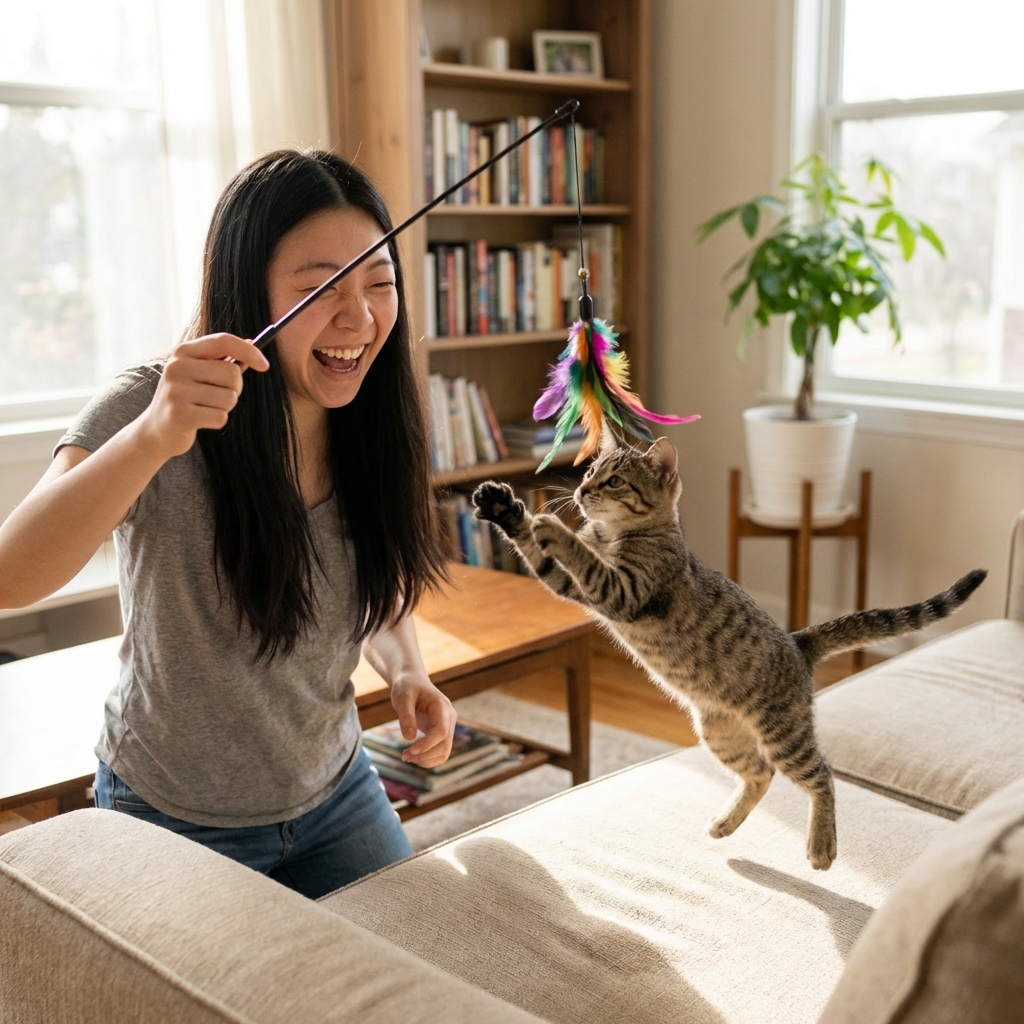
- Redirect with a wand toy or toss a kicker toy (a long plush toy they can grab and bunny-kick) away from your legs.
This teaches: biting ends access to you, but playing with toys continues the fun.
Step 3: Schedule daily play
Most ankle-biters need more structured play. Aim for 10 to 15 minutes once or twice daily (more for kittens). Use a wand toy to mimic prey: slow stalk, quick dart, then let your cat catch it sometimes.
Pro tip: end play with a small meal or a few treats. This can help mimic the hunt-eat-groom-sleep rhythm many cats follow, and it often reduces random attacks.
Step 4: Reward calm behavior near your feet
Catch your cat being good. When your cat approaches without biting, calmly drop a treat or toss a toy. If your cat enjoys it, gentle petting can also work. You are building a new habit: “walking near humans makes good things happen.”
Step 5: Improve the environment
Bored cats create their own entertainment. Add options that meet normal feline needs:
- Vertical space: cat trees, shelves, window perches.
- Solo enrichment: puzzle feeders, treat balls, crinkle tunnels.
- Scratch zones: horizontal and vertical scratchers in key rooms.
- Viewpoints: a perch near a window for “cat TV.”

Step 6: Do not punish
Yelling, swatting, or spray bottles can increase fear and anxiety, and anxious cats bite more. Punishment also does not teach what to do instead. Calm, consistent redirection works better and protects your bond.
Night and early morning bites
This is usually a routine and energy issue. Cats often tend to be most active around dawn and dusk, but many also shift their schedule to match their household.
- Do a play session about 30 to 60 minutes before bed.
- Offer a small meal after play, or use an automatic feeder to deliver breakfast before you wake up.
- Keep mornings boring: if biting gets you out of bed, the behavior is reinforced. Stand still, calmly step away, then redirect with a toy placed outside the bedroom.
Kids and guests
If your cat targets moving feet, manage the setup while you work on training. Supervise interactions, ask guests not to run or “tease” with their shoes, and consider baby gates or a separate room during high-energy times. This protects kids and visitors and prevents your cat from practicing the behavior.
When to call your veterinarian
Please schedule a checkup if any of the following are true:
- The biting is new or suddenly worse.
- Your cat seems to be in pain when picked up or petted.
- You notice bad breath, drooling, pawing at the mouth, or dropping food (possible dental pain).
- There are changes in appetite, weight, litter box habits, or hiding.
- The bites break skin frequently or your cat appears fearful or aggressive in other situations.
If your cat bites hard enough to puncture skin, wash the wound well and contact your healthcare provider. Cat bites are puncture wounds and can become infected quickly. Seek urgent care if you notice increasing redness, swelling, warmth, pus, fever, worsening pain, or if you are immunocompromised.
When to get extra behavior help
If you are doing daily play and consistent redirection for a few weeks and the biting is not improving, or if you see escalation like hissing, repeated ambushes, or very dilated pupils with a stiff body, it is time to get help. Ask your veterinarian about a referral to a veterinary behaviorist, or look for a certified cat behavior consultant. Early guidance can prevent the habit from becoming entrenched.
Simple 7-day reset plan
If you like having a clear plan, try this for one week:
- Days 1 to 2: Identify patterns. When and where do bites happen?
- Days 3 to 4: Add two daily wand-toy sessions and end with a small meal.
- Days 5 to 6: Start rewarding calm walking past your cat and redirect every attempted pounce.
- Day 7: Add one new enrichment item (puzzle feeder, perch, or new scratcher) and keep the routine.
Most families see improvement when they are consistent and stop accidentally rewarding the behavior.
The bottom line
Ankle biting is usually your cat saying, “I have energy,” “I want something,” or “I am overwhelmed.” Once you meet the underlying need and teach a better outlet, the bites typically fade. Be patient, stay consistent, and do not be afraid to ask your veterinarian for help if anything feels sudden or out of character.