Ankle biting is often play, attention-seeking, overstimulation, routine frustration, or pain. Learn how to read the signals, redirect safely, and prevent bit...
Article
•
Designer Mixes
Why Cats Bite Ankles

Shari Shidate
Designer Mixes contributor
If your cat has ever darted out of nowhere to chomp your ankle, you are not imagining it. Ankle biting is a relatively common feline behavior, and it is usually a mix of normal cat instincts plus a little bit of learned habit. The good news is that many ankle-biters can be redirected with the right kind of play, predictable routines, and a few simple household tweaks.
What it means
Cats rarely bite “out of nowhere.” From your cat’s point of view, ankles are fast-moving, exciting targets that show up on schedule. Common reasons include:
1) Play and hunting instinct
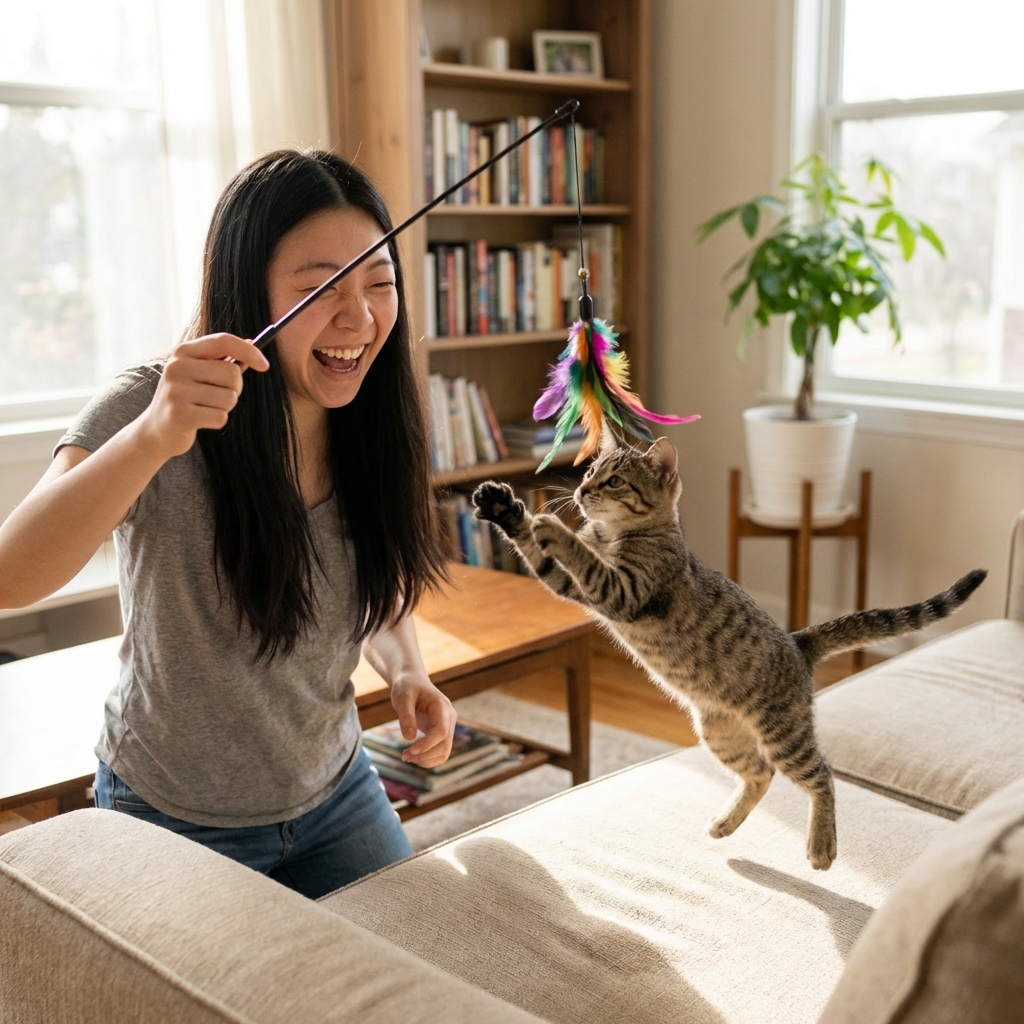
Cats are hardwired to stalk, chase, grab, and bite. When a cat does not have enough appropriate outlets, they may turn your moving feet into the day’s best hunting game. This is especially common in kittens, adolescents, and indoor cats with high energy.
2) Attention seeking that accidentally worked
If ankle bites lead to you talking, looking, moving faster, or engaging with them, many cats file that away as “effective.” Even negative attention can reinforce the behavior, because it is still attention.
3) Overstimulation and stress
Some cats bite when they are over-aroused. That can look like zoomies, dilated pupils, tail flicking, or a sudden swat-bite combo. Stressors like a new pet, schedule changes, loud noises, outdoor cats at the window, or a lack of hiding places can make biting more likely.
4) Boredom and low enrichment
A cat who has little to do may create their own entertainment. Hallway ambushes often happen when there is not enough daily interactive play, climbing options, or food enrichment.
5) Pain or medical issues
Less common, but important: pain can shorten a cat’s fuse. Dental disease, arthritis, skin irritation, injuries, and other illnesses can contribute to irritability and sudden behavior changes. Hyperthyroidism can sometimes contribute as well. If ankle biting is new, intense, or paired with other changes, it is worth a veterinary check.
Quick note: Behavior tips are not a substitute for diagnosis. If you suspect pain or illness, your veterinarian should be your first stop.
Clues to watch
Small details can tell you whether you are seeing play behavior or something more serious.
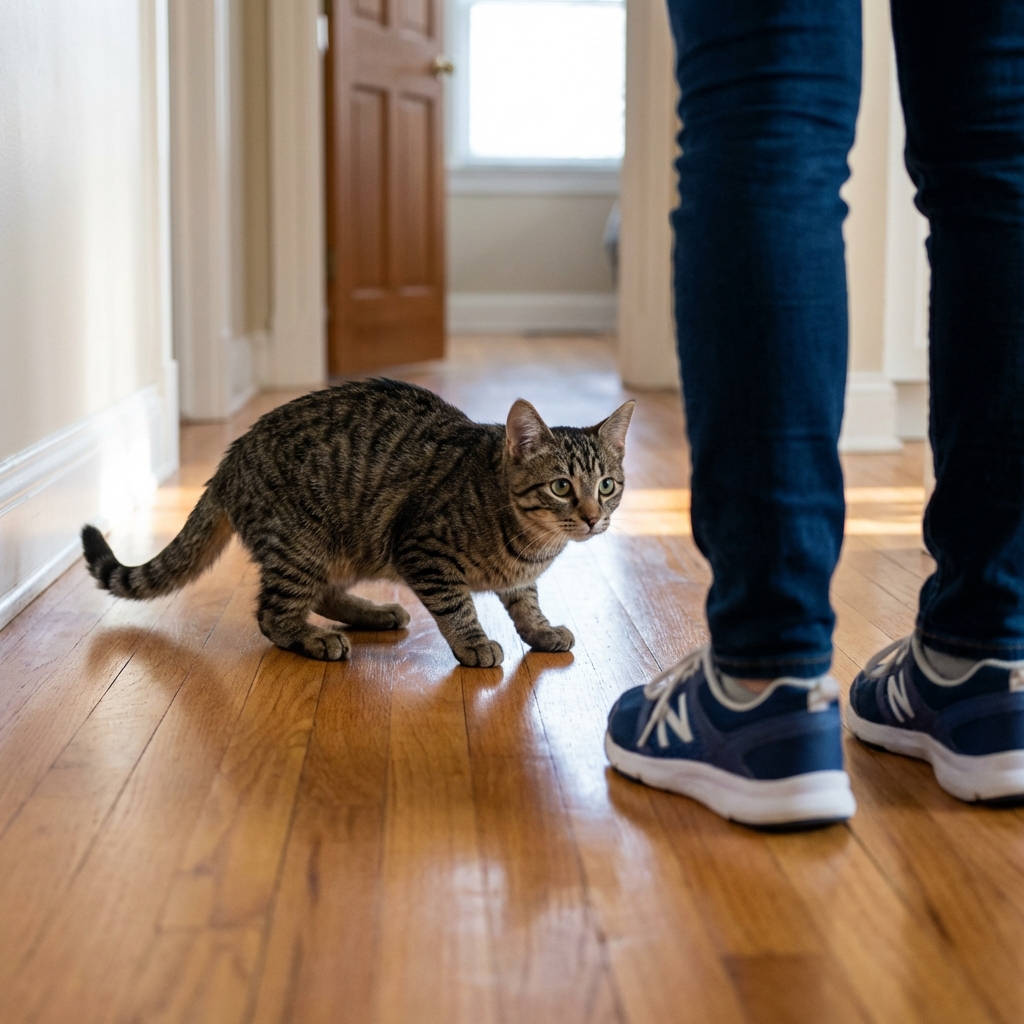
- Playful ambush: crouching, stalking, quick pounce, then running away.
- Overstimulation: twitchy skin, tail thumping, ears turning sideways, pupils wide.
- Fear: flattened ears, crouched posture, hiding, growling or hissing.
- Redirected aggression: your cat is worked up by something else (outside cat at the window, loud noise) and bites the nearest moving thing.
Safety note: If your cat breaks skin, wash the wound with soap and water. Cat bites can become infected. Seek prompt medical care for deep punctures, bites to the hand, worsening pain, spreading redness, swelling, fever, drainage, or if you are immunocompromised.
How to redirect it
Think of this as a two-part plan: prevent the ambush and teach a better behavior that still meets your cat’s needs.
Step 1: Stop rewarding the bite
- Freeze your feet if it is safe to do so. Fast movement often makes the “hunt” more exciting.
- Go silent and avoid eye contact for a moment, then redirect to a toy. Big reactions can reinforce the behavior.
- Do not use hands or feet to play at any time, even with kittens. It trains biting as a game.
If your cat is latched on, gently use a pillow, folded blanket, or a thick towel between you and the cat to create space. Avoid pulling away quickly, since that can worsen scratches.
Step 2: Redirect to the right target
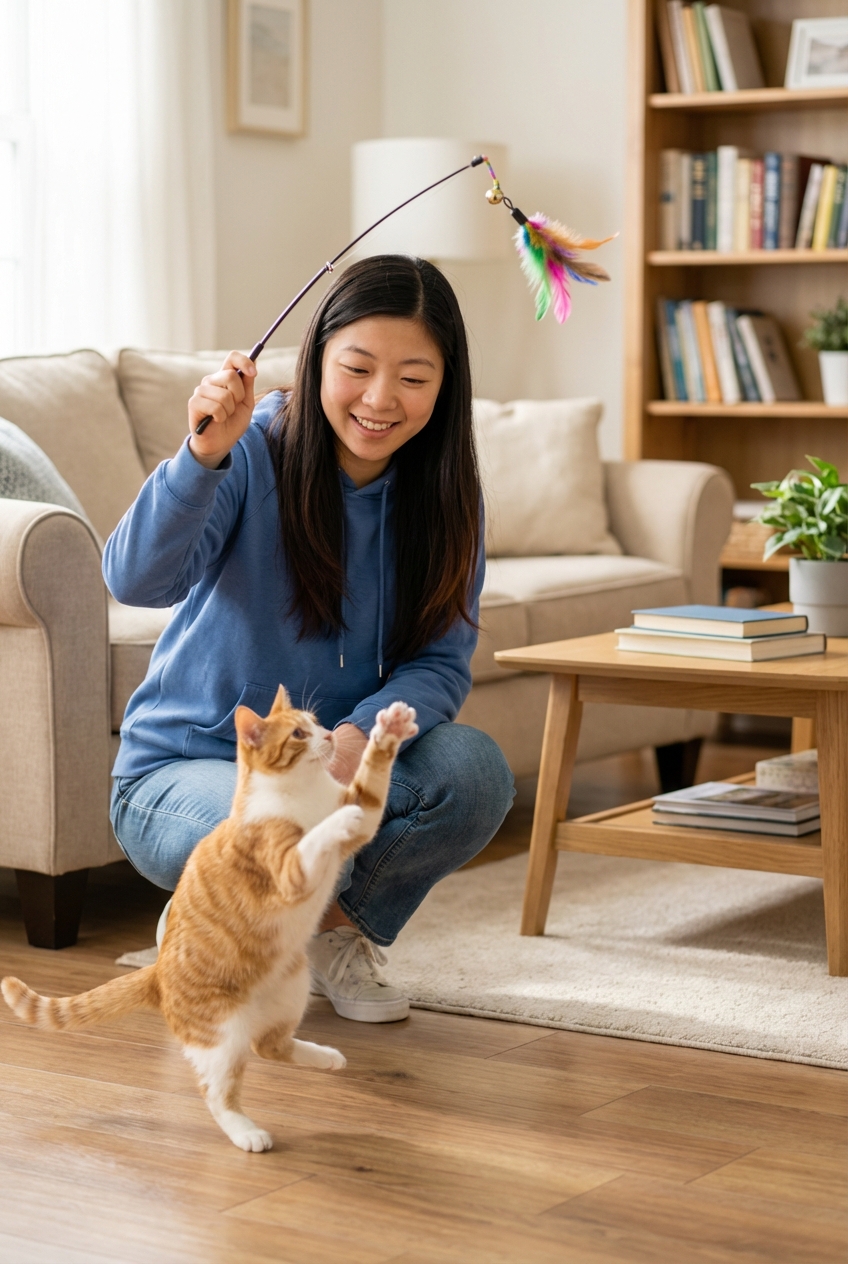
Keep a toy in “ambush zones” like hallways. The moment you notice stalking, toss a toy away from your legs. Great options include:
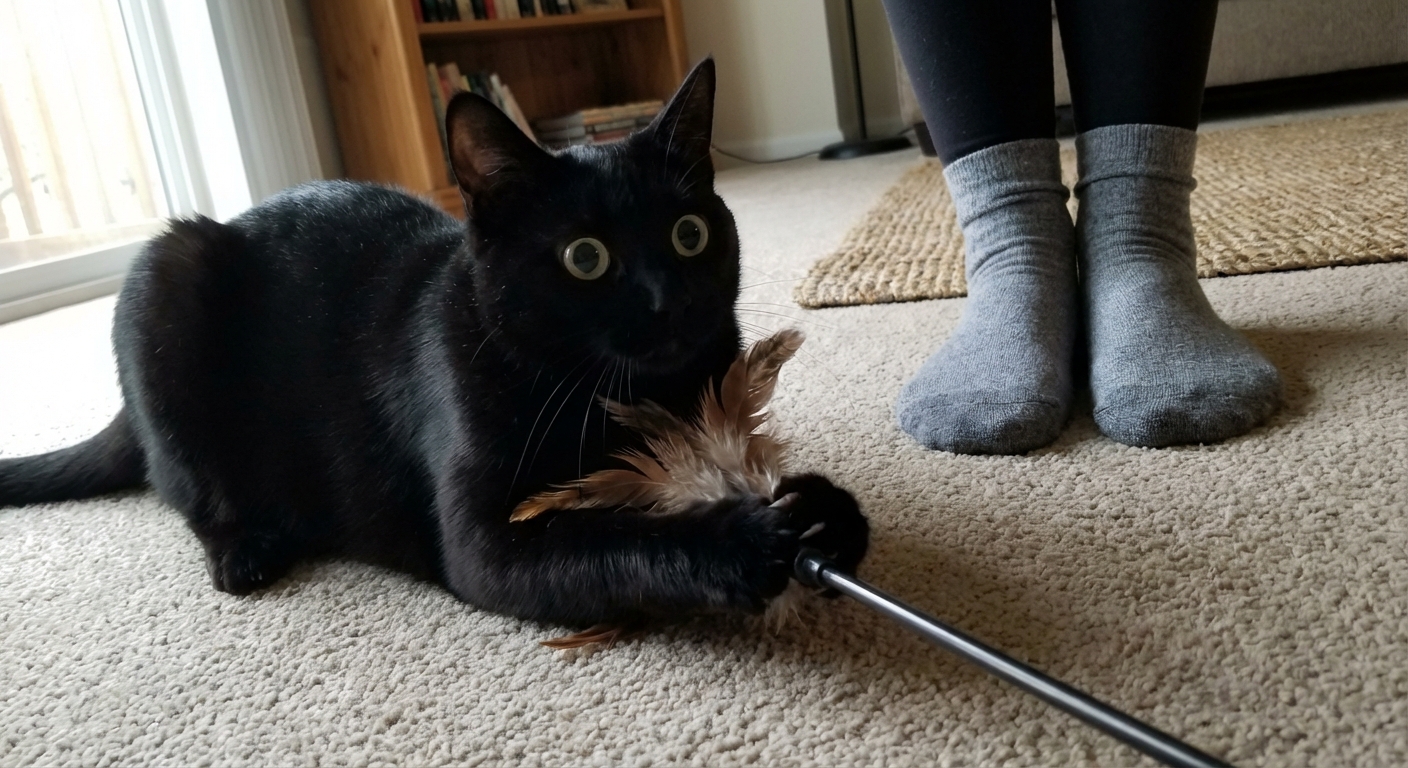
- Wand toys (hands stay far from teeth).
- Soft kickers (lets them grab and bunny-kick safely).
- Small balls or springs for quick chase bursts.
Step 3: Schedule daily interactive play
Most ankle-biters improve when their hunting sequence is met on purpose, every day. Aim for two to three short sessions (5 to 10 minutes) instead of one long one.
- Start with slow stalking motions.
- Build to quick chase and pounces.
- End by letting your cat “catch” the toy.
- Finish with a small meal or treats to complete the hunt-eat cycle.
Step 4: Reward the behavior you want
Teach a simple alternative, like “sit” or “go to mat.” Reward with treats when your cat approaches without biting. You are building a new habit: “I get good things when I keep teeth off human ankles.”
Step 5: Improve enrichment at home
Environmental changes reduce boredom and stress, which lowers biting overall.
- Vertical space: cat tree, shelves, or a window perch.
- Safe hiding spots: covered bed or a quiet room option.
- Food puzzles: treat balls or hidden kibble for “hunting.”
- Lick mats (cat-safe): use soft wet food or a cat treat paste, supervise, and remove it if your cat tries to chew and swallow pieces.
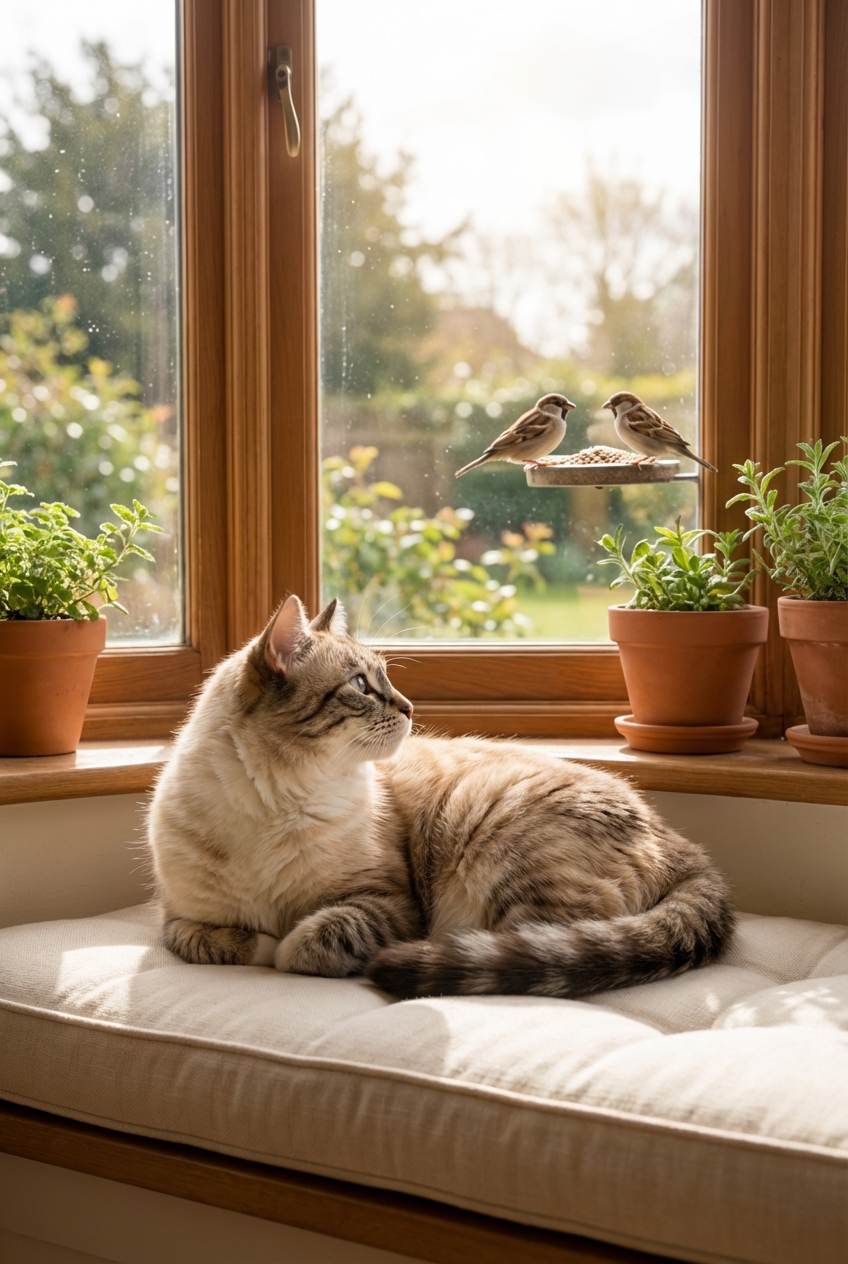
- Window enrichment: bird feeder outside a window, or nature videos for cats.
- Pheromone support: feline facial pheromone diffusers may help some cats feel calmer during transitions or stressful periods.
Step 6: Watch timing and triggers
Ankle attacks often follow patterns: right before dinner, when you get home, or when you walk down a specific hallway. If you can predict it, you can prevent it.
- Before known trigger times: do a 5-minute play session.
- During high-risk walks: carry a wand toy or toss a toy ahead of you.
- For “dinner ambushes”: use puzzle feeders to slow the routine and reduce frustration.
Step 7: Make it easier on people
A few human-focused changes can cut down on bites while you retrain the habit.
- Wear slippers or thick socks during training.
- Avoid dangling robe ties or loose pant legs that invite chasing.
- Keep halls well lit and remove clutter that creates perfect ambush corners.
- Use a baby gate or closed door temporarily for known “attack hallways,” especially during peak zoomie times.
Step 8: Plan for kids and guests
If your cat tends to bite when excited, manage the situation instead of waiting for a mistake.
- Separate your cat in a calm room with litter, water, and enrichment when visitors arrive or during high arousal.
- Coach kids to stand still “like a tree” if the cat stalks, then call an adult to redirect with a toy.
- Do not allow chasing games between children and cats, even if it looks playful.
Bonus: If you have a single young cat
Some young cats play too rough with humans because they do not get as much feedback from another cat. If your home and your cat’s temperament allow it, talk with your veterinarian or a reputable rescue about whether a well-matched feline playmate could help. It is not the right fit for every household, but for some kittens it is a game changer.
What not to do
These approaches often backfire because they increase fear or excitement.
- No yelling or physical punishment. It can create anxiety and make aggression worse.
- No spraying with water. Many cats learn to fear the person holding the bottle, not the behavior.
- No rough play. Wrestling teaches biting is normal and fun.
When to get help
Get help sooner rather than later if:
- The biting is sudden in an adult cat or is escalating.
- You see signs of pain (hiding more, less jumping, sensitivity to touch, decreased grooming).
- Your cat is also hissing, growling, or attacking in other contexts.
- There are household stressors like a new baby, a move, a new pet, or neighborhood cats outside.
A vet visit can rule out medical causes, and a credentialed cat behavior consultant can help build a tailored plan. Per force-free behavior guidelines used by veterinary behavior professionals, consistency and positive reinforcement tend to work best for long-term change.
Quick takeaway
Ankle biting is usually your cat asking for an outlet, not trying to be “mean.” Meet the hunting need with daily play, remove accidental rewards, and teach a simple alternative behavior.
If you stick with the plan for a couple of weeks, most cats start choosing toys and routines over ambush bites. And if you get stuck, you do not have to figure it out alone. Your veterinary team can help.