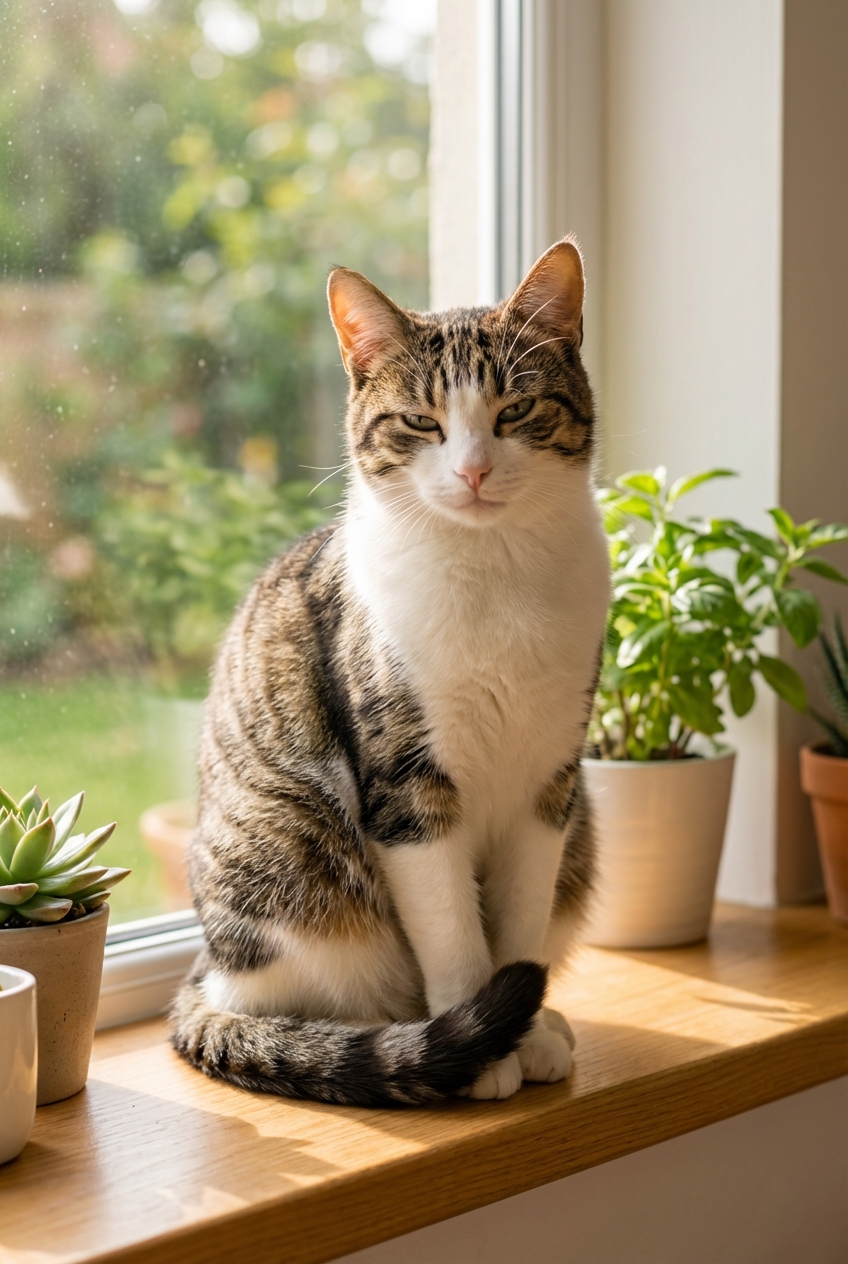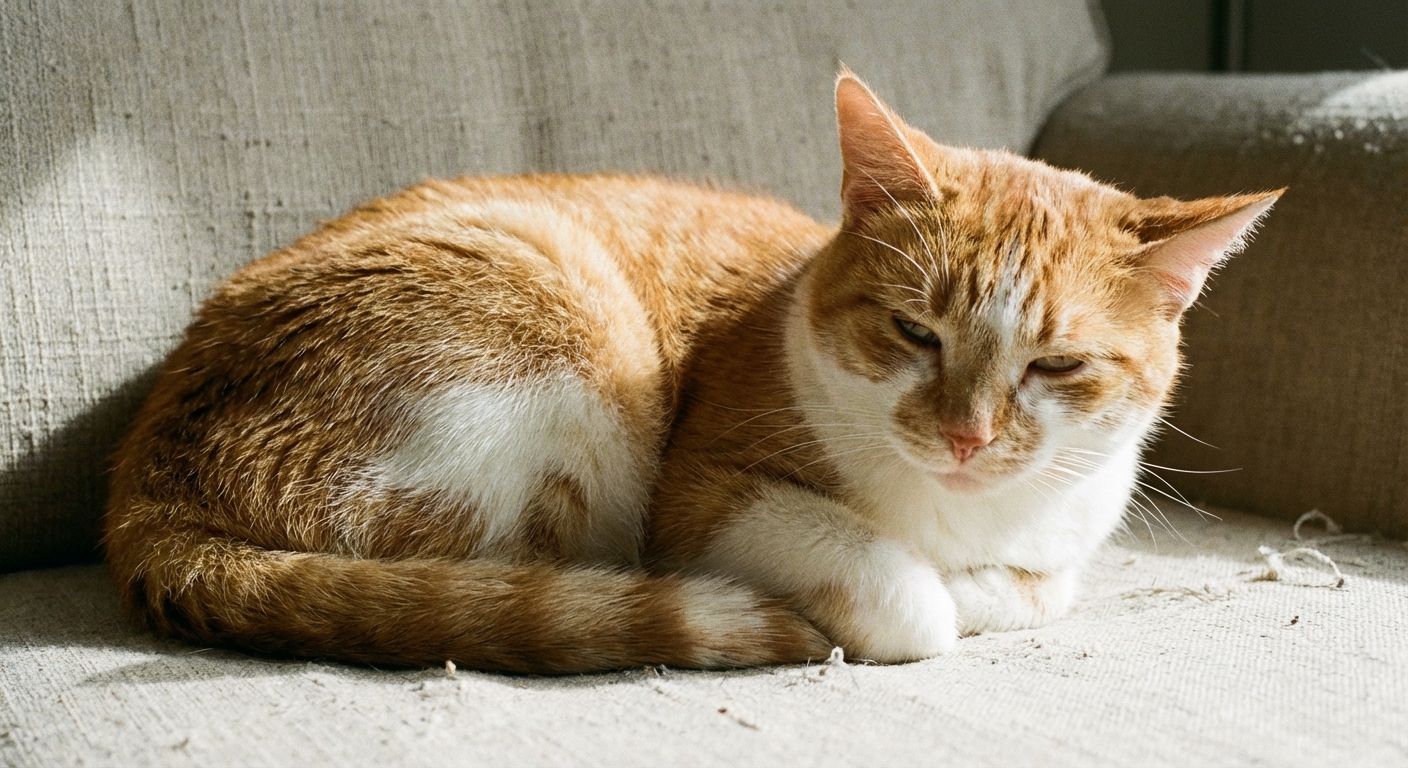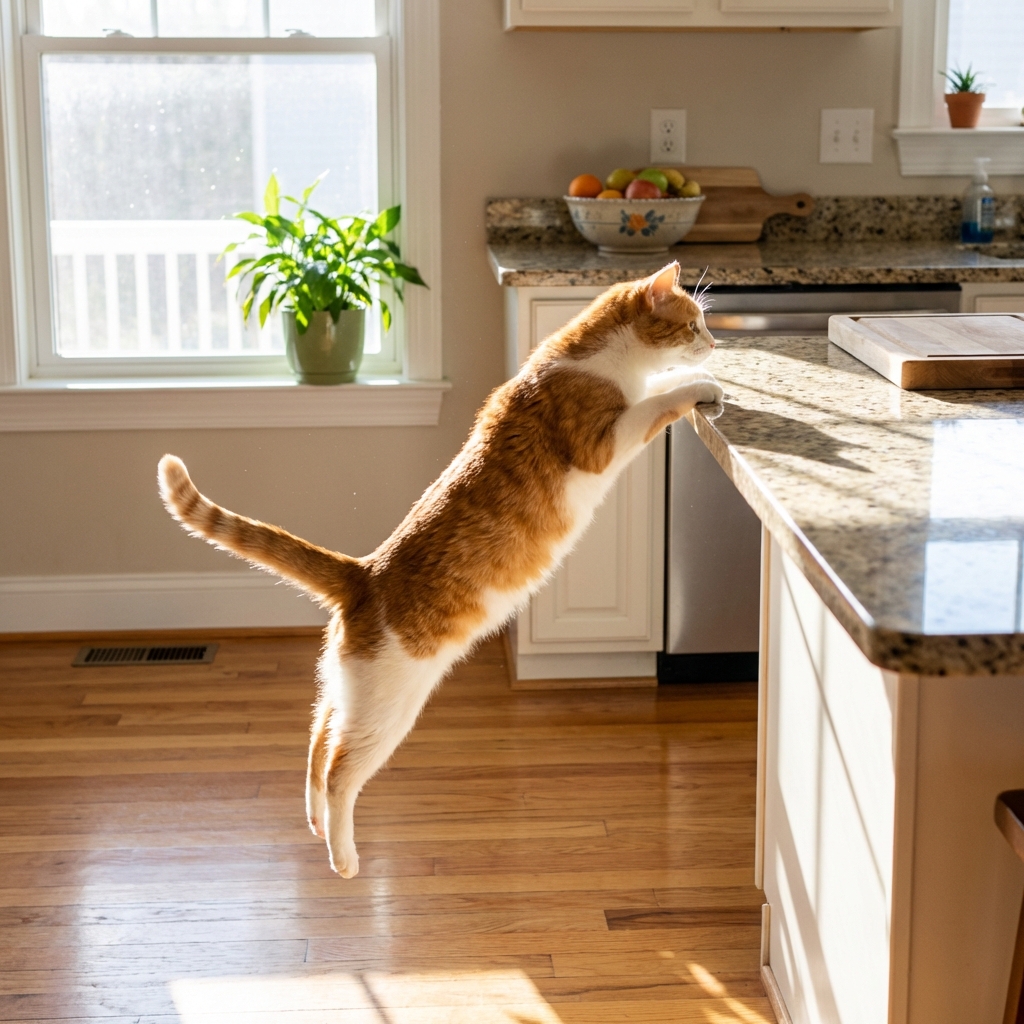
Discover how high cats can jump in real homes (often 4–6 feet, sometimes 7–8 feet). Learn what affects jump height, how to support safe landings, and whe...
Article
•
Designer Mixes
Why Cats Are So Flexible

Shari Shidate
Designer Mixes contributor
If you have ever watched a cat slip through a half-open door, fold into a tiny box, or twist midair to land on their feet, you have seen one of nature’s most impressive athletic designs. Cats are not just “stretchy” because they love a good sun-warmed stretch. Their flexibility comes from a very specific combination of skeletal structure, joints, muscles, and even the way their spine is built.
Let’s unpack what is really happening inside your cat’s body, and why it matters for their safety, mobility, and long-term joint health.
Note: This article is for education and general guidance. It is not a substitute for veterinary care.
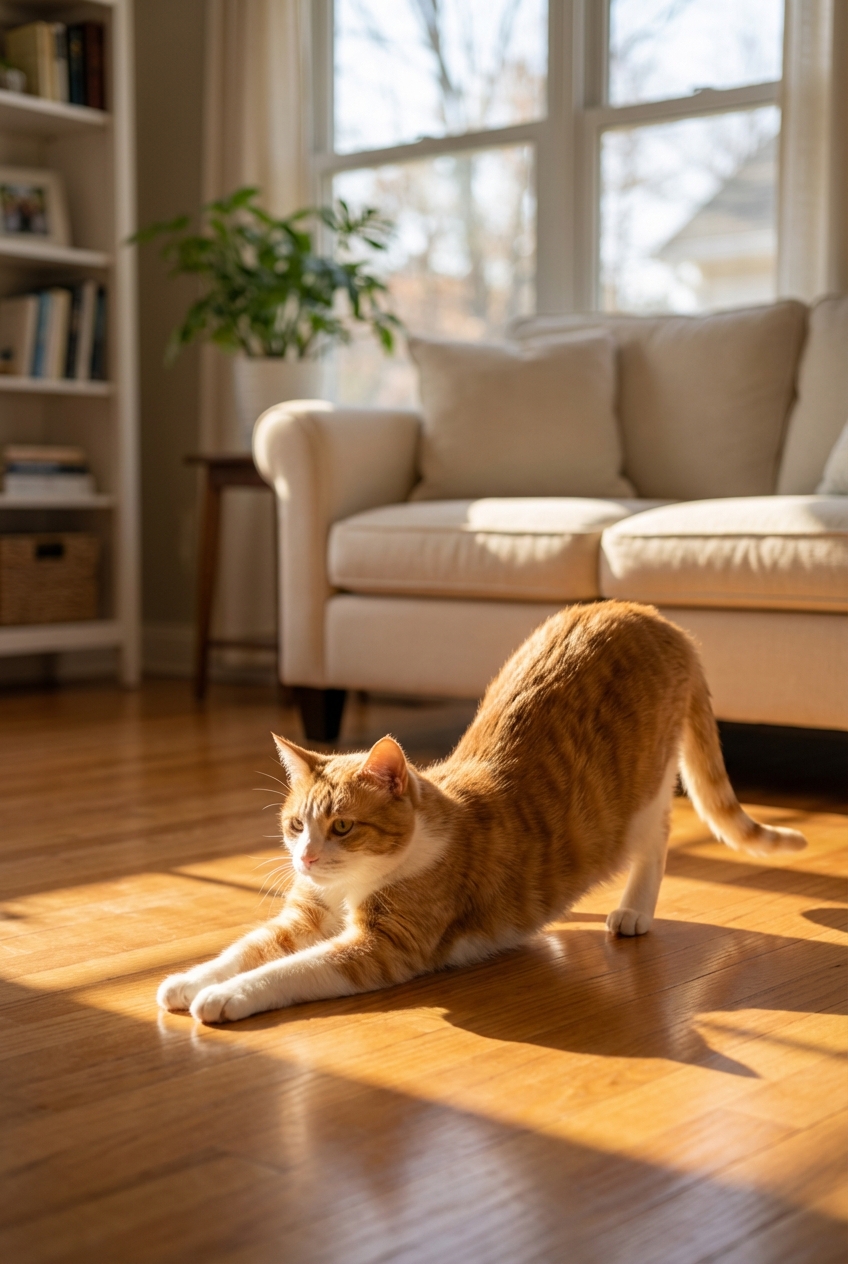
The cat spine: built for bending
A major secret to feline flexibility is the spine itself. Compared with humans, a cat’s vertebrae and the joints between them are shaped to allow a wider range of flexion, extension, and rotation through much of the back. The supporting ligaments and muscles also help the spine move smoothly and efficiently, which is a big reason cats can arch, curl, and twist with ease.
Discs support smooth, controlled motion
Between each vertebra is an intervertebral disc that helps cushion the spine and distribute forces during movement. In cats, the discs and surrounding soft tissues allow controlled bending while reducing peak impact, which supports everyday actions like leaping onto counters, turning quickly during play, and grooming hard-to-reach spots.
Flexible spine plus powerful muscles
The spine can only move as well as the muscles controlling it. Cats have strong epaxial muscles along the back that stabilize and flex the spine. When you see a cat do that dramatic “Halloween cat” arch, it is a coordinated action between vertebrae, ligaments, and multiple muscle groups working together.
The shoulder secret: a muscle-suspended collarbone
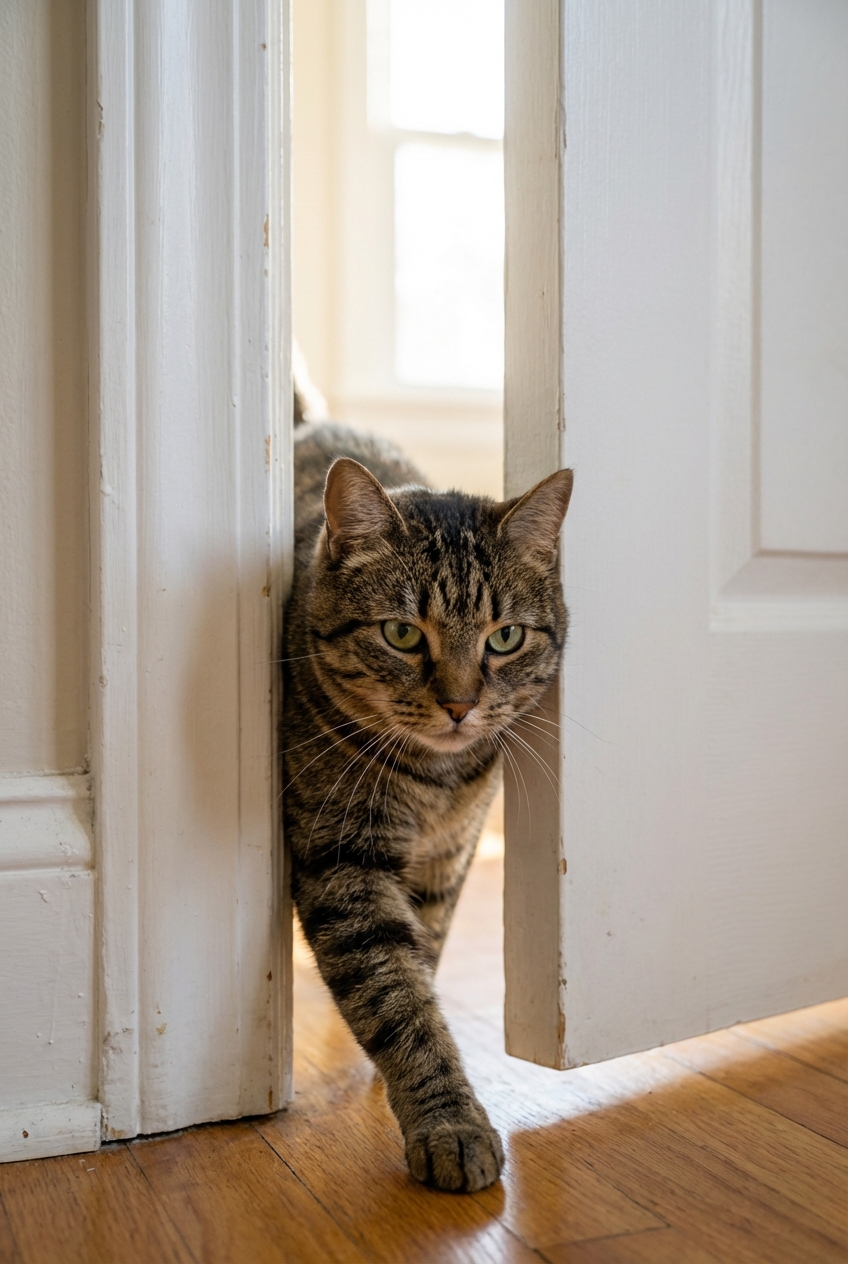
Here is one of my favorite feline facts as a veterinary assistant. Cats have a clavicle (collarbone), but it is small and does not form a firm, bony connection to the rest of the shoulder girdle the way ours does. Instead, it is largely suspended in muscle. In people, the clavicle helps brace the shoulder for pushing, lifting, and bearing weight. In cats, the shoulder is built for stride length, stealthy movement, and squeezing through tight spaces.
This gives cats an incredible advantage: their shoulder region can compress more than you would expect, allowing the front of the body to slip through narrow openings.
- Practical rule of thumb: if your cat’s head fits through an opening, the rest of the body often can too. Caveat: this is not always true for overweight cats (or cats wearing bulky harnesses), because the chest or belly can be wider than the head.
- Safety note: that also means windows, balcony rails, and cracked doors can be more dangerous than they look.
Hips and hindlimbs: built to jump
Cats are jumpers, and their flexibility supports that springy motion. The hip joint is a ball-and-socket joint, designed for multi-directional movement. Add a mobile spine and long hindlimb bones, and you get powerful propulsion plus the ability to tuck, twist, and land.
The pelvis and spine work together
When a cat prepares to jump, they crouch and coil. That coiling is not just leg strength. It is a coordinated load through muscles and tendons, with the spine adding range of motion and helping transfer power through the hindquarters. Think of it as a whole-body launch system, not a single “spring” in the back.
The tail: balance and communication
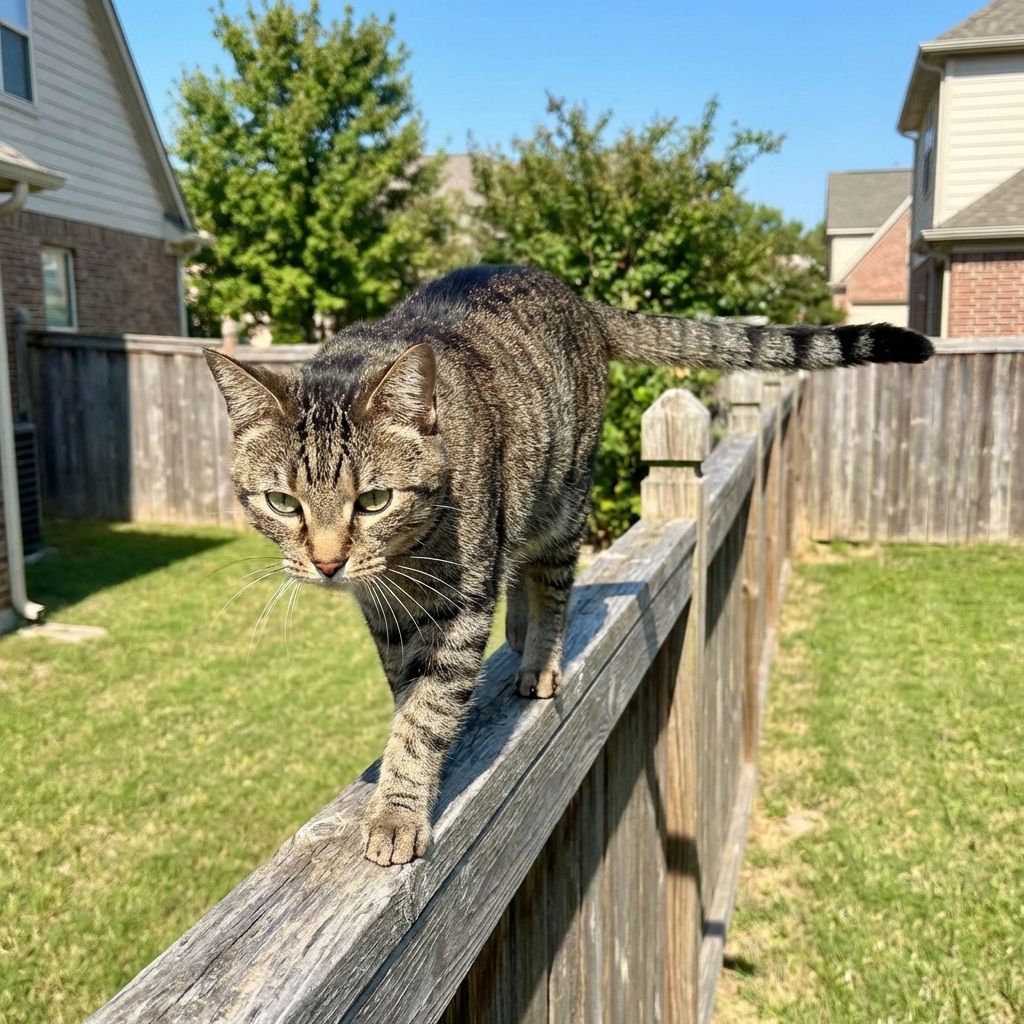
A cat’s tail contains multiple vertebrae and is highly mobile. It acts as a balance aid, a communication tool, and a stabilizer during fast movement. When a cat makes a sharp turn while running, the tail helps counterbalance the shift in momentum.
Tail injuries can be serious. Nerves extend into the tail, and injuries at the tail base can sometimes be associated with pain, nerve damage, or even trauma affecting nearby pelvic structures. If you ever notice a limp tail, pain at the base, or changes in litter box habits after a fall, it is worth a prompt veterinary visit.
The righting reflex: turning midair
Many cats can rotate their bodies during a fall to land feet-first. This is called the righting reflex, and it depends on flexibility, spinal rotation, and body awareness. Not every cat can do this equally well. Age, illness, neurologic issues, or vestibular disease can all affect it.
It is important to know what this reflex can and cannot do.
- Cats can still be injured from falls. Landing on their feet does not guarantee a safe landing.
- Higher falls are not “safe.” Cats may have time to orient themselves, but impact injuries can still occur.
- Indoor safety matters. Secure screens and supervise open windows to help prevent falls.
Connective tissue and joint range
Flexibility is not just bones. It is also about connective tissue. Cats tend to have joint structures that allow wide ranges of motion, especially in the spine and shoulders. Their tendons and ligaments support fluid movement and fast direction changes, which is ideal for hunting behavior, even in a living room “hunt” for a toy.
That said, flexibility does not make cats indestructible. Over time, repetitive high jumps and hard landings can contribute to joint wear, especially if a cat is overweight or older.
When flexibility is a health clue
In clinic settings, we pay close attention to mobility changes because cats are experts at hiding pain. A flexible cat that suddenly stops stretching, jumps less, or avoids stairs may be telling you something important.
Signs your cat may be uncomfortable
- Hesitating before jumping or choosing lower surfaces
- Missing jumps or landing stiffly
- Grooming less, especially along the back or hips
- Irritability when picked up or touched over the spine
- Changes in litter box use due to difficulty stepping in or squatting
If you notice these changes, a veterinary exam is the best next step. Arthritis, soft tissue strains, and spinal pain can happen even in cats that seem “too young” for joint problems.
Support flexibility for life
The goal is to protect that amazing feline mobility for life. A few simple home choices can make a big difference.
- Keep your cat at a healthy weight. Extra pounds increase stress on hips, knees, and the spine.
- Offer step-ups. Pet stairs or strategically placed stools can reduce repeated high-impact jumps.
- Add traction. Non-slip rugs or runners can help cats feel more secure on slick floors, especially seniors.
- Make the litter box easier. For older cats, a lower-entry box can reduce strain on hips and knees.
- Encourage safe play. Daily movement keeps muscles strong, which supports joints.
- Use supportive bedding. Soft, warm resting spots help older joints feel better.
- Ask your vet about supplements. Options like omega-3 fatty acids may support joint health for some cats, depending on their medical history.
Your cat’s body was built for grace, speed, and athletic movement. With good preventive care and a safe environment, you can help them stay comfortably flexible well into their senior years.