From hairballs to toxins and foreign bodies, this guide explains what cat vomit can mean, when it’s an emergency, what to do at home, and what your vet wil...
Article
•
Designer Mixes
Why Cat Vomit Happens

Shari Shidate
Designer Mixes contributor
As a veterinary assistant, I can tell you this with a lot of compassion: cat vomit is common, but it is not something you should ignore. Vomiting is a symptom, not a diagnosis. Sometimes it is as simple as hairballs or eating too fast. Other times it is your cat’s early warning system for problems like inflammation, parasites, food intolerance, pancreatitis, or kidney disease.
This guide breaks down the key signals behind cat vomit: what different types can suggest, what patterns matter, what you can safely try at home, and when it is time to get to the vet.
First: Vomit or regurgitation?
This is one of the biggest “aha” moments for cat parents, because it changes what we worry about.
Vomiting
- Usually includes retching and abdominal heaving.
- Typically occurs minutes to hours after eating (or even on an empty stomach).
- Material may be partly digested, foamy, or mixed with bile.
Regurgitation
- Looks effortless, food just comes back up.
- Often happens soon after eating or drinking.
- Food may look undigested and may be shaped like a tube (esophagus-shaped).
If you can catch a short video safely (without stressing your cat), it can help your veterinarian a lot.
Color and texture clues
Cat vomit can look gross, but it can also be informative. Appearance alone cannot diagnose a cause, so use these as clues and look at the bigger pattern: timing, frequency, appetite, energy, and stool.
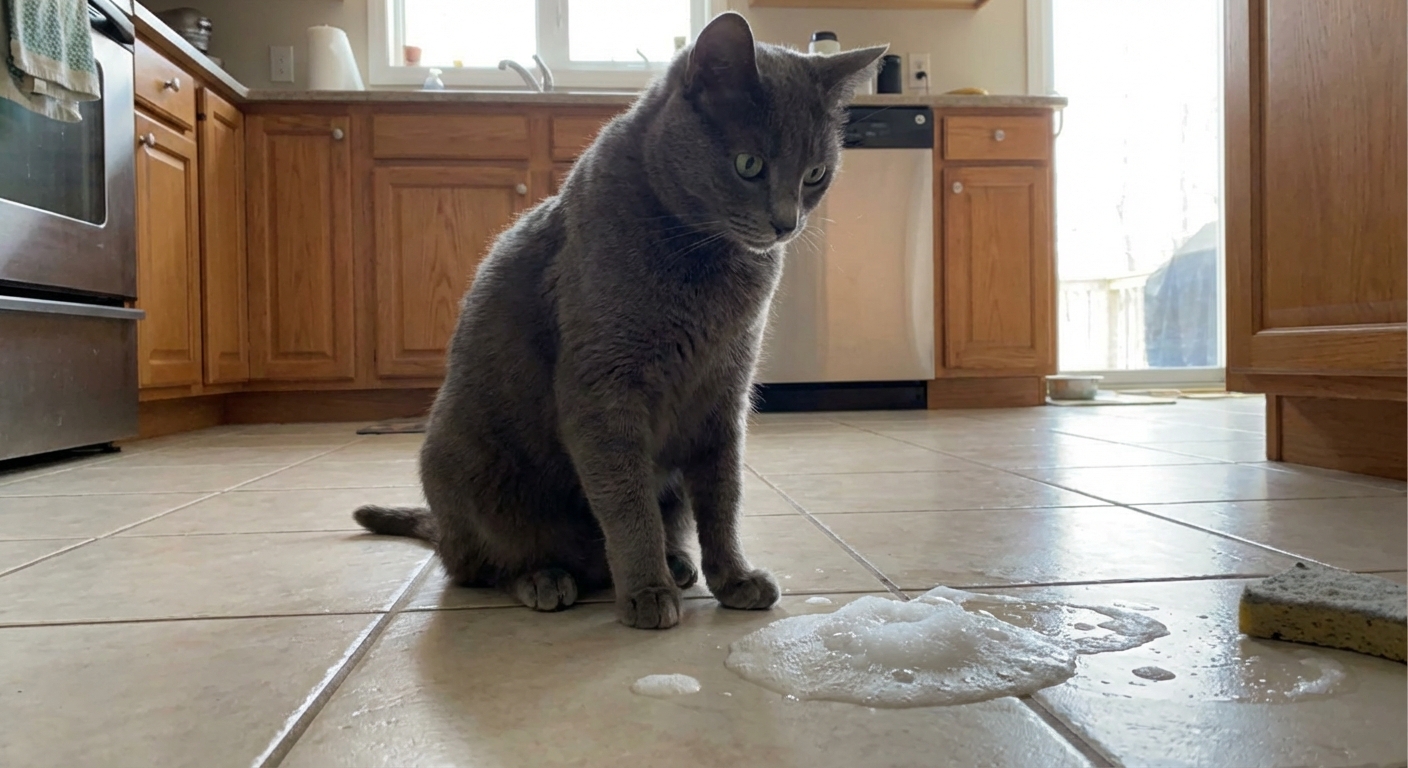
Clear or white foam
- Can happen with an empty stomach, mild nausea, hair irritation, or reflux.
- If it’s frequent or paired with poor appetite, it can also suggest gastritis or another underlying illness.
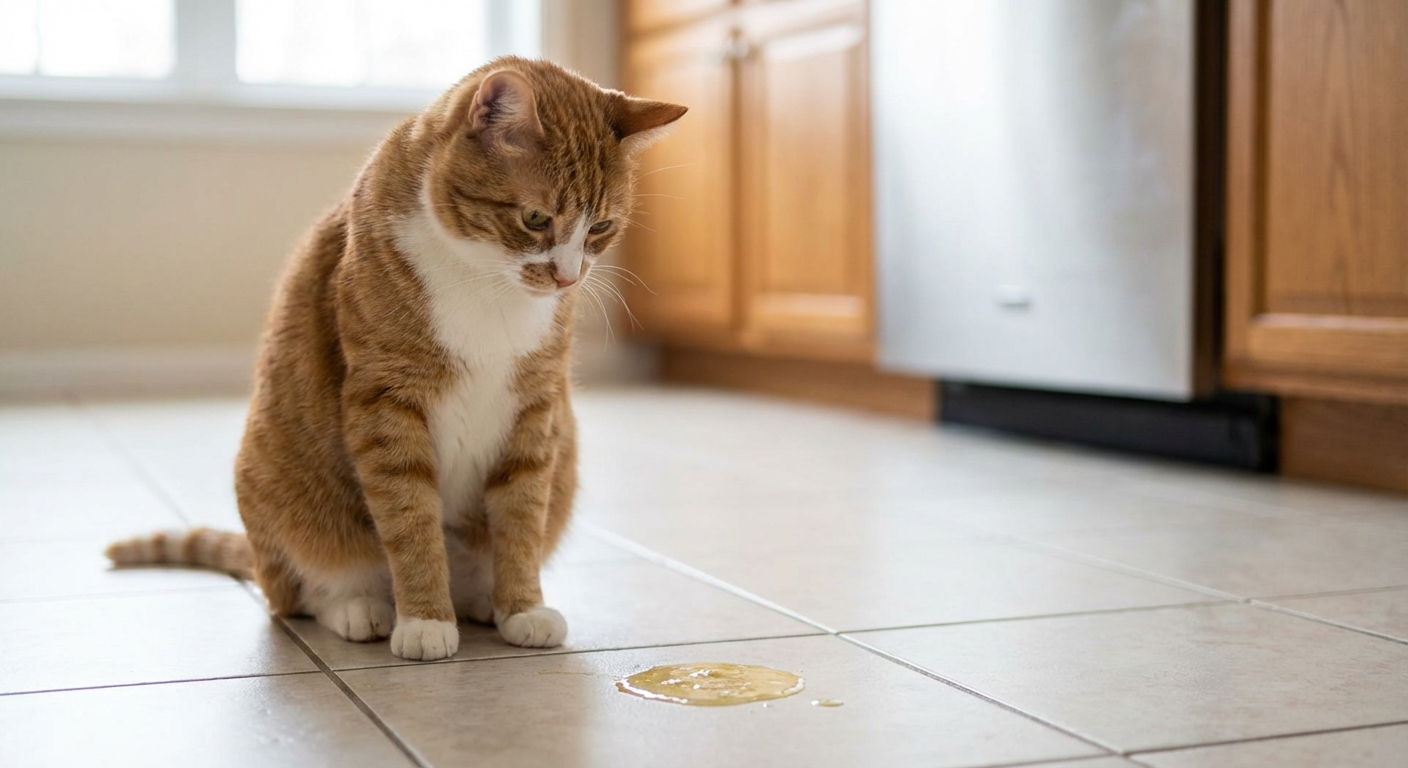
Yellow or green (bile)
- Can occur when the stomach is empty or your cat has gone too long between meals.
- It can also be seen with GI irritation, inflammatory bowel disease (IBD), pancreatitis, or liver-related issues, so context matters.
Food (undigested)
- Common with eating too fast, stress, sudden diet change, or gulping air while eating.
- It can also occur with food intolerance, parasites, or chronic GI disease.
Hairballs
- Occasional hairballs can be normal, especially in long-haired cats.
- Frequent hairballs can signal overgrooming, allergies, skin disease, stress, or GI motility problems.
- Also note: some cats that “hack like a hairball” are actually coughing. Asthma or bronchitis can be mistaken for hairballs, especially if nothing comes up.
Brown “coffee grounds” or black material
- Coffee-ground vomit often suggests digested blood.
- Black material can also be something ingested (like dirt or dark food), but it should still be assessed by a veterinarian, especially if your cat seems unwell.
- Treat this as urgent.
Red streaks or fresh blood
- Sometimes from irritation after repeated vomiting.
- But blood is never something to “wait and see” on if it is more than a tiny streak or your cat seems unwell.
Safety note: If your cat is vomiting and also acting weak, hiding, breathing differently, has pale gums, has sunken eyes, has very tacky gums, or cannot keep water down, treat it as urgent.
Common causes
Once you know whether it looks like vomiting or regurgitation, the next step is thinking through likely causes. Many cases fall into a handful of common categories, and chronic vomiting is often multi-factorial, meaning more than one issue can be contributing.
1) Eating too fast or eating too much
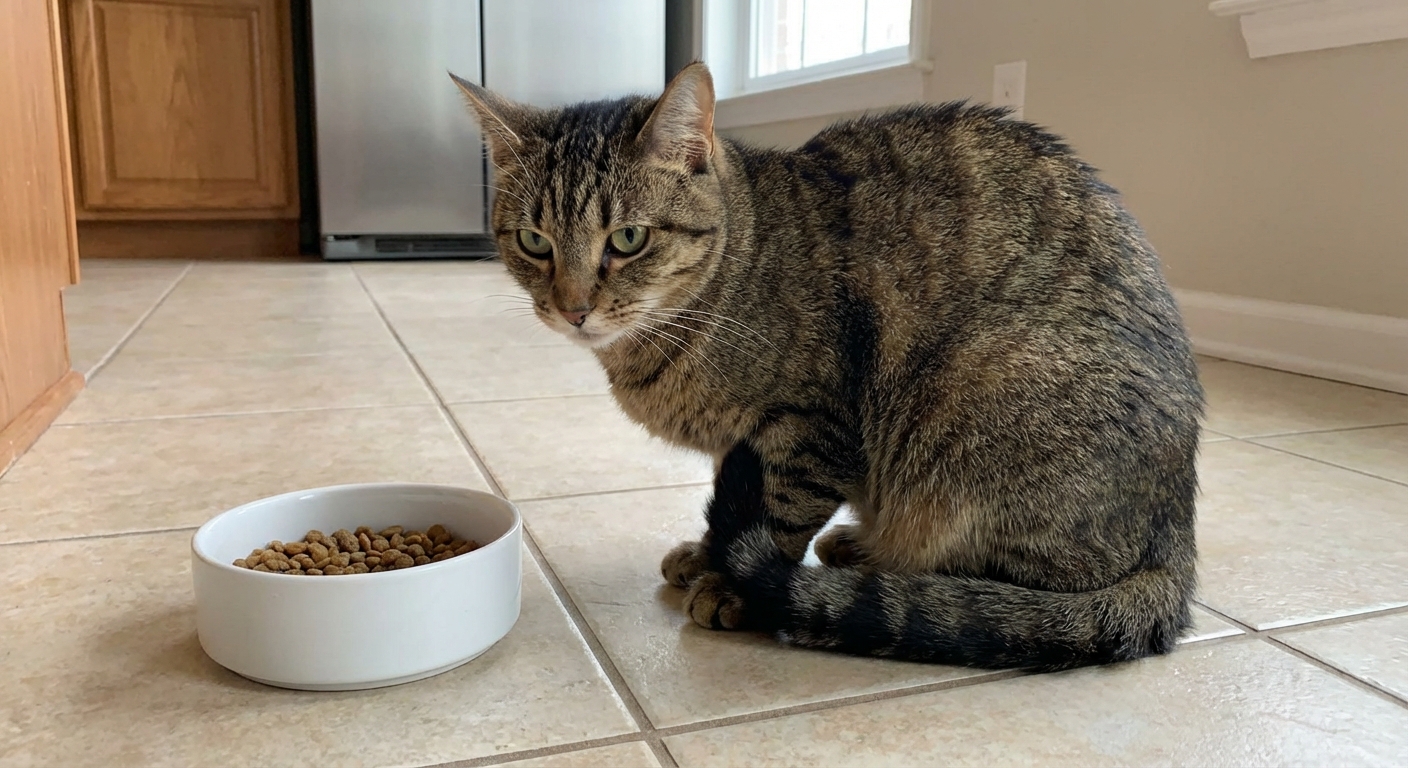
Some cats gulp food, especially in multi-cat homes or if they feel food competition. Rapid eating can lead to regurgitation or vomiting due to overfilling, swallowed air (aerophagia), and stomach irritation.
2) Hairballs and grooming overload
Cats are fastidious groomers. Hair is meant to pass through the GI tract, but sometimes it clumps. If vomiting hairballs is frequent, we also think about skin allergies, fleas, pain (cats overgroom painful areas), and stress.
3) Diet change, food intolerance, or sensitivity
Switching foods too quickly can trigger vomiting. Some cats also react to specific proteins, additives, or rich treats. True food allergies exist, but intolerance is more common than people think.
4) Parasites
Roundworms and other intestinal parasites can contribute to vomiting and poor stool quality. Even indoor cats can be exposed through insects, rodents, or contaminated soil tracked indoors.
5) Inflammatory bowel disease (IBD)
IBD is a common reason for recurring vomiting, sometimes with diarrhea or weight loss. It is a diagnosis your vet works toward, often using history, lab work, ultrasound, and response to diet or medication.
6) Pancreatitis
Cats can have subtle pancreatitis signs: decreased appetite, hiding, vomiting, and lethargy. It can be easy to miss early.
7) Kidney disease, thyroid disease, liver issues
Vomiting can be an “outside the gut” symptom. This is why older cats with vomiting often need bloodwork and urine testing even if their stool looks normal.
8) Foreign material or toxins
String, ribbon, hair ties, and small toys are classic hazards. Linear foreign bodies (like string) are especially serious. Toxins are also a concern: lilies (for cats), antifreeze (ethylene glycol), and human medications like ibuprofen and naproxen are common, dangerous examples. If you suspect toxin exposure or object ingestion, call your vet right away (or pet poison control if advised in your region).
How often is too often?
One isolated episode in an otherwise bright, happy cat that eats and drinks normally can be a simple stomach upset. The pattern matters more than a single mess on the floor.
Many clinicians consider vomiting more than once or twice a month worth discussing, even if your cat seems okay, especially if it is becoming a pattern.
Monitor at home if
- It is a single episode.
- Your cat is bright, comfortable, and breathing normally.
- They return to normal appetite and can keep water down.
- No known toxin exposure or swallowed object risk.
Call your vet promptly if you notice
- Repeated episodes (for example, more than once in 24 hours), especially if your cat is lethargic, not eating, or has other health conditions.
- Vomiting that repeats weekly or more, even if your cat “seems fine.”
- Weight loss, reduced appetite, increased thirst, or hiding.
- Diarrhea, constipation, or straining in the litter box.
- Hairballs that are frequent, large, or paired with coughing or gagging.
Go to urgent care or emergency if
- Your cat cannot keep water down, is actively vomiting repeatedly, or is drooling and nauseated and will not stop.
- There is significant blood, coffee-ground vomit, or black tarry stool.
- Your cat seems painful, has a bloated belly, or is repeatedly trying to vomit with nothing coming up.
- Possible toxin exposure, string ingestion, or a swallowed object.
- Kittens or seniors are vomiting repeatedly.
What you can do at home
Home care is only appropriate if your cat is alert, breathing normally, and otherwise acting okay. If you are unsure, it is always better to call your veterinarian and describe what you’re seeing.
Step 1: Pause and observe
- Check appetite: Are they interested in food later?
- Check hydration: Are they drinking? Is the mouth tacky? Are they peeing normally?
- Check behavior: Bright and social, or hiding and quiet?
- Check the litter box: Any diarrhea, constipation, or no stool?
If your cat is actively vomiting, do not force food or water. Offer small sips later only if vomiting has stopped and they seem comfortable, or follow your vet’s advice.
Step 2: Reduce scarf-and-barf triggers
- Feed smaller meals more often.
- Try a slow feeder bowl or puzzle feeder.
- Separate cats during meals if competition is a factor.
Step 3: Support hairball control
- Brush more frequently, especially during shedding seasons.
- Ask your vet about hairball gels or fiber support if hairballs are frequent.
- Address fleas and itch, since itch drives overgrooming.
Step 4: Keep diet changes slow
If you are switching foods, aim for a gradual transition over 7 to 10 days. Sudden changes can trigger vomiting even in healthy cats.
Step 5: Avoid common mistakes
- No human anti-nausea meds unless a vet specifically directs you. Many are unsafe for cats.
- Do not fast cats for long periods without guidance. Cats are at risk for hepatic lipidosis (fatty liver) when they stop eating, and the risk increases with prolonged reduced intake (often a concern after 24 to 72 hours). If your cat is not eating normally for a day, call your vet, and call sooner for kittens, seniors, or cats with other illnesses.
- Do not offer milk as a “soother.” Many cats are lactose intolerant.
The vet visit
If vomiting is recurring, your veterinarian may recommend a stepwise workup. This is not about running every test. It is about finding the cause efficiently and safely.
Common diagnostics
- Physical exam, weight check, and abdominal palpation.
- Fecal test for parasites.
- Bloodwork and urinalysis, especially for adult and senior cats.
- X-rays if obstruction is a concern.
- Ultrasound if chronic vomiting, weight loss, or suspected IBD or pancreatitis.
Bring these details
- Photos of the vomit (yes, really helpful).
- Timing: after meals, overnight, or random?
- Food and treats list, including any people-food.
- Hairball frequency and grooming habits.
- Any household changes: new pet, move, stress, schedule change.
Prevention
Not all vomiting is preventable, but you can reduce the most common triggers.
- Consistent feeding routine with smaller portions for cats that vomit bile on an empty stomach.
- Regular parasite prevention per your vet’s recommendations.
- Weight management to reduce GI stress and support overall health.
- Environmental enrichment to reduce stress-based overgrooming.
- Annual exams, and for many cats, screening labs starting around midlife (about age 7) and continuing as they get older.
The bottom line
The key takeaway behind cat vomit is that the pattern matters more than a single episode. If your cat vomits repeatedly, loses weight, acts quieter than usual, starts coughing or hacking without producing a hairball, or cannot keep water down, it deserves medical attention. And if it is occasional, you can still make smart changes at home like slower feeding, better grooming support, and gradual diet transitions.
If you are tracking a vomiting pattern, write down your cat’s age, how often it happens, what it looks like, whether it seems tied to meals, and any appetite or weight change. That simple log can make your vet visit much more efficient.