
Feeling overwhelmed by homemade cat food? Get safety basics, key nutrients like taurine and calcium balance, an easy transition plan, and 18 cooked toppers a...
Article
•
Designer Mixes
Why Calico Cats Are Almost Always Female

Shari Shidate
Designer Mixes contributor
Calico cats are showstoppers: bright patches of orange, black (or gray), and white all in one coat. But there is an even more fascinating story underneath those colors: genetics . In most cases, a calico cat is female because the genes that control orange vs. black pigment sit on the X chromosome, and it usually takes two X chromosomes to create the classic patchwork pattern.

What “calico” actually means
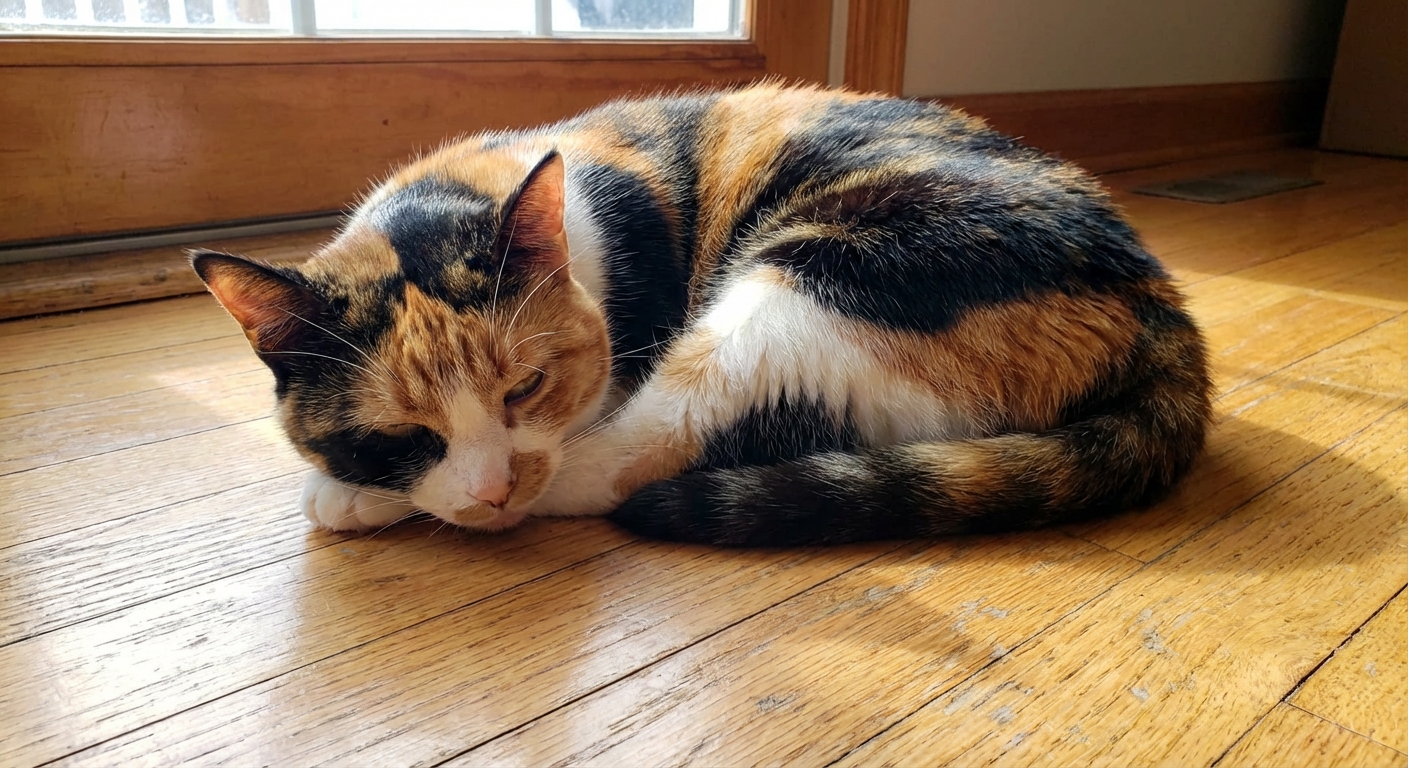
First, calico is not a breed. It is a coat color pattern . You can find calicos in many breeds and in mixed-breed cats. A traditional calico coat includes:
- Orange (red) patches
- Black patches (or sometimes a diluted gray called “blue”)
- White areas, often on the chest, belly, and paws
You might also hear the term tortoiseshell . Torties have orange and black mixed together with little to no white. Calico is essentially tortoiseshell plus white spotting.
The key: orange and black are X-linked
The “magic” is in where the color genes live. In cats, the gene that influences whether fur pigment is orange or non-orange (black) is located on the X chromosome.
Here is the simple version:
- Females typically have XX.
- Males typically have XY.
A cat can carry an orange version of the gene on one X and a non-orange version on the other X. That is what sets the stage for the calico pattern.
Why two X chromosomes create patches: X-inactivation
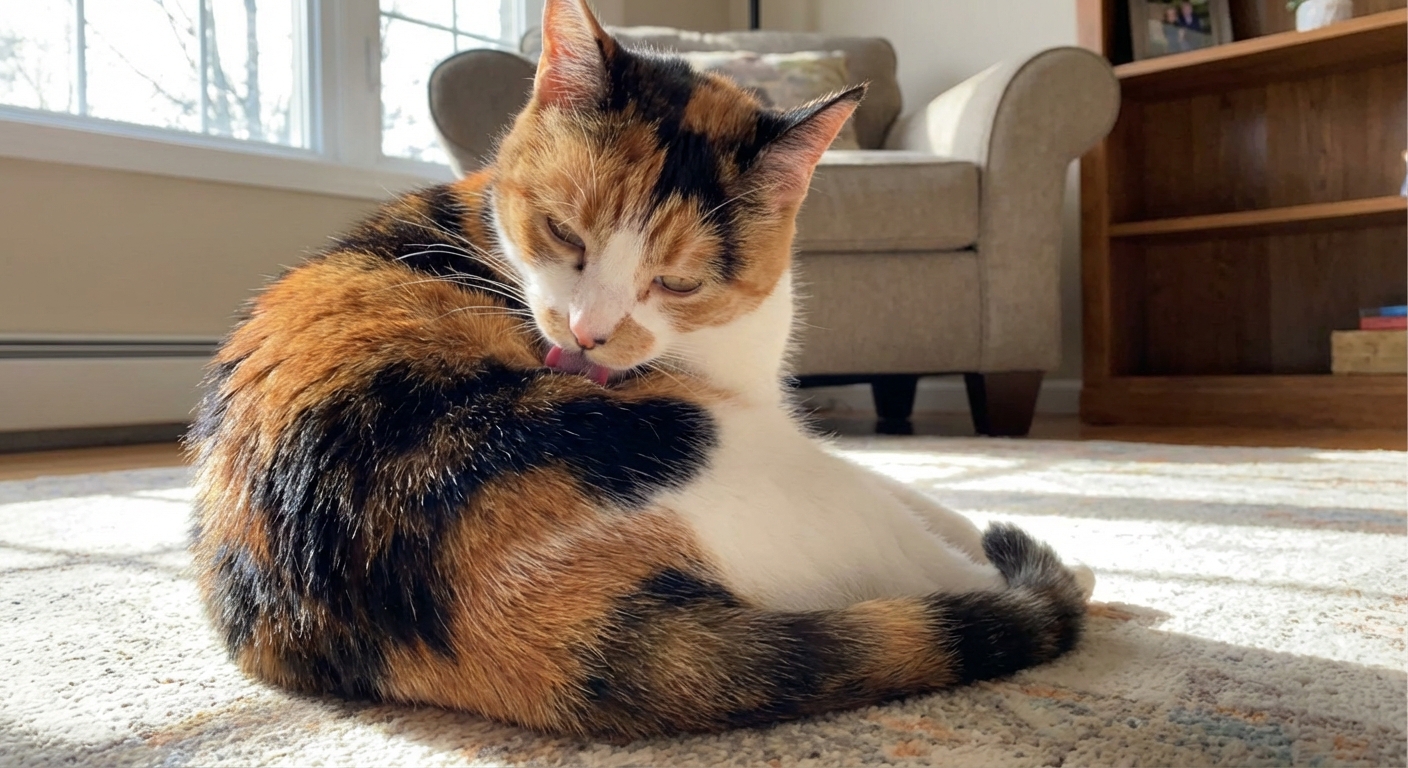
Even if a female cat has two X chromosomes, she does not use both fully in every cell. Early in development, each cell randomly “turns off” one of the X chromosomes. This is called X-inactivation (also known as Lyonization).
So in a kitten with one X carrying orange and the other X carrying black:
- Some skin cell groups use the orange X
- Other cell groups use the black X
As the kitten grows, those groups of cells expand into the visible patches we recognize as calico or tortoiseshell.
So why are male calicos so rare?
Most male cats are XY, meaning they usually have only one X chromosome. With a single X, a male cat typically expresses either orange or black across the coat, not both in large patchwork areas.
Male calicos do happen, but they are uncommon. The most common genetic reason is a male cat with an extra X chromosome: XXY. This is often compared to Klinefelter syndrome in humans. With two X chromosomes, the same X-inactivation process can occur, producing calico-style patching.
Important note: Many XXY male calico cats are sterile , which is part of why calico coloration does not spread through male lines.
Other (less common) ways a male calico can occur
Genetics can be wonderfully complicated. Beyond XXY, there are a couple of rare scenarios that may produce a calico-like male:
- Chimerism: Two embryos fuse early on, creating one cat with two different cell lines. One cell line may carry orange, the other black.
- Mosaicism: A mutation during development creates two genetically different populations of cells in the same cat.
These cases are unusual, and they typically require laboratory testing to confirm.
Where does the white come from?
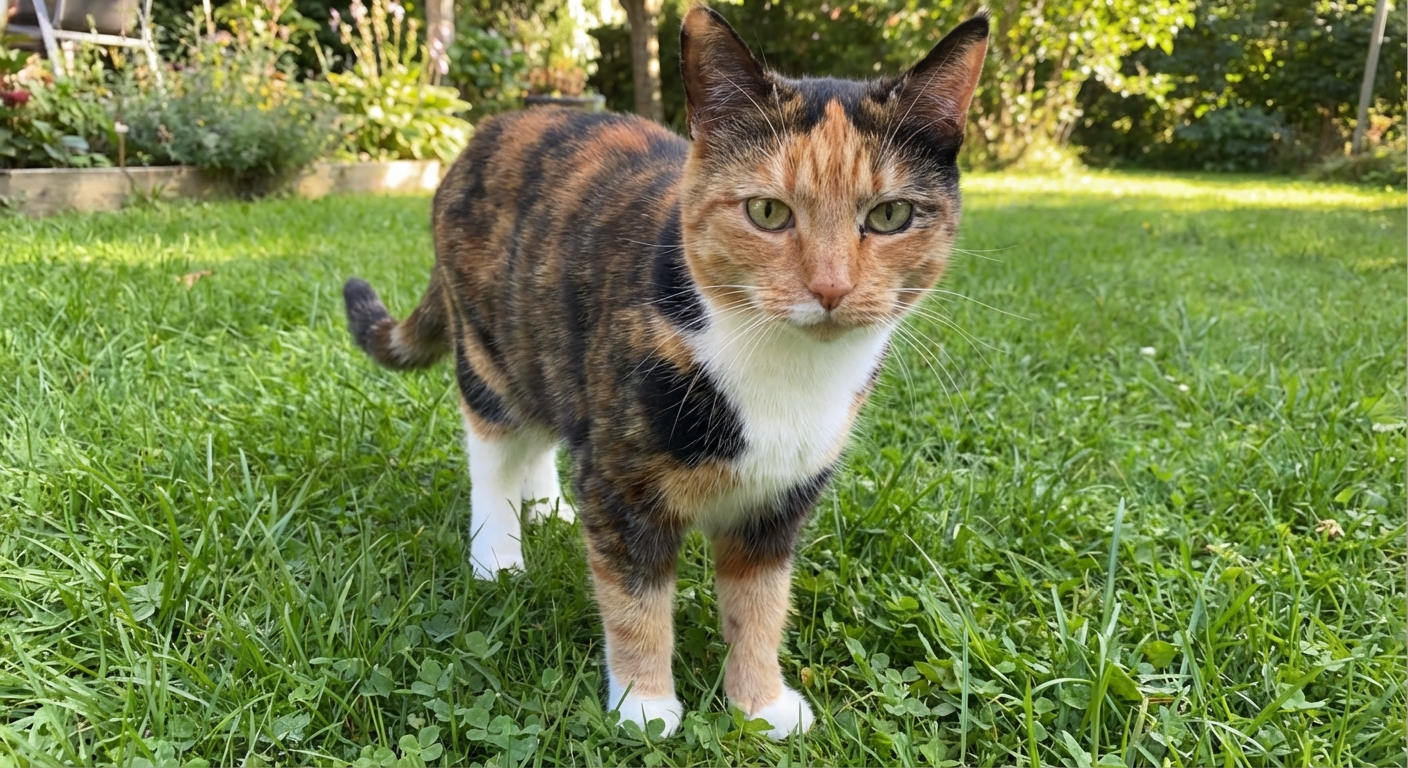
Calico is not only about orange and black. The white spotting is controlled by separate genes that affect how pigment cells migrate in the developing embryo. Areas without pigment cells develop as white fur.
This is why many calicos have white on the chest and paws, and why the amount of white can vary from a little to a lot.
Are calico cats healthier or different in personality?
Coat color does not determine personality in a scientific, predictable way. Calicos do not have a “guaranteed” temperament simply because of their colors. That said, plenty of calico owners will tell you their cats are bold, quirky, or confident. My best evidence-based advice is to treat personality as a mix of:
- Early socialization
- Environment and enrichment
- Individual genetics beyond coat color
When it comes to health, the coat pattern itself is not a health problem. However, male calicos (especially XXY) may have increased risk for certain issues related to their chromosome pattern, and they are often infertile. If you have a male calico, it is a good idea to discuss long-term care with your veterinarian, including weight management and routine wellness checks.
If you are curious about your cat’s genetics
If your cat is calico and you are wondering about sex chromosomes, there are a few practical steps:
- Confirm sex with your veterinarian , especially if your kitten was very young at adoption.
- Consider a DNA test if you have a male calico or an unusual pattern and want more clarity.
- Focus on the basics: great nutrition, dental care, parasite prevention, enrichment, and regular checkups matter far more to longevity than coat color.
Calico coloring is one of the best examples of how “beautiful” can also be “biological”. Those patches are a visual snapshot of genetics in action.
Takeaway
Calico cats are almost always female because the orange and black color genes are located on the X chromosome, and the signature patchwork pattern typically requires two X chromosomes plus the natural process of X-inactivation. Male calicos are rare and usually have an extra X chromosome (XXY) or another uncommon developmental scenario.
If you have a calico at home, you are living with a little genetics lesson wrapped in a gorgeous coat.