Fix cloudy aquarium water without harsh chemicals. Learn what murky water means, how to test parameters, do safe water changes, clean filters, and prevent re...
Article
•
Designer Mixes
Why Aquarium Water Gets Cloudy

Shari Shidate
Designer Mixes contributor
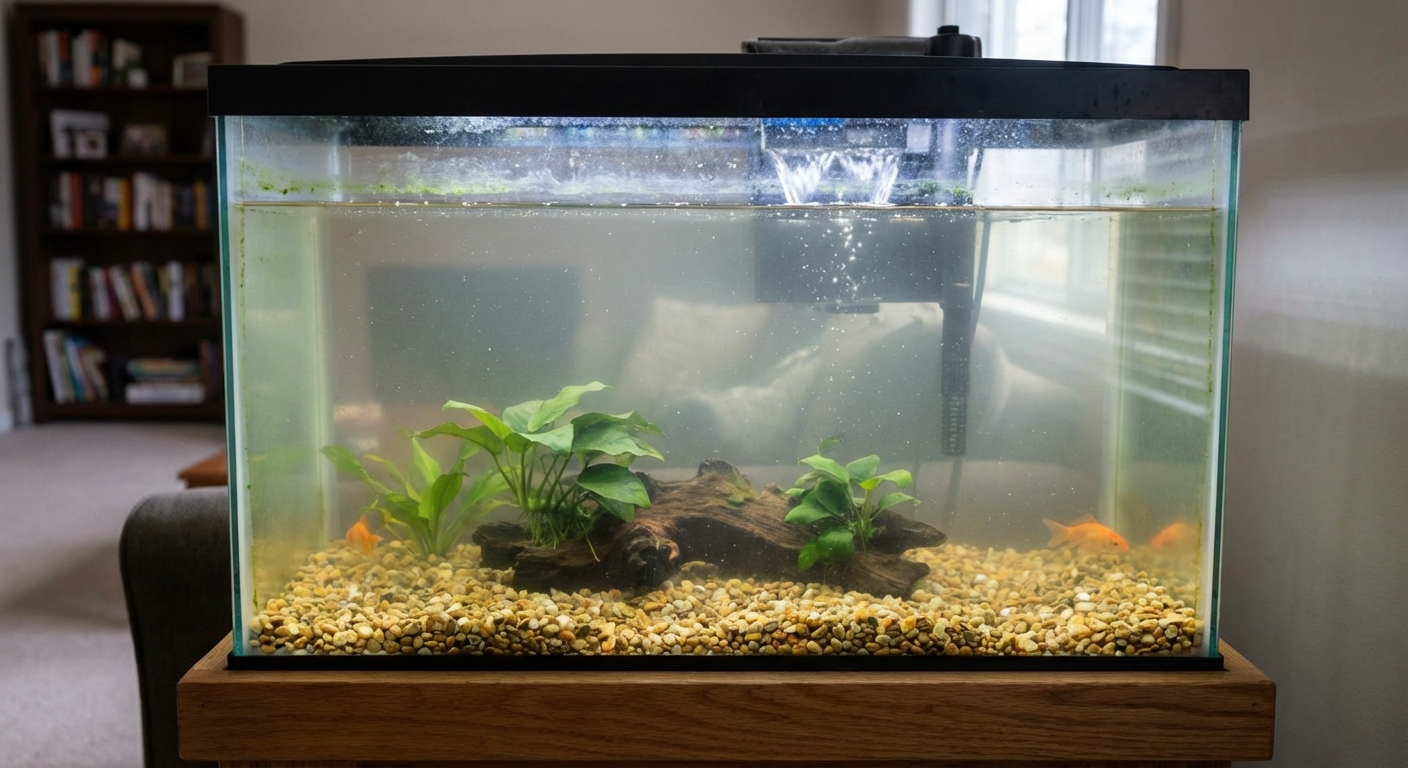
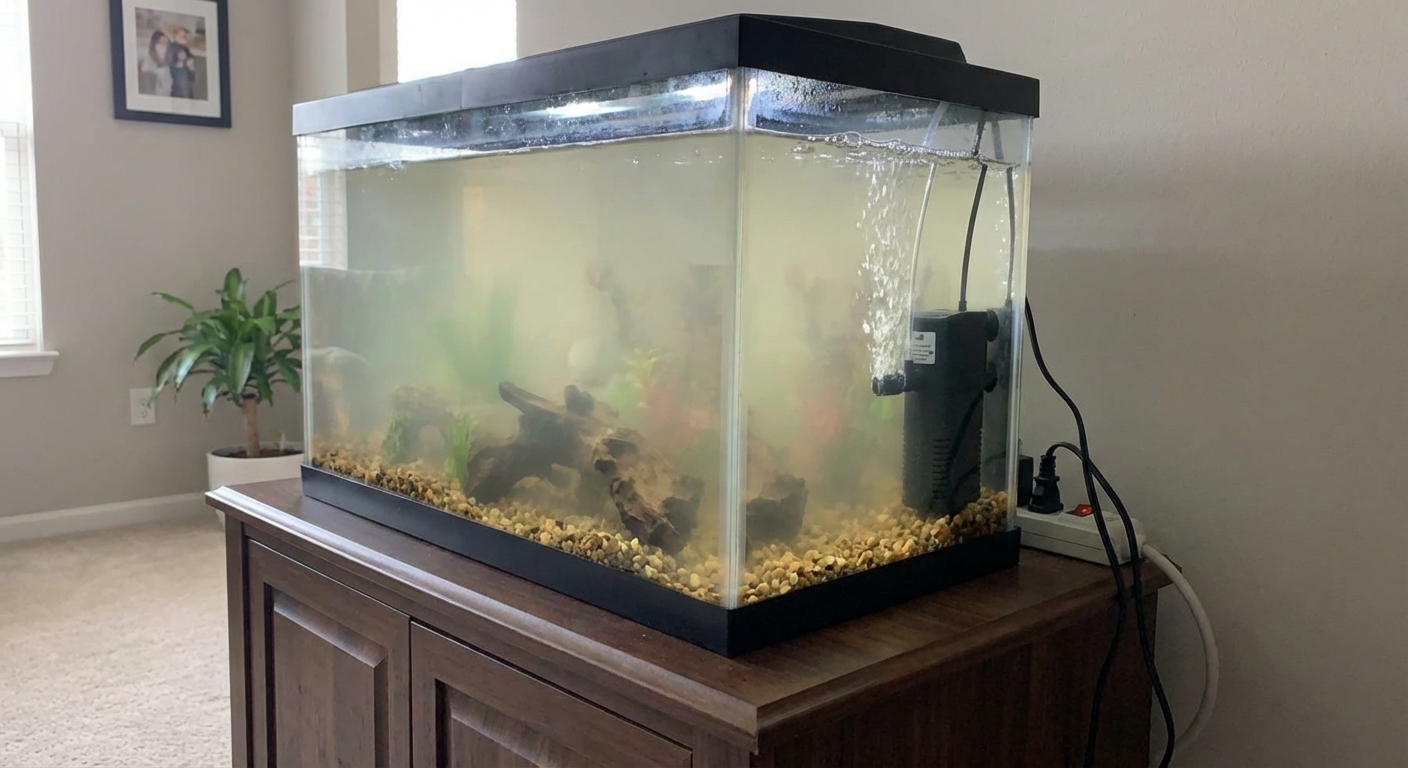
Cloudy aquarium water can feel like it came out of nowhere. One day your tank looks clear, and the next it looks like someone poured milk into it. The good news is that most causes are fixable, and many are part of a normal “new tank” phase. The key is figuring out what kind of cloudiness you have, because the right solution depends on the cause.
As a veterinary assistant, I always come back to the same health rule: when water quality slips, fish stress goes up. Stress weakens immunity, and that is when you start seeing fin damage, odd behavior, and disease. Let’s break this down in a clear, practical way.
Quick note: This guide is for freshwater aquariums. Saltwater and reef tanks can get cloudy for different reasons and need a slightly different approach.
First: what does it look like?
Cloudy water is a symptom, not a diagnosis. Use the color, timing, and texture to narrow it down.
- White or gray haze: usually a bacterial bloom, stirred-up debris, or microbubbles.
- Green water: free-floating algae bloom, often triggered by excess light and nutrients.
- Brown or tea-colored: tannins from driftwood or certain botanicals.
- Cloudy with visible particles: uneaten food, sand or gravel dust, or filter issues.
Microbubbles vs bloom
- Microbubbles: look sparkly, cling to glass and plants, and often clear within hours to a day (common after water changes, new filters, or extra aeration).
- Bacterial bloom: looks like a uniform white haze and usually lingers for days (sometimes longer) until the tank stabilizes.
Common causes
1) Bacterial bloom (new tank or disrupted filter)
If your aquarium is newly set up, or you just deep-cleaned it, a white haze is often a bacterial bloom. During cycling, bacteria populations are still stabilizing. A bloom can also happen later if the biofilter is disrupted, such as after replacing too much filter media, overcleaning, or making a big stocking change.
What you’ll notice: cloudy white water often in the first few weeks, but it can happen anytime after a biofilter disruption. Fish may look normal at first, or they may breathe faster if oxygen dips.
2) Overfeeding and waste buildup
Extra food breaks down into ammonia and other compounds that fuel bacteria and algae. Even “a little too much” every day adds up fast in a closed system.
What you’ll notice: water looks cloudy and you may see detritus on the bottom. Fish may seem hungry because they are opportunistic, not because they need more.
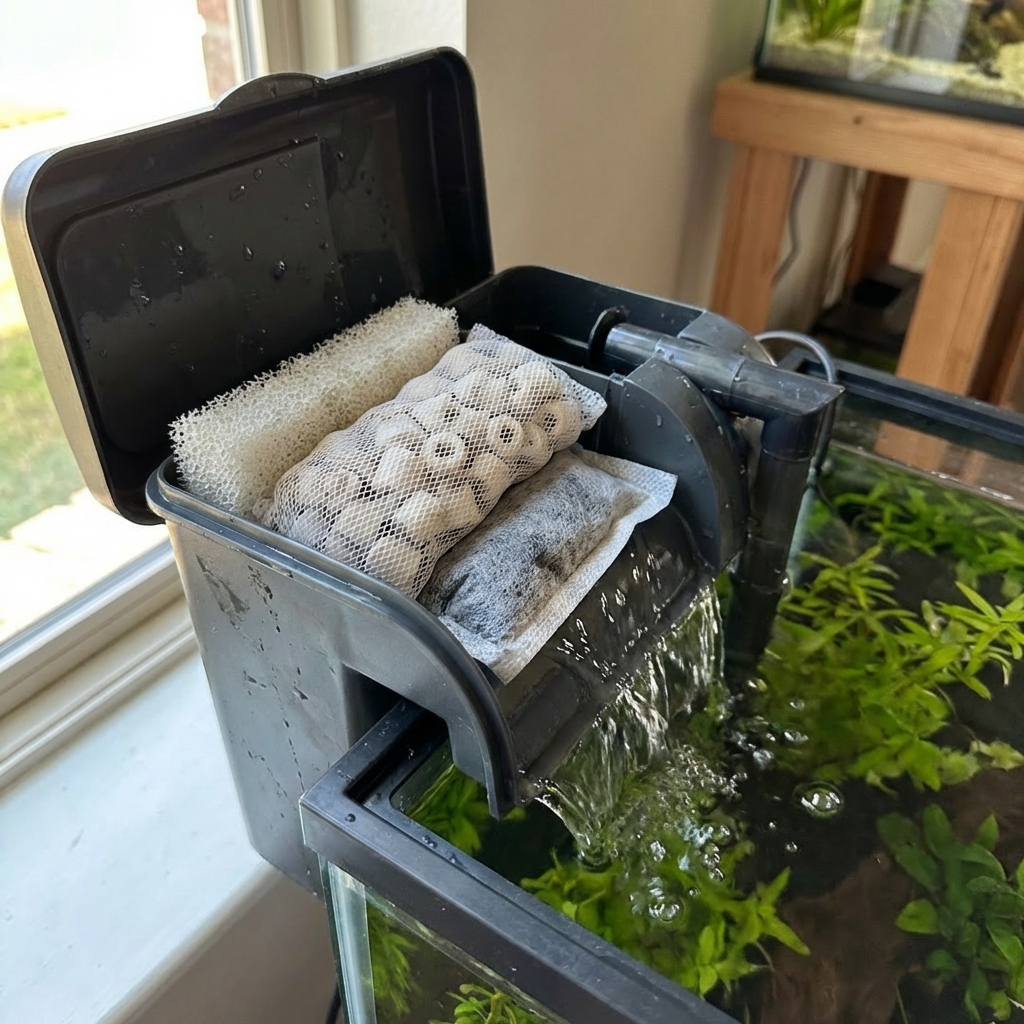
3) Filter issues or missing mechanical media
If your filter is undersized, clogged, or missing appropriate mechanical media, it cannot trap fine particles. If you replaced all filter media at once, you may have removed beneficial bacteria, which can trigger a bloom.
What you’ll notice: water stays hazy even after a water change, flow is reduced, or cloudiness returns quickly.
4) Dusty substrate or stirred debris
New gravel and sand can release fine dust, especially if it was not rinsed thoroughly. Rearranging decor can also kick up trapped debris.
What you’ll notice: cloudiness appears right after setup or after you moved things around, and it slowly settles.
5) Algae bloom (green water)
Green water is caused by free-floating algae. It is usually triggered by a combination of long light exposure, direct sunlight, and excess nutrients (nitrate and phosphate).
What you’ll notice: water has a green tint and visibility drops. Glass may not be very dirty because the algae is suspended in the water.
6) Tannins from driftwood (brown water)
Tannins are natural compounds released by driftwood and some botanicals. They are not usually dangerous, and many fish actually prefer slightly tannin-rich water, but they can discolor the tank.
What you’ll notice: water looks like weak tea and stays that way until the wood stops leaching or you remove tannins with chemical filtration.
7) Mineral or product-related cloudiness
Sometimes cloudiness comes from mineral precipitation in hard water, or from adding products too aggressively. Common examples include a chalky haze after raising pH or KH (calcium carbonate precipitation), or cloudiness after overdosing conditioners, clarifiers, or buffers.
What you’ll notice: cloudiness shows up shortly after adding new products or making a major parameter change.
Why it matters
Cloudy water is often tied to the nitrogen cycle. If the cycle is unstable, ammonia and nitrite can rise, and those compounds irritate gills and reduce oxygen exchange. Fish may look “fine” until they are not, because stress builds quietly.
- Ammonia (NH3/NH4+): can burn gills and skin, causing gasping, lethargy, and clamped fins.
- Nitrite (NO2-): interferes with oxygen transport (methemoglobinemia). Watch for rapid breathing, lethargy, and fish that look stressed even with good surface agitation.
- Nitrate (NO3-): less immediately toxic but chronic high levels stress fish and fuel algae.
If your fish are gasping, breathing rapidly, clamped, or acting abnormal, treat it as urgent.
What to do today
Step 1: Test first
Before you chase solutions, get numbers. A liquid test kit is the most reliable for home use.
- Ammonia
- Nitrite
- Nitrate
- pH (and ideally KH if you have it)
- Temperature
Step 2: Water change based on the reading
If ammonia or nitrite is above 0 ppm, do a 25% to 50% water change right away (match temperature and use dechlorinator for the new water). If levels are higher (for example, 0.5 ppm or more) or fish are showing distress, do larger and/or repeated daily water changes until readings are back to safe levels.
If parameters are safe and you are dealing with mild haze, substrate dust, tannins, or green water, a steady routine like 20% to 30% can help reduce nutrients and suspended debris. Just know that water changes alone usually do not clear green water quickly.
Tip: Avoid doing a major filter clean on the same day as a large water change. Stacking big changes can destabilize a tank that is already stressed.
Step 3: Reduce feeding immediately
Feed smaller amounts. A solid rule is what your fish can finish in 30 to 60 seconds (or up to 2 minutes for slower species), once a day, and consider skipping 1 day per week.
Step 4: Increase oxygenation if needed
Cloudiness from blooms and poor water quality can go along with lower dissolved oxygen. If fish are breathing fast, add an air stone or increase surface agitation (aim the filter output to ripple the surface).
Step 5: Check your filter
- Mechanical media: fine sponge or floss to capture particles.
- Biological media: ceramic rings, sponge, or bio-balls for beneficial bacteria.
- Do not replace everything at once: rinse media gently in removed tank water, not tap water.
Step 6: Match the fix to the cause
- White bloom: avoid over-cleaning, do partial water changes as needed, increase aeration, and let the tank stabilize. If the tank is cycling, consider bottled nitrifying bacteria and monitor daily.
- Green water: reduce light to 6 to 8 hours, block direct sun, cut feeding, and stay consistent with water changes to reduce nutrients. For faster results, a short blackout (when safe for your plants and fish) or a UV sterilizer is often the most effective.
- Brown tannins: optional fix. Use activated carbon or Purigen and do routine water changes. Pre-soak or boil driftwood before use next time.
- Particles or substrate dust: add filter floss, let the tank settle, and vacuum lightly during water changes. Vacuum only part of the substrate at a time, especially in established tanks, so you do not disrupt too much beneficial bacteria at once.
- Mineral or product haze: stop adding extra products, confirm pH and KH, and give it time with good mechanical filtration. If you recently increased pH or KH and the water turned chalky, this can be precipitation in hard water.
What not to do
- Do not do a full tank teardown for cloudy water. It usually makes things worse by removing beneficial bacteria.
- Do not wash filter media under tap water. Chlorine and chloramine can kill the bacteria that keep your tank stable.
- Do not keep adding clarifiers repeatedly without testing. Some can gum up filters or mask the real problem.
- Do not add more fish until ammonia and nitrite are consistently 0 ppm and the tank is stable.
How long will it take?
- Substrate dust: often hours to a few days (faster with fine floss).
- Microbubbles: usually hours to a day.
- Bacterial bloom: often a few days to about 2 weeks if the tank is left stable and water quality is kept safe.
- Green water: can persist for weeks without stronger interventions. UV or blackout is usually the quickest path to clear water.
- Tannins: gradual improvement with water changes, faster with carbon or Purigen.
Quick troubleshooting
If you want the fastest path to clarity, use this checklist:
- Tank less than 6 weeks old? Likely cycling bloom. Test frequently, water change as needed, feed lightly, and boost aeration.
- Cloudy right after adding sand or moving decor? Substrate dust or debris. Add floss, let it settle, avoid stirring.
- Sparkly haze that clears fast? Microbubbles. Usually harmless.
- Green tint? Algae bloom. Shorten light, reduce nutrients, consider UV or blackout for faster clearing.
- Brown tint + driftwood? Tannins. Harmless, use carbon if you prefer clear water.
- Ammonia or nitrite above 0? Treat as a water quality emergency: water change, dechlorinator, pause feeding, increase aeration, and repeat daily until safe.
When to get help
Reach out to a local aquarium store (or an aquatic vet if available) if:
- Fish are gasping at the surface or breathing rapidly
- Ammonia or nitrite stays elevated for more than a few days despite water changes
- You see sudden deaths, ulcers, heavy fin rot, or widespread lethargy
- You are unsure whether you are dealing with a cycle crash
Clear water is not the goal by itself. Stable, safe water is what keeps fish healthy, colorful, and active.
Keep it clear long-term
- Consistent water changes: 20% to 30% weekly is a great baseline for many tanks.
- Don’t overstock: more fish equals more waste and less stability.
- Feed with intention: small portions, remove uneaten food.
- Maintain the filter gently: rinse media in tank water and stagger replacements.
- Control lighting: use a timer, avoid direct sunlight.
- Test routinely: especially after adding fish, changing food, or adjusting decor.
If you tell me your tank size, how long it has been running, and your latest ammonia, nitrite, and nitrate readings, I can help you narrow the cause quickly.