If your cat suddenly won’t use the litter box, it’s rarely spite. Review medical causes and emergency signs, enzymatic cleanup, box setup tweaks, stress ...
Article
•
Designer Mixes
Why a Cat Stops Using the Litter Box

Shari Shidate
Designer Mixes contributor
If your cat suddenly stops using the litter box, it can feel confusing, frustrating, and honestly a little heartbreaking. As a veterinary assistant, I want you to know two things can be true at once: litter box issues are often fixable, and they are also one of the most important behavior changes to take seriously because medical problems are common.
In this guide, we will walk through the most likely reasons cats stop using the litter box, how to tell medical from behavioral causes, and what to do today to protect your home and help your cat feel comfortable again.
Quick note: This article is educational and not a substitute for veterinary care.
First step: assume medical
Cats are masters at hiding pain. What looks like a behavior problem is very often discomfort, urgency, or a negative association with the box due to pain.
Call your vet urgently if you see
- Straining to urinate, crying in the box, or frequent trips with little output
- Blood in urine
- Urinating outside the box plus vomiting, hiding, or reduced appetite
- Male cats with any signs of urinary trouble (blockage can become life-threatening quickly)
- Sudden onset in a cat who was previously reliable with the box
If your cat is straining and producing little to no urine, treat that as an emergency. While urinary blockage is most common in males, any cat that cannot pass urine needs emergency care.
Common medical reasons
These are some of the top health-related causes vets see when a cat stops using the litter box.
Urinary tract problems
Feline lower urinary tract disease (FLUTD) is an umbrella term that includes bladder inflammation (often sterile or idiopathic), crystals, stones, and, less commonly in healthy adult cats, bacterial infection. Cats may begin associating the litter box with pain and start urinating elsewhere.
- Clues: frequent small urinations, licking the genital area, straining, vocalizing, and accidents that may show up in “easy to reach” places. Some cats choose tubs, sinks, or cool surfaces.
- What your vet may do: urinalysis, sometimes urine culture (especially in seniors or cats with conditions like kidney disease or diabetes), imaging, pain relief, diet changes, hydration plan
High urine volume (systemic illness)
Not all litter box issues are about pain. Some cats urinate outside the box because they are producing much larger volumes of urine and cannot make it in time, or the box becomes saturated quickly.
- Possible causes: chronic kidney disease, diabetes mellitus, hyperthyroidism
- Clues: very large puddles, more frequent box visits, increased thirst, weight loss, changes in appetite, vomiting, or a dull coat
- What your vet may do: bloodwork, urinalysis, blood pressure check, and a treatment plan tailored to the diagnosis
Arthritis or mobility pain
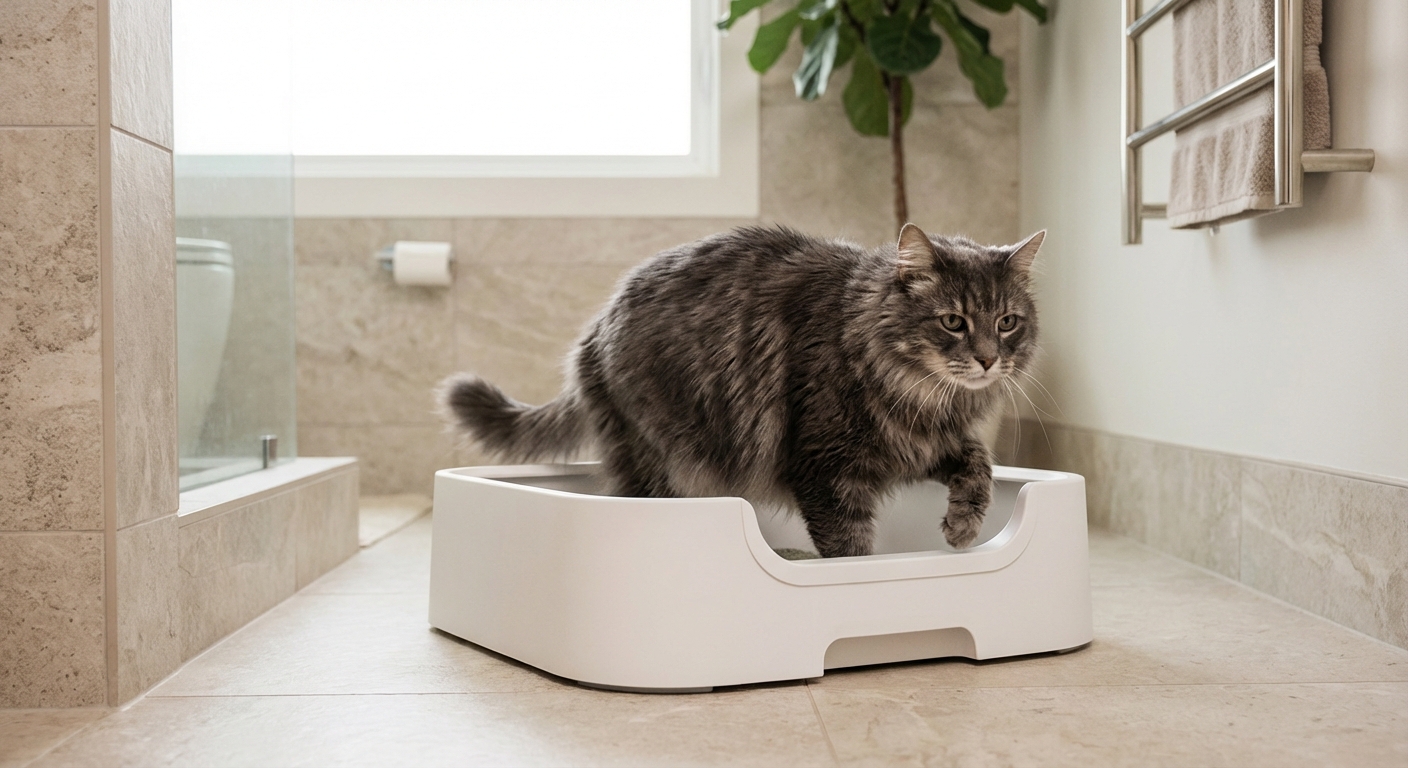
Older cats commonly develop arthritis, even if they still jump sometimes. A high-sided box, stairs, or a long walk to the litter box can be enough to trigger accidents.
- Clues: peeing or pooping just outside the box, hesitating to step in, stiffness, less grooming
- Helpful changes: low-entry box, additional boxes, easier access, non-slip flooring nearby
Constipation, diarrhea, and GI discomfort
If passing stool hurts, cats may avoid the box. Loose stool can also lead to urgency and accidents if the box is too far away or difficult to access.
- Clues: hard small stools, straining to poop, stool stuck to fur, accidents in hidden corners
Senior brain changes
Some senior cats experience confusion or altered routines and may forget where the box is, especially at night.
- Clues: accidents in new spots, vocalizing at night, pacing, disorientation
Pooping outside the box
When the issue is mostly poop (or poop plus urine), the troubleshooting can overlap, but there are a few extra medical considerations.
- Pain while pooping: constipation, arthritis, spinal pain, or past painful episodes that create box avoidance
- GI triggers: dietary intolerance, parasites, inflammatory bowel disease, sudden diet changes
- Rear-end discomfort: anal sac issues or skin irritation can make the box feel unpleasant
Because straining to poop can look like straining to pee, it is another reason a timely vet visit matters.
Behavior and environment
If your vet has ruled out medical causes, or you are treating them while also troubleshooting at home, look closely at your cat’s litter box setup and daily stress level. Pain and stress can also feed into each other, so addressing both is often what gets real traction.
Box preferences
- Dirty box: many cats will refuse a box they consider soiled. Scoop at least once daily, ideally twice.
- Wrong litter type: sudden changes in texture or fragrance can cause refusal. Many cats prefer unscented, fine-grain clumping litter.
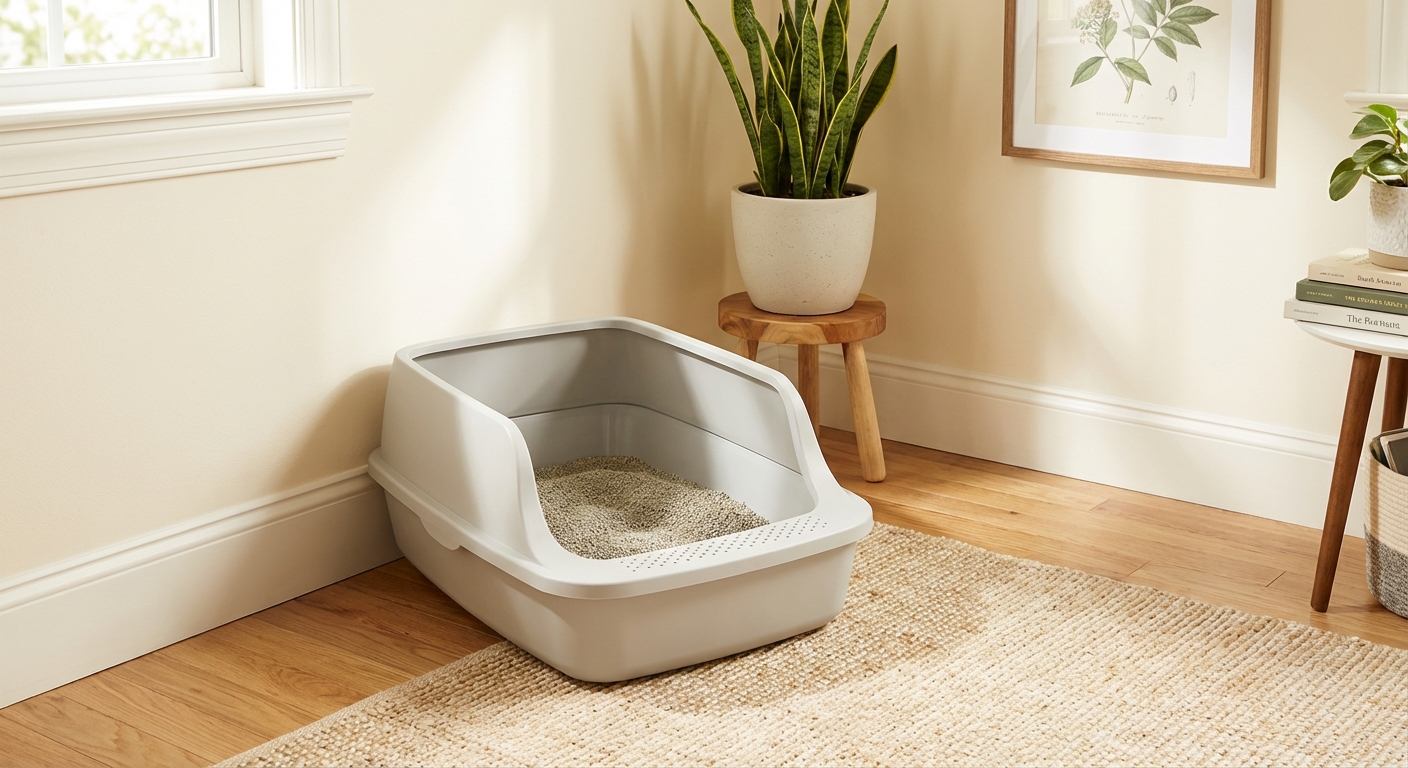
- Box is too small: a commonly recommended guideline is about 1.5 times your cat’s body length (nose to base of tail). Bigger is often better.
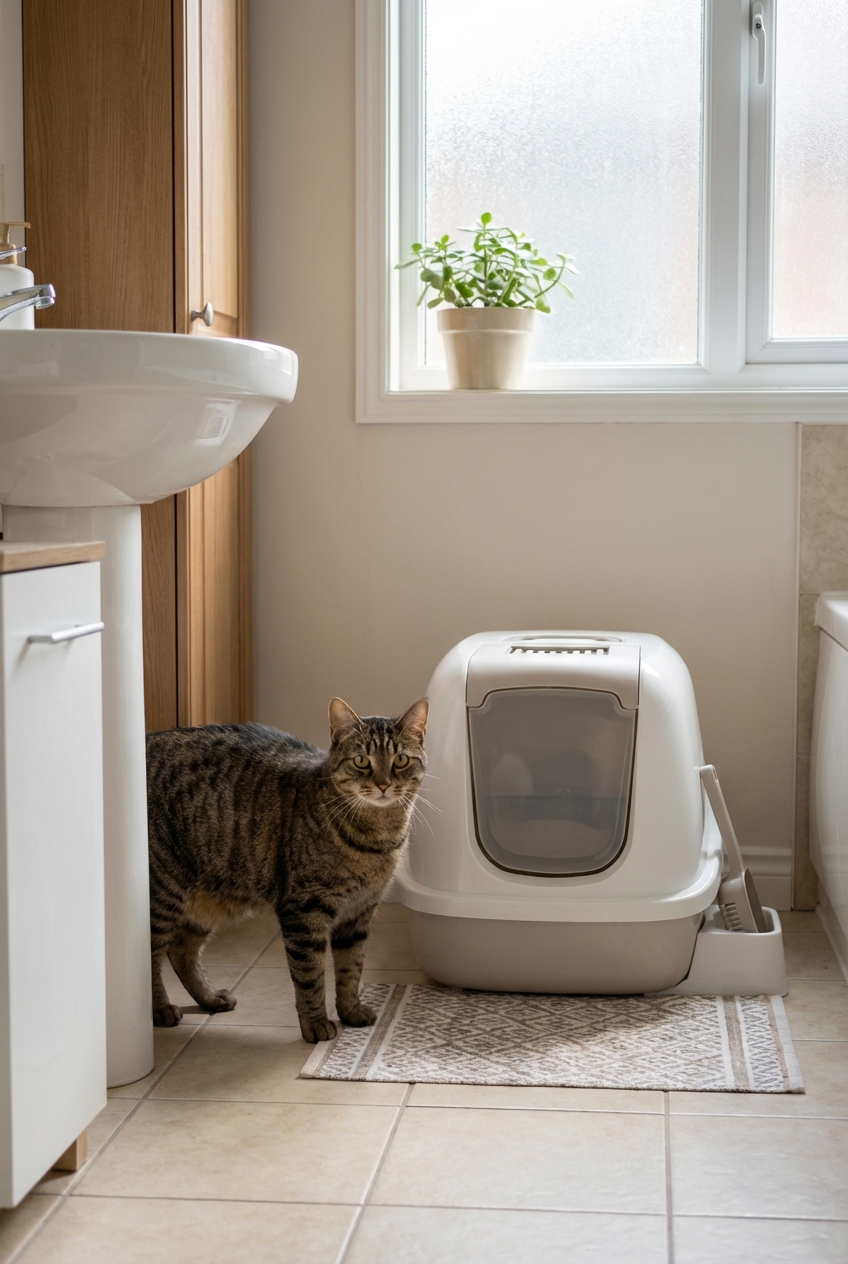
- Covered boxes: some cats like privacy, others feel trapped. If you use a covered box, try also offering an open one.
- Liners or deodorizer crystals: these can feel odd under paws or add strong smells.
Location issues
From a cat’s perspective, the box needs to be easy, safe, and quiet.
- Avoid placing boxes next to loud appliances (washer, dryer, furnace).
- Avoid tight dead-end areas where another pet can corner them.
- Give senior cats a box on every level of the home.
Stress, conflict, and changes
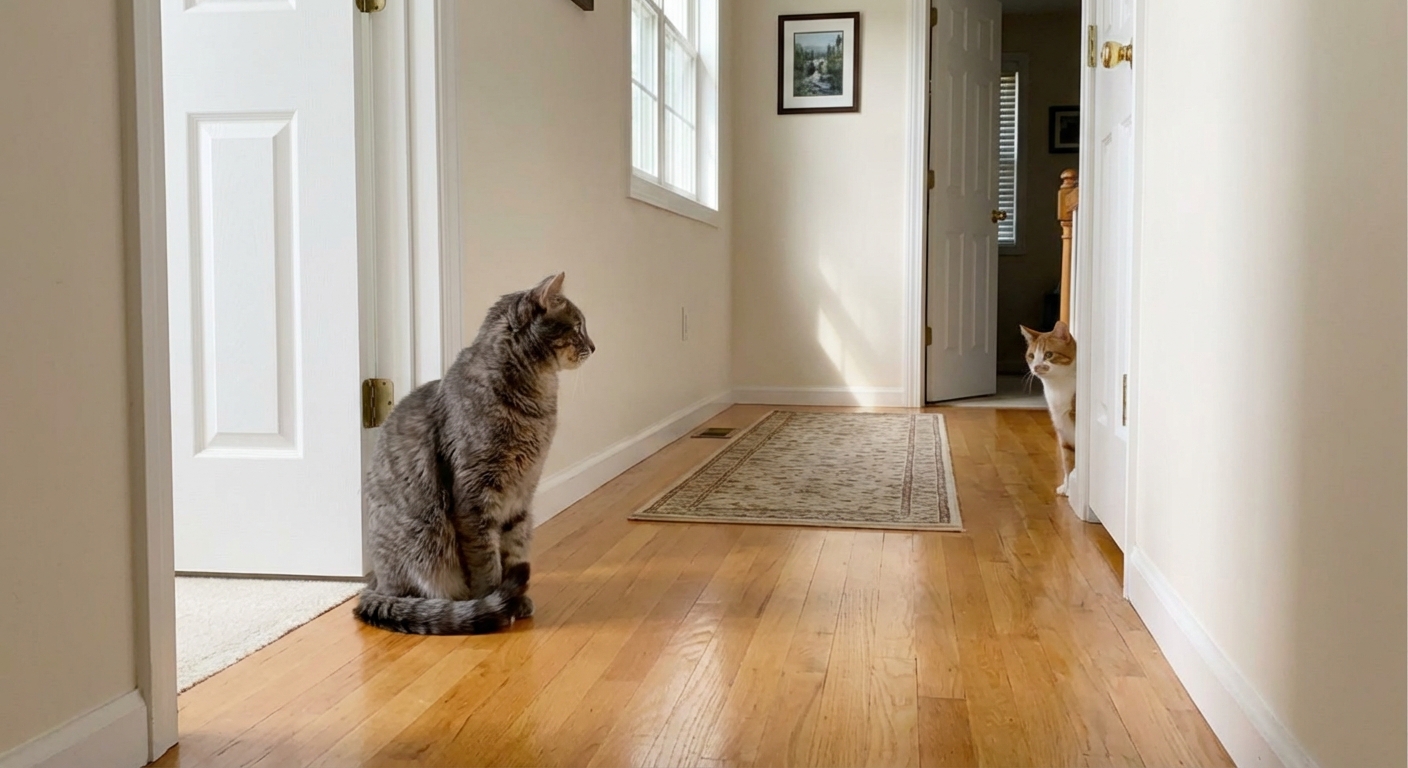
Stress is a major trigger for urination outside the box. This can include moving, remodeling, new pets, a new baby, schedule changes, or conflict between cats.
- Blocking: one cat may guard the litter box area, preventing access.
- Resource tension: not enough litter boxes, feeding stations, or resting spots.
- Optional support: feline facial pheromone diffusers or sprays can help some cats feel more secure. They work best alongside medical care and environmental changes.
Marking vs. accidents
This distinction matters because the solutions can differ.
Signs it may be urine marking
- Urine on vertical surfaces like walls, furniture, doors, or curtains
- Small amounts of urine
- Often occurs in socially meaningful areas, like entryways or near windows
Signs it may be box aversion or urgency
- Large puddles on horizontal surfaces
- Urinating on soft items like laundry, rugs, or bedding
- Accidents near the litter box
Important note: medical issues can still be present in either scenario, so do not skip a vet visit based on “it looks behavioral.”
What to do today
If you are in the middle of active accidents, these steps can help right away while you schedule veterinary care and improve the setup.
1) Make the box inviting
- Scoop now. Replace litter if it is heavily soiled.
- Use unscented litter.
- Try an open, large box with low entry.
- Add one extra box in a second location.
2) Follow the box count rule
A widely used guideline is one box per cat, plus one extra, spread across the home.
3) Clean accidents correctly
- Use an enzymatic cleaner designed for pet urine.
- Avoid ammonia-based cleaners. They can leave a lingering odor that may draw some cats back to the same spot.
- If urine is on bedding, wash with an enzyme product and follow label directions.
4) Wash boxes the cat-friendly way
- Empty and wash boxes regularly with mild soap and warm water.
- Rinse well and dry completely.
- Avoid strong disinfectants or heavy fragrance near the box. Fumes and leftover scent can be a turn-off.
5) Reduce stress and increase safety
- Keep routines predictable: feeding times, play sessions, quiet rest areas.
- Provide vertical space (cat tree, shelves) and hiding spots.
- In multi-cat homes, separate key resources: food, water, litter boxes, resting spots.
6) Consider gentle temporary confinement
If your home is being heavily soiled, a short-term “reset room” can help. Set up a quiet room with food, water, bed, toys, and a clean box. This is not punishment. It is a way to rebuild a positive pattern and protect your household while you troubleshoot.
Common mistakes
- Punishment: yelling, rubbing their nose in it, or spraying water increases fear and can escalate avoidance.
- Changing too much at once: if you are experimenting, do it gradually and change one variable at a time.
- Too much fragrance: scented litter, plug-ins, or strong cleaners near the box can repel cats.
- Not enough boxes: especially in multi-cat households.
Working with your vet
Your vet will typically ask very specific questions. Having details ready saves time and gets your cat help faster.
Bring this info
- When the problem started and whether it was sudden or gradual
- Urination vs. defecation, or both
- Whether the puddles are small or very large (and any changes in thirst)
- Photos of accident locations (if possible)
- Litter type, box type, box location, and cleaning routine
- Any new stressors: moves, visitors, new pets, construction, schedule changes
- Diet and water intake changes, plus any weight loss
Possible treatments
- Pain control and anti-inflammatory medication for urinary inflammation or arthritis
- Diet adjustments for urinary health, constipation, or diarrhea
- Hydration support, including strategies to increase water intake
- Behavior plans, environmental enrichment, and in some cases prescription anti-anxiety medication
Prevention
Once your cat is back on track, small routines can help keep it that way.
- Scoop daily and do a full box wash regularly with mild soap and water.
- Keep at least one box in a quiet, low-traffic area.
- Offer ample water options, including a fountain if your cat likes moving water.
- Schedule wellness visits, especially for senior cats, to catch pain, kidney disease, thyroid issues, and urinary problems early.
Most litter box problems are not “spite.” They are communication. When we listen closely and respond with comfort plus good medical care, cats usually improve.
If your cat is currently having accidents, start with the urgent health check, then work through box setup and stressors step by step. You do not have to solve everything in one day. Small changes add up quickly for cats.