Start homemade dog food safely with this vet-informed starter plan. Learn what “vet approved” means, choose a balancer, follow a 14-day transition, and u...
Article
•
Designer Mixes
Whippet Temperament, Speed, and Care

Shari Shidate
Designer Mixes contributor
Whippets look like miniature racehorses in dog form, but living with one often surprises people in the best way. Yes, they can hit breathtaking speeds in a sprint. But in most homes, a Whippet is a gentle, affectionate “shadow dog” who loves soft blankets, quiet companionship, and a predictable routine.
As a veterinary assistant here in Frisco, Texas, I like to describe Whippets as athletes with an off switch. If you meet their daily exercise and safety needs, they are often wonderfully calm indoor companions.
Quick facts: Most Whippets live 12 to 15 years. Adults are usually around 18 to 22 inches tall and roughly 25 to 40 pounds, though individuals vary.

Whippet temperament
Whippets are sweet-natured, people-focused, and sensitive. They tend to bond closely with their family and are often polite with visitors once they feel safe. Many prefer gentle handling and a calm household, which makes them a great match for owners who enjoy a quieter, more routine-based lifestyle.
What owners love most
- Affectionate and loyal: Most Whippets want to be near you, not necessarily on top of you, but close.
- Low drama: Compared to many high-energy breeds, Whippets are often content to relax after a good run.
- Generally quiet: They are not known for being constant barkers, though individuals vary.
Traits to plan for
- Sensitivity: Harsh corrections can backfire. Positive reinforcement and consistency work best.
- Prey drive: Like many sighthounds, Whippets may instinctively chase squirrels, rabbits, and cats outdoors.
- Separation stress potential: Because they bond strongly, some struggle if left alone for long stretches without training and enrichment.
Multi-pet note: Some Whippets live peacefully with cats and small dogs, especially when raised together and carefully introduced. Others have a stronger chase instinct. I always recommend slow, supervised introductions and realistic expectations around small, fast-moving pets.
Speed and exercise
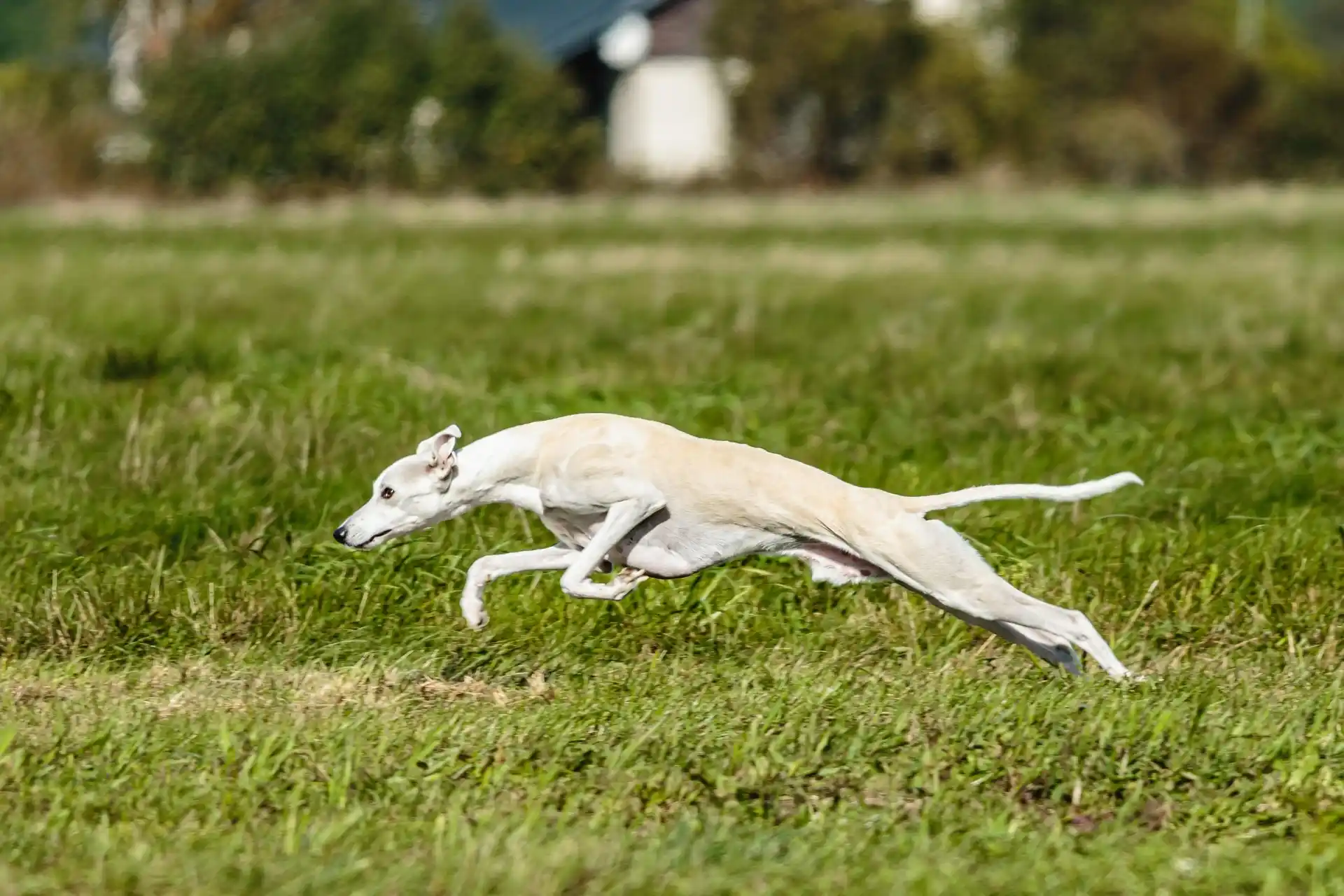
Whippets are famous for speed and are sometimes called “the poor man’s racehorse” because of their sprinting ability. They are built for bursts of fast running, not endless jogging. A Whippet that gets safe opportunities to sprint will often be more relaxed at home.
After temperament, most of the day-to-day success with this breed comes down to exercise and safe management.
How much exercise?
Most adult Whippets do well with daily walks plus chances to run at full speed in a secure area. Needs vary by age and personality. Some are perfectly content with a few weekly sprint sessions, while others truly shine with a daily free-run when you can safely provide it. Puppies and adolescents do best with shorter, more frequent sessions to protect growing joints.
- Daily: 1 to 2 walks for sniffing and mental stimulation.
- Running: Short, safe sprint sessions in a fully fenced area when possible.
- Brain work: Food puzzles, scent games, and short training help prevent boredom.
Off-leash and fencing
Because Whippets can accelerate instantly and may chase moving objects, off-leash time should be limited to secure, fenced spaces. A strong recall helps, but it is not foolproof when prey drive kicks in. For many Whippets, a long line in an open field is a safer compromise.
- Fence security matters: Check for gaps, loose boards, and spots where a dog could slip through or dig out.
- Fence height: A solid fence is ideal, and many owners aim for at least 5 to 6 feet, especially for athletic individuals.
Coat and weather care
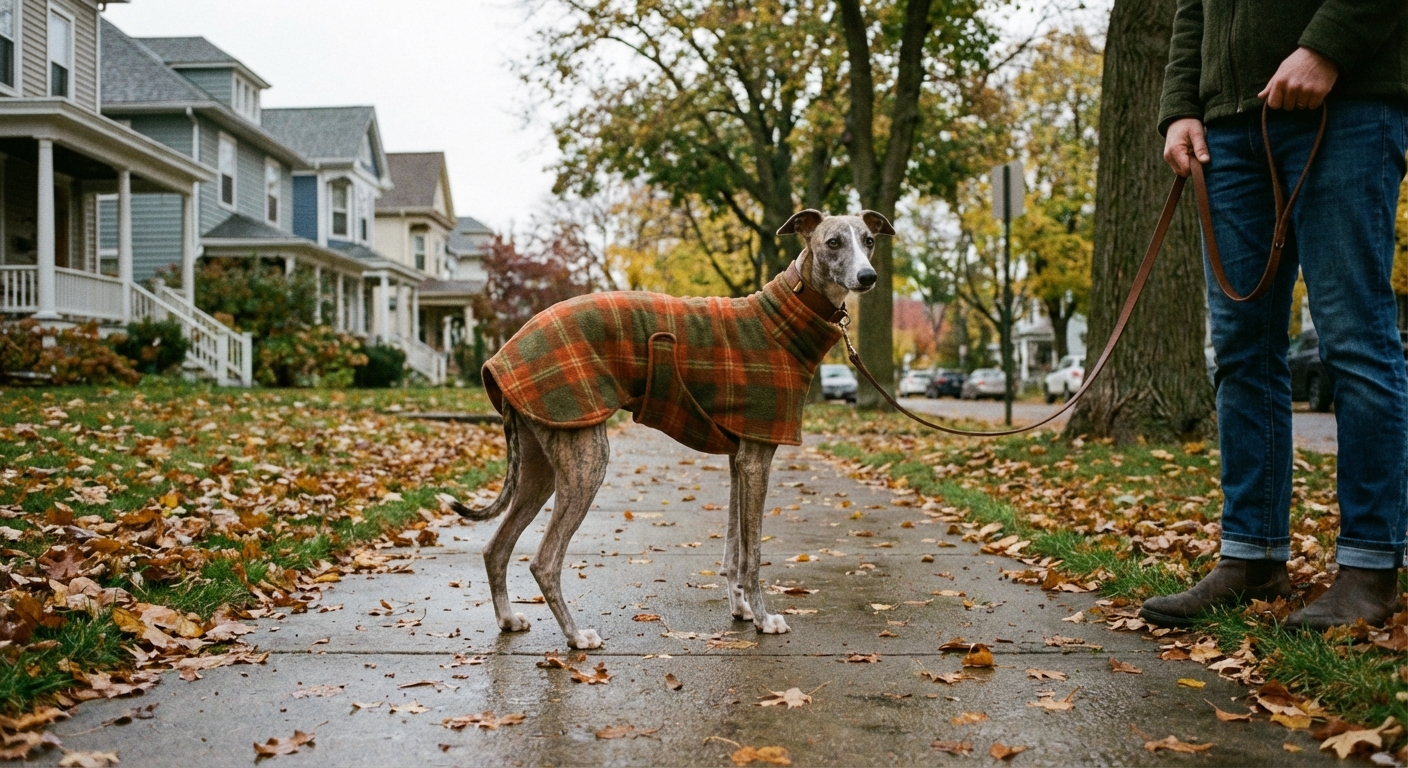
Whippets have a short, thin coat and tend to be lean with relatively low body fat compared with many breeds. That sleek look is part of their charm, but it also makes them more sensitive to cold, wind, and wet weather than many dogs.
Once you understand their coat, weather comfort, and a few basic grooming routines, Whippets are refreshingly low-maintenance.
Grooming basics
- Brushing: A soft brush or grooming mitt once a week is usually plenty.
- Bathing: Only as needed, using a gentle dog shampoo to protect skin.
- Nails: Keep nails short. Long nails can change gait and contribute to discomfort.
- Teeth: Daily brushing is ideal, plus veterinary dental cleanings as recommended.
Cold weather
If you have a Whippet, you will probably become a coat-and-sweater person. In cooler temperatures, many are far more comfortable wearing a well-fitted jacket or fleece, especially on early morning walks. Also consider warm bedding away from drafts.
- Use a warm coat when it is chilly or windy.
- Limit time outside in cold rain.
- Provide soft, insulated bedding indoors.
Hot weather
Texas summers are no joke, and Whippets can overheat quickly when they are excited and running. Stick to early morning or evening walks, offer plenty of water, and use shaded areas. If the pavement is hot to your hand, it is too hot for paws.
Calm indoors
This is the Whippet secret: once their exercise needs are met, many are happy to spend hours lounging. They love comfort and can be expert nappers. In apartments and suburban homes, the biggest indoor challenge is often not hyperactivity. It is ensuring they feel secure, warm, and included.
Set them up for success
- Create a “safe soft spot”: A cushy bed in a quiet corner reduces stress and helps them settle.
- Use predictable routines: Whippets often thrive on consistency.
- Teach calm: Reward relaxed behavior, and practice short training sessions for confidence.
Think of a Whippet like a sprinter: quick bursts of speed, then back to the couch.
Nutrition and healthy weight
Whippets are naturally lean and fine-boned, and they do not carry extra weight well. In clinic, one of the most helpful things we do for long-term joint and heart health is simple: keep dogs in a healthy body condition.
- Portion control: Measure meals and go easy on calorie-dense treats.
- Watch body condition, not the scale alone: You should be able to feel ribs with a light touch, and see a defined waist from above.
- Support activity: On higher-exercise days, you may need to adjust calories slightly with your veterinarian’s guidance.
Common health issues
No dog breed is guaranteed healthy, but knowing what to watch for helps you partner with your veterinarian and catch issues early. Whippets are generally robust for a purebred dog, yet a few concerns come up more often. Prevalence varies by line and individual.
Heart concerns
Some Whippets may have heart murmurs or rhythm issues. A murmur is a sound your veterinarian hears during auscultation that can be innocent or linked to underlying heart disease. If your vet detects a murmur or an irregular rhythm, they may recommend further evaluation such as an echocardiogram and or ECG with a veterinary cardiologist.
- Ask about baseline cardiac evaluation at routine exams.
- Watch for exercise intolerance, coughing, fainting, or unusual fatigue and report it promptly.
Eye disease
Whippets can be prone to inherited eye conditions. Depending on the line, these may include cataracts and progressive retinal atrophy (PRA). Regular veterinary checkups help, and reputable breeders often screen breeding dogs through ophthalmology exams.
- Schedule an exam quickly if you notice sudden vision changes.
- Watch for cloudiness, squinting, redness, discharge, or bumping into objects.
Other practical considerations
- Thin skin: They can get scrapes or cuts more easily during rough play.
- Orthopedic injuries: High-speed zoomies can lead to sprains or strains. Warm up with a walk before intense running.
- Deafness: Reported in some lines, so mention any hearing concerns to your vet early, especially in young dogs.
- Lean-body anesthesia considerations: Sighthounds are often discussed in relation to anesthesia and medication sensitivity. It is more documented in Greyhounds, but it is still worth telling your veterinary team your dog is a sighthound type so they can choose appropriate drugs and monitoring.
Important: If your Whippet collapses, has labored breathing, suddenly cannot use a limb, or shows severe lethargy, treat it as urgent and contact an emergency clinic.
Health testing to ask about
If you are working with a breeder, ask what health screening they do and whether they participate in OFA and or CHIC-style testing. At minimum, many owners look for routine cardiac and eye screening in breeding dogs.
Training and enrichment
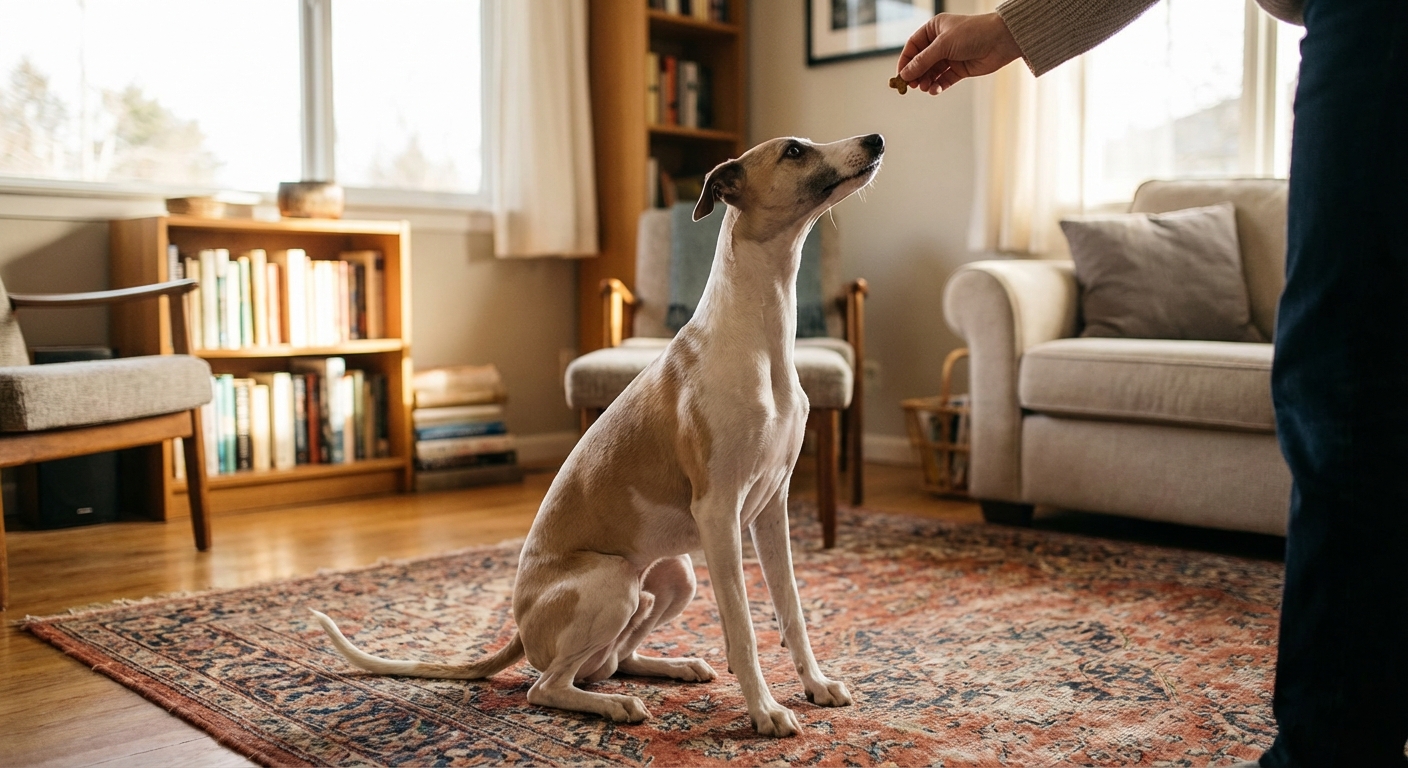
Whippets are smart, but they are not always motivated by repetition. Keep training sessions short, positive, and rewarding. Many love chasing games, so channel that instinct into safe activities like lure coursing, flirt pole play in a fenced yard, or structured fetch with rules.
Puppies and teens are often the busiest version of a Whippet. Plan for extra patience, more frequent potty breaks, and training that builds confidence without overdoing physical impact.
Tips that work well
- Positive reinforcement: Treats, praise, and play build trust and reliability.
- Recall practice: Train indoors first, then on a long line. Expect instincts to compete with training outdoors.
- Socialization: Gentle exposure to people, dogs, surfaces, and sounds helps reduce anxiety.
- Prevent boredom: Rotate chew items and puzzle feeders.
Is a Whippet right for you?
A Whippet can be a wonderful fit if you want an affectionate companion who enjoys exercise but does not need constant activity all day. They tend to do best with owners who value gentle training, can provide safe running opportunities, and are happy to share the couch.
A great match if you want
- A calm indoor dog after daily exercise
- A gentle, affectionate companion
- A sleek, low-odor coat with minimal grooming
Think twice if
- You need a dog that can reliably be off-leash in unfenced areas
- You want a rugged outdoor dog that loves cold, wet weather
- You prefer a more independent, less people-focused breed
If you are considering a Whippet, talk with a reputable breeder or a sighthound rescue and ask about temperament, health screenings, and what daily life looks like with their dogs. With the right setup, Whippets are one of those breeds that quietly steal your heart and never really give it back.