Skip filler-heavy store treats with these 5 fast homemade options—tuna bites, chicken sprinkles, salmon flakes, freezer treats, and broth cubes—plus safe...
Article
•
Designer Mixes
Which Human Foods Can Cats Eat? A Practical Guide for Safe Sharing

Shari Shidate
Designer Mixes contributor
Starting your morning right sets the tone for the entire day, and the same “small habits add up” idea applies to how we feed our pets. If you have ever looked down at a hopeful pair of cat eyes while you are eating, you are not alone. The key is knowing which human foods are truly safe for cats, which are only safe in tiny amounts, and which can be risky.
Important note: Cats are obligate carnivores, meaning their bodies are built to thrive on animal-based nutrition. Human foods should be occasional treats, not a replacement for a complete and balanced cat diet. And if your cat has kidney disease, diabetes, food allergies , or is on medication, check with your veterinarian before introducing anything new.
Quick rules before you share
- Keep it plain: No added salt, garlic, onion, butter, sauces, or seasonings.
- Think “pea-sized” portions: Especially for new foods. For most cats, that is roughly 1 teaspoon or a few small bites. Too much can trigger vomiting or diarrhea.
- Avoid bones: Cooked bones splinter and can injure the mouth or digestive tract. (This includes small fish bones.)
- Go slow: Introduce one new item at a time and watch for itching, ear redness or head shaking, vomiting, or loose stool.
- Treats stay small: A good target is treats making up no more than about 10 percent of daily calories. Many indoor cats eat around 200 to 250 calories per day, so treats often land around 20 calories daily or less.
Best human foods cats can eat
1) Cooked, unseasoned meats
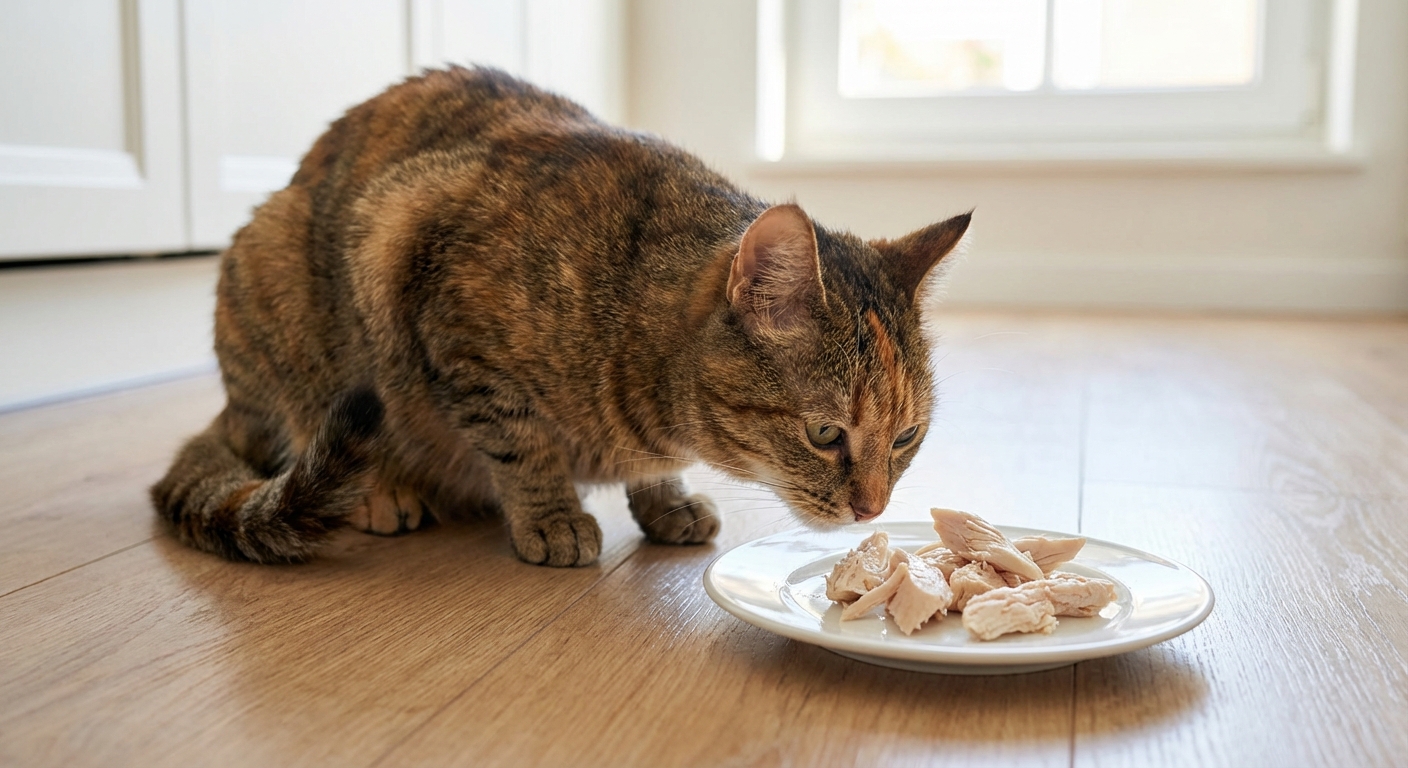
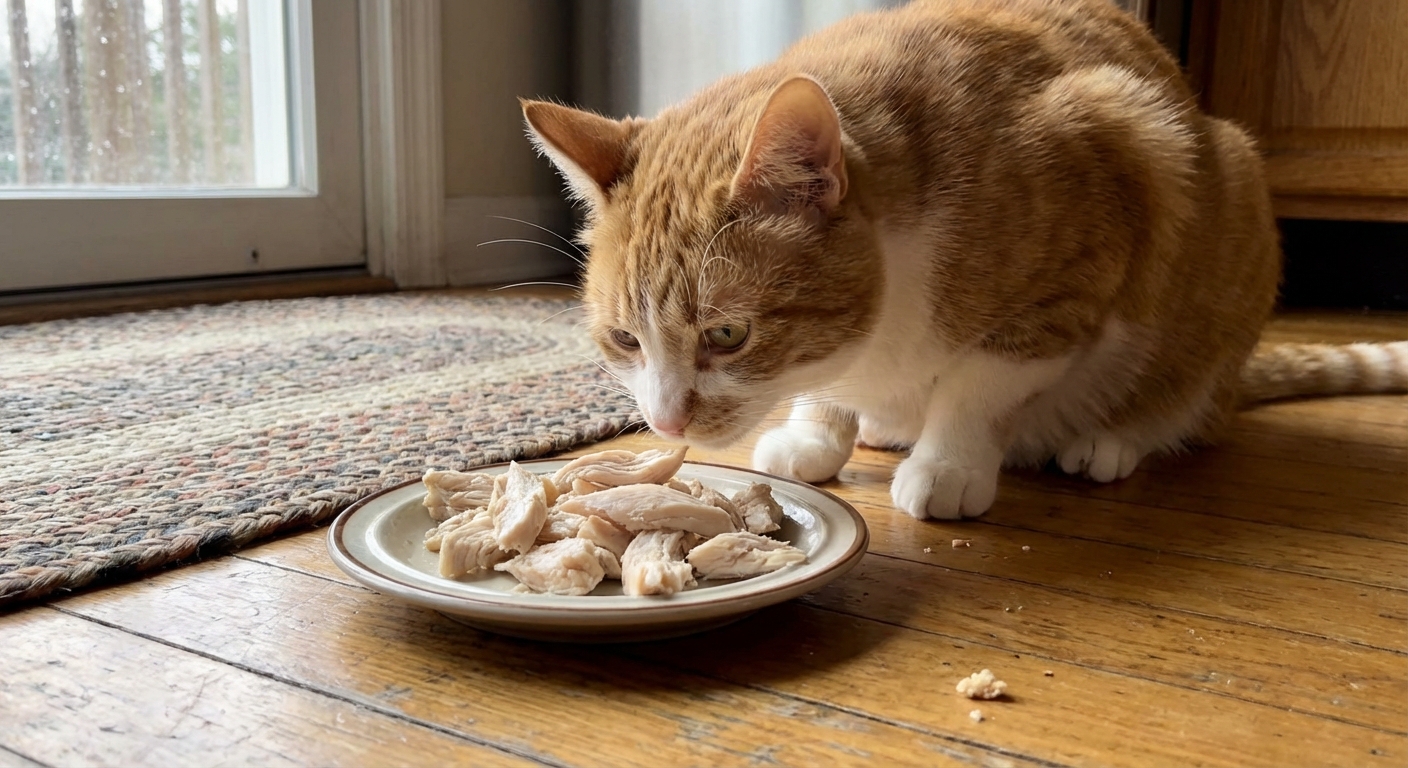
These are typically the safest “people foods” for cats because they match a cat’s natural nutritional needs. Offer small bits of:
- Chicken (skinless, boneless, cooked)
- Turkey (plain deli turkey is often too salty, so choose home-cooked)
- Lean beef (cooked, unseasoned)
- Pork (fully cooked, lean, no seasoning)
Skip: Anything fried, breaded, cured, smoked, or heavily processed (like bacon, sausage, or ham) due to fat and salt.
2) Cooked fish in small amounts
Plain cooked fish can be a tasty treat. Choose:
- Salmon (cooked)
- Sardines packed in water with no added salt, in tiny portions
- Tuna as an occasional treat only (plain, in water)
Fish should be a treat, not a daily staple. Too much can unbalance the diet, and some cats develop strong preferences that make them refuse balanced cat food. Overdoing tuna can also raise concerns about mercury over time, so keep it occasional.
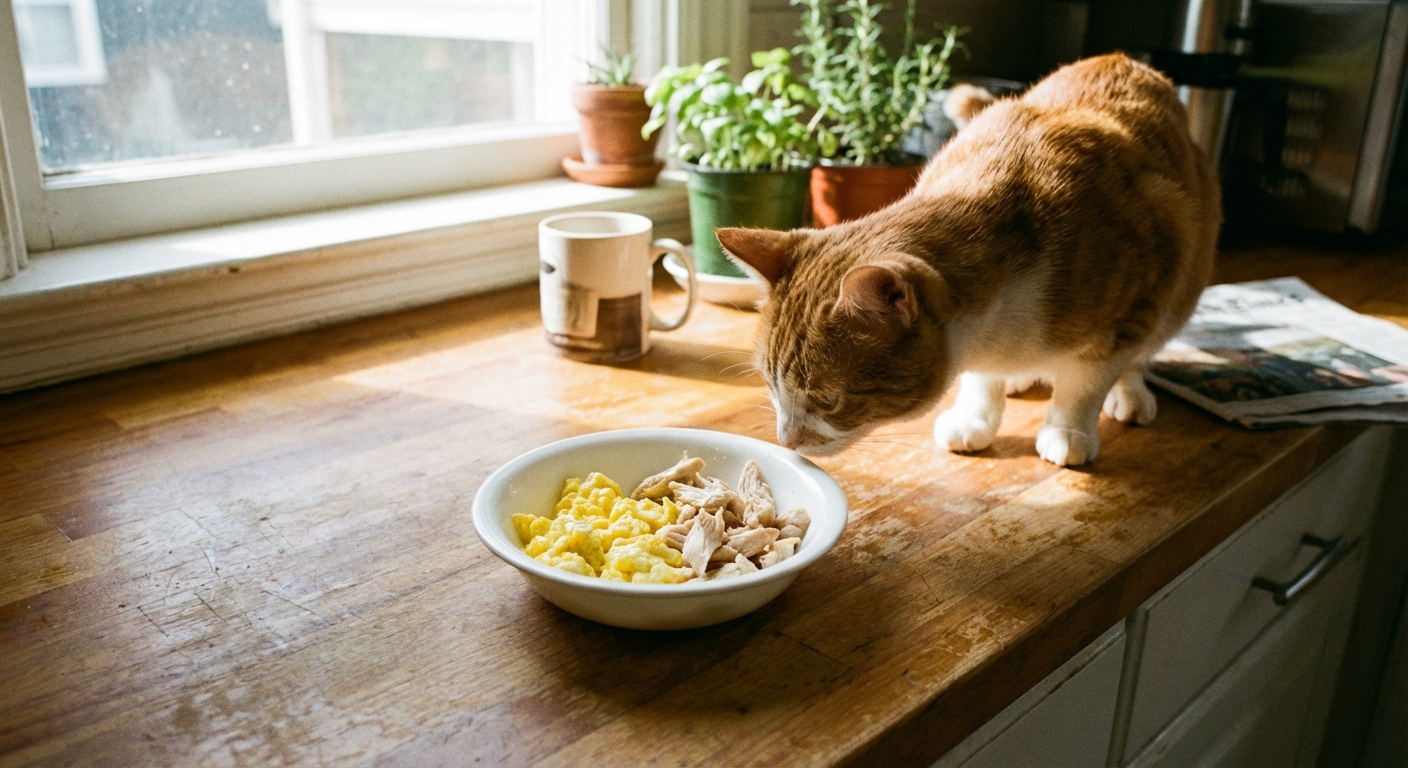
3) Eggs (fully cooked)
Cooked egg is a high-quality protein option. Offer a small bite of scrambled or hard-boiled egg with no butter, oil, salt, or seasoning.
4) Small portions of certain fruits
Most cats are not fruit-motivated, but some enjoy a taste. Safe options include:
- Blueberries
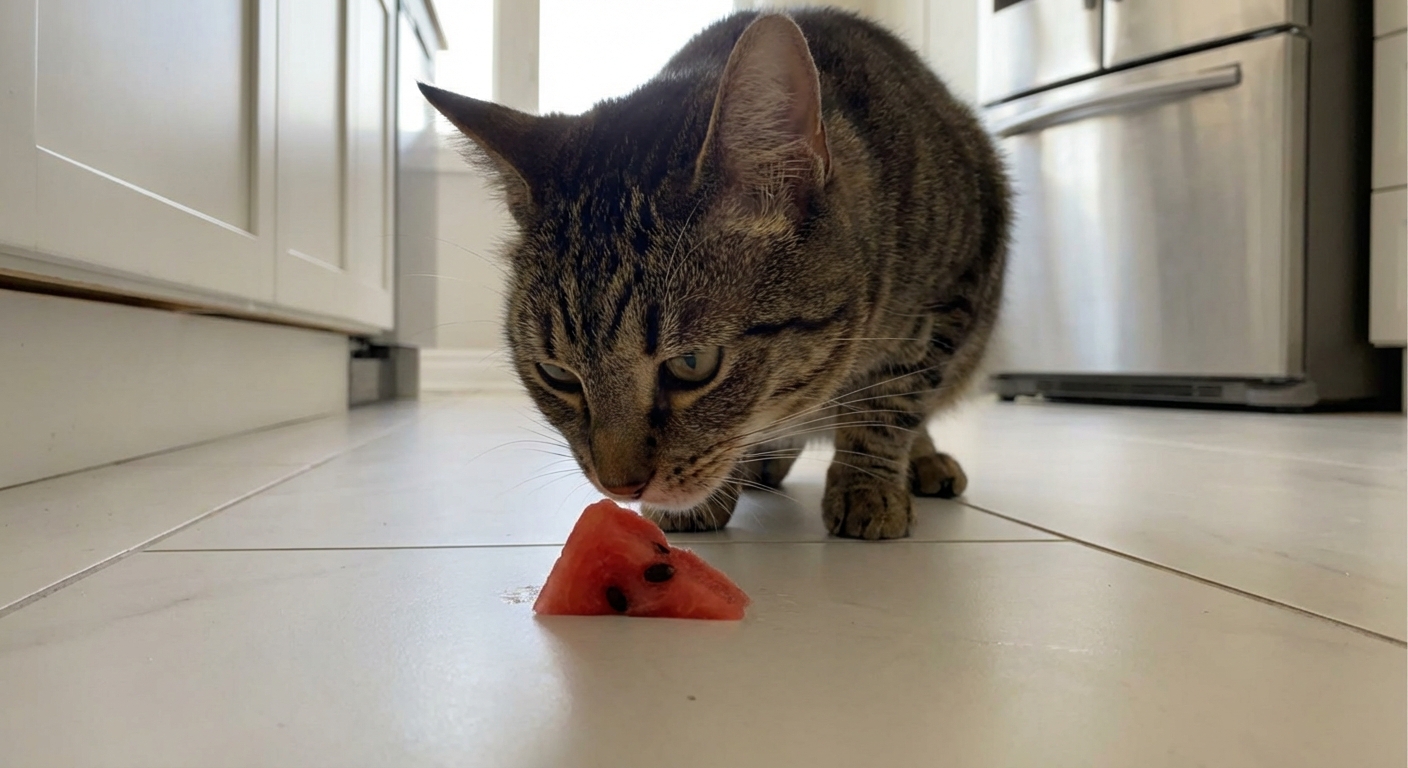
- Seedless watermelon
- Strawberries
- Apple (peeled is easier, no seeds or core)
Fruits are higher in sugar than cats need, so keep portions tiny.
5) Some vegetables (cooked or soft)
Vegetables are not required for cats, but a small amount can be fine. Try:
- Steamed pumpkin (plain, not pie filling)
- Steamed carrots
- Green beans
- Peas
If your cat tends toward constipation or hairballs , a small amount of plain pumpkin (for example, 1 to 2 teaspoons) can help some cats. Start small and confirm with your veterinarian if symptoms are ongoing.
6) Plain, small amounts of dairy (only if tolerated)
Many adult cats are lactose intolerant. If your cat handles dairy without digestive upset, a tiny lick of:
- Plain yogurt
- Small piece of cheese
…can be okay. If you notice gas or diarrhea, skip dairy entirely.
Foods that are risky sometimes
These are not automatically toxic, but they can cause issues depending on portion size, preparation, and your cat’s health.
High-fat foods
Greasy foods, fatty meat trimmings, and rich table scraps can trigger stomach upset and may increase pancreatitis risk in susceptible cats.
High-salt foods
Chips, deli meats, salted meats, soups, and many packaged foods contain far more sodium than cats need. Even if a food is not “toxic,” the salt load can be a problem.
Gravy and sauces
Many gravies, broths, marinades, and sauces contain onion, garlic, or heavy salt and fat. They are a common hidden reason cats get sick after “just a little taste.”
Raw foods
Raw eggs, raw meat, and raw fish can carry bacteria and parasites. Raw fish also contains an enzyme (thiaminase) that can reduce thiamine (vitamin B1) over time if fed frequently. Cooking inactivates thiaminase.
Grains and starches
Plain rice or oatmeal is not toxic, but cats do not need much carbohydrate. If offered at all, keep it minimal and unseasoned.
Foods to avoid
If you remember nothing else, remember this list. These are common household foods that can cause poisoning, illness, or serious complications in cats:
- Onion, garlic, chives, leeks (fresh, cooked, powdered): can damage red blood cells
- Grapes and raisins: avoid. Kidney injury has been reported in pets, and while it seems rarer in cats, it is not worth the risk
- Chocolate and cocoa: contain methylxanthines that can be dangerous
- Alcohol: even small amounts can be toxic
- Caffeine: coffee, tea, energy drinks
- Xylitol: avoid. It is a common ingredient in sugar-free gums, candies, baked goods, and some peanut butters. Feline toxicity is less clearly defined than in dogs, but it is still a smart no-share ingredient
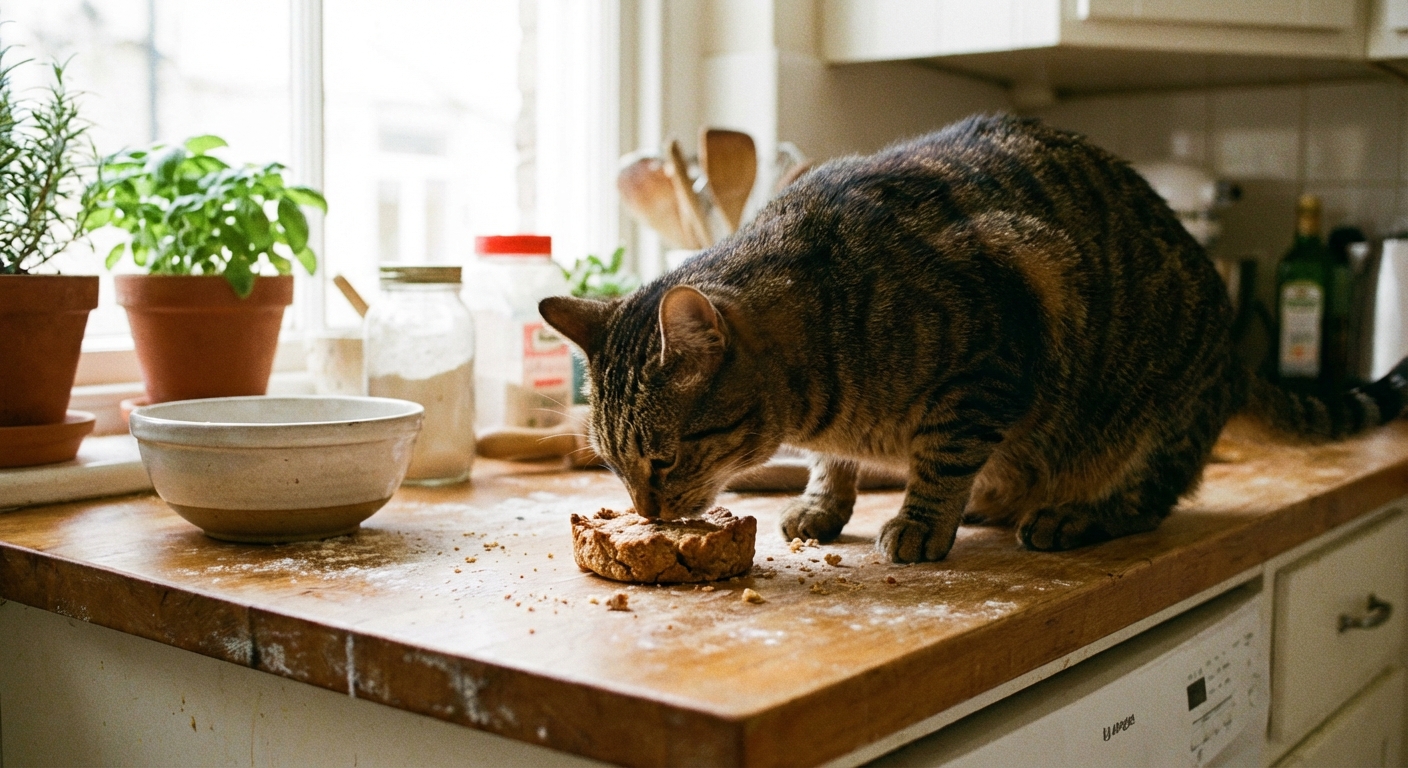
- Raw bread dough with yeast: can expand in the stomach and produce alcohol
- Macadamia nuts: avoid. Toxicity is well documented in dogs, and caution is advised for cats too
- Cooked bones: splinter risk and choking hazard
When in doubt, leave it out. If a food is heavily seasoned, sugary, salty, fatty, or processed, it is not a good “share.”
How to share safely
Portion guide
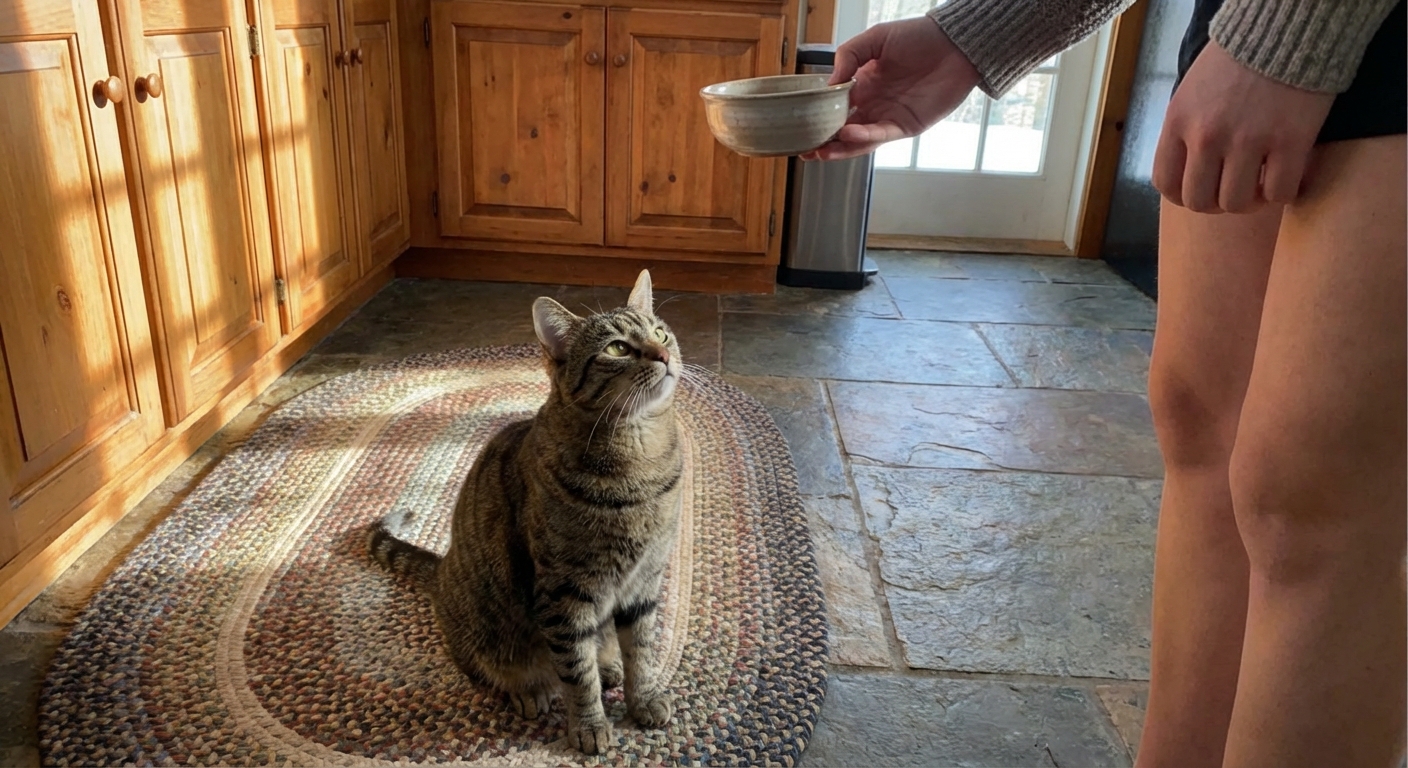
- Start with 1 to 2 small bites (about the size of a pea each, or around 1 teaspoon total).
- If your cat does well, you can offer a little more next time, but keep treats modest.
Prep checklist
- Cook thoroughly (for meats, eggs, fish).
- Remove skin, bones, and visible fat.
- Serve plain and cooled to room temperature.
- Use a clean plate or bowl, especially if the food was on your cutting board.
Watch for these signs
- Vomiting or diarrhea
- Excessive drooling
- Itching, ear redness or head shaking, or facial rubbing
- Low appetite or hiding
If symptoms are severe, persistent, or your cat may have eaten something unsafe, contact your veterinarian or a pet poison helpline immediately.
FAQ
Can cats eat peanut butter?
Not recommended. While a tiny lick may not harm some cats, peanut butter is calorie-dense and can be high in fat. Some brands may also contain xylitol or other additives. It is safer to skip.
Can cats eat bread?
Plain baked bread is not toxic, but it offers little nutritional value and can add unnecessary carbs. Never give raw dough.
Can cats eat canned tuna?
As an occasional treat, a small amount of tuna in water can be okay. Choose plain tuna with no added salt or seasoning. Avoid frequent feeding, and avoid tuna packed in oil.
Can cats eat milk?
Many adult cats are lactose intolerant. If you choose to offer dairy, keep it very small and stop if you notice digestive upset.
The bottom line
If you want to share human food with your cat, your safest choices are plain cooked meats, a small amount of cooked egg, and occasional bites of cat-safe fruits or vegetables. Keep portions tiny, avoid added seasonings, and steer clear of high-risk foods like alliums (onion and garlic), chocolate, alcohol, caffeine, and sugar-free products that may contain xylitol.
Small, consistent choices really do compound into remarkable results over time, for you and your cat. When you keep treats simple and safe, you support your cat’s long-term health while still enjoying those sweet “can I have a bite?” moments.