
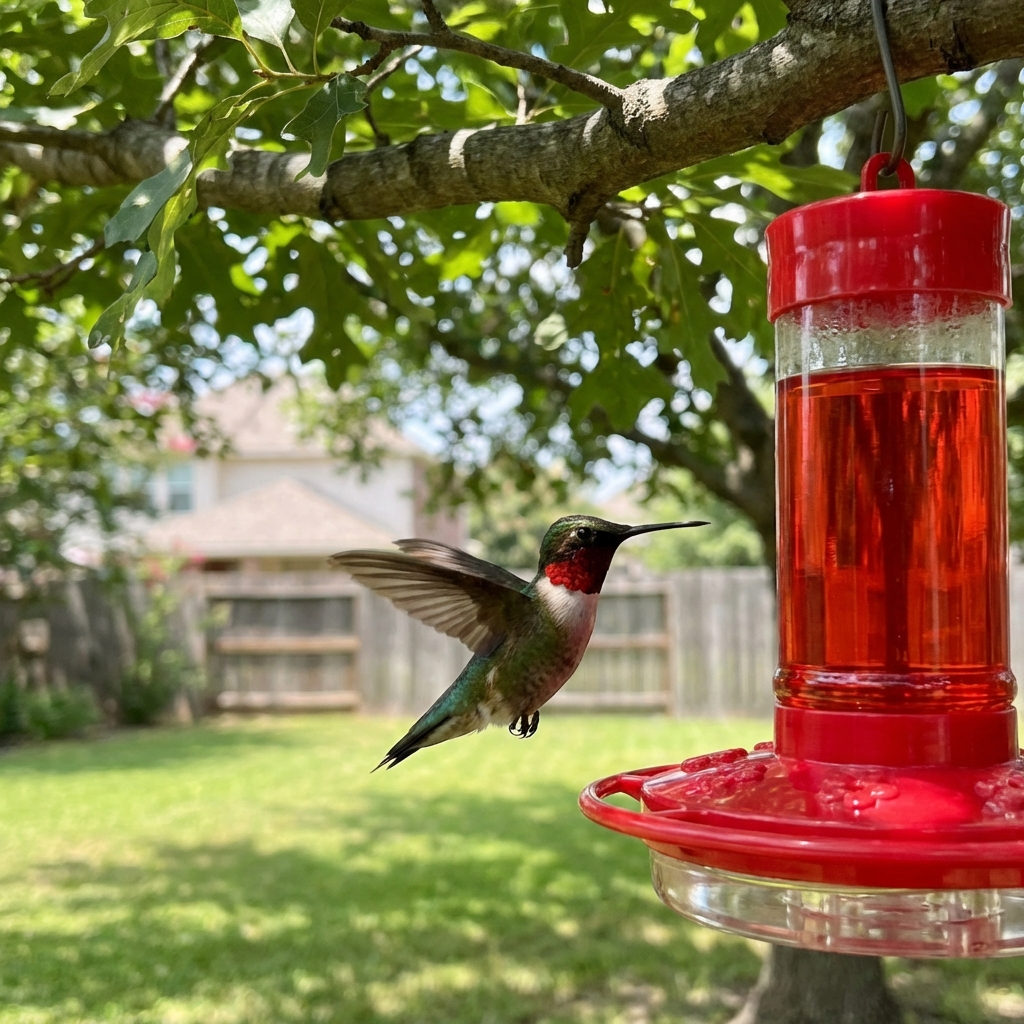
Find the healthiest spot for your hummingbird feeder: bright shade, 4–6 ft height, safe cover, window strike spacing, and tips to prevent ants, bees, and s...
Article
•
Designer Mixes
Where to Put a Hummingbird Feeder

Shari Shidate
Designer Mixes contributor
Hummingbirds are tiny, fast, and surprisingly picky about where they feel safe enough to feed. If you have ever hung a feeder and wondered why it stays full for days, placement is often the missing piece. The good news is you do not need a huge yard or fancy landscaping. With a few practical, field-tested tweaks (and a couple of research-backed basics from bird safety and feeder-care guidance), you can make your feeder easier for hummingbirds to find and safer for them to use.
The best spot, in plain terms
The best place for a hummingbird feeder is a shaded or partly shaded location that is easy for birds to see, close to protective cover, and far enough from windows to reduce collisions. You also want it to be convenient for you to refill and clean, because cleanliness is not optional with nectar feeders.
- Light: Bright shade or morning sun with afternoon shade helps keep nectar fresher longer.
- Visibility: Hang it where birds can spot it while flying a typical route, like along a fence line, garden edge, or near flowering plants.
- Safety: Place it near shrubs or small trees for quick escape from predators, but not so close that a cat can hide and pounce.
- Convenience: If you dread maintaining it, it will get neglected. Put it where you can easily reach it.
Sun vs shade
Heat speeds up fermentation and spoilage. In hot climates, full sun can turn nectar questionable quickly, especially in the hottest months. Part shade is usually the sweet spot.
Hot weather placement tips
- Choose morning sun and afternoon shade when possible.
- Avoid hanging directly over concrete patios or reflective surfaces that trap heat.
- If the only option is sun, plan on more frequent nectar changes and consider a feeder with a bit of built-in shade from the top.
Quick reality check: Shade helps nectar last longer, but it does not replace cleaning. A feeder can still grow mold in shade if it is not scrubbed regularly.
Nectar and cleaning quick rules
If you only remember a few things, make it these. They keep hummingbirds safer and they keep your feeder working.
- Simple nectar recipe: 1 part white sugar to 4 parts water. No honey, no brown sugar, no artificial sweeteners, and no red dye.
- Change nectar by temperature (rule of thumb): In extreme heat, change it daily or every 1 to 2 days. In typical summer weather, every 2 to 3 days. In cooler conditions, it can often go longer, but always dump it sooner if it looks cloudy or has debris.
- Cleaning basics: Wash with hot water and a bottle brush. Mild dish soap is fine if you rinse very thoroughly so no residue remains. For extra help with film and odor, use a vinegar solution (1 part white vinegar to 4 parts water), then rinse well and air dry.
How close to cover?
Hummingbirds like a nearby place to perch and scan the area. They also use cover as an escape route from hawks and other threats. In many yards, hanging the feeder within about 10 to 15 feet of shrubs or small trees works well, but treat that as a practical starting point, not a strict rule.
Avoid the ambush zone
Cover is helpful, but too close can create a hiding spot for cats. If you have outdoor cats in the neighborhood, keep the feeder away from low, dense bushes that provide a perfect stalking position. Consider placing it near cover that is higher up or more open underneath. Also avoid placing feeders right beside obvious predator perches, such as a fence corner or dead branch where a hunter can sit and watch the feeder.
Window safety
Hummingbirds can and do hit windows, especially when they chase each other. Feeder placement can reduce risk. General bird-collision guidance applies here too. The safest options are either very close to glass or farther away.
- Very close (within about 3 feet): Birds cannot build up enough speed for a serious impact.
- Farther away (30 feet or more): Helps reduce confusion between reflections and real space.
If your best feeder location is near a window, consider adding window treatments that break up reflections, such as external screens or other bird-safe glass solutions.
Height matters
Most hummingbird feeders do well at about 4 to 6 feet off the ground. This height is comfortable for you and typical for hummingbird feeding. Going very high is not necessary and can make maintenance harder.
Balance these factors
- Easy access for you: Frequent cleaning is much more likely if you do not need a ladder.
- Predator awareness: Higher can be safer from some ground threats, but height alone does not stop cats that can jump or climb.
- Wind: A feeder that swings wildly can leak and attract insects. If it is windy, choose a more sheltered spot.
One feeder or two?
Hummingbirds are territorial. It is normal for one bird to try to “own” a feeder. If you want more visitors, adding a second feeder often helps, especially if you place them out of direct line of sight.
- Try two feeders on opposite sides of the house, or separated by shrubs.
- If one feeder stays empty, keep it up anyway for a bit. Birds often take time to build new routes.
- During migration, extra feeders can help because traffic increases.
Flowers and feeders
If you already grow nectar-rich flowers, use them. Hummingbirds tend to follow food corridors. Putting a feeder near flowering plants can make your yard feel like a reliable feeding station.
Simple strategy
- Hang the feeder near a cluster of blooms, but leave open airspace so birds can approach from multiple angles.
- Use flowers to draw them in, then let the feeder serve as a steady “backup” food source when blooms fade.
- Avoid pesticides, especially on flowering plants, because hummingbirds also eat small insects for protein.
Ants, bees, and wasps
Insects happen, but you can reduce them. Small changes in where and how you hang your feeder can make a noticeable difference.
- Hang from a smooth hook or line: It is easier to add an ant moat above the feeder.
- Avoid placing near trash bins: They can attract wasps, especially in summer.
- Pick a less windy location: Leaking nectar invites insects fast.
- Skip yellow if insects are intense: Yellow parts can be more attractive to bees and wasps. If you are battling insects, prioritize tight seals, no drips, and bee guards over color alone.
Most importantly, do not use insecticides on or near a feeder. Keeping nectar fresh and the feeder clean is the safest long-term solution.
If your feeder stays full
If your feeder is in a decent spot and still gets ignored, it is usually one of these fixable issues.
- Nectar is off: Use the 1:4 recipe (white sugar and water only). Skip dyes and flavored mixes.
- Feeder is leaking or sticky: Even small leaks can create a mess that birds avoid and insects love. Check seals and hang it level.
- It is too hidden: Move it where birds can see it, especially near blooms or along a garden edge.
- Competition is fierce: Add a second feeder out of sight of the first to reduce territorial guarding.
- Timing is normal: In some areas, hummingbird activity is highly seasonal. Give it time, especially during migration swings.
Cleaning and refill reality
From a health perspective, feeder hygiene is the heart of hummingbird care. Spoiled nectar can grow mold and harmful microbes. Put your feeder where you can quickly take it down, wash it, and refill it without it becoming a dreaded chore.
A routine you can keep
- Change nectar more often in hot weather.
- Scrub all ports and seams with a bottle brush.
- Rinse thoroughly and air dry if possible.
Actionable tip: If you have space, keep a second feeder so you can swap a clean one in while the other dries.
Quick checklist
- Part shade preferred, especially in summer heat
- Often within about 10 to 15 feet of trees or shrubs for cover
- Not tucked into dense bushes where cats can hide
- Either within 3 feet of windows or 30 feet away
- About 4 to 6 feet high for easy access and stability
- Near flowers for visibility and a natural feeding route
- Easy for you to clean and refill consistently
When in doubt, choose the location that keeps nectar coolest and makes cleaning easiest. A well-maintained feeder in a good spot will beat a “perfect” spot you rarely service.
Sources worth bookmarking
- National Audubon Society: bird feeding and hummingbird feeder guidance
- Cornell Lab of Ornithology: bird feeding and bird safety basics
- American Bird Conservancy: window collision prevention guidance (the “close or far” placement principle)