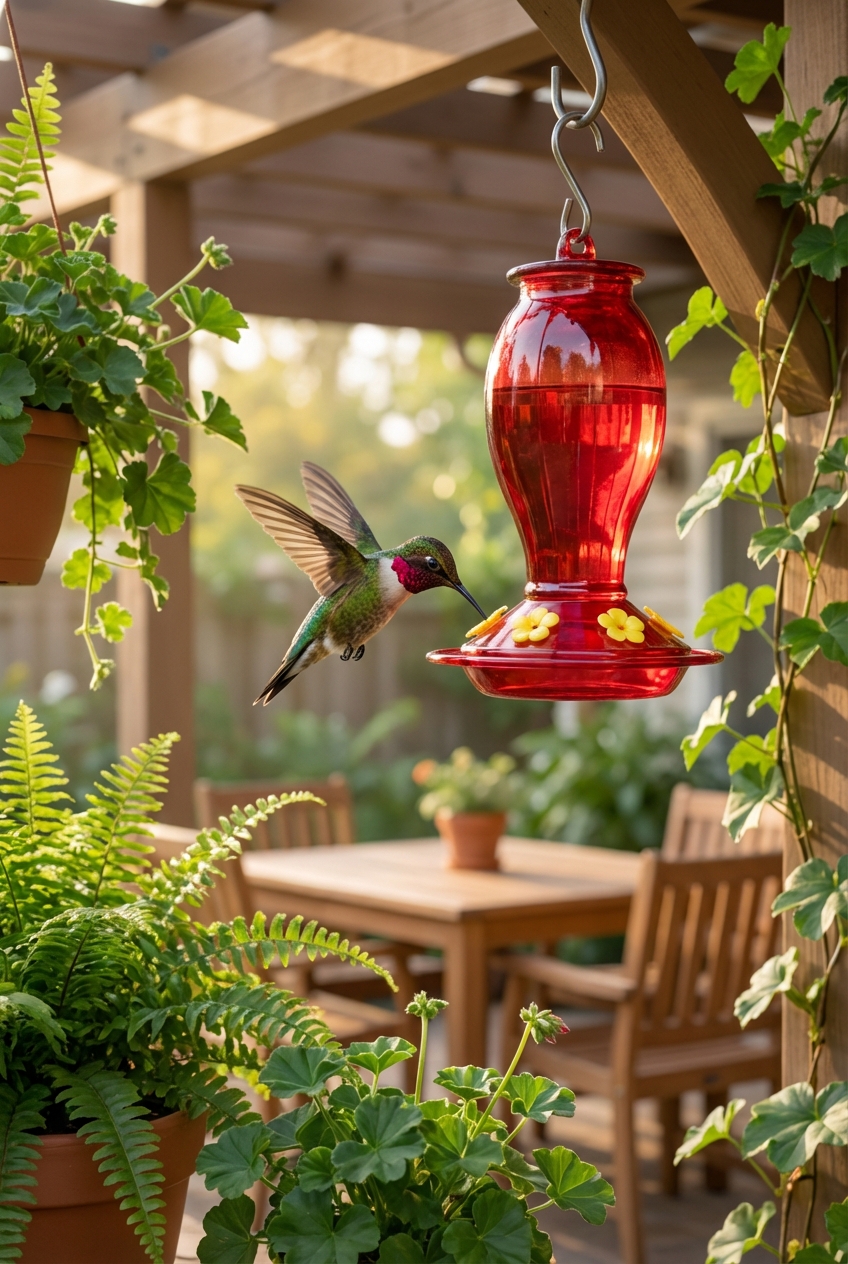
Place hummingbird feeders the right way for more visitors and fewer problems. Get guidance on height, shade, spacing, window strike safety, and keeping ants ...
Article
•
Designer Mixes
Where to Place a Hummingbird Feeder

Shari Shidate
Designer Mixes contributor
Hummingbirds are tiny athletes with huge energy needs. The right feeder placement helps them fuel up safely, keeps your nectar fresher, and reduces common problems like window strikes, ants, bees, and sick birds. I am going to walk you through the healthiest, most bird-friendly spots to hang a feeder, plus a few simple tweaks that make a big difference.
Choose a safe, low-stress location
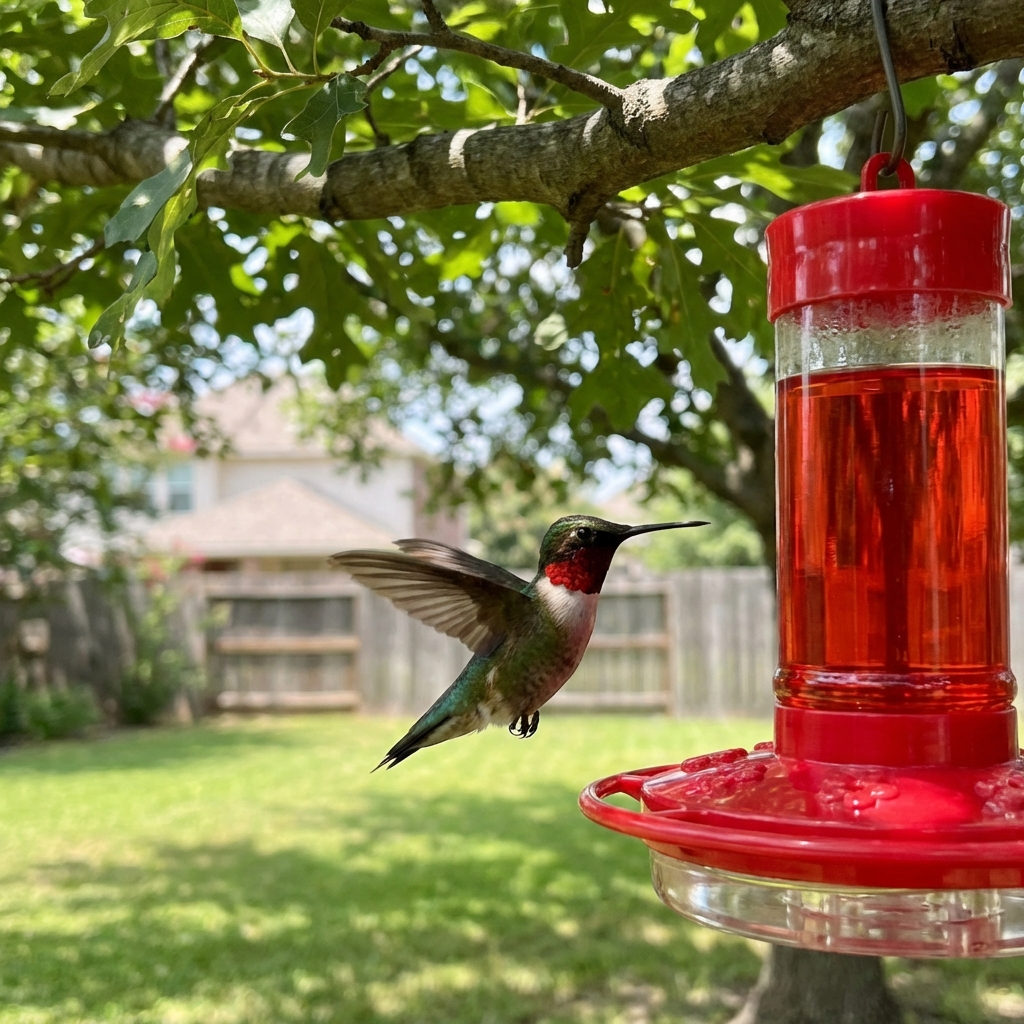
Hummingbirds thrive when they can feed quickly and retreat to cover. A feeder that is too exposed can make them nervous, especially if larger birds, outdoor cats, or frequent foot traffic are nearby.
- Place the feeder within about 10 to 15 feet of safe cover like shrubs or small trees so hummingbirds can perch, rest, and scan for danger. If that is not possible, aim for “nearby,” not isolated.
- Avoid placing it right next to dense thickets where a cat could hide and ambush. Nearby cover is good, but do not create a hiding spot directly under the feeder.
- Pick a calmer zone away from doorways, play areas, and barking-dog routes if you can.
If you only have one workable spot near activity, do not give up. Many hummingbirds adapt as long as you keep the feeder steady, predictable, and well maintained.
Sun or shade: aim for bright shade
Nectar spoils faster in heat and direct sun. Warm sugar water can also ferment, which is unhealthy for birds.
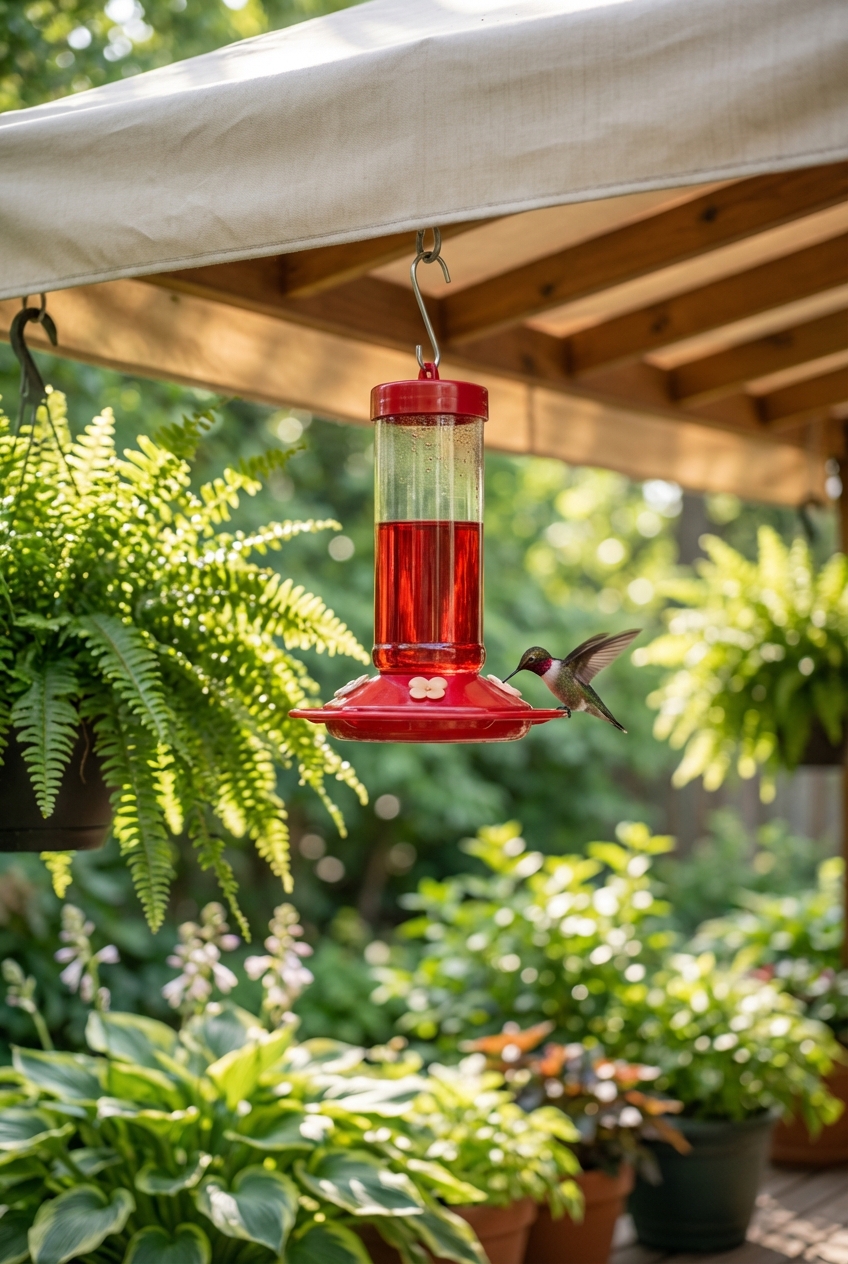
- Best choice: bright shade, like morning sun and afternoon shade. Think shaded but still daylight-bright, not deep shade.
- Avoid: full afternoon sun in hot climates. In Texas summers, direct sun can spoil nectar quickly.
- If shade is limited: use a smaller feeder and top it off more often so nectar is used up before it has time to spoil.
As a practical rule, if the metal parts of the feeder feel hot to your hand, the nectar is heating up too.
Height and stability
Most hummingbird feeders do well at about 4 to 6 feet off the ground. That height is easy for you to refill and clean and still feels secure for the birds.
- Too low increases risk from cats and curious dogs.
- Too high makes upkeep harder, and missed cleanings are one of the biggest health risks with feeders.
Pick a height you can reach safely every time. Fresh nectar and a clean feeder beat a hard-to-reach setup any day.
Prevent window strikes
Hummingbirds are fast and can hit glass, especially during chases. A feeder can either increase or reduce that risk depending on placement.
- Safest options: place the feeder within 3 feet of a window or more than 30 feet away. (This spacing rule is widely recommended by bird-safety groups and collision-prevention programs.)
- Why this helps: within 3 feet, they usually cannot build up enough speed to seriously injure themselves. Farther than 30 feet, the feeder is less likely to pull them toward reflective glass.
- Extra protection: add exterior window patterns, decals, or screens if you notice frequent near-misses.
Avoid chemicals and fumes
Hummingbirds have high metabolisms and can be more sensitive to toxins than you might expect.
- Do not hang feeders near areas recently treated with insecticides, herbicides, or lawn chemicals.
- Avoid placing feeders near grills, fire pits, or garage doors where fumes can linger.
- If you must treat plants, consider pausing feeding in that zone and washing the feeder before rehanging.
Cut down ants and stingers
Good placement and a couple of simple accessories can dramatically reduce insect problems without putting hummingbirds at risk.
Bees and wasps
- Use a feeder with bee guards and avoid yellow parts, since yellow attracts many stinging insects.
- If insects are heavy, move the feeder away from flowering plants that are drawing lots of bees.
- Do not use insect sprays around the feeder. They can harm hummingbirds directly or indirectly.
Ants
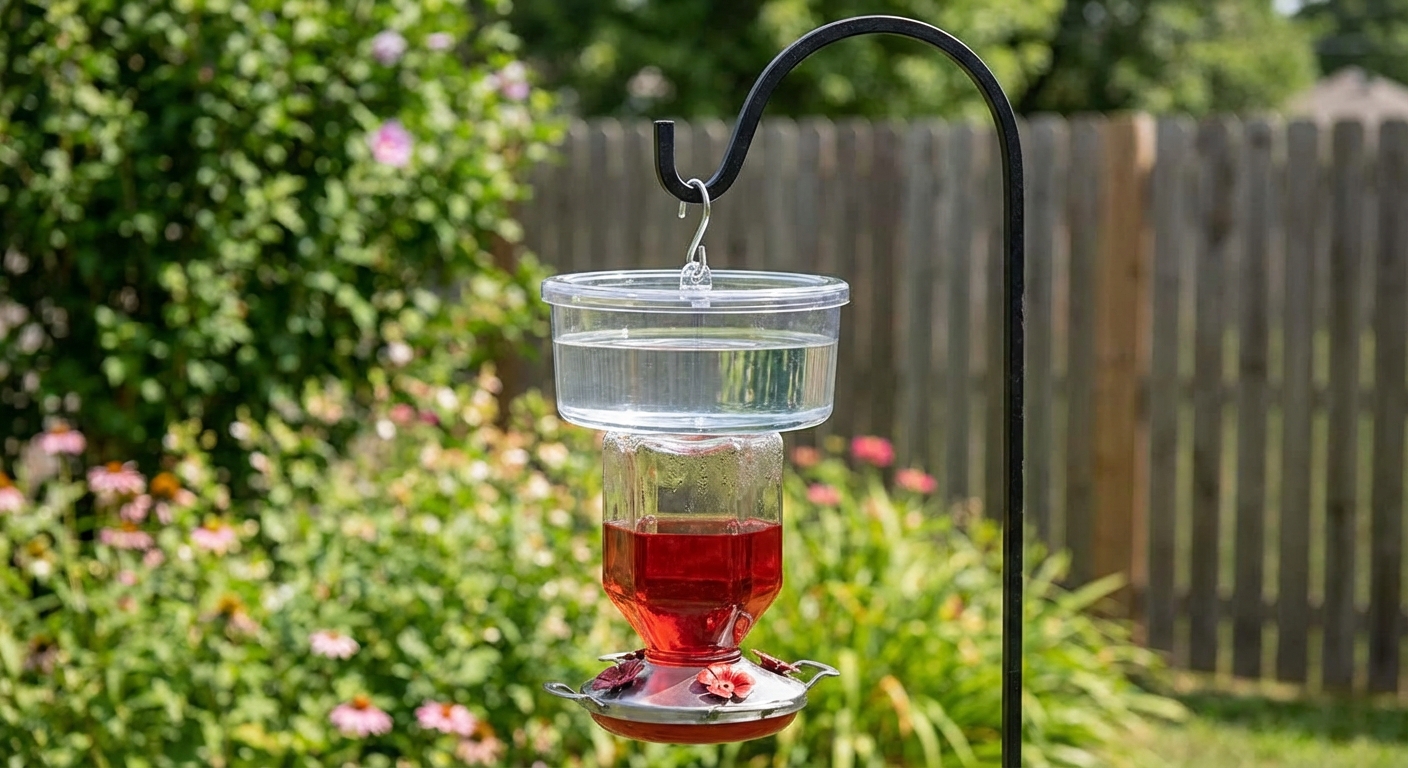
- Hang an ant moat above the feeder and fill it with water.
- Make sure the feeder is not touching branches, rails, or wires that create an ant bridge.
One feeder or two
Hummingbirds can be territorial. If you see one bird guarding the feeder and chasing others off, adding a second feeder often helps.
- Place feeders out of direct line of sight from each other, like on opposite sides of the house or separated by shrubs.
- Consider smaller feeders so the nectar is consumed quickly before it has time to spoil, especially if you have hot weather or lots of visitors.
Nectar freshness and feeder hygiene
Placement matters, but hygiene is the real health foundation. Spoiled nectar can ferment and grow microbes that can make hummingbirds sick.
- Use the right recipe: 1 part plain white sugar to 4 parts water. Use clean water and stir until fully dissolved. Many people bring the water to a brief boil to help the sugar dissolve and to start with very clean nectar, but it is not strictly required if everything is clean and the sugar dissolves completely. Let it cool before filling.
- Never add: red dye, honey, brown sugar, or artificial sweeteners.
- Routine cleaning: wash with hot water and a bottle brush. Pay special attention to the feeding ports where residue can build up.
- Occasional deep cleaning: if you see mold or stubborn film, soak parts in a weak vinegar solution (about 1 part white vinegar to 4 parts water), then scrub and rinse extremely well until there is no vinegar smell.
Refresh timing: in cooler conditions, nectar often lasts about 3 to 5 days. In warm weather, plan on every 1 to 2 days, and daily during extreme heat or if the feeder gets any sun.
If nectar looks cloudy, has floating debris, or smells off, dump it immediately, scrub the feeder, and start fresh.
Extra placement tips
- Keep it steady: avoid very windy corners where the feeder swings hard, spills, or scares birds off.
- Watch for ambush spots: if you notice predators like cats nearby, relocate the feeder. Also keep an eye out for praying mantises on hooks, rails, or the feeder itself and remove them if you see them.
Quick placement checklist
- Bright shade, especially afternoon shade in warm climates
- 4 to 6 feet high, easy for you to reach and maintain
- Within about 10 to 15 feet of perching cover, but not right next to cat hiding spots
- Within 3 feet of a window or more than 30 feet away
- Away from pesticides, fumes, and heavy foot traffic
- Ant moat and bee guards if insects are an issue
When you combine a smart location with fresh nectar and a clean feeder, you are not just attracting hummingbirds. You are supporting their health, energy, and safety every single day.