Make your kitten’s first week calm and successful. Set up a safe room, build trust with gentle bonding, prevent litter accidents, establish feeding routine...
Article
•
Designer Mixes
Where Should My Kitten Sleep the First Night?

Shari Shidate
Designer Mixes contributor
Bringing a kitten home is exciting, and that first night can feel like a big test for both of you. The good news is most “first-night” struggles come down to one thing: your kitten is suddenly in a brand-new place without mom, littermates, and familiar smells. Your job is to make sleep feel safe, warm, and predictable.
Quick age note: Kittens should ideally stay with mom and littermates until at least 8 weeks (often 10 to 12). If you have a very young kitten (or one who is tiny, underweight, or recovering from illness), talk to your vet or rescue about overnight feeding and safe warmth, because their needs can be different.
Below is a practical, behavior-based plan that keeps your kitten secure and helps you actually get some rest too.
The best place for night one
For most kittens, the best first-night sleeping setup is:
- In your bedroom (same room as you)
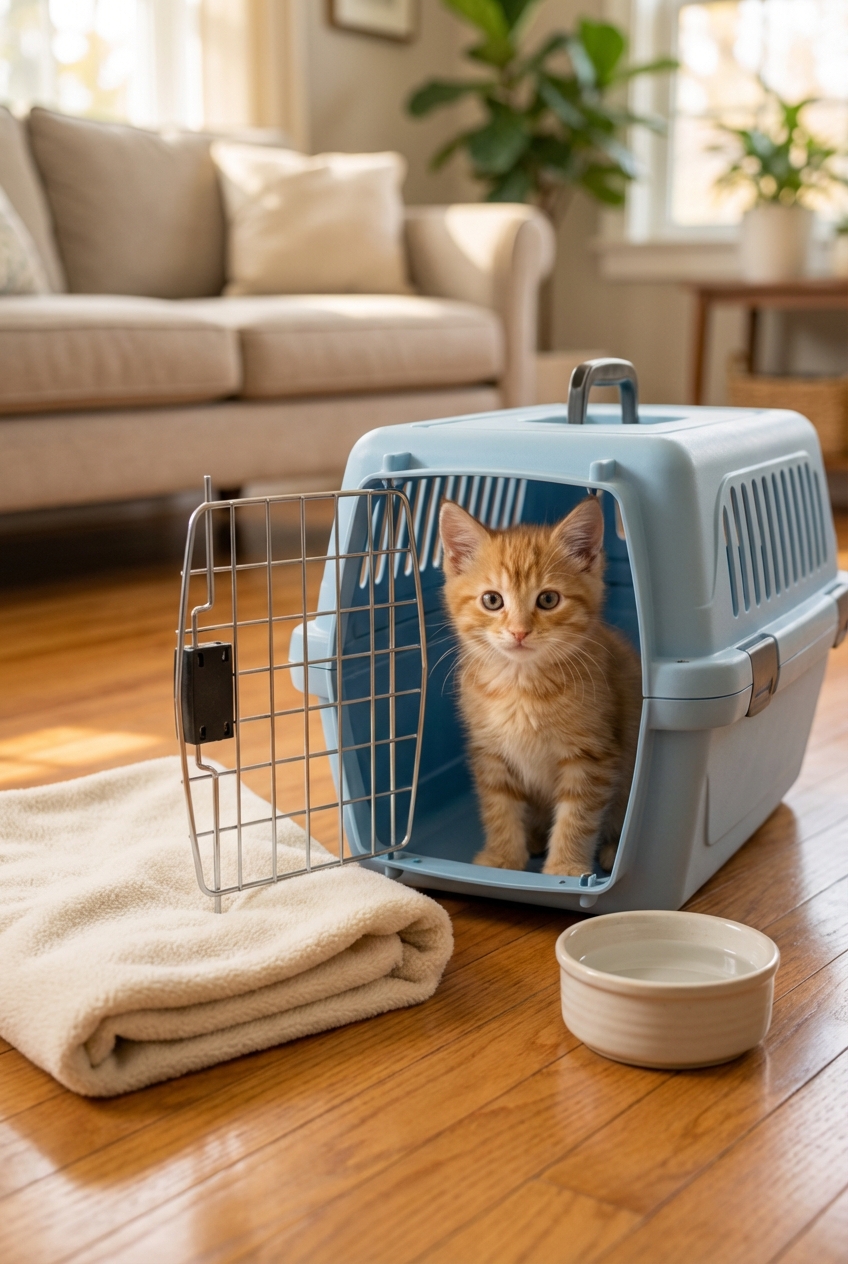
- Inside a safe, enclosed space like a large crate, playpen, or kitten-proofed bathroom
- With a bed, litter box, water, and a comfort item
This checks the big behavioral boxes: proximity to you (security), reduced roaming (safety), and easy access to the litter box (good habits right away).
Why not let them roam the whole house?
Even in “kitten-proofed” homes, night roaming increases the risk of hiding in dangerous spots, chewing cords, falling, or getting stuck. It also reinforces a habit of nighttime exploring and mischief, which can turn into weeks of disrupted sleep.
Why not isolate them in another room?
Some kittens do fine, but many will cry, scratch, or panic when they cannot hear or smell you. Keeping your kitten near you for the first few nights is one of the simplest ways to reduce stress-related behaviors.
Option A: Crate or playpen in your bedroom (my top pick)
A crate or playpen setup is a gentle middle ground between “sleeping on the bed” and “alone in a room.” It gives your kitten a den-like space and gives you peace of mind.
What to put inside
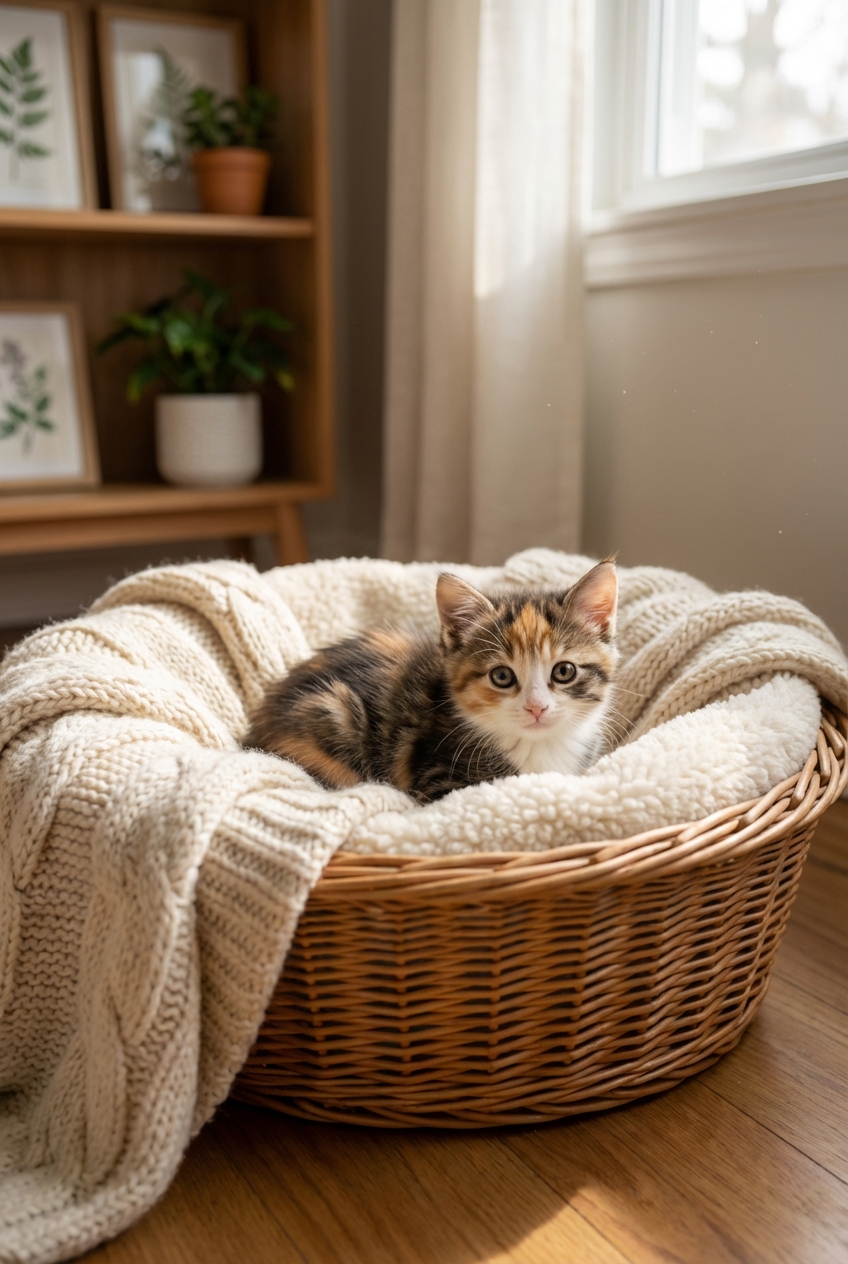
- Soft bed or folded towel (easy to wash)
- Small litter box placed as far from the bed as the space allows
- Water bowl
- Food plan that fits your kitten: Many healthy, older kittens can go overnight without food, but younger or smaller kittens may need a bedtime snack or food available to prevent tummy upset or low blood sugar. Follow your vet or rescue guidance.
- Comfort item like a blanket that smells like the rescue or breeder, if available
- Safe toy such as a small plush (avoid strings, feathers, or anything that can be swallowed)
Safety checks (worth doing)
- No collar in the crate or pen, especially overnight, to reduce snagging risk.
- Good ventilation and a stable setup that cannot tip or collapse.
- No gaps big enough for a head or limb to get stuck.
How big should it be?
Big enough that your kitten can stand up, turn around, and walk a few steps to the litter box. If the space is too tight, accidents are more likely. If it is enormous, some kittens get overstimulated and treat it like a playground.
What if my kitten cries?
Expect some protesting the first night. You can reassure your kitten without teaching “crying gets me out”:
- Keep the enclosure near your bed so your kitten can see you
- Speak softly for a minute or two
- Offer a finger to sniff through the bars if your kitten seems relaxed, but do not poke at a frightened kitten and watch for bites
- Avoid taking them out every time they cry or you may create a habit
If crying escalates into frantic behavior, double-check the basics: did they use the litter box, are they too hot or cold, and do they have water (and food, if your kitten needs it overnight)?
Option B: A kitten-safe bathroom or small room
If you do not have a crate or playpen, a small kitten-safe room can work very well, especially for confident kittens.
How to set it up
- Remove trash cans, cleaning chemicals, razors, hair ties, dental floss, and anything small enough to swallow
- Close toilet lids and block tight hiding spots behind appliances
- Provide a bed, litter box, water, and a plan for overnight food as needed
- Add a towel or T-shirt that smells like you
If possible, choose a room close enough that your kitten can hear you, at least for the first night or two.
Option C: Sleeping in bed with you (when it can be okay)
Many people love the idea of a snuggly kitten on night one. Sometimes it works beautifully, but it is not the safest default, especially with very young or tiny kittens.
Potential risks
- Accidental injury if you roll over
- Falls from the bed
- Nighttime play that reinforces biting hands and pouncing on toes at 3 a.m.
If you do allow bed sleeping, I still recommend starting with a playpen or crate beside the bed for the first few nights. Once your kitten is settled, reliably using the litter box, and you understand their nighttime energy, you can adjust.
A simple first-night routine
Kittens thrive on predictable patterns. Try this on night one and repeat for at least a week.
1) Play, then feed
Do 10 to 15 minutes of interactive play in the evening (wand toy with supervision is great), then offer a meal. This mimics a natural “hunt, eat, groom, sleep” cycle and helps your kitten settle.
2) One last litter box trip
Gently place your kitten in the litter box before bedtime. Praise calmly when they use it. No punishment for accidents, just clean thoroughly.
Litter tip: If you can, start with the same litter type your rescue or breeder used. Familiar texture and scent can mean fewer accidents. As you expand access to the home later, having a box on each floor helps.
3) Dim lights and lower energy
Reduce noise and stop active play right before bed. Calm voices and gentle petting help signal that nighttime is for sleeping.
4) Settle them in their sleep space
Set them in the crate, pen, or room, then keep your response boring and consistent if they protest.
Comfort tools that help
These can make a big difference, especially for kittens who were just separated from their litter.
- Warmth: A wrapped warm (not hot) water bottle placed near the bed area can be soothing. Always leave space so the kitten can move away. A pet-safe heating pad on low can also work, but only if it is designed for pets and the kitten can easily move off of it.
- Heartbeat or “snuggle” toys: Some kittens settle faster with these.
- Familiar scent: A blanket from the rescue or breeder can reduce anxiety.
Avoid essential oil diffusers around kittens. Many essential oils can be irritating or toxic to cats, and cats are especially sensitive because of how they metabolize certain compounds.
What is normal on night one?
Many kittens will do at least one of these:
- Cry or meow for short periods
- Pace or try to climb
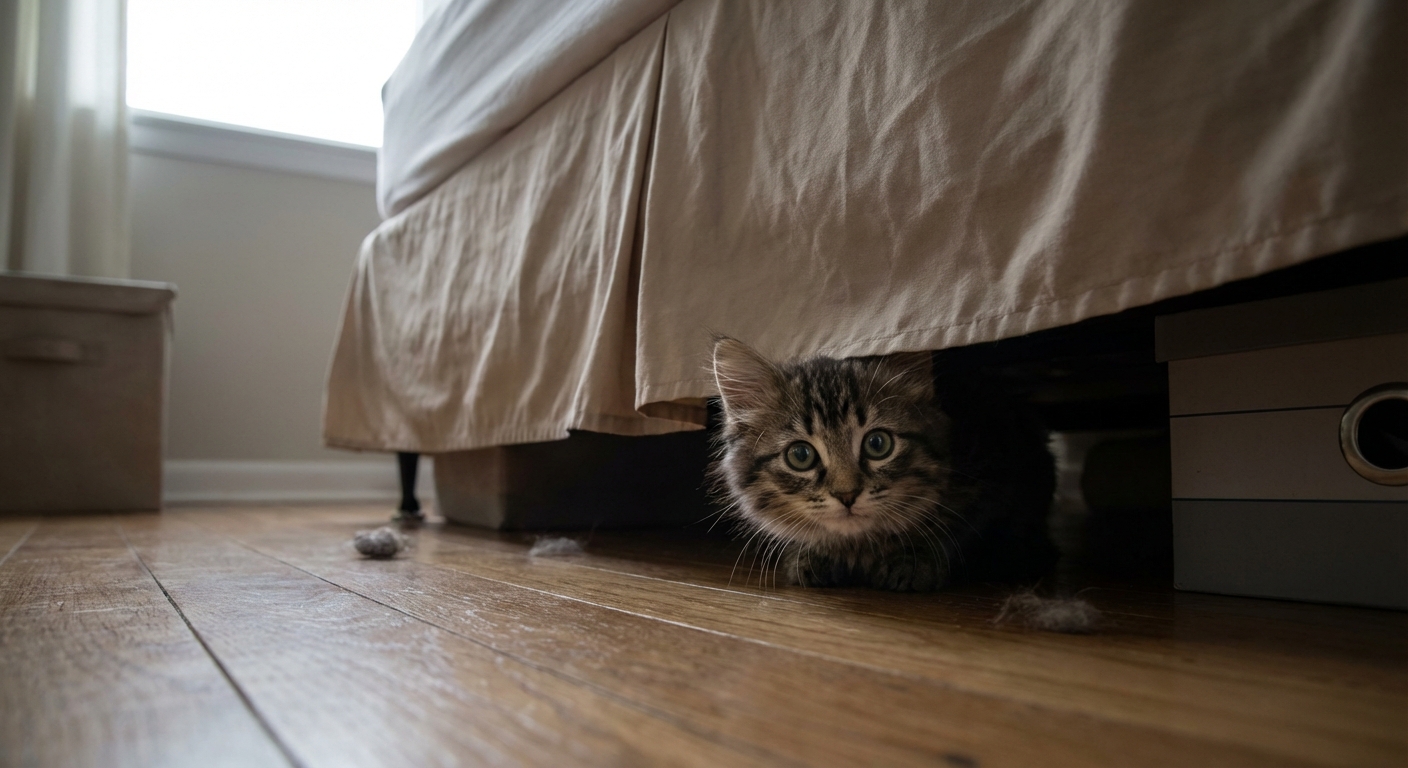
- Hide if given the chance
- Wake up very early
This is usually stress plus adjustment, not “bad behavior.” With a consistent routine, many kittens settle within a few nights, but some take a week or two depending on temperament and history.
When it is not normal
Contact your veterinarian promptly if you notice:
- Not eating for 24 hours (or sooner for very young, tiny, or unwell kittens)
- Repeated vomiting or diarrhea
- Straining to urinate, crying in the litter box, or no urine output
- Lethargy, open-mouth breathing, or weakness
- Any sign of fleas, pale gums, or dehydration (sticky gums, sunken eyes, or skin tenting). The skin test is not definitive in kittens, so if you are worried, let your vet assess.
Quick checklist: first-night setup
- Sleep space is in or near your bedroom
- Bed or towel is clean and warm
- Litter box is nearby and easy to access
- Water is available (and food is available if your kitten needs overnight access)
- Room temperature is comfortable
- No cords, strings, or small chewable items within reach
- Crate or pen is secure, ventilated, and collar-free
- You have a plan for crying that is consistent and calm
The goal for night one is not perfection. It is helping your kitten feel safe enough to rest, then repeating that routine until it becomes normal.
My bottom line as a veterinary assistant
If you are wondering where your kitten should sleep the first night, choose the option that balances safety and security: a crate or playpen in your bedroom is a wonderful starting point. You can always give more freedom later, but it is harder to undo risky habits once they become routine.
Go slow, keep it cozy, and remember that a little patience in the first week often buys you months of calmer nights.