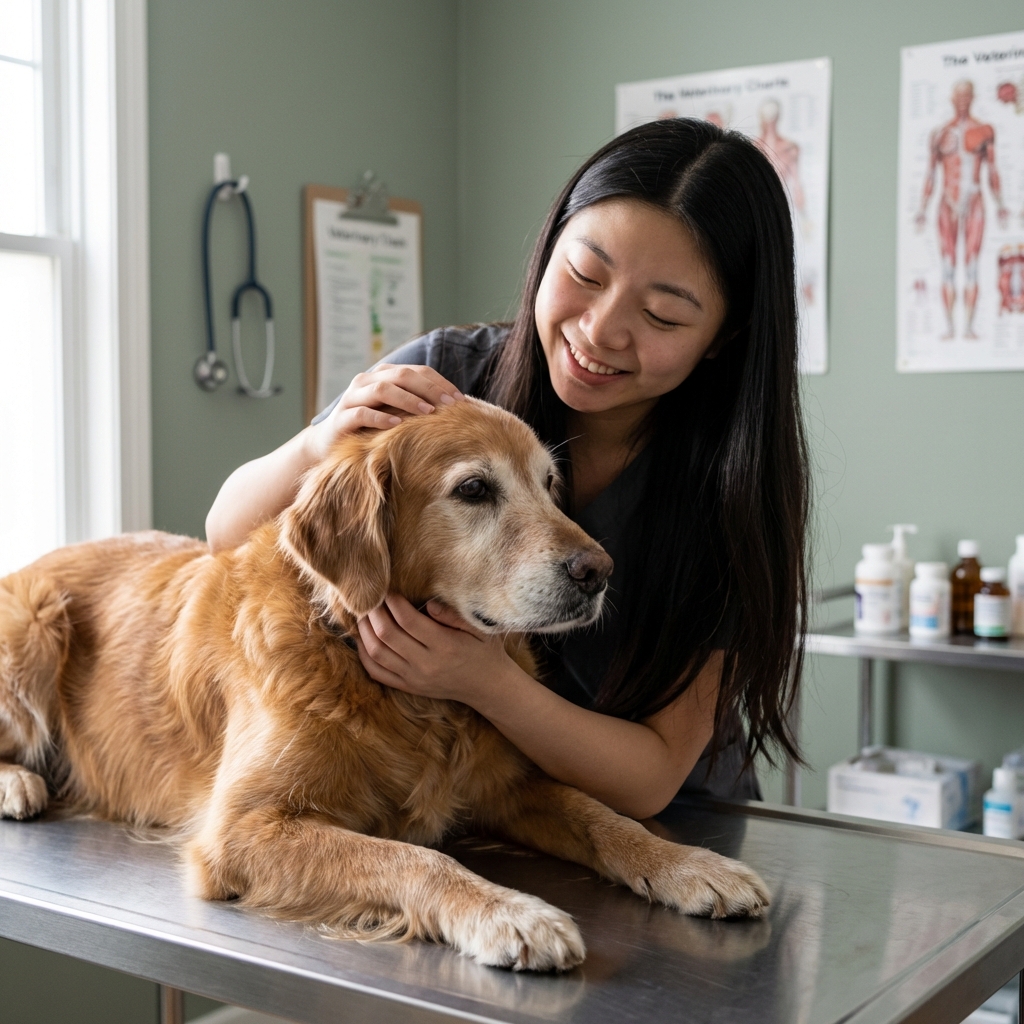
A compassionate, clear walkthrough of dog euthanasia: settling in, consent, sedation, IV catheter, euthanasia medication, confirming passing, and aftercare o...
Article
•
Designer Mixes
When to Put an Old Dog Down

Shari Shidate
Designer Mixes contributor

A tender topic, and you are not alone
Deciding when to euthanize an older dog is one of the hardest, most loving decisions we make. As a veterinary assistant in Frisco, Texas, I have seen families wrestle with this question, and I have also seen what relief looks like when suffering finally ends. If you are reading this with a lump in your throat, that is normal. It means you care.
This article is here to give you a practical way to think about quality of life, tips for talking with your vet, and gentle guidance for planning a peaceful goodbye. It is not a substitute for veterinary care, especially if your dog’s symptoms are severe or changing quickly.
Kindness is not measured by how long we can keep them with us. Kindness is measured by how well we protect them from suffering.
What euthanasia is
Euthanasia means a peaceful, medically guided death that prevents ongoing pain, panic, or distress when treatment can no longer restore comfort. In veterinary practice, the process is designed to be calm and compassionate.
Protocols vary by clinic and by patient, but it typically involves giving a sedative or anti-anxiety medication first (often by injection), then administering a euthanasia solution that acts like an anesthetic overdose. The goal is sleep first, then a peaceful death, not fear.
If you have heard scary stories, please know this: when euthanasia is done properly, your veterinarian will talk you through what to expect, including things like changes in breathing, muscle twitches, or vocalization as the body relaxes. These can be normal reflexes and do not necessarily mean suffering. Your vet and team monitor closely, and if there is any sign of distress, they can give additional medication.
Key signs it may be time
A single bad day does not always mean it is time. What matters most is the pattern and whether comfort can realistically be restored. Here are the biggest quality-of-life signals we watch for in senior dogs:
- Pain that is not controlled: panting at rest, trembling, guarding, yelping, or unable to settle even with medication.
- Breathing distress: labored breathing, blue, gray, or pale gums, frequent coughing that prevents sleep, or repeated episodes of collapse.
- Not eating or drinking enough: ongoing refusal of food, difficulty chewing or swallowing, or dehydration that keeps returning. This can become urgent faster in small dogs and in certain diseases, so call your vet sooner rather than waiting it out.
- Mobility loss: falls, inability to stand to potty, dragging, or constant slipping that creates fear and injuries.
- Incontinence with distress: accidents can be manageable, but panic, skin sores, or constant wetness can become a welfare issue.
- Confusion and anxiety: pacing all night, getting stuck in corners, startling easily, or seeming frightened in familiar places.
- More bad days than good: the “spark” is gone most days, with fewer moments of interest, comfort, or connection.
If your dog is experiencing multiple items on this list, especially pain plus breathing trouble or an inability to rest, it is time to have an urgent conversation with your veterinarian.
Quality-of-life tools
HHHHHMM: a widely used checklist
Many veterinarians use a quality-of-life scale often summarized as HHHHHMM: Hurt, Hunger, Hydration, Hygiene, Happiness, Mobility, and More good days than bad. It is commonly attributed to Dr. Alice Villalobos and is used as a practical framework for decision-making.
A helpful way to use it at home is to score each category from 0 to 10. You do not need perfection. You are looking for trends. If the total score keeps dropping over days to weeks, that is meaningful information to bring to your vet.
A planning window that can help
Families sometimes wait for a clear sign, but many illnesses do not provide a neat turning point. One rule of thumb some families find helpful is thinking in a short planning window. If you truly feel you may be in the last couple of weeks of life, planning a peaceful euthanasia can reduce the chance of a crisis death at 2 a.m. in the emergency room. Your veterinarian can help you decide whether that timing fits your dog’s specific condition.
Comforting truths
- Dogs seem to live very much in the present. They do not count time the way we do. Many appear to measure life by comfort, safety, and being close to their person.
- Appetite can be misleading. Some dogs will keep eating even when they are very sick, while others stop eating early from nausea or pain. Eating is a clue, not the whole story. If your dog is not eating, your vet may be able to help with nausea control, pain relief, appetite support, or hydration.
- Tail wags are not always happiness. Dogs can wag when anxious, when they want reassurance, or even when in pain. Look at the whole body: relaxed eyes, soft posture, ability to settle.
- Waiting for the perfect day can keep you stuck. Many families tell me later they wish they had chosen “a week earlier” instead of “a day too late.”
- You can choose a peaceful goodbye at home. For many senior dogs, an at-home euthanasia reduces stress from travel, slippery clinic floors, and unfamiliar smells.
Questions for your vet
When emotions are high, it is easy to forget what you meant to ask. Consider saving these questions on your phone:
- What do you think is causing my dog’s discomfort right now?
- What are realistic goals for treatment: comfort, cure, or time?
- What signs would mean we should not wait?
- Can we adjust pain control or nausea meds today?
- How will I know if my dog is suffering at home?
- What will the euthanasia process look like step by step for my dog?
- Do you offer at-home euthanasia, or can you refer me to someone who does?
- What are the aftercare options: private cremation, communal cremation, burial where legal?
Making the decision clearer
Track 7 days
For one week, jot down a simple daily note:
- Appetite and water intake
- Sleep quality and ability to settle
- Pain signs and medication response
- Bathroom habits and accidents
- One “good moment” you noticed, if any
Patterns often become clearer on paper than they feel in the swirl of daily life.
The favorite things test
Pick 3 things your dog has always loved, like a short sniff-walk, greeting you at the door, a chew treat, or sunbathing. If your dog cannot enjoy 2 out of 3 most days, quality of life may be slipping.
Safety and dignity
Repeated falls, being unable to get up, or struggling to breathe are not just sad. They can be frightening for your dog. Preventing fear is part of compassionate care.
Planning a peaceful euthanasia
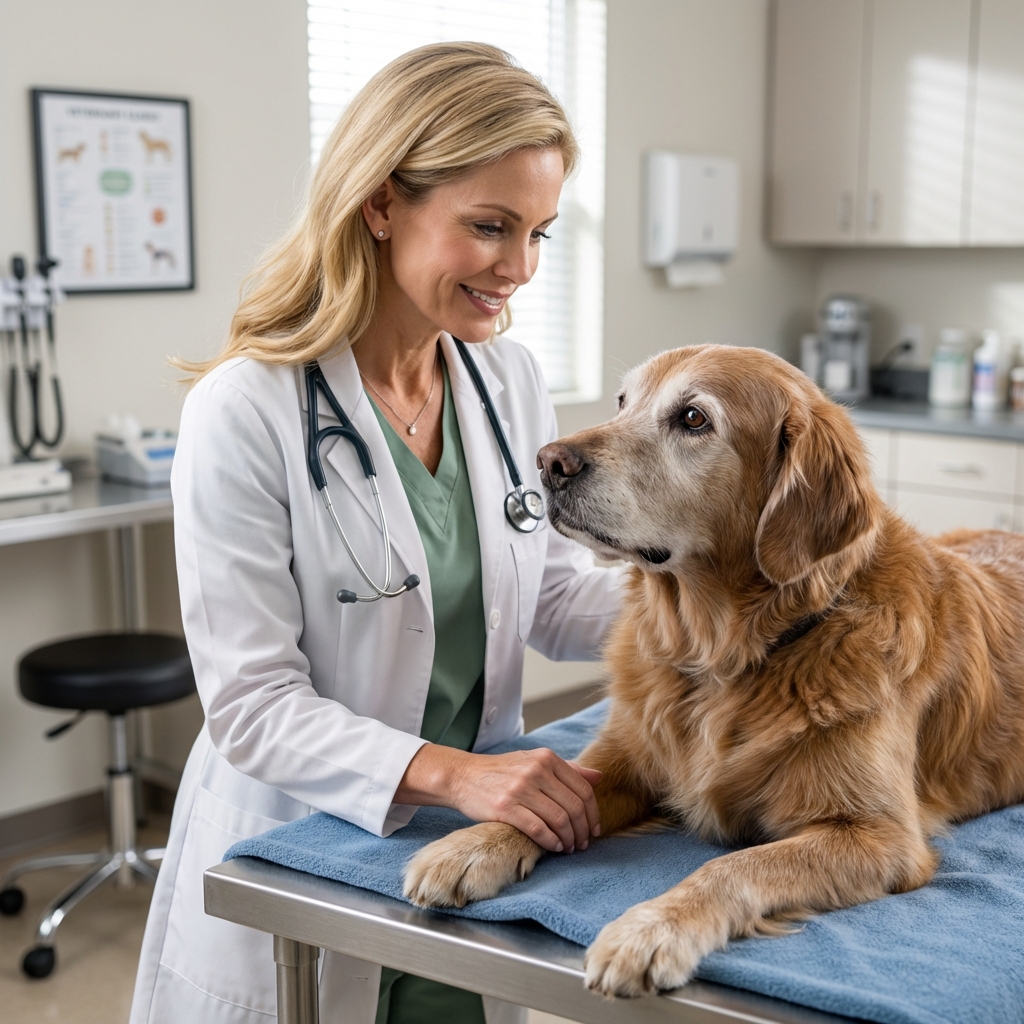
At-home vs. in-clinic
- At-home can be calmer for anxious dogs, dogs with severe mobility issues, and families who want privacy.
- In-clinic can be best if symptoms are unstable, if you need same-day help, or if home feels too emotionally heavy.
What to expect
- Sedation first is common. Many dogs receive a sedative or anti-anxiety medication before the final injection, especially if they are painful, fearful, or hard to handle.
- An IV catheter may be placed. Some vets place a catheter after your dog is relaxed. In other cases, the catheter is placed first, or a different route is used if veins are difficult. Your vet will choose what is safest and least stressful.
- Reflexes can happen. Sighs, twitches, or a final deep breath can occur. These are typically reflexes, not awareness of pain.
- Accidents are normal. Urination or defecation can happen after death as muscles relax. It is not distress and it is nothing to be embarrassed about.
What to bring or prepare
- A favorite blanket or bed
- High-value treats if your dog is still eating
- Non-slip socks or a yoga mat or non-slip runner for traction
- Payment and aftercare decisions handled ahead of time if possible
If you have kids
Use clear, simple language. “We are helping Bella die peacefully because her body is too sick, and we cannot make her feel better.” Avoid phrases like “put to sleep” if your child already worries about bedtime. Let them draw a picture, choose a toy to send with your dog, or share a memory.
Aftercare and grief
Grief is not linear. You may feel relief, guilt, sadness, and even numbness, sometimes all in the same hour. That does not mean you made the wrong choice. It means you loved deeply.
- Memorialize simply: paw print, collar shadow box, a photo in your favorite room.
- Keep a routine: your body needs sleep, water, and food even when your heart hurts.
- Watch for complicated grief: if you cannot function weeks later, consider a pet loss support group or counselor.
If you are in a moment of crisis and your dog is struggling to breathe, cannot get up, has uncontrolled vomiting, is collapsing, or seems in severe pain, please call your veterinarian or the nearest emergency clinic right away.
Do not wait signs
These situations often call for urgent veterinary help and may mean euthanasia is the kindest option:
- Labored breathing at rest or repeated collapse
- Uncontrolled pain despite medication
- Unable to stand or walk to potty, with distress
- Continuous vomiting, black stools, or signs of internal bleeding
- Seizures that cluster or do not stop
- Extreme confusion with panic that prevents sleep
A final note
Many people fear they are “giving up.” But euthanasia, when chosen to prevent suffering, is not giving up. It is protecting your dog with the last, most selfless gift you can give.
If you want, you can bring this article to your vet visit and use it as a guide for the conversation. You do not have to carry this decision alone.