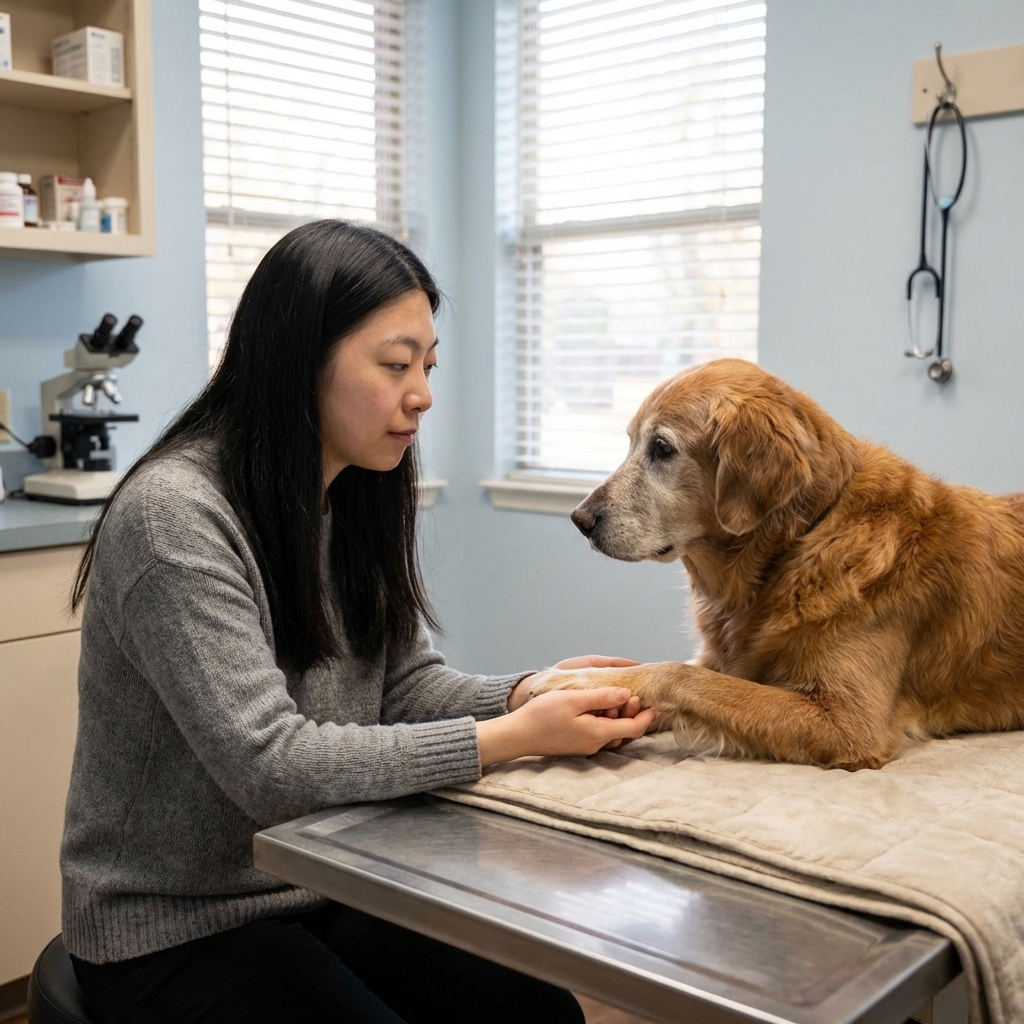
A compassionate guide to deciding when it’s time to euthanize a dog. Learn quality-of-life signs, a daily checklist, urgent red flags, and what to expect a...
Article
•
Designer Mixes
When to Let Go of Your Dog

Shari Shidate
Designer Mixes contributor
Few decisions hurt like wondering if it is time to say goodbye to your dog. As a veterinary assistant here in Frisco, Texas, I have seen how deeply people love their dogs and how hard they fight for them. I have also seen the peace that can come from a thoughtful, compassionate plan when quality of life is slipping away.
This page will walk you through what “letting go” can look like, the signs that matter most, and how to care for your dog and yourself through the process.
Quick note: This article is for education and support. It is not a substitute for veterinary care. If your dog is struggling to breathe, has uncontrolled pain, repeated collapse, uncontrolled bleeding, a swollen painful abdomen, or seizures that will not stop, seek urgent veterinary help right away.
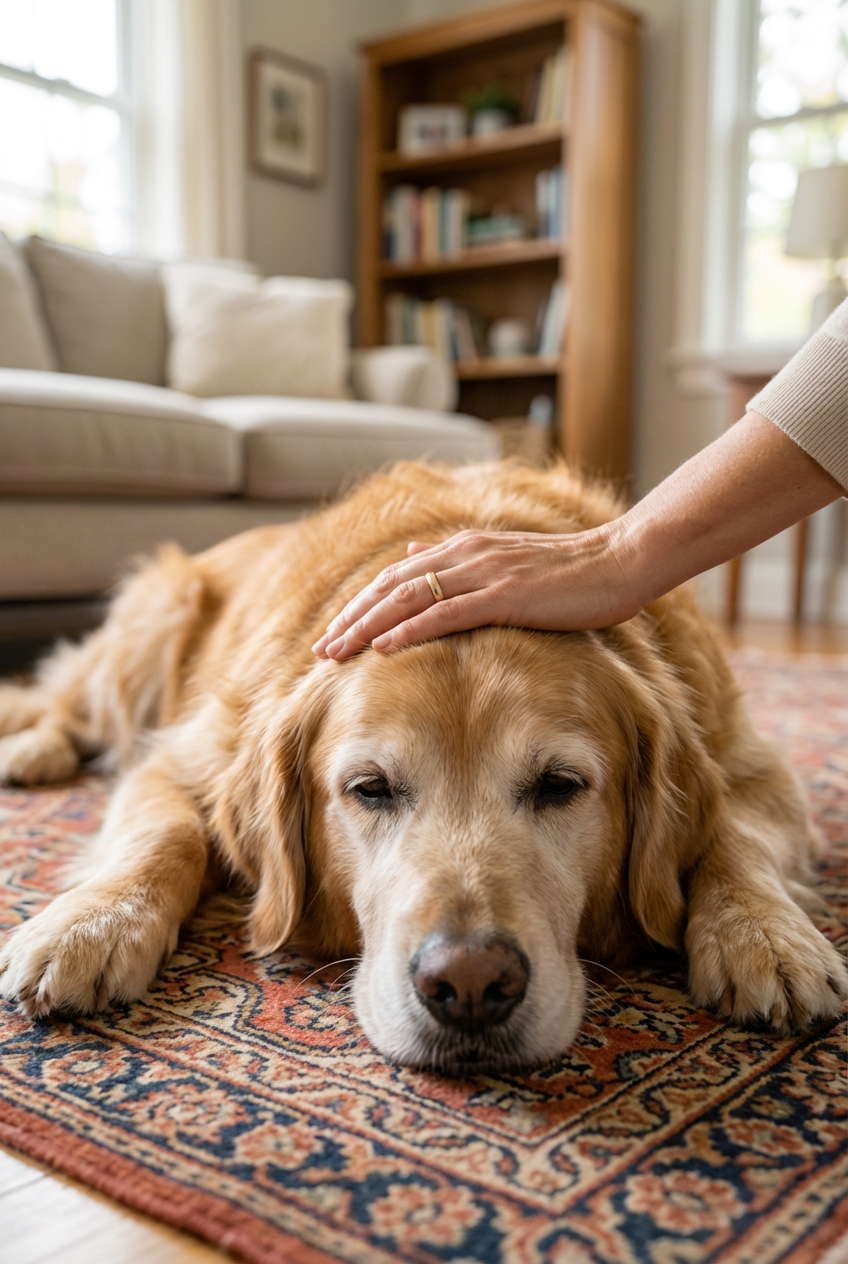
What “letting go” means
When people say “let go,” they usually mean one of these paths:
- Choosing euthanasia to prevent ongoing suffering when a condition cannot be cured or comfortably managed.
- Choosing hospice or palliative care for a period of time, then reassessing as your dog’s comfort changes.
- Allowing a natural death in limited situations, and only with close veterinary guidance. Natural death can be unpredictable, and comfort can become difficult to maintain at home. If you consider this option, ask your veterinarian to help you create an emergency plan, including when to pursue humane euthanasia.
The most loving goal is not “more days.” It is good days. When good days become rare, your dog is telling you something, often quietly.
Quality of life
Quality of life is both medical and emotional. It focuses on comfort, function, and joy. Many veterinarians use a structured checklist (often called the HHHHHMM scale: Hurt, Hunger, Hydration, Hygiene, Happiness, Mobility, and More good days than bad).
Key questions
- Hurt: Is pain controlled most of the day? Are they restless, panting at rest, trembling, or guarding a body part?
- Hunger: Are they able and willing to eat enough to maintain strength?
- Hydration: Are they drinking or able to keep fluids down? Are they dehydrated despite support?
- Hygiene: Can they stay clean and dry? Are there repeated accidents, urine scald, or sores?
- Happiness: Do they still seek affection, respond to family, enjoy small routines?
- Mobility: Can they get up, lie down, and reposition comfortably? Are falls common?
- More good days than bad: In the last 2 weeks, are the comfortable days clearly winning?
Practical tip: Track a simple calendar. Mark each day as “good,” “okay,” or “hard.” Patterns often show up faster on paper than in your head.
When not to wait
Some situations are true emergencies and should not be watched at home. Call your veterinarian or go to an emergency clinic if you see:
- Severe breathing distress (open-mouth breathing, blue or pale gums, struggling to inhale, breathing that looks like hard work at rest).
- Suspected bloat (swollen painful belly, retching without vomit, sudden collapse, extreme restlessness).
- Uncontrolled bleeding or bleeding you cannot stop quickly.
- Continuous seizures or repeated seizures without recovery.
- Unrelenting pain that breaks through medication.
- Repeated collapse or inability to stand with distress.
If your dog is already in hospice, ask your vet ahead of time what to do after hours. Having a plan can prevent a crisis from turning into panic.
Signs it may be time
Every dog and diagnosis is different, but these are common signs that a dog is suffering or nearing the end of life. One sign alone does not always mean it is time, but clusters of signs and progression matter.
Physical signs
- Pain that breaks through medication or returns quickly after doses.
- Labored breathing, persistent coughing, open-mouth breathing, or breathing that looks like work even at rest.
- Repeated vomiting or diarrhea that does not respond to treatment.
- Not eating for 24 to 48 hours or rapid weight loss and muscle wasting.
- Collapse, frequent falls, or inability to stand without distress.
- Seizures that are increasing in frequency, severity, or recovery time.
- Uncontrolled bleeding, large tumors that ulcerate, or wounds that cannot heal.
Behavior signs
- Withdrawing, hiding, or seeming “not present.”
- Confusion, pacing, getting stuck in corners, or sleep-wake reversal.
- Not enjoying familiar things, including food, treats, walks, toys, or greeting you.
- New aggression or growling when touched due to pain or fear.
If your dog is no longer able to do the things that make them feel like themselves, and comfort is getting harder to maintain, it is reasonable and compassionate to talk about a peaceful goodbye.
Before you decide
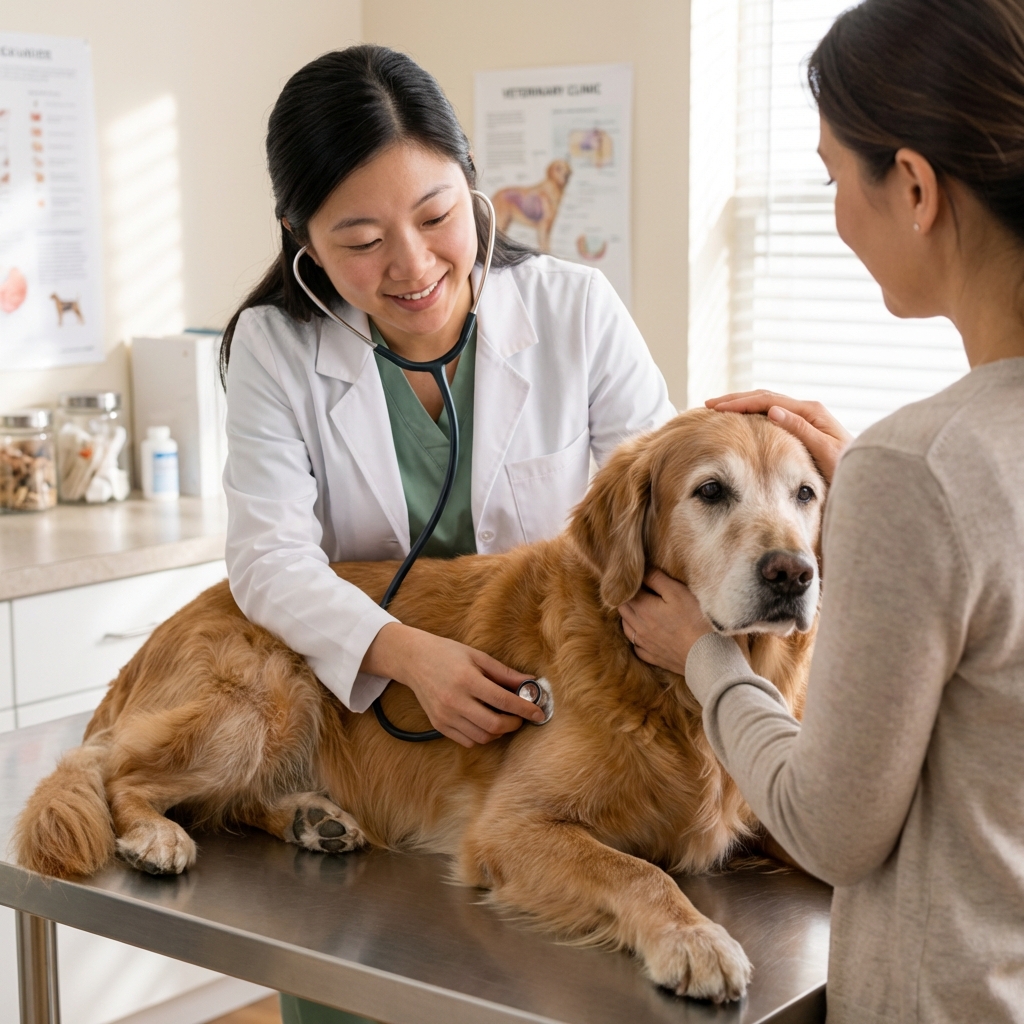
Sometimes there are still meaningful comfort options, even when cure is not possible. Ask your veterinarian directly: “If this were your dog, what would you do next?” It is a fair question.
Common supports
- Pain control plans (often multi-modal, meaning more than one type of pain medication).
- Anti-nausea and appetite support to help your dog feel well enough to eat.
- Fluid support (sometimes given under the skin at home) when appropriate.
- Mobility tools like harnesses, slings, rugs for traction, ramps, and orthopedic bedding.
- Hygiene support including diapers, barrier creams, gentle wipes, and frequent bedding changes.
- Anxiety support for dogs who feel unsettled, especially at night.
Important: If your dog’s comfort cannot be maintained without heavy sedation, repeated emergency trips, or constant distress, the kindest choice may be to prevent the next crisis rather than react to it.
Planning a peaceful goodbye
Planning ahead can reduce panic and guilt. A plan gives you room to be present with your dog.
In-clinic vs. at-home
- In-clinic can be the fastest option for urgent suffering and may be more affordable. Many clinics offer a quiet room and extra time.
- At-home can feel calmer for anxious dogs and families who want a familiar setting. Availability varies by area.
Questions to ask
- Can we have a quiet room and extra time?
- What medications are given first to help with anxiety and comfort, and how long do they take to work?
- Can family members be present, including children, if we choose?
- What aftercare options are available (private cremation, communal cremation, home burial where legal)?
- Can we bring a blanket, bed, or favorite toy?
- Can you provide an estimate of costs ahead of time? Costs vary by clinic, location, and aftercare choices, and it is okay to ask.
Many families find comfort in creating a calm “goodbye day” routine: a special meal if medically safe, a favorite sniff-walk, sitting outside together, or simply being close. It does not need to be perfect. It just needs to be loving.

What happens during euthanasia
Knowing what to expect often reduces fear. While details vary by clinic and by your dog’s medical needs, euthanasia is commonly a two-step process:
- Comfort medication first: A sedative or anesthetic medication is given so your dog becomes deeply relaxed and sleepy. Many dogs are not aware of what happens next.
- The final medication: A euthanasia solution is given, often through an IV catheter (though other routes may be used in certain situations). It quickly causes unconsciousness, then stops breathing and heart function. This is not painful.
Afterward, it is normal to see reflexive movements (like a final breath, a sigh, or muscle twitching). These happen after your pet is unconscious and are not a sign of suffering, but they can be surprising. Your veterinary team will confirm death and can talk you through what you might see.
Aftercare and keepsakes
Thinking about aftercare can feel overwhelming, but making a few decisions ahead of time often helps.
Common options
- Private cremation: Your dog is cremated individually, and ashes are returned to you (often in an urn or container you choose).
- Communal cremation: Cremation occurs with other pets, and ashes are not returned. This is usually the least expensive option.
- Home burial: Only where legal and safe. Ask your veterinarian about local rules and practical considerations.
Things to ask for
- Paw prints (ink or clay) and a lock of fur, if you want them.
- Time alone with your dog afterward, if that matters to you. Many clinics will offer this.
- What the timeline is for ashes, if you choose private cremation (it varies).
- How to handle practical updates like microchip records or pet insurance, if applicable. Your clinic can often point you in the right direction.
Children and other pets
Talking with children
Kids do best with simple, truthful language. Avoid phrases like “put to sleep” if your child might connect it to bedtime. You can say:
- “Her body is very sick, and the vet cannot make it better.”
- “We are going to help her die peacefully so she does not hurt anymore.”
Give choices when possible: whether they want to say goodbye, draw a picture, pick a flower for the blanket, or share a favorite memory.
Other pets
Dogs and cats can grieve, but responses vary. Some pets look for their friend, sleep more, eat less, or seem clingy, while others show little change. Keeping routines steady helps. If your dog passed at home, allowing other pets to briefly sniff the body may help some animals understand the change, but it is not required. If you are unsure, ask your veterinarian what is appropriate for your household.
Grief and the right time
Many people feel guilt no matter what they decide. If you choose euthanasia, you may worry it was too soon. If you wait, you may worry you waited too long. That emotional tug-of-war is normal.
In my experience, a gentle truth helps: there is rarely one perfect moment. There is, however, a compassionate window where your dog can leave this world without panic or uncontrolled pain. Choosing within that window is an act of love.
If you are stuck, try asking yourself:
- “What would my dog choose if they could understand the future?”
- “Am I hoping for recovery, or hoping for one more good day?”
- “What crisis am I afraid of, and do I have a plan if it happens tonight?”
Care tips for now
If your veterinarian agrees that hospice or palliative care is appropriate for now, focus on comfort and safety. These small steps can make a big difference.
Comfort checklist
- Soft bedding with washable layers. Turn your dog gently to help prevent pressure sores if they cannot reposition well.
- Traction using yoga mats or rugs to prevent slips.
- Easy access to water, food, and potty breaks. Consider pee pads for nighttime.
- Medication routine with alarms and a written log of doses and symptoms.
- Small, tempting meals approved by your veterinarian if appetite is low.
- Low-stress handling, especially for painful dogs. Use a harness or sling when needed.
When to go to emergency care
Seek urgent veterinary help if your dog has severe breathing difficulty, repeated collapse, uncontrolled bleeding, continuous seizures, unrelenting pain, a swollen painful abdomen, or cannot be kept comfortable at home.
A gentle next step
If you are reading this with a lump in your throat, please know you are not failing your dog. You are advocating for them. The next kind step is to schedule a quality-of-life appointment and bring your notes: appetite, mobility, breathing, sleep, and your “good vs. hard day” calendar.
Your dog has known your love in thousands of daily moments. When the time comes, a peaceful goodbye can be one of those moments too.