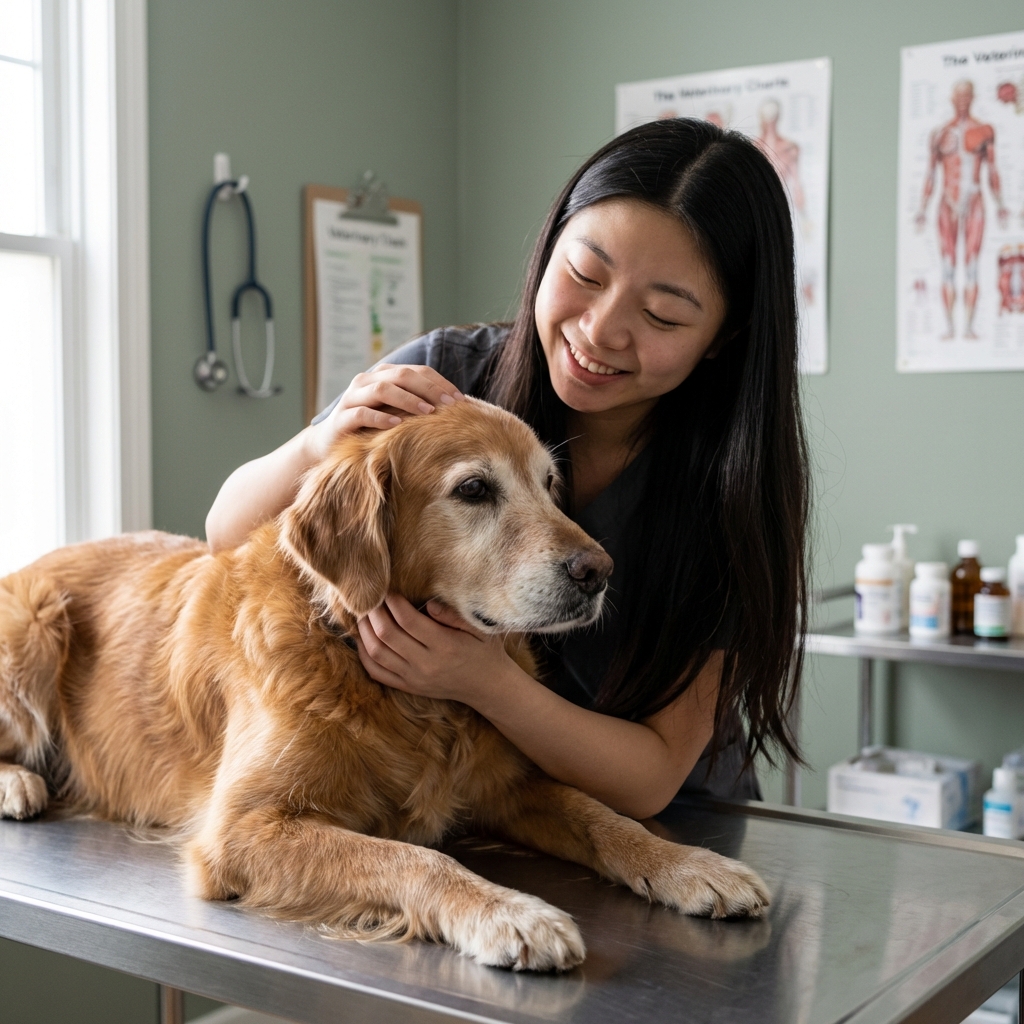
A compassionate, evidence-based guide to deciding when to euthanize a dog. Track quality of life, recognize urgent red flags, ask the right vet questions, an...
Article
•
Designer Mixes
When to Euthanize Your Dog

Shari Shidate
Designer Mixes contributor
Making the decision to euthanize a dog you love is one of the hardest moments in pet parenting. As a veterinary assistant, I have sat with families who felt peaceful about their choice and others who felt blindsided by how quickly things changed. What I want you to know is this: you do not have to do this alone or rely on pure guesswork. With your veterinarian’s guidance, you can use clear, compassionate quality-of-life signs to make a more supported decision about when “helping them go” may be the kindest next step.
This article is meant to support you with veterinarian-informed insights, practical tools, and gentle language for a very tender time. It is not a substitute for veterinary care. If your dog has sudden, severe symptoms, contact your veterinarian or an emergency clinic right away.
What euthanasia is (and is not)
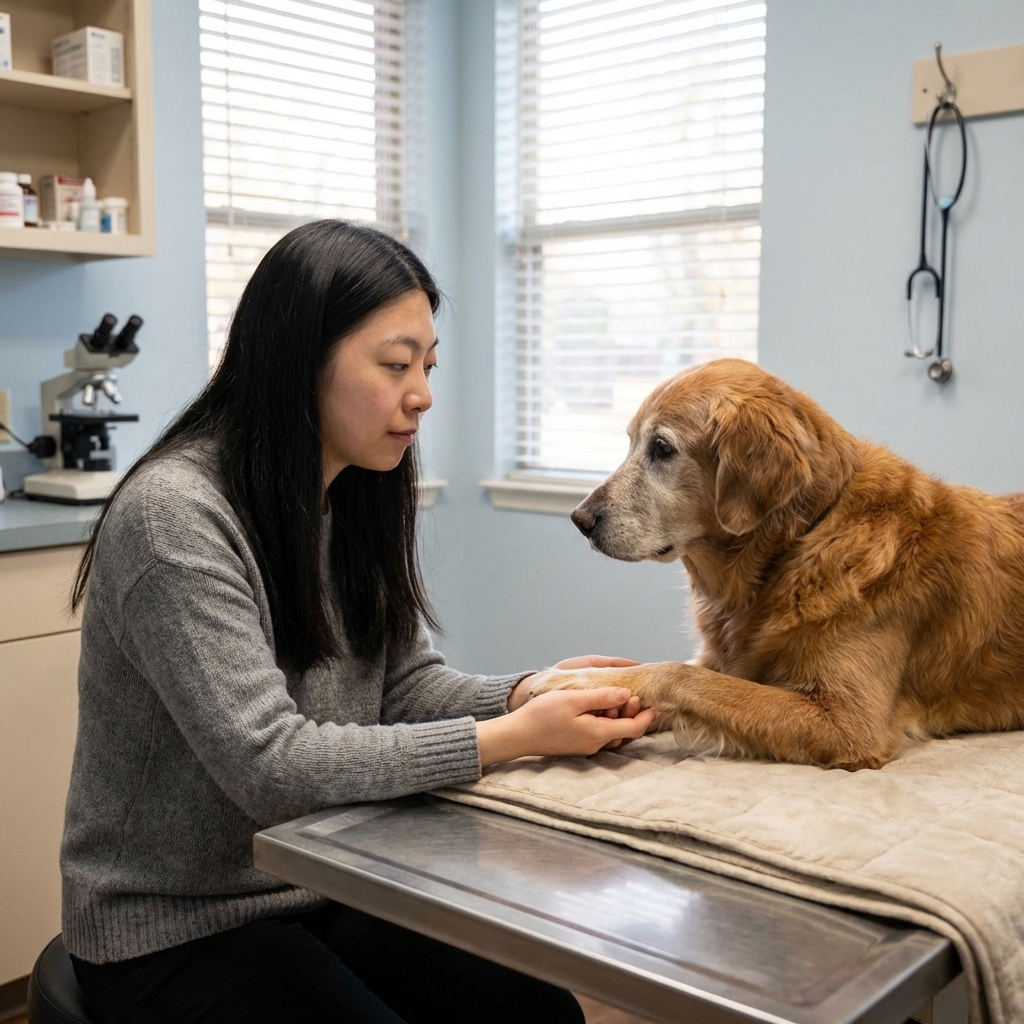
Euthanasia literally means “good death.” In veterinary medicine, it is a carefully performed, humane procedure intended to prevent ongoing suffering when a pet’s quality of life cannot be restored. It is not giving up. It is not choosing convenience. For many families, it is the final act of love when medicine has reached its limit.
Protocols vary by clinic and by patient, but many veterinarians use a two-step approach: medication first to ease anxiety and help your dog become deeply relaxed, then a final medication (usually given through an IV catheter) that peacefully stops the heart. Some pets are already heavily sedated or anesthetized, and the steps may look a little different. If you have fears about pain, ask your vet to walk you through exactly what they do and what you might see.
Most dogs are unaware and comfortable at the end. Sometimes, even when a pet is unconscious, the body can have reflexes such as a deep “final” breath, small muscle twitches, a brief vocalization, or release of urine or stool. These can look alarming, but they are not usually signs of suffering. Knowing this ahead of time can make the moment feel less shocking.
Start here: more bad days than good days?
When a dog is nearing end of life, it is common to see a pattern: good mornings followed by difficult evenings, or a few “okay” days followed by a crash. A simple way to track this is to mark each day as good, borderline, or bad. This is not perfect, but it can help you see trends more clearly.
- Good day: your dog can rest comfortably, enjoys at least one meaningful activity (eats a little, sniffs outside, seeks cuddles), and pain seems mostly controlled.
- Borderline day: your dog is quieter or uncomfortable, needs extra help (getting up, eating, going outside), but still has a few moments of interest or ease.
- Bad day: your dog cannot get comfortable, cannot do basic functions (eating, toileting, breathing) without distress, or pain and anxiety do not seem controlled despite prescribed medication.
If bad days are becoming the majority, or the “good” days are no longer truly good, that is a strong reason to talk with your veterinarian about euthanasia and timing.

Quality of life signs to watch
Veterinarians often think about quality of life in consistent categories. You can use the same categories at home. If several areas are declining at once, it usually means your dog is working very hard just to get through the day.
1) Pain that is not well controlled
Pain is not always obvious. Some dogs do not cry. They quietly cope. Signs can include:
- Restlessness, panting, trembling, or inability to settle
- Hunched posture, tight belly, or a “praying” position
- Guarding a body part, snapping when touched, hiding
- Reluctance to move, climb steps, or go outside
- Sleep disruption or suddenly seeking constant reassurance
If your dog is on pain meds and still seems uncomfortable much of the time, ask your veterinarian whether there are realistic adjustments to improve comfort, or whether comfort can no longer be maintained.
2) Breathing trouble
Struggling to breathe is frightening for dogs and for the humans watching them. Call your vet urgently if you see:
- Open-mouth breathing at rest (especially in a dog that is not hot or stressed)
- Persistent cough, gagging, or retching that is worsening
- Blue, gray, or very pale or white gums or tongue
- Labored breathing with the belly heaving
When breathing cannot be stabilized, euthanasia may be the kindest decision because respiratory distress is a major quality-of-life limiter.
3) Not eating enough
Appetite often changes with illness, but ongoing refusal can signal nausea, pain, organ failure, or advanced cancer. Call your veterinarian promptly if you notice:
- Little to no interest in food, especially if it lasts more than a day or is paired with weakness
- Repeated vomiting, gagging, or swallowing as if nauseated
- Rapid weight loss or your dog seems too tired to eat
Appetite stimulants, nausea meds, and pain control can sometimes help. If they no longer help, your dog may be nearing their limit.
4) Not drinking enough
Water intake matters as much as food, and dehydration can make nausea, weakness, and confusion worse. Contact your veterinarian promptly if your dog:
- Is refusing water or cannot keep water down
- Seems dehydrated (tacky gums, sunken eyes, marked lethargy)
- Is worsening quickly, especially if they are small, diabetic, or have kidney disease
Some dogs benefit from anti-nausea meds or assisted hydration. Your veterinarian can tell you what is appropriate for your dog’s condition and goals of care.
5) Incontinence or difficulty toileting comfortably
Accidents happen with age. What matters is whether your dog is distressed and whether hygiene and comfort can be maintained.
- Frequent falls while squatting or trying to posture
- Soiling while lying down and distress afterward
- Recurring urine scald, skin infections, or pressure sores
If your dog seems embarrassed, anxious, or develops painful skin issues despite your best care, their comfort and dignity are being affected.
6) Mobility loss and frequent falls
Dogs do not need to run marathons to have a good life, but they do need to move enough to meet basic needs without fear.
- Cannot stand up without significant help
- Slips and falls that cause panic or injury
- Cannot reposition to stay comfortable
- Can no longer go outside for bathroom breaks without distress
Support harnesses, rugs, ramps, and medications can be wonderful. But when mobility loss turns every day into constant struggle, it often means suffering is present.
7) Confusion, anxiety, or “not themselves”
Cognitive decline, brain tumors, pain, and organ disease can cause behavior changes. Signs can include:
- Getting stuck in corners or staring at walls
- Night waking, pacing, vocalizing, or seeming panicked
- Not recognizing family at times
- Loss of interest in affection or activities they used to enjoy
Some cases improve with medication and routine changes. If your dog seems frightened more than peaceful, that matters.
8) A terminal diagnosis with fast decline
With conditions like aggressive cancer, end-stage heart failure, kidney failure, or severe neurologic disease, quality can change quickly. Ask your vet a direct question: “If this were your dog, what signs would tell you it is time?” A good veterinarian will answer clearly and kindly.
A simple scoring tool
Many veterinarians reference the HHHHHMM quality-of-life approach (Hurt, Hunger, Hydration, Hygiene, Happiness, Mobility, More good days than bad). You can turn it into a quick weekly check-in by scoring each item from 0 to 10.
- Hurt: Is pain controlled?
- Hunger: Are they eating enough to maintain strength and comfort?
- Hydration: Are they hydrated without constant struggle?
- Hygiene: Can they stay clean and dry?
- Happiness: Do they still enjoy being a dog in small ways?
- Mobility: Can they move without fear and distress?
- More good days: Are good days still clearly winning?
If the total score trends downward week after week, or drops suddenly and does not rebound with treatment, that trend is meaningful information to bring to your veterinarian.

Questions to ask your vet
When emotions are high, it helps to have a script. Here are questions I have seen bring clarity quickly:
- “What is my dog’s prognosis with and without treatment?” This separates hope from likelihood.
- “What suffering signs should I watch for at home?” Ask for 3 to 5 specific signs tied to your dog’s diagnosis.
- “Can we realistically control pain and nausea?” Comfort is often the priority at end of life.
- “If my dog declines tonight, what is the emergency plan?” Knowing where to go reduces panic.
- “Do you think euthanasia is a reasonable option now?” You are allowed to ask directly. Many families need permission to consider it.
What the appointment can look like
Every clinic is a little different, but many appointments follow a gentle, predictable flow:
- A staff member reviews consent forms and aftercare choices, and answers questions.
- Your dog is made comfortable on a blanket or bed. You can usually hold them if it is safe and comforting.
- A calming medication is given (often by injection). Your dog becomes sleepy over several minutes.
- An IV catheter may be placed once your dog is relaxed, or sometimes before sedation depending on your dog’s needs.
- The veterinarian gives the final medication. Breathing slows, then the heart stops.
- The veterinarian listens for the heartbeat and confirms death, then gives you time alone if you want it.
If you want, ask your veterinarian to talk you through each step before it happens. You deserve to feel prepared, not rushed.
When waiting can add suffering
Many loving people say, “I just want them to go naturally.” Sometimes that happens peacefully, but not always. “Natural” can also mean a long, distressing decline with uncontrolled pain, breathing distress, repeated ER visits, or a frightening crisis in the middle of the night.
A sentiment some veterinarians share is: better a week too early than a day too late. It is not a rule, and it is not meant to rush you. It is a reminder to weigh the risks of waiting, especially if your dog’s condition tends to end in crisis. Your veterinarian can help you compare “what happens if we wait” versus “what happens if we choose a planned goodbye.”
Planning a peaceful goodbye
If euthanasia is likely soon, planning can turn a scary unknown into a calmer, more loving experience.
At-home or in-clinic
- At-home: often quieter and less stressful for anxious dogs. Families can say goodbye in a familiar place.
- In-clinic: best if your dog needs urgent symptom control, oxygen support, or if at-home services are not available quickly.
What to bring or do
- A favorite blanket that smells like home
- Special treats if your dog can safely eat
- A calm friend who can drive you home if you feel overwhelmed
- A plan for aftercare (private cremation, communal cremation, burial where legal)
Children and other pets
If you have children, simple and honest language is usually best. You can explain that your dog is very sick, cannot get better, and the veterinarian will help them die peacefully so they do not suffer. If you have other dogs, some families find it helpful to let them sniff a blanket afterward or have quiet time at home to notice the change. Your veterinarian or at-home euthanasia provider can tell you what is appropriate for your situation.
Aftercare questions to ask
- What is the difference between private and communal cremation?
- Will I receive ashes back, and how are they labeled and returned?
- If I am considering burial, what is legal in my area and what is safe for wildlife and other pets?
If you are unsure whether you want to stay with your dog during euthanasia, you are not a bad person. Some people need to be present, others cannot, and both choices can come from deep love. If you do not stay, ask a staff member to hold and comfort your dog.

If you feel guilt
Guilt often shows up because love has nowhere else to go. You are making a decision on behalf of a being who cannot speak in words, and that is heavy. But euthanasia is not about choosing death. It is about choosing relief when life has become mostly discomfort.
A helpful reframe is to ask: What would my dog choose if they could understand the whole picture? Most dogs would choose comfort, closeness, and peace.
Urgent signs
If your dog shows any of the following, contact your veterinarian or emergency clinic immediately:
- Severe breathing distress, collapse, or blue, gray, pale, or white gums
- Uncontrolled bleeding or suspected bloat (hard swollen abdomen, unproductive retching)
- Repeated seizures or a seizure lasting longer than 5 minutes
- Sudden inability to use back legs, especially with pain
- Extreme pain that does not respond to prescribed medication
In some emergencies, euthanasia becomes the most humane way to end suffering quickly. If that happens, it does not mean you failed. It means you responded with love in a crisis.
A gentle next step
If you are unsure, schedule a quality-of-life appointment with your regular veterinarian. Bring your notes about eating, drinking, breathing, mobility, sleep, and good days versus bad days. Ask for an honest comfort-focused plan and a clear threshold for “when it’s time,” tailored to your dog’s diagnosis.
You are not alone in this. And whatever you decide, your dog will not measure your love by the calendar. They will measure it by the care you give them right now.