
A practical, vet-guided kitten vaccine timeline: FVRCP series through 16–20 weeks, rabies timing, and FeLV for kittens. Plus indoor-cat tips, delays, and a...
Article
•
Designer Mixes
When Should Cats Get Shots?

Shari Shidate
Designer Mixes contributor
As a veterinary assistant here in Frisco, Texas, one of the most common questions I hear is: “When should my cat get shots?” The answer depends on age, lifestyle, and health, but the good news is that most cats follow a simple, predictable vaccine timeline.
This quick guide walks you through what to get, when to get it, and how to keep your cat protected without overdoing it.
Quick note: This is general U.S. guidance. Your veterinarian will tailor timing to your cat’s history, local disease risk, and local rabies rules.
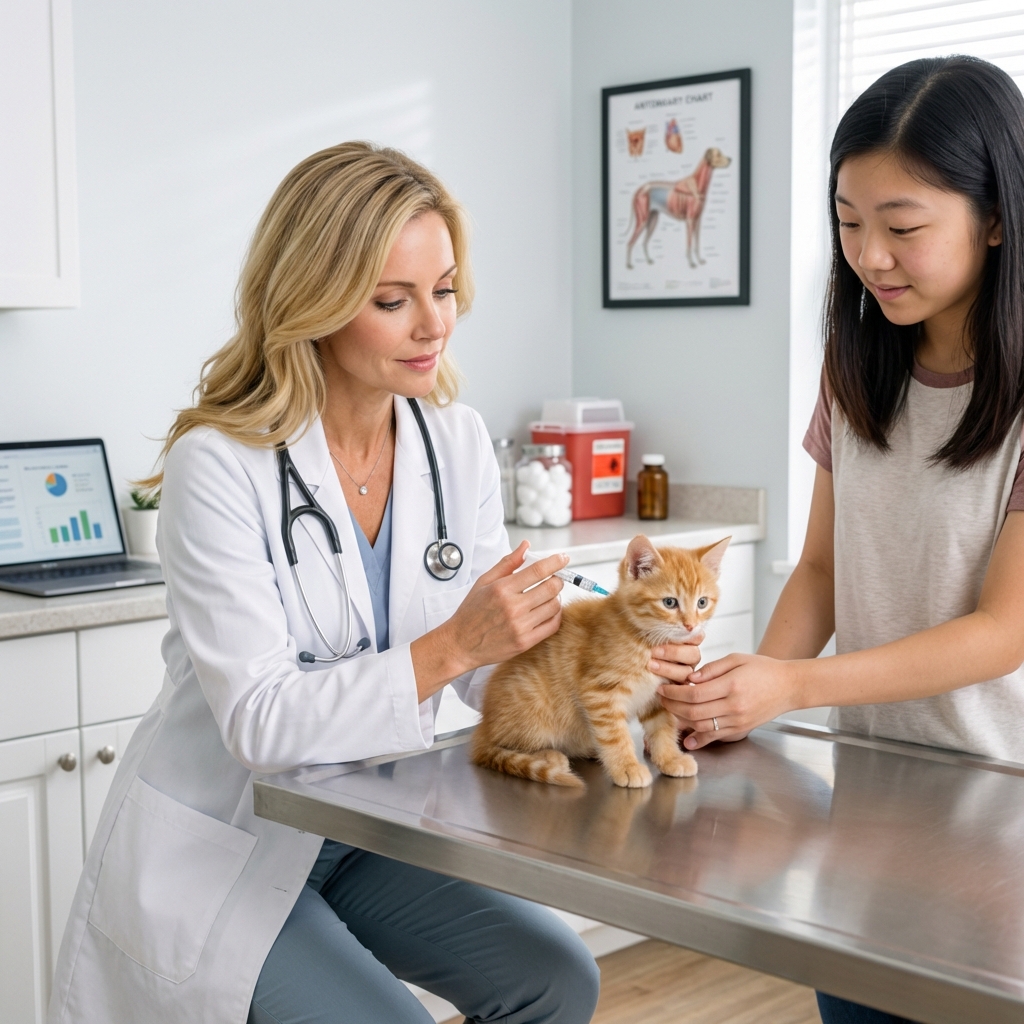
The quick schedule (at a glance)
Below is the typical vaccine timing used by many clinics in the U.S. Your veterinarian may adjust based on local disease risk, product labeling, and your cat’s medical history.
Kittens
- 6 to 8 weeks: FVRCP (core vaccine) first dose
- Every 3 to 4 weeks until at least 16 weeks: FVRCP boosters (some vets extend to 18 to 20 weeks in higher-risk situations)
- 12 to 16 weeks (timing varies by state and product): Rabies (core vaccine)
- FeLV (feline leukemia): typically recommended for all kittens through 1 year, often starting around 8 to 12 weeks with a booster 3 to 4 weeks later
After the kitten series (around 1 year old)
- About 1 year after the kitten series: FVRCP booster
- About 1 year after the first rabies vaccine (if required by product or law): Rabies booster
- FeLV booster (if continuing): often at 1 year, then based on risk
Adult cats
- FVRCP: usually every 3 years (sometimes yearly based on risk)
- Rabies: every 1 or 3 years depending on the vaccine used and local regulations (only certain products are labeled for 3-year use)
- FeLV: yearly for at-risk cats, otherwise may be discontinued for low-risk indoor-only adults after veterinarian discussion
Bottom line: Kittens need a series, then most vaccines move to longer intervals once immunity is established.
What vaccines do cats actually need?
Vaccines are generally grouped as core (recommended for most cats) and non-core (based on lifestyle and exposure risk).
Core vaccines
- FVRCP (feline viral rhinotracheitis, calicivirus, panleukopenia): Protects against common and potentially severe upper respiratory disease and panleukopenia.
- Rabies: Protects your cat and your family. It is legally required in many areas and is important even for indoor cats because bats can get inside homes. In Texas, requirements can vary by city or county, so your clinic can help you confirm what applies where you live.
Common non-core vaccines
- FeLV (feline leukemia virus): Recommended for all kittens (through 1 year of age), then continued for cats who go outdoors, live with FeLV-positive cats, or have unknown-cat exposure. FeLV vaccination does not replace FeLV testing. Most vets recommend testing when adopting, before introducing a new cat, and any time exposure risk changes.
- Other non-core options (situational): In shelters, multi-cat homes, or boarding scenarios, some cats may be recommended vaccines like Bordetella or Chlamydia. Ask your vet if any of these fit your cat’s lifestyle.
Why kittens need multiple shots
This part confuses a lot of loving pet parents, so here is the simple explanation.
Kittens get early protection from their mother’s antibodies. Those antibodies are helpful, but they can also block vaccines from working at certain ages. That is why the FVRCP vaccine is repeated every 3 to 4 weeks and continued until at least 16 weeks (and sometimes longer in higher-risk situations). The goal is to catch the immune system at the right time so protection sticks.
If a kitten starts vaccines late or misses boosters, your veterinarian may recommend restarting the series or adjusting the schedule.
Indoor cats: do they still need shots?
Often, yes. Indoor-only lowers risk, but it does not make risk zero.
- Rabies: Even indoor cats can have unexpected contact with bats or other wildlife that enters the home. Also, rabies requirements are tied to public health laws, not just lifestyle.
- FVRCP: Respiratory viruses spread most easily cat-to-cat, but they can also be brought in on contaminated objects (fomites) like carriers, bedding, and hands. Plus, many indoor cats still need boarding, grooming, or a hospital stay at some point.
- FeLV: Usually more lifestyle-based. If your cat is truly indoor-only with no contact with unknown cats, many vets will consider stopping FeLV after kittenhood. If there is any chance of exposure, continuing it is often the safer choice.
Booster timing
For healthy adult cats, many clinics follow a schedule where FVRCP and rabies are boosted at 1 year, then spaced out.
- FVRCP: commonly every 3 years after the 1-year booster
- Rabies: every 1 year or every 3 years depending on the vaccine used and local law
- FeLV: typically yearly if your cat remains at risk
Important note: your cat still needs annual wellness exams even if vaccines are not due every year. Many health problems in cats are easiest to treat when caught early.
Also, your vet may recommend giving vaccines in specific limb locations. This is partly because vaccine-site reactions are usually mild, and very rarely a tumor can form at an injection site. Location matters for monitoring and treatment, and it is one more reason to keep good records.
When to delay shots and call your vet
Vaccines are very safe for most cats, but timing matters. If your cat is sick, call your clinic before your appointment. Your vet may recommend postponing routine vaccines until your cat feels better, or they may want to examine your cat first.
Call ahead if your cat:
- Has a fever, is lethargic, or is not eating normally
- Is vomiting or has significant diarrhea
- Is on immune-suppressing medication (like certain steroids or chemotherapy drugs)
- Has a history of vaccine reactions
Common, mild side effects can include sleepiness for a day, mild soreness, or a small bump at the injection site. But contact your veterinarian promptly for facial swelling, hives, repeated vomiting, trouble breathing, or collapse.
Special situations
Newly adopted cats
If you adopt from a shelter or rescue, your cat may have received an initial vaccine, but boosters are often still needed. Bring any paperwork you have so your vet can build a clean schedule.
If you truly do not know your cat’s vaccine history, many vets will treat them as unvaccinated and restart an age-appropriate series to be safe.
Outdoor cats
Outdoor access increases exposure to FeLV and other infectious diseases. Your veterinarian may recommend FeLV vaccination and more frequent risk-based protection.
Senior or chronically ill cats
Older cats may still benefit from core vaccines, but decisions should be individualized. Many vets focus on risk, previous vaccine history, and overall health rather than automatically vaccinating on the same schedule forever.
What you can do today
If you are unsure what your cat needs, here are simple next steps:
- Find your records (paperwork from shelters, previous clinics, or your pet portal).
- Book a wellness visit and ask for a vaccine plan tailored to your cat’s lifestyle.
- Ask specifically about: FVRCP timing, rabies requirements where you live, and whether FeLV makes sense for your cat long-term.
- If you are adding a new cat: ask about FeLV testing and a safe introduction plan.
Good prevention is one of the kindest gifts you can give your cat. Vaccines help protect them from diseases that can be expensive to treat and heartbreaking to watch.