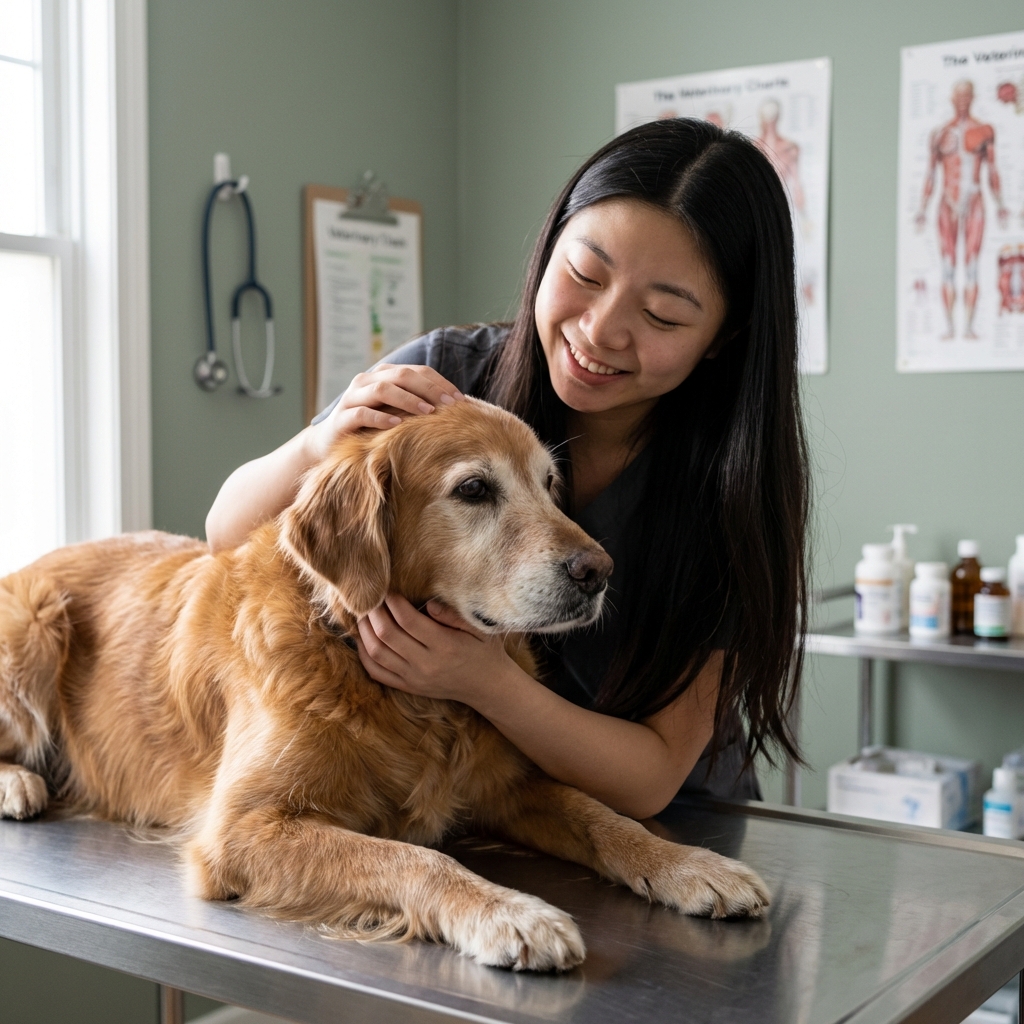
A compassionate, clear walkthrough of dog euthanasia: settling in, consent, sedation, IV catheter, euthanasia medication, confirming passing, and aftercare o...
Article
•
Designer Mixes
When It’s Time to Put a Dog Down

Shari Shidate
Designer Mixes contributor

Deciding when it may be time to euthanize a dog (many people say “put a dog down”) is one of the hardest, most love-filled responsibilities we take on as pet parents. As a veterinary assistant here in Frisco, Texas, I have seen how deeply families care and how much they want to do the right thing. The goal of this guide is to help you make a compassionate, evidence-informed decision with your veterinarian, using the same kind of quality-of-life checklists often used in hospice care.
“When is it time?” is really two questions: Is my dog suffering? and Can we relieve that suffering in a meaningful way?
Important: This article is general information and not a substitute for veterinary advice. If your dog is in urgent distress, contact your veterinarian or an emergency clinic right away.
What euthanasia is (and is not)
Euthanasia is a peaceful, medically guided way to end suffering when a pet’s quality of life has declined and cannot be restored. In many clinics, euthanasia is performed with medication that allows a dog to become unconscious and then pass away. Protocols can vary by clinic and by your dog’s condition, including whether sedation is given first and whether medication is given through a catheter or another route.
It is not “giving up.” It is choosing comfort when comfort is no longer reliably available through treatment, time, or management.
Signs quality of life is declining
Many families look for one clear sign, but it is usually a pattern of changes. If you are noticing several of the concerns below, it is a good time to schedule a quality-of-life conversation with your veterinarian.
Pain that is hard to control
- Restlessness, inability to get comfortable, trembling, or panting at rest
- Yelping, growling, or withdrawing when touched
- Hunched posture, tucked abdomen, or “prayer position”
- Stopping activities they used to enjoy even with medication
Breathing or heart disease signs
- Labored breathing, persistent coughing, or open-mouth breathing at rest
- Blue or gray gums, fainting episodes, or sudden weakness
- Cannot sleep because they cannot breathe comfortably
Appetite changes
- Not eating for more than 24 to 48 hours, or a clear drop in appetite that does not improve
- Call your veterinarian sooner if your dog is very small, has diabetes, kidney disease, is on critical medications, or is acting weak or dehydrated
- Repeated vomiting, severe nausea, or continued weight loss despite treatment
Hydration problems
- Drinking much less than usual, signs of dehydration, or dry and tacky gums
- Ongoing diarrhea or vomiting leading to dehydration
- Dehydration that returns quickly even with supportive care
Mobility loss and repeated falls
- Cannot stand to urinate or defecate without distress
- Frequent slipping, knuckling, collapsing, or falling
- Pressure sores, urine scald, or constant soiling despite support
Confusion, anxiety, or distress
- Pacing, getting stuck in corners, or staring into space
- Nighttime agitation, vocalizing, or inability to settle
- Fearful reactions to familiar people or environments
More bad days than good days
This is one of the most reliable real-world signals. If the tough days are outnumbering the comfortable days, suffering is likely becoming the dominant experience.
Quality-of-life checklist
Quality-of-life tools help turn an emotional situation into something you can track. Once a day, rate each category from 0 to 10, where 0 is worst and 10 is best. Many families use a version of the HHHHHMM scale (Hurt, Hunger, Hydration, Hygiene, Happiness, Mobility, and More good days than bad). Bring your notes to your veterinarian.

- Hurt: Is pain controlled? Can your dog rest comfortably?
- Hunger: Are they eating enough willingly?
- Hydration: Are they drinking and staying hydrated?
- Hygiene: Are they clean, dry, and free from sores or urine scald?
- Happiness: Do they still enjoy affection, toys, sunshine, or your presence?
- Mobility: Can they stand, walk, and reposition without distress?
- More good days than bad: Are good days still the majority?
If scores are trending downward over 1 to 2 weeks, or there is a sudden drop you cannot correct, it is a strong signal to talk about next steps. Sometimes comfort can improve with medication adjustments or a hospice-style plan, so it is always worth asking what options you still have.
Common conditions involved
Every dog is unique, but these are some of the most common medical scenarios where euthanasia becomes part of the conversation:
- Advanced cancer with pain, internal bleeding, difficulty breathing, or severe weight loss
- Kidney failure when nausea, dehydration, and toxin buildup cannot be managed
- Congestive heart failure with fluid in the lungs or repeated distressing episodes
- Severe arthritis or neurologic disease when mobility and toileting become painful and unmanageable
- Progressive cognitive dysfunction when fear, confusion, and sleeplessness dominate daily life
- Uncontrolled diabetes or endocrine disease with frequent crises
- Trauma or sudden catastrophe when recovery is not possible without ongoing suffering
In many of these situations, the most helpful question is: Are we treating the disease, or are we chasing emergencies? Repeated emergency visits can be a sign the body is no longer coping.
Natural death vs euthanasia
Some families hope their dog will pass naturally at home. Sometimes that happens peacefully, but not always. Natural dying from advanced disease can include nausea, air hunger, panic, pain, and sudden crises. The purpose of euthanasia is to prevent or end suffering when comfort cannot be maintained, and to avoid a frightening emergency in the final hours.
If you are hoping for a natural passing, ask your veterinarian what signs would mean your dog is suffering and what your plan is for nights, weekends, or sudden decline.
Questions to ask your vet
It can be hard to think clearly in the moment. Consider saving these questions on your phone:
- What is my dog’s likely prognosis with treatment, and without it?
- What signs would mean suffering is increasing or becoming urgent?
- What can we do for comfort right now, today?
- Are there palliative care options, hospice support, or pain-control adjustments we have not tried?
- What would a “good day” realistically look like from here?
- If we choose euthanasia, what should I expect before, during, and after?
When it is urgent
If you see any of the following, contact an emergency veterinarian right away. Even if euthanasia is the eventual decision, urgent suffering should not wait.
- Severe breathing difficulty, blue or gray gums, or collapsing
- Uncontrolled pain, nonstop crying, or inability to rest
- Repeated seizures or a seizure lasting more than 5 minutes
- Suspected bloat: distended abdomen, retching without vomit, restless pacing, or a painful, tight belly
- Inability to urinate (straining with little or no output)
- Profuse bleeding, severe weakness, or sudden severe disorientation
What the appointment is like
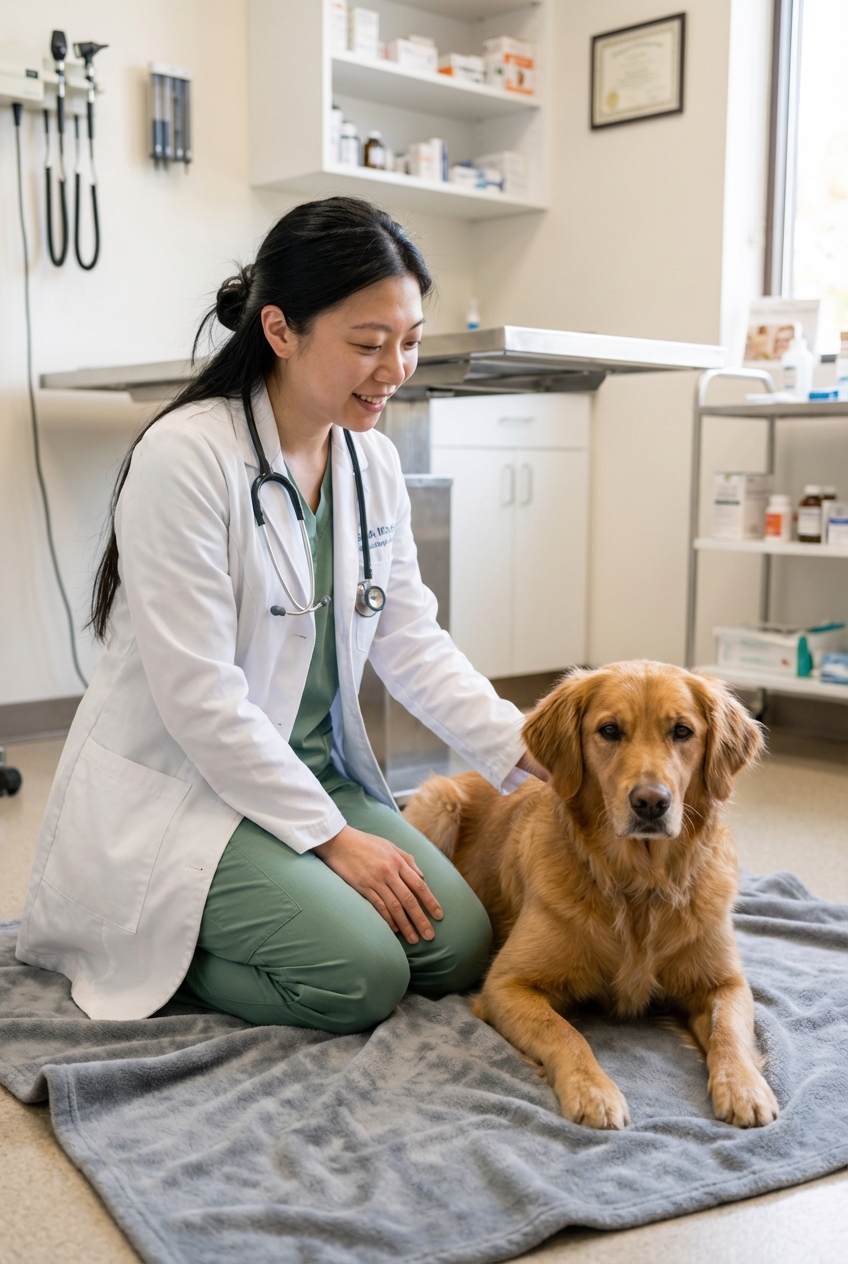
Clinics vary, but most follow a calm, gentle process:
- Consent and comfort plan: You will review paperwork and discuss aftercare choices (private or communal cremation, burial where legal, keepsakes). Many clinics also review timing, costs, and how much time you want in the room before and after.
- Sedation (often, but not always): Many veterinarians give a sedative first so your dog becomes deeply relaxed and sleepy. In some cases, the veterinarian may recommend a different approach based on your dog’s condition.
- Final medication: Once your dog is fully unconscious, the euthanasia solution is given, typically through a vein.
- Confirmation: The veterinarian confirms passing by listening to the heart.
You can often choose whether to stay the entire time. There is no “right” choice. Some people need to be present, some cannot. Both are love.
What can be normal
- A deep breath or a few reflex breaths after passing
- Eyes may remain open
- Muscle relaxation that may lead to urination or defecation
- Small movements or twitches that are reflexes, not pain
- More rarely, brief vocalization or stronger body movements can happen as reflexes after unconsciousness
These responses can feel startling, but they are physiologic and typically happen after consciousness is gone. If you are worried in the moment, ask your veterinary team to talk you through what you are seeing.
At-home euthanasia
For many dogs, home is where they feel safest. At-home euthanasia can reduce stress for dogs with anxiety, mobility issues, or fear of car rides and clinics. It can also give families more privacy and time.
Consider asking about at-home services if your dog becomes distressed at the vet, or if you want a quieter setting with familiar bedding, smells, and routines.
Practical planning tips
- Transportation: If your dog is large or cannot walk, ask the clinic how they recommend getting your dog inside. Many clinics can help you bring your dog in from the car, or you can use a stretcher, wagon, or a blanket as a lift.
- Timing: If possible, ask for a quieter appointment time and arrive a little early so you are not rushed.
- Other pets: Some families feel it helps to let a housemate dog sniff the body afterward (at home or after you return). Not every pet needs this, but for some it can reduce searching behavior and anxiety.
How to prepare
Comfort plan for the last days
- Ask your vet for a clear pain and nausea plan, including what to do after hours.
- Use supportive tools: non-slip rugs, ramps, slings, waterproof bedding, and raised bowls.
- Keep routines simple. Short potty breaks, soft bedding, and easy access to water often help.
Plan the goodbye day
Not every situation allows planning, but when it does, gentle structure can reduce anxiety.
- Pick a calm time of day when your dog is usually most comfortable.
- Offer favorite foods if medically safe. For some dogs, this is the one day rules can soften.
- Choose who will be present. Keep it small if your dog is easily overwhelmed.
- Bring a familiar blanket, favorite toy, or your dog’s bed.
Aftercare and grief
Grief after pet loss is real, and it can be intense. You may feel sadness, relief, guilt, or all three at once. That does not mean you made the wrong decision. It usually means you loved deeply and carried a heavy responsibility.
If you are supporting children, simple and honest language helps. For example: “Their body was very sick and hurting, and the veterinarian helped them die peacefully so they would not hurt anymore.”
If grief is overwhelming, consider reaching out to a pet loss support hotline, a counselor, or your veterinarian’s clinic. Many practices keep a list of local resources.
A gentle truth
Dogs do not measure a life by its length. They measure it by safety, comfort, and love. When you choose euthanasia to prevent suffering, you are making a medically guided, compassionate decision. It is one of the final gifts we can give.
Quick reminders
- You do not have to decide alone. Your veterinarian can help you evaluate suffering and options.
- Track quality of life daily for clearer decision-making.
- When comfort cannot be maintained, euthanasia can be a kind and humane choice.
- If you are seeing urgent distress, seek emergency care right away.