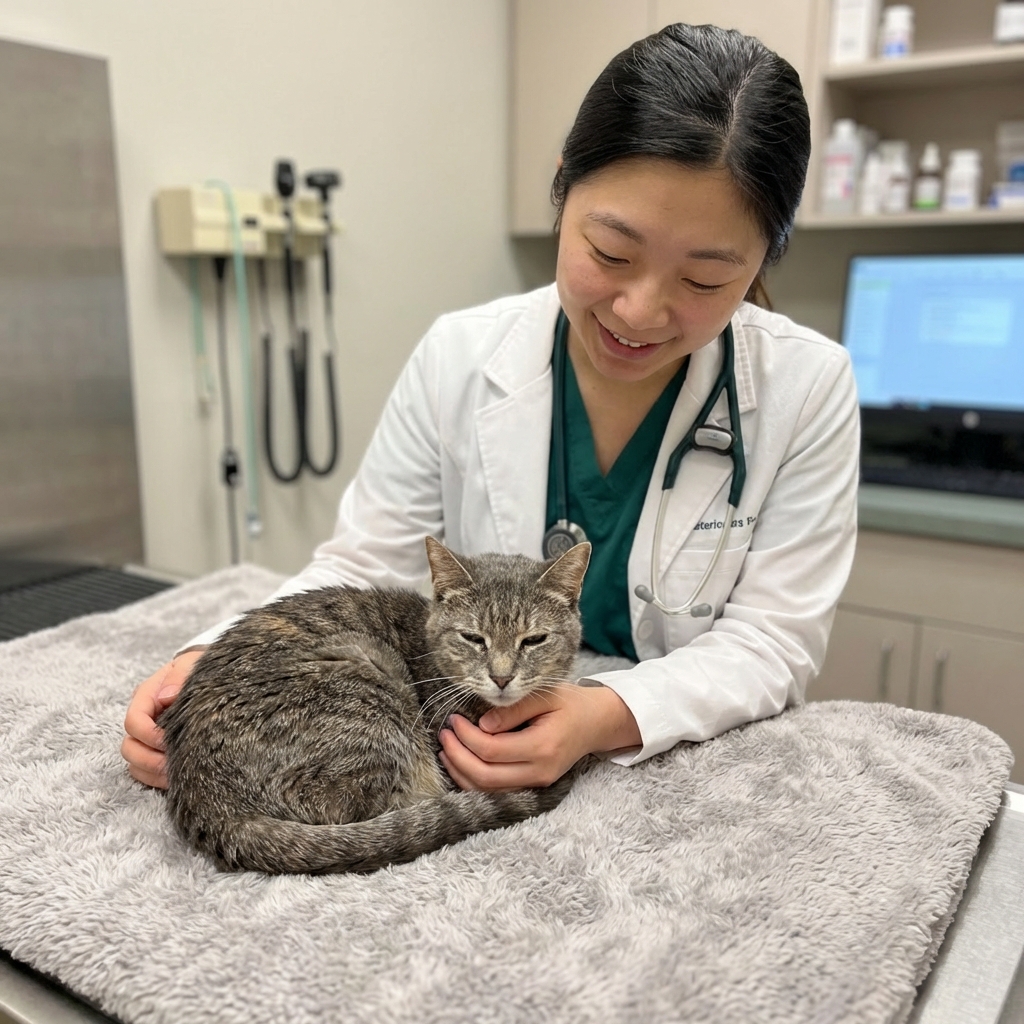
A compassionate guide to deciding when it’s time to euthanize your cat. Learn key signs of decline, a quality-of-life checklist, questions for your vet, an...
Article
•
Designer Mixes
When Is It Time To Put A Cat Down

Shari Shidate
Designer Mixes contributor
Making an end-of-life decision for a cat you love is one of the hardest moments in pet parenting. As a veterinary assistant, I have sat with families who are afraid of waiting too long and equally afraid of doing it too soon. The truth is, there is rarely a single perfect “right day.” What we can do is gather clear signs, track quality of life, and work closely with your veterinarian so your cat’s final chapter is as peaceful and comfortable as possible.
Quick note: This article is for support and education and is not a substitute for veterinary care. If you think your cat is in pain or struggling to breathe, contact your veterinarian or an emergency clinic right away.

What euthanasia means
Euthanasia is a medical procedure that intentionally ends life in a way designed to prevent suffering. For cats with advanced illness, uncontrolled pain, or progressive decline, euthanasia can be a final act of kindness.
Many people worry that choosing euthanasia means “giving up.” In reality, it often means you are refusing to let your cat endure distress that cannot be reasonably fixed.
Common reasons families consider euthanasia
Cats are masters at hiding discomfort, so families are often shocked at how quickly things can change once a condition progresses. Some illnesses are very treatable for a long time. The concern is when a condition becomes advanced, poorly controlled, or no longer responds to reasonable care.
- Chronic kidney disease: nausea, dehydration, weight loss, weakness, blood pressure complications.
- Cancer: pain, appetite loss, breathing difficulty, sudden decline, poor response to treatment.
- Heart disease: labored breathing, fainting, fluid buildup, repeated crises.
- Severe arthritis: inability to use the litter box comfortably, persistent pain, loss of mobility.
- Poorly controlled diabetes or hyperthyroidism: muscle wasting, weakness, repeated complications, quality of life decline.
- Neurologic disease: seizures, confusion, inability to stand, reduced awareness of surroundings.

Signs your cat may be suffering
One of the most helpful things you can do is look for patterns, not just one bad day. Any single sign can have many causes. What matters most is persistence, severity, and how much it affects your cat’s comfort and daily life. Call your veterinarian promptly if you notice any of the following.
Comfort and pain clues
- Hiding more than usual or withdrawing from family
- Growling, hissing, or flinching when touched
- Restlessness, inability to get comfortable, pacing
- Rapid or shallow breathing when at rest
- Persistent nausea signs such as drooling, lip smacking, or repeated swallowing
Eating, drinking, and weight
- Not eating for 24 hours, or eating dramatically less for several days (sooner is more urgent for kittens, diabetic cats, cats who are overweight, or cats already ill)
- Repeated vomiting or diarrhea
- Noticeable weight loss or muscle loss along the spine and hips
- Dehydration or not drinking, especially with kidney disease
Hygiene and daily function
- Not using the litter box or having accidents because mobility is too painful
- Not grooming, greasy coat, urine or stool stuck to fur
- Inability to stand, walk, or reach food and water
- Getting stuck in corners or seeming disoriented
A simple quality-of-life checklist
When emotions are high, a basic scoring system can bring clarity. Try rating each category from 0 to 10 (10 is great). Re-check daily, or at least every few days, and share the results with your vet. Trends matter more than a single number.
- Hurt: pain controlled, breathing comfortable, no distress
- Hunger: eating enough to maintain strength
- Hydration: drinking, staying hydrated with support if needed
- Hygiene: staying clean, able to use the litter box
- Happiness: responds to affection, enjoys a favorite spot, relaxes
- Mobility: can move to essentials without struggle
- More good days than bad: good days are still truly “good”
How to use it: If several categories are consistently low, or your total score keeps dropping over a week, it is time for a serious conversation with your veterinarian. For example, a cat who goes from mostly 7 to 9 scores to mostly 3 to 5 scores is telling you something important, even if there is an occasional “better” afternoon.
Tip: Keep a one-line daily note such as “ate half breakfast, used box, purred in window.” Patterns show up quickly when written down.
Next, separate “plan soon” concerns from “call today” red flags. Some signs mean you can schedule a quality-of-life visit. Others mean your cat may be in immediate danger.
When it may be time now
These situations often indicate urgent suffering or a medical crisis. If you see them, contact an emergency clinic or your vet immediately.
- Open-mouth breathing, heavy breathing, or belly effort to breathe
- Blue, gray, or very pale gums, or collapse with breathing distress
- Repeated collapse, inability to stand, or severe weakness
- Uncontrolled pain despite medication
- Continuous seizures or seizures that cluster
- Suspected urinary blockage in a male cat (straining with little or no urine, crying, lethargy)
- Severe dehydration, repeated vomiting, or inability to keep water down

Questions to ask your veterinarian
Your veterinarian can help you separate what is treatable from what is no longer fair to your cat. Consider asking:
- What is causing the discomfort right now, and can it be controlled?
- What does the next 2 weeks likely look like with treatment? What about without it?
- Are we treating the disease, or responding to repeated crises?
- What are the “red flag” signs that mean my cat is suffering?
- Would hospice or palliative care at home be appropriate?
If you can, bring videos of your cat walking, breathing, or trying to eat at home. Cats often act more “together” in the clinic, so home footage can be incredibly helpful.
At-home hospice options
Not every decline means immediate euthanasia. Some cats can have comfortable time with palliative support. Your veterinarian may recommend:
- Pain control: cat-safe medications only, never human pain relievers
- Anti-nausea support: for kidney disease, cancer, or chronic GI issues
- Appetite support: food warming, strong-smelling wet foods, vet-approved appetite stimulants
- Hydration support: water fountains, wet food, or subcutaneous fluids if prescribed
- Litter box access: low-entry box, puppy pads nearby, non-slip rugs
- Warmth and easy rest: heated bed on low, soft blankets, quiet space
Hospice has one core goal: comfort. If comfort is no longer achievable, such as pain you cannot control, ongoing breathing distress, or inability to eat or drink despite support, euthanasia becomes the compassionate option.
What to expect during euthanasia
Procedures vary by clinic and by your cat’s medical needs, but most follow a calm, gentle process.
In-clinic euthanasia
Many clinics give a sedative first so your cat becomes very relaxed and sleepy. Then an overdose of anesthetic medication is given, usually through a vein. The passing is typically peaceful, and it usually happens within seconds to a few minutes after the final injection. Your veterinarian will listen for the heart to confirm death.
Many families choose to stay and hold their cat, and many choose not to. Both choices are loving choices.
At-home euthanasia
Some families prefer a familiar environment. A veterinarian comes to your home, and your cat can rest in a favorite spot. At-home euthanasia may be especially helpful for cats who fear the car or clinic, or for multi-cat households where stress is a concern.
Physical changes that can be normal
Even with a very gentle passing, the body may do a few things that can surprise families. Your cat may take a few reflex breaths, twitch, or release urine or stool after passing. These are not signs of pain. If you are worried at any point, ask your veterinary team to talk you through what you are seeing.
Aftercare
Afterward, your veterinarian will discuss aftercare options such as private cremation, communal cremation, or home burial where legal and safe.

Planning a gentle goodbye
Practical details can make a hard day feel a little less overwhelming. Your clinic can tell you what is available and what to expect.
- Cost and scheduling: Fees vary by location, time of day, and whether you choose in-home care. Ask for an estimate and the soonest appointment options.
- Comfort items: Bring a familiar blanket, bed, or toy, especially for in-clinic visits.
- Food beforehand: Some cats can have a favorite treat the day of. If sedation is planned, your clinic may give fasting guidance. When in doubt, ask.
- Support: If you want a friend or family member with you, it is okay to plan for that.
Helping kids and other pets cope
Talking with children
Use simple, truthful language. Avoid phrases like “put to sleep” without context, because it can make bedtime scary. Try: “The vet is helping her die peacefully because her body is very sick and she is hurting.” Let kids ask questions and include them in goodbyes in an age-appropriate way.
Supporting other cats and dogs
Pets often notice a change in routine and energy. Keep feeding and walk schedules consistent, offer extra enrichment, and watch for decreased appetite or clinginess. Some behavior changes are normal during grief.
Guilt, grief, and the fear of too soon
Guilt is common, even when you made the most compassionate choice. A gentle reframe that helps many families is this: you are choosing a peaceful passing instead of a painful crisis.
If you are stuck in the loop of “What if I waited?” consider this: waiting does not always create more good days. Sometimes it creates a harder ending. A planned goodbye, with sedation and familiar comfort, is often kinder than a rushed emergency visit during severe distress.
If you need support, ask your clinic about local pet loss resources or grief counseling. You do not have to carry this alone.
Quick decision support
If you are overwhelmed, start here:
- Today: Track pain, appetite, breathing, litter box use, and hydration.
- Within 24 to 48 hours: Schedule a quality-of-life appointment or phone triage or telehealth check-in with your vet.
- Ask: “Can we keep her comfortable, or are we prolonging suffering?”
- Plan: If decline is expected, discuss timing and whether at-home euthanasia is available.
Love is the reason this decision hurts so much. And love is also what makes a peaceful goodbye possible.