Feed your puppy with confidence using age, current weight, and body condition. Includes toy to giant breed charts, meals-per-day guidance, wet vs dry tips, a...
Article
•
Designer Mixes
When Do Puppies Stop Growing?

Shari Shidate
Designer Mixes contributor
If you have a puppy at home, you have probably asked some version of this question while staring at paws that look way too big for their body: When do puppies stop growing? The honest answer is that it depends, mostly on genetics and adult size. The good news is that there are reliable patterns you can use to estimate your pup’s timeline and support healthy growth along the way.
The short answer by size
Breed size is the biggest predictor of how long a puppy will keep growing. In general, small dogs mature faster and giant dogs take the longest. These are typical ranges, and some individuals and breeds fall outside them.
- Toy and small breeds: often finish most growth by 8 to 10 months, with some finishing closer to 6 to 8 months and others filling out until about 12 months.
- Medium breeds: commonly stop gaining height around 10 to 12 months, then slowly add muscle until 12 to 15 months.
- Large breeds: usually keep growing until about 12 to 18 months.
- Giant breeds: can continue growing until 18 to 24 months, and some may keep maturing in muscle and body shape beyond that.
Important note: “Stop growing” can mean two different things. Puppies typically reach adult height first, then continue to “fill out” with muscle and chest development over the following months.
What drives puppy growth?
So what is actually happening during all that puppy growth? It is driven by a mix of genetics, nutrition, hormones, and the timing of growth plate closure. Growth plates are soft areas of developing cartilage at the ends of long bones. As puppies mature, those growth plates harden and close, and that is when height gain slows and stops.
Smaller dogs’ growth plates tend to close sooner. Larger dogs’ growth plates stay open longer, which is one reason they need a longer runway of careful nutrition, weight management, and age-appropriate exercise for joint health.
Height vs. weight
Height
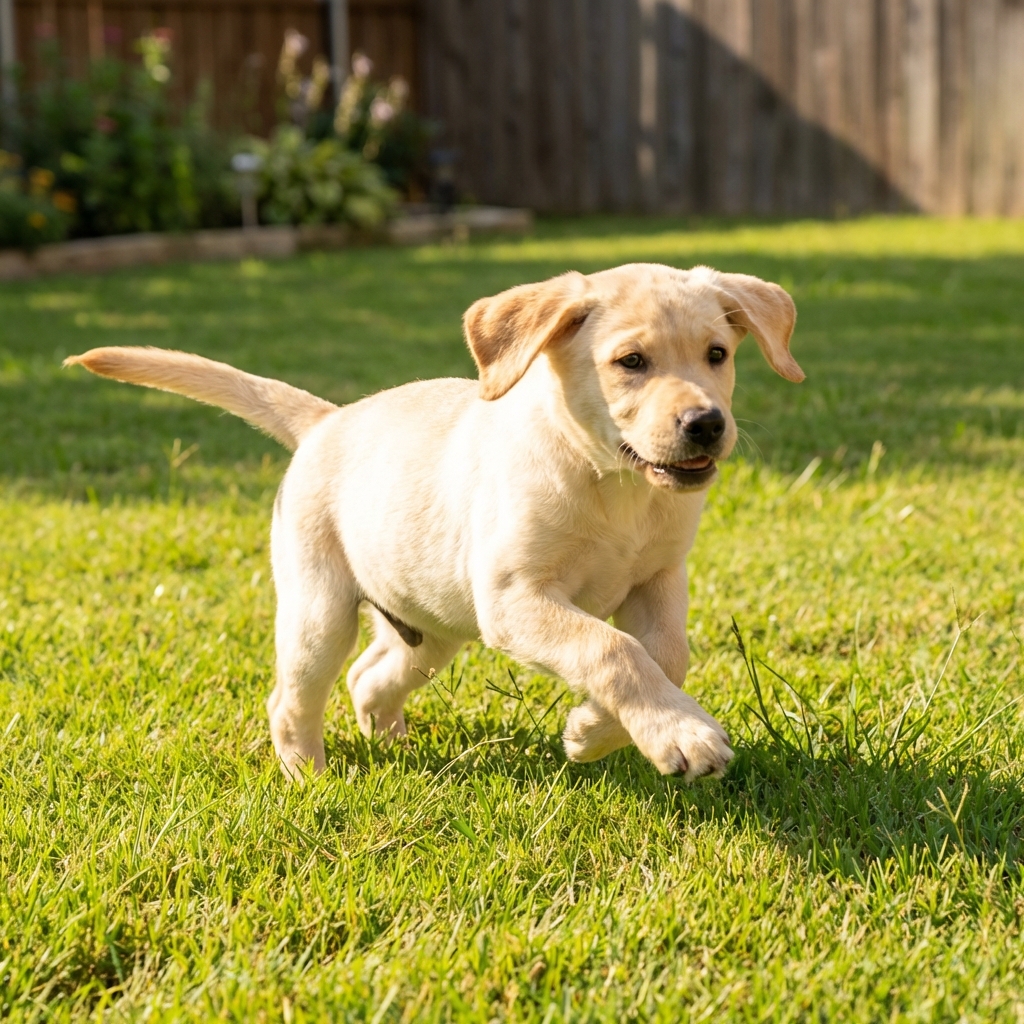
Most puppies reach near-adult height before they reach near-adult weight. You might notice your pup suddenly looks “leggy” or a little awkward for a while. That is normal.
Weight and body condition
After height slows down, many dogs continue gaining healthy weight as they build muscle, broaden through the chest, and mature overall. This is especially true for athletic breeds and larger mixes.
Rather than chasing a specific number on the scale, focus on body condition. You should be able to feel ribs with light pressure, see a waist from above, and see a gentle tummy tuck from the side.
Estimate adult size
No method is perfect, especially for mixed breeds, but these tools can get you closer.
1) Breed and parent size
If you know your puppy’s parents, their adult size is often the most reliable predictor.
2) Weight at key ages
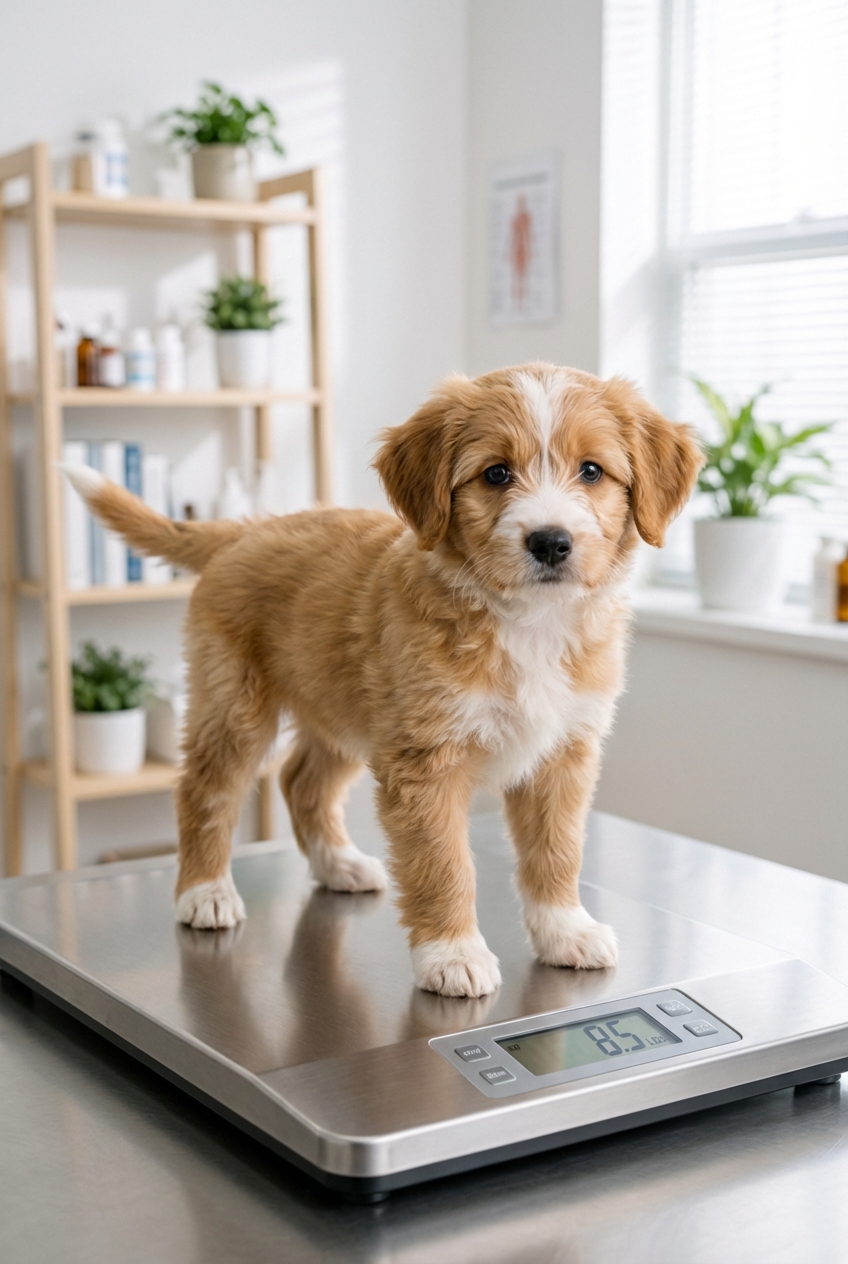
Veterinarians often use growth curves and repeated weigh-ins to track progress. You may hear a rule of thumb that many puppies are around half of their adult weight by 4 to 5 months, but it varies a lot by breed and size. Small breeds may reach that point earlier, while large and giant breeds may not be close until later, which is why trendlines (not one-off numbers) matter most.
3) Paw size
Big paws can suggest a larger adult dog, but it is not a sure thing. Puppies can have oversized feet during growth spurts and still end up medium-sized.
4) DNA tests for mixed breeds
Breed ID tests can help explain why your “mystery mix” is growing the way they are. They are not perfect at predicting exact adult weight, but they can offer helpful context.
Growth spurts
Many puppies grow in bursts, not in a smooth line. During a growth spurt, you may notice:
- Increased appetite
- Extra sleep
- Clumsiness or less coordination
- A temporary “skinny” or “gangly” look
If your puppy seems to be in pain, suddenly limps, or does not want to move, that is not a normal growth spurt. It is a good time to call your veterinarian and ask about an exam.
Feeding for healthy growth
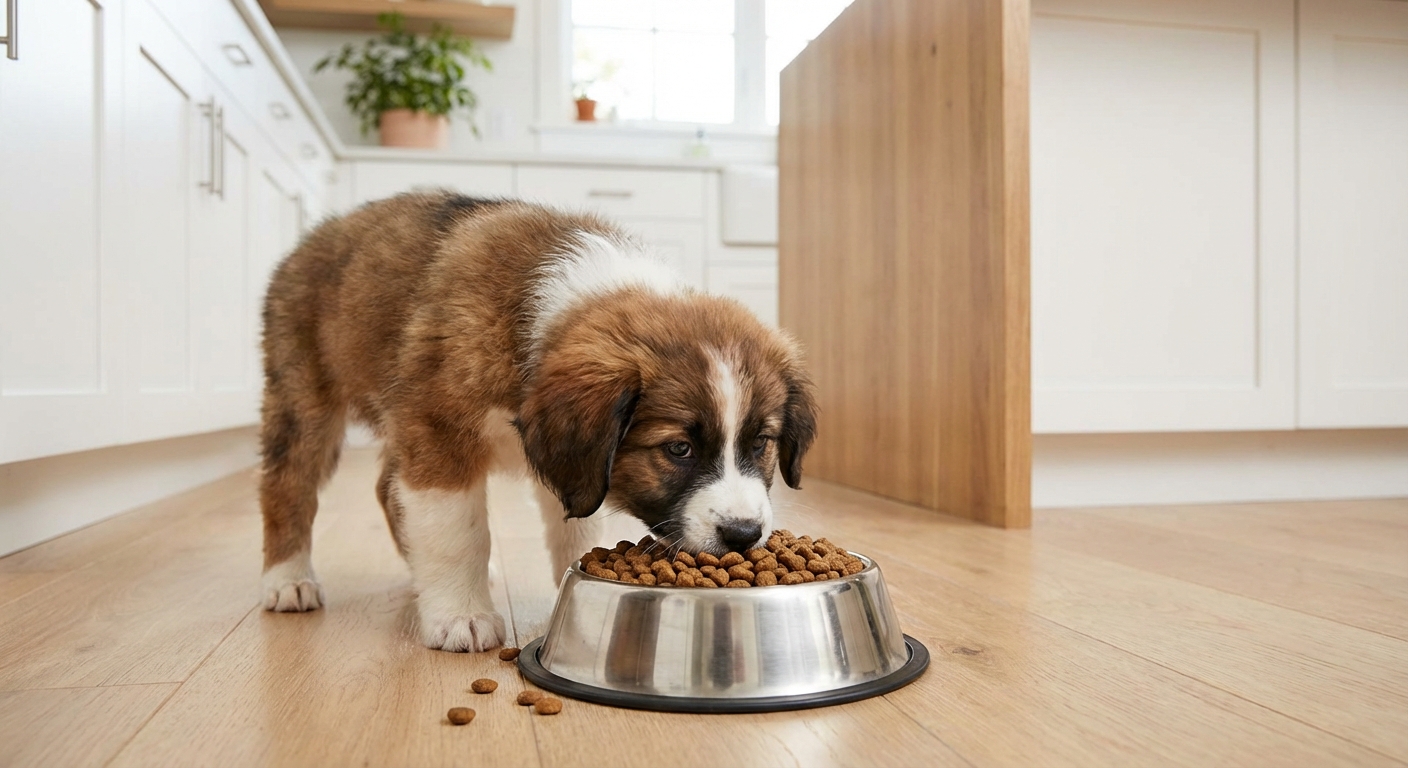
As a veterinary assistant, one of the most common problems I see is well-meaning owners unintentionally overfeeding or using the wrong type of food for their puppy’s expected adult size.
Use a diet made for growth
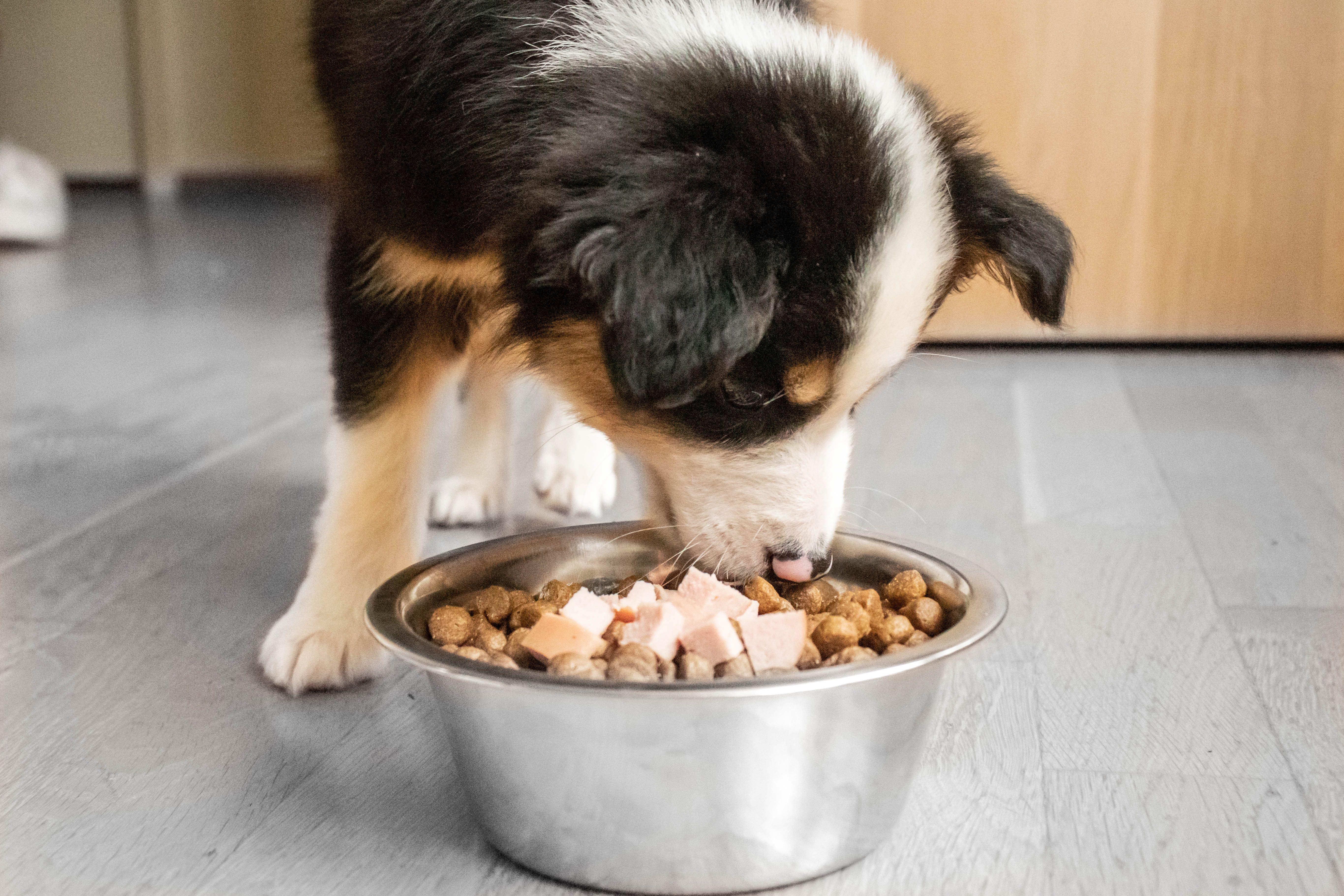
Puppies need higher levels of certain nutrients than adult dogs. Look for a food labeled for growth or all life stages and ideally one that meets AAFCO nutrient profiles for growth.
Large-breed puppies and the right formula
Large-breed puppies often do best on diets formulated to meet large-breed growth requirements. These formulas are designed to support slower, steadier growth and appropriate calcium and phosphorus balance, which matters for bone and joint development. Some all life stages foods can also work if they are properly formulated for large-breed growth, so if you are unsure, ask your vet to help you choose.
Watch calcium supplements
Unless your veterinarian specifically recommends it, avoid adding calcium to a puppy’s diet. Too much calcium can be risky, especially for large and giant breeds.
Use treats strategically
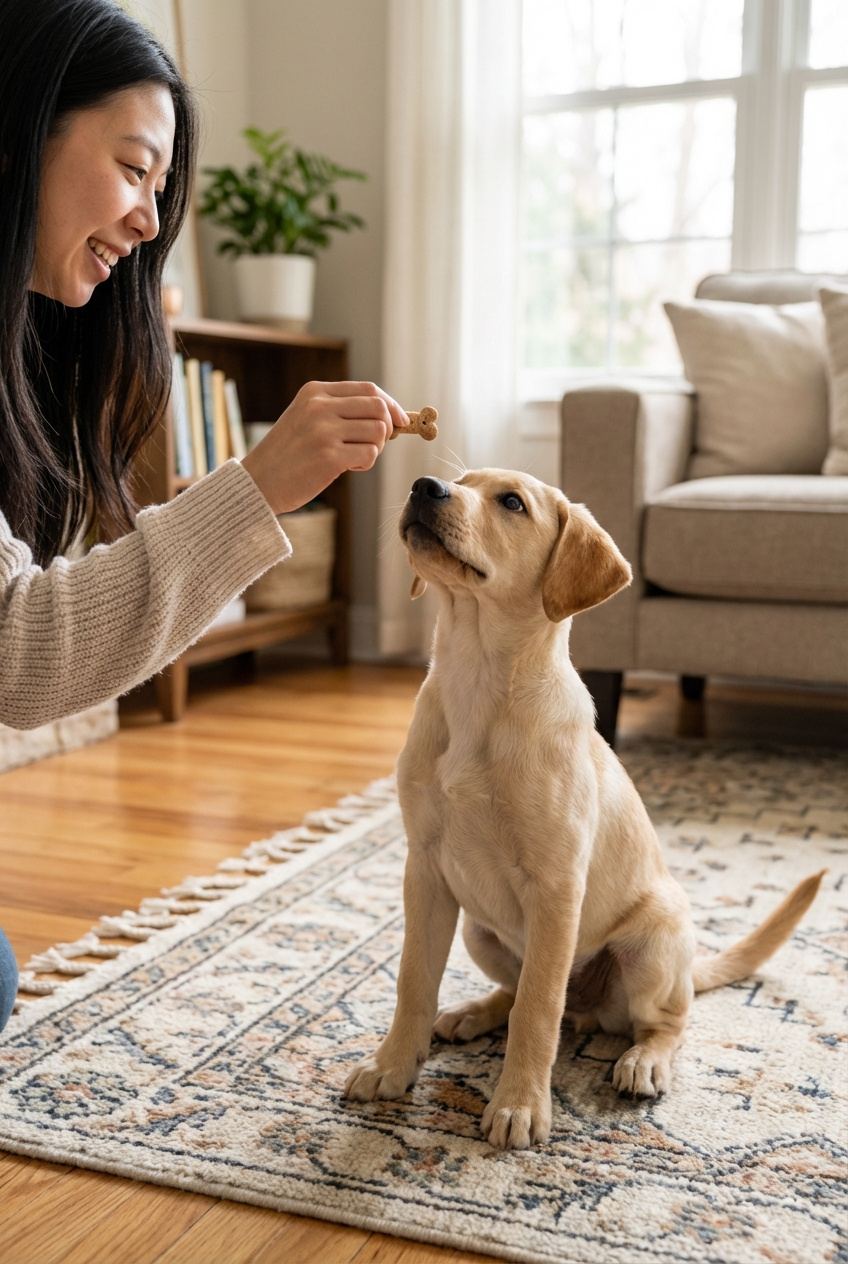
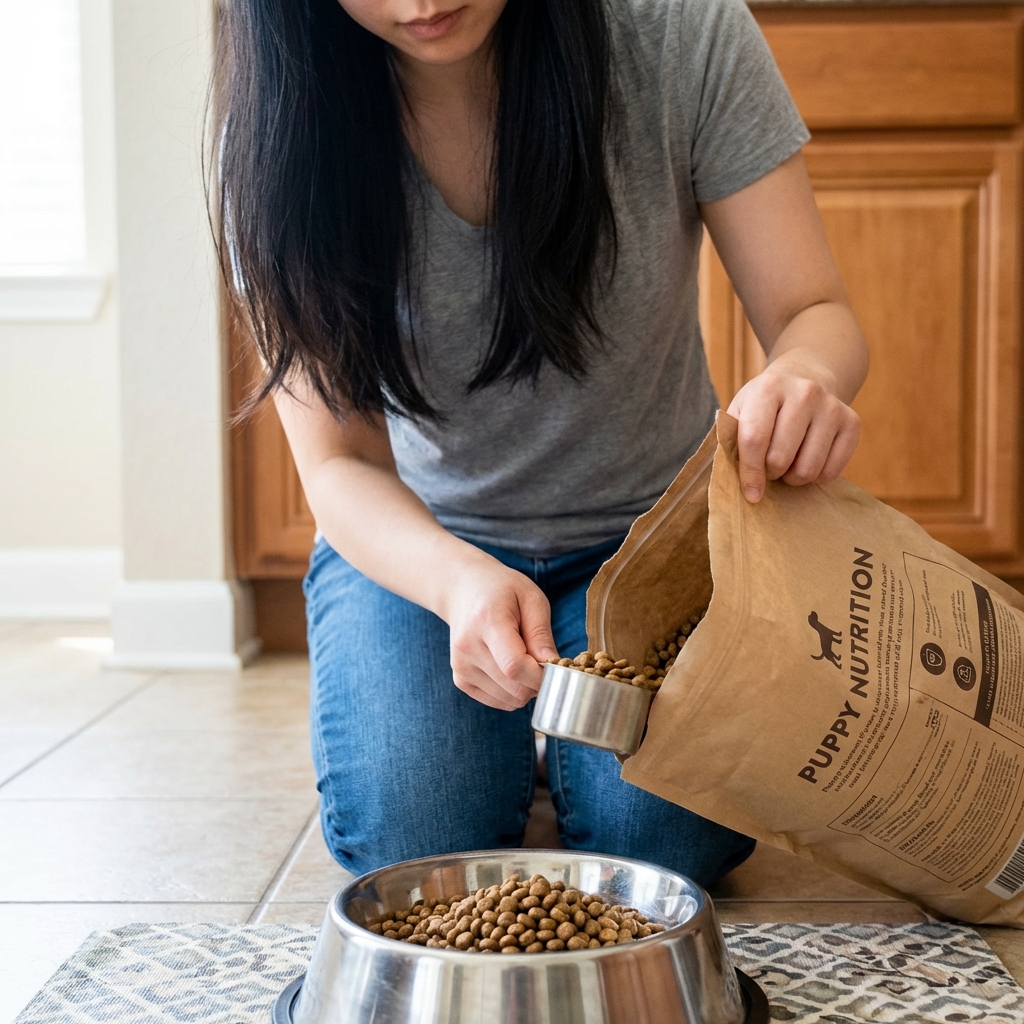
Treats should generally make up no more than 10% of daily calories. If training requires lots of rewards, use tiny pieces or part of your puppy’s regular kibble.
Exercise during growth
Puppies need movement, but growing joints do best with the right kind of activity.
- Choose free play: sniffy walks, gentle play, and puppy-appropriate games are great.
- Avoid too much forced impact: for long-bodied, large, or giant breeds especially, limit repetitive high-impact exercise like long runs, lots of stair climbing, or frequent high jumps while they are still growing.
- Keep them lean: healthy body condition is one of the best forms of joint support.
If you are not sure what is appropriate for your puppy’s breed and age, your veterinarian can help you build a simple plan.
Spay and neuter
Spaying or neutering can influence growth patterns because sex hormones play a role in growth plate closure. In some dogs, altering earlier can result in slightly taller height due to delayed growth plate closure.
Timing decisions are individualized, and the science is nuanced and still evolving. Many veterinarians consider factors like breed size, lifestyle, behavior, orthopedic risk, and other health considerations (including breed-specific cancer risks). If you have a large-breed puppy, it is worth having a specific conversation with your vet about the best timing for your dog.
Signs your puppy is nearing adult size
Keep an eye out for these indicators that your dog is reaching maturity:
- Your puppy’s height changes very little month to month
- Appetite becomes more consistent (no more sudden “bottomless pit” phases)
- Energy becomes steadier and less frantic
- Body shape looks more proportionate and less leggy
- Your vet notes that growth is leveling off on weigh-ins
When growth is not on track
Trust your instincts. If something feels off, it is okay to ask for a checkup. Contact your veterinarian if you notice:
- Persistent diarrhea or vomiting
- Rapid weight gain with loss of waist definition
- Not gaining weight over multiple weeks (especially in young puppies)
- Lameness, swelling, pain, or reluctance to play
- A dull coat or constant itching that could suggest a dietary issue
If your puppy is not gaining weight, ask your vet about common underlying issues like intestinal parasites and whether a fecal test or deworming plan is needed.
Growing bodies are sensitive, and early adjustments can make a big difference long-term.
The bottom line
Most puppies stop growing in height somewhere between 8 and 24 months, depending largely on adult size. Small dogs finish sooner, giant dogs take longer, and most pups continue filling out after their height slows.
If you want the most accurate answer for your puppy, your veterinarian can track weight and body condition over time and help you choose the right diet, exercise plan, and (if relevant) spay or neuter timing for healthy, steady development. This article is for general education and is not a substitute for veterinary advice for your individual dog.