Wondering when puppies are full grown? Get a clear size-by-size timeline (toy to giant), plus signs of maturity, growth plates, nutrition, and safe exercise ...
Article
•
Designer Mixes
When Do Puppies Reach Full Size?

Shari Shidate
Designer Mixes contributor
Puppies grow fast, then suddenly it feels like they slow down overnight. If you are wondering when your puppy will reach their full size, the honest answer is: it depends on their adult size, genetics, and overall health. The good news is you can usually make a pretty accurate estimate by looking at breed mix, growth rate, and a few simple body clues.
As a veterinary assistant in Frisco, Texas, I love helping families understand puppy growth because it reduces worry and helps you plan for nutrition, training, and even when to switch from “tiny puppy gear” to adult-sized everything.
Quick note: This article is educational and not a substitute for veterinary advice. Also, “full size” can mean different things: adult height, adult weight, and even mental maturity (which often comes later, especially in large breeds).
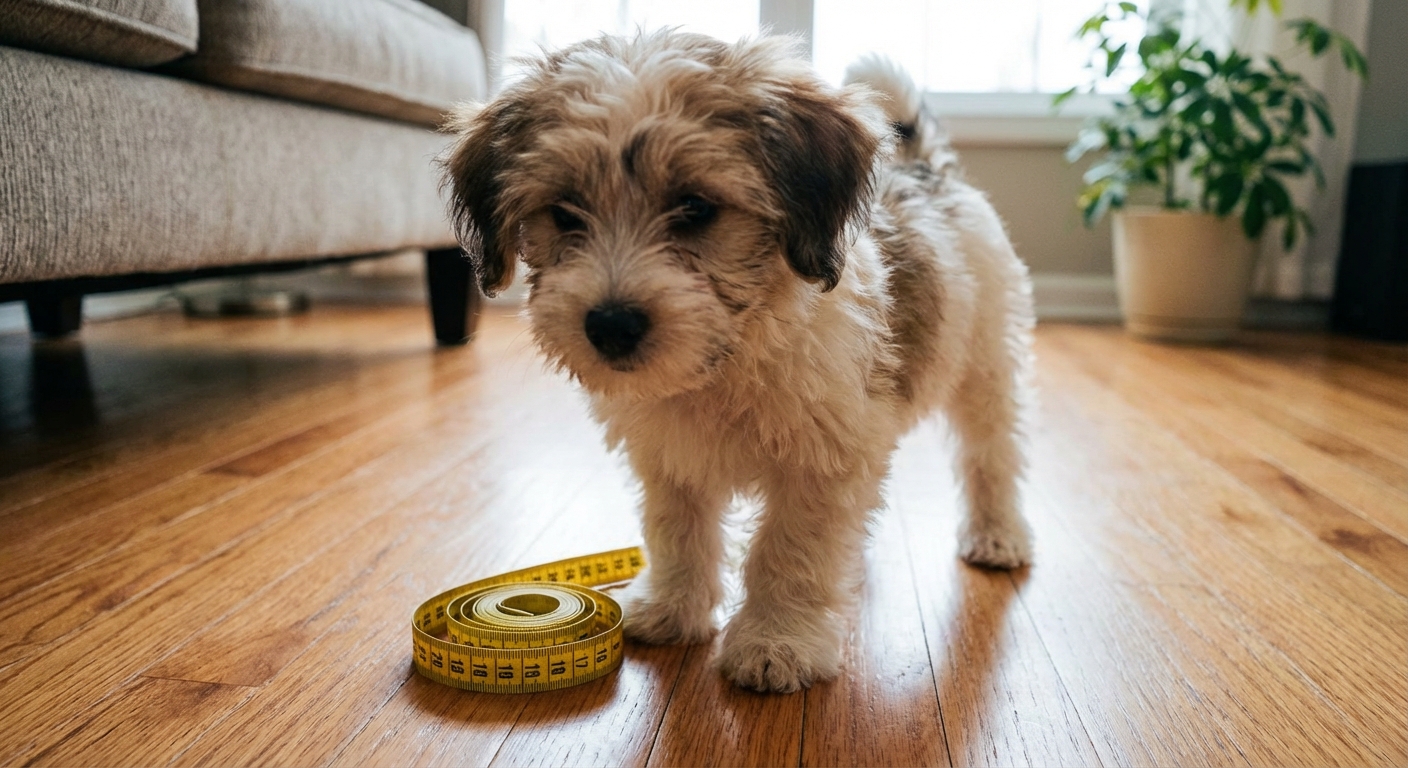
Quick answer by size
Many puppies reach their adult height before they reach their adult weight. Think of it like teenagers: they stretch up, then fill out. There are always exceptions, and some dogs keep gaining height longer than expected.
If you are not sure what “size” your puppy is, these adult-weight ranges are a helpful guide:
- Toy: under about 12 lb
- Small: about 12 to 25 lb
- Medium: about 25 to 50 lb
- Large: about 50 to 100 lb
- Giant: about 100 lb+
Typical growth timelines (general ranges, not a promise):
- Toy breeds (very small adults): often close to full size by 6 to 8 months.
- Small breeds: usually around 8 to 10 months.
- Medium breeds: commonly around 10 to 12 months.
- Large breeds: often around 12 to 18 months.
- Giant breeds: may keep growing until 18 to 24 months (sometimes a bit longer for “filling out”).
Fun fact: A puppy can be “done” getting taller, but still add muscle and chest width for months after.
Why mixed breeds vary
Mixed-breed dogs can be wonderfully unpredictable. Even within the same litter, adult sizes can vary because each puppy inherits a different blend of genes.
Here is what tends to influence adult size the most:
- Parents and grandparents: if you know their sizes, that is the most helpful clue.
- Bone structure: thick legs and big paws can point to a bigger adult dog, but it is not a perfect rule.
- Early growth speed: rapid gain early can suggest a larger adult size, but nutrition and health also affect this.
- Spay and neuter timing: in some dogs, hormone timing may slightly affect growth plate closure and final height. If you have questions, talk with your veterinarian about the best timing for your dog’s breed, lifestyle, and orthopedic risk.
Month by month
0 to 4 months: fast growth
This is the “grow every week” phase. Puppies typically gain quickly, sleep a lot, and need frequent meals and potty breaks. Appetite and energy can fluctuate with teething and vaccines.
4 to 6 months: lanky stage
Many puppies start looking leggy and awkward. You may see a slimmer waist and longer limbs. This is also a common time for training “regression” because adolescence is starting.
6 to 12 months: slowing height
Small dogs may be nearly done physically. Medium dogs often approach adult height. Large dogs may still look like oversized puppies with teenage energy (and teen decision-making).
12 to 24 months: filling out
Large and giant dogs often keep adding chest width and muscle. Their coordination also tends to improve as they mature.
Estimate adult size
No method is perfect, but these are practical options that help many families.
1) Get a growth check
At a routine exam, your veterinary team can look at body condition, growth trend, and breed mix clues. If there is a concern, your vet may recommend checking for issues that can affect growth, like parasites or nutrition imbalances.
2) Track weight weekly
Weigh your puppy once a week and write it down. The number matters less than the trend. A steady, appropriate growth curve is the goal, not “as fast as possible.”
3) Check body condition
A healthy puppy should have a waist when viewed from above, but fluffy coats can hide it. Use your hands too: you should be able to feel ribs under a light layer of tissue. If ribs are hard to find, it is time to talk to your vet about calories and treats.
Many clinics also use a Body Condition Score (BCS) on a 1 to 9 scale. It is a simple, helpful tool to track “healthy shape,” not just pounds.
4) A simple rule of thumb (with caution)
For some small and medium puppies, adult weight may be roughly about 2 times their weight around 4 months. This varies a lot by breed mix and individual growth pattern, so treat it as a loose estimate, not a guarantee.

Support healthy growth
Choose the right food
Large-breed puppies have special needs. Growing too quickly can stress developing joints, so they often do best on a large-breed puppy formula that supports controlled growth and balanced minerals.
- Do: pick a puppy diet that meets AAFCO growth standards.
- Do: ask your vet if your puppy should be on large-breed puppy food.
- Do: focus on appropriate portions to avoid overfeeding, since excess calories can increase developmental orthopedic risk in fast-growing dogs.
- Do not: add calcium supplements unless your veterinarian specifically recommends it. Calcium and phosphorus balance matters, and more is not better.
Keep exercise puppy-safe
Movement helps build muscle and coordination, but repeated high-impact exercise can be tough on growing joints.
- Favor short play sessions, gentle walks, and training games.
- Limit repeated high jumps and intense stair workouts for young puppies.
- Use traction (rugs, runners) on slippery floors to protect developing hips and knees.
Protect sleep
Growth happens during rest. Puppies often sleep 16 to 20 hours a day, with variation by age and individual. An overtired puppy is more likely to be mouthy, wild, and frustrated.
Teething and growth
Teething and growth overlap a lot, which is why the 3 to 6 month window can feel chaotic. Most puppies finish teething and have their adult teeth in by about 6 to 7 months. During this time, sore mouths can make some puppies temporarily picky, extra chewy, or more easily distracted in training.
Fun facts
- Paws are not a perfect predictor. Big feet can mean a bigger adult dog, but some mixes just have “funny feet.”
- Puppies can have growth spurts. You might see a sudden appetite increase, extra sleep, or temporary clumsiness.
- Adult coat can arrive late. Many mixes keep a soft puppy coat longer, then mature coat texture appears after the first year.
Simple growth routine
This is my favorite routine because it takes about 5 minutes and gives you a clear record to share with your veterinarian.
- Weigh your puppy weekly.
- Take one side-profile photo monthly in similar lighting.
- Do a quick body condition check: ribs, waist, and tummy tuck.
- Adjust food portions slowly, then re-check in 1 to 2 weeks.
When to call your vet
Growth is individual, but you should check in with your vet if you notice:
- Sudden weight loss, poor appetite, or persistent vomiting or diarrhea
- Limping, stiffness, or difficulty rising after rest
- A very bloated belly, especially with poor muscle tone (possible parasites or other issues)
- Your puppy is consistently underweight or overweight despite reasonable feeding
- Any concern that your puppy is not growing normally compared to littermates
If you take only one thing from this article, let it be this: the healthiest puppies are not always the fastest-growing puppies. Steady, balanced growth is what we want.