A practical week-by-week guide to caring for newborn puppies, from setting up the whelping area and maintaining safe temps to daily weights, weaning, dewormi...
Article
•
Designer Mixes
When Do Puppies Open Their Eyes?

Shari Shidate
Designer Mixes contributor
Puppies are born with their eyes closed, and for good reason. Those tiny eyes are still developing and need protection from light, dust, and irritation. If you are caring for a new litter, knowing when puppies open their eyes helps you spot what is normal, what needs a closer look, and how to support healthy development during those first fragile weeks.
Quick answer: the timeline
Most puppies begin opening their eyes at:
- 10 to 14 days old (most common)
- Some start as early as 7 days
- Some can take up to 16 days, especially in certain breeds or individual pups
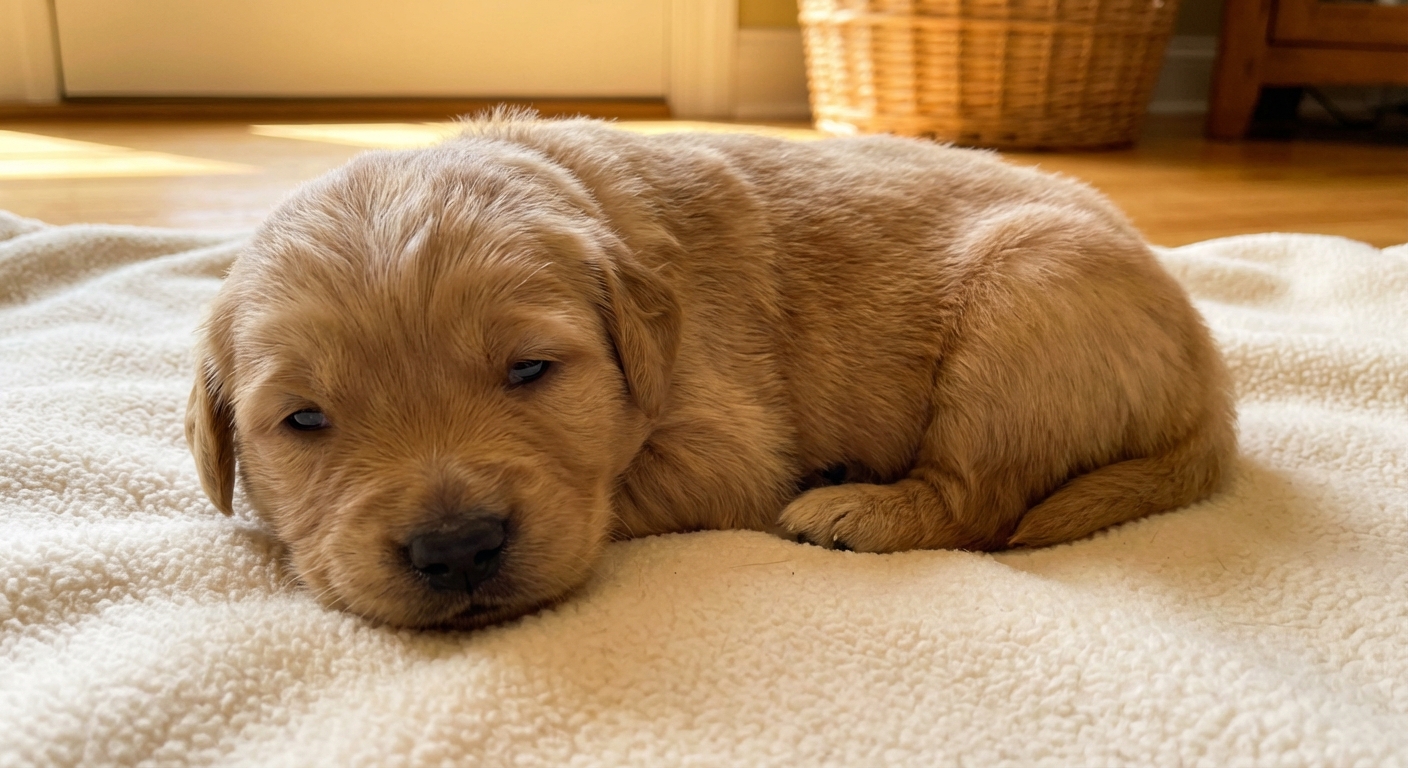
It is normal for one eye to open before the other. Eyes also tend to open gradually, starting as a tiny slit that widens over a couple of days. Some puppies may not have both eyes fully open until closer to 2 to 3 weeks.
What is normal
Newly opened puppy eyes do not look like adult dog eyes yet. Here is what is typical:
- Cloudy or bluish gray appearance at first
- Slow blinking and squinting, especially in brighter rooms
- Limited vision early on. They can sense light and movement before they can truly see details.
You may also notice them turning their heads toward light or wiggling toward mom when she shifts. Vision improves steadily over the next few weeks. Many puppies have noticeably better sight by 4 to 5 weeks, and vision is often closer to functionally “normal” around 6 to 8 weeks, even though development continues beyond that.
Why eyes stay closed
In clinic, I explain it like this: puppies arrive “unfinished” compared to many other mammals. Their nervous system is still wiring up, and their eyes are delicate.
- Protection: Closed eyelids shield the cornea while it matures.
- Development: The retina and optic nerve continue developing after birth.
- Comfort: Early exposure to bright light and irritants can stress and inflame newborn eyes.
When ears open
Puppies’ ear canals are also closed at birth. They often begin to open around:
- 14 to 18 days old (approximate)
Once eyes and ears are opening, you often see a big jump in awareness. Puppies start reacting more to movement and sound, and may startle or scoot toward familiar warmth.
How to help
This is one of those times where doing “less” is often best. A few supportive habits can make a big difference.
Keep lighting soft
Choose gentle indoor lighting. Avoid bright sunlight directly on the whelping area. Puppies will naturally squint, but harsh light can be irritating.
Keep the nesting area clean
Dirty bedding increases the risk of eye irritation and infection. Change bedding often and keep the area warm and dry.
Do not force eyelids open
Never pry a puppy’s eyes open. You can damage the eyelids or cornea and potentially introduce bacteria.
Wash hands before handling
Newborn immune systems are immature. Clean hands reduce the chance of transferring germs that can lead to eye infections.
What is not normal
Some eye issues in young puppies move quickly, so it is smart to get help early. Contact your veterinarian if you notice:
- Swollen eyelids or bulging around the eye area
- Yellow, green, or thick discharge
- Crusting that seals the eyelids shut
- Redness or persistent squinting after the eyes have opened
- A foul odor near the face
- One eye stays closed much longer than the other
- Visible injury or a scratch near the eye
- Eyes still fully closed after 16 days (especially if littermates are open)
One concern we watch for in very young pups is an infection behind closed eyelids (sometimes called neonatal conjunctivitis or ophthalmia neonatorum, and often nicknamed “puppy eye”). This needs veterinary care to prevent eye damage.
Breed and litter differences
There is a normal range. Timing can vary based on:
- Breed and head shape: some breeds mature a bit faster or slower
- Litter and individual variation: pups within the same litter can open at slightly different times
- Overall health and nutrition of mom: good prenatal and nursing nutrition supports steady growth
What matters most is that your puppy is warm, nursing well, gaining weight, and staying clean. Eye opening is one milestone among many.
FAQ
Do puppies go blind if their eyes open late?
Not usually. A slight delay can be normal. The red flags are swelling, discharge, injury, or obvious discomfort. If you are unsure, it is worth a vet check.
Why do puppy eyes look blue?
Many puppies look blue eyed early on because their iris pigment is still developing and because of how light scatters in the young eye. As pigment develops, eye color often shifts over the first couple of months.
Can I clean a puppy’s eyes if there is mild crusting?
If it is minimal, you can gently wipe with a warm, damp cotton pad or sterile saline on a clean pad. If the crusting is heavy, returns quickly, or the eyelids look puffy, call your veterinarian. Avoid using human eye drops or medicated products unless your vet tells you to.
Bottom line
Most puppies open their eyes between 10 and 14 days old, but timing can vary, and some may not be fully open until closer to 2 to 3 weeks. Vision improves gradually over the next few weeks and is often more functional by 6 to 8 weeks. Keep the environment clean, softly lit, and low stress, and never force the eyelids open. If you see swelling, thick discharge, injury, one eye lagging far behind the other, or eyes still closed after about 16 days, a quick call to your vet is the safest next step.