Most puppies open their eyes at 10–14 days. See the full timeline, what cloudy “newborn” eyes look like, how vision improves, and when swelling or disc...
Article
•
Designer Mixes
When Do Puppies Open Their Eyes?

Shari Shidate
Designer Mixes contributor
Puppies are born with their eyes closed, and for good reason. Their eyes, ears, and nervous system are still developing, so nature gives them a quiet, protected start. As a veterinary assistant in Frisco, Texas, I love helping families understand what is normal in those first few weeks and what is not. Once you know the typical timeline, you can relax and simply support your litter or new puppy with gentle, thoughtful care.
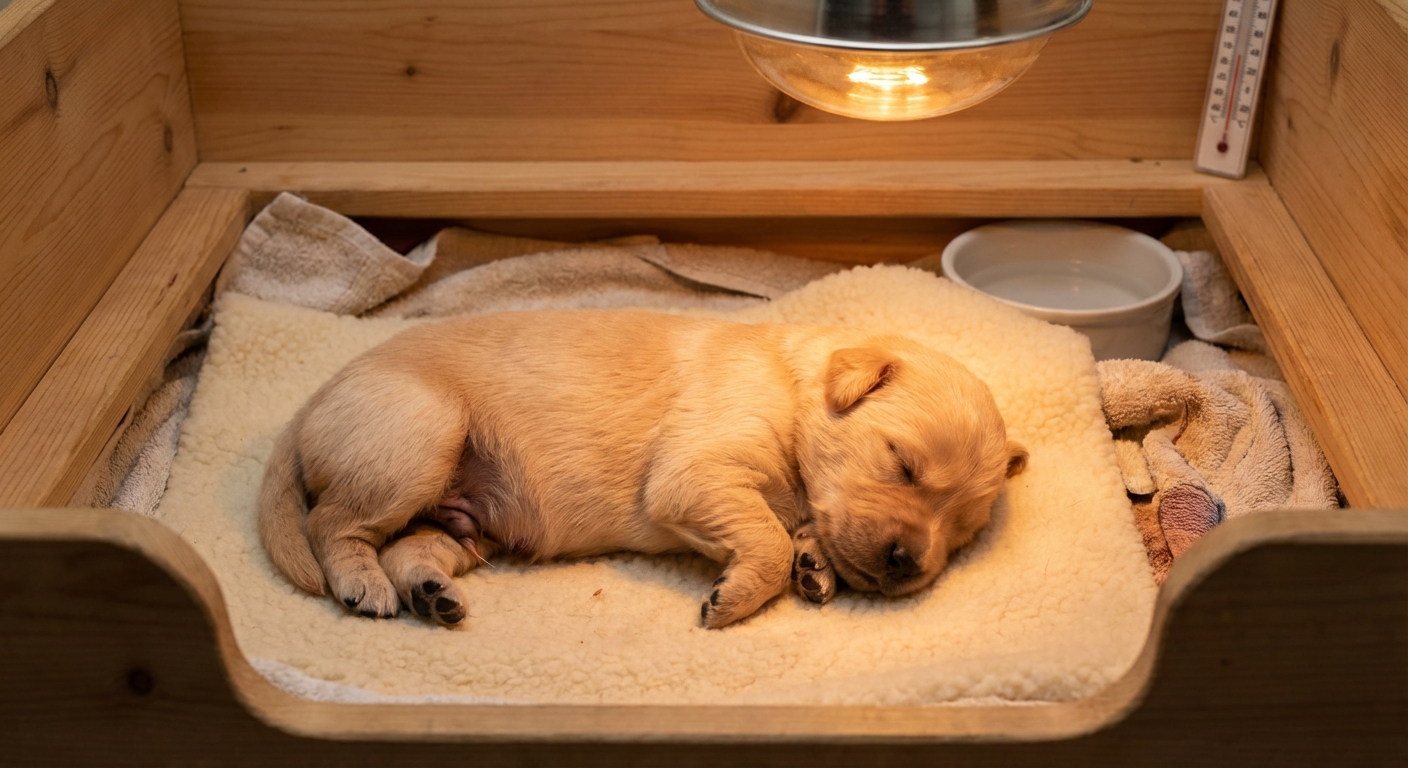
Most puppies open their eyes at 10 to 14 days
In general, puppies begin to open their eyes somewhere around 10 to 14 days old. Some may peek earlier (around day 7 to 10) and some later (up to about 16 days), depending on breed and individual development.
Here is what owners often notice:
- Day 10 to 12: tiny slits at the inner corners of the eyelids, usually one eye before the other
- Day 12 to 14: both eyes gradually open more fully
- Week 3: vision improves, but it is still blurry and light-sensitive
Even when the eyes first “open,” the puppy is not seeing the world clearly yet. Think of it as the lights turning on low, not flipping on bright.
Why puppies are born with their eyes closed
Puppy eyelids are fused at birth to protect delicate, still-forming eye structures. Early exposure to light, dust, or bacteria could irritate or damage developing tissues. Keeping the eyelids sealed helps prevent dryness and infection during those fragile first days.
Another important point: puppies cannot regulate body temperature well early on. So a calm, warm environment is just as crucial as eye development.
Puppy development (week by week)
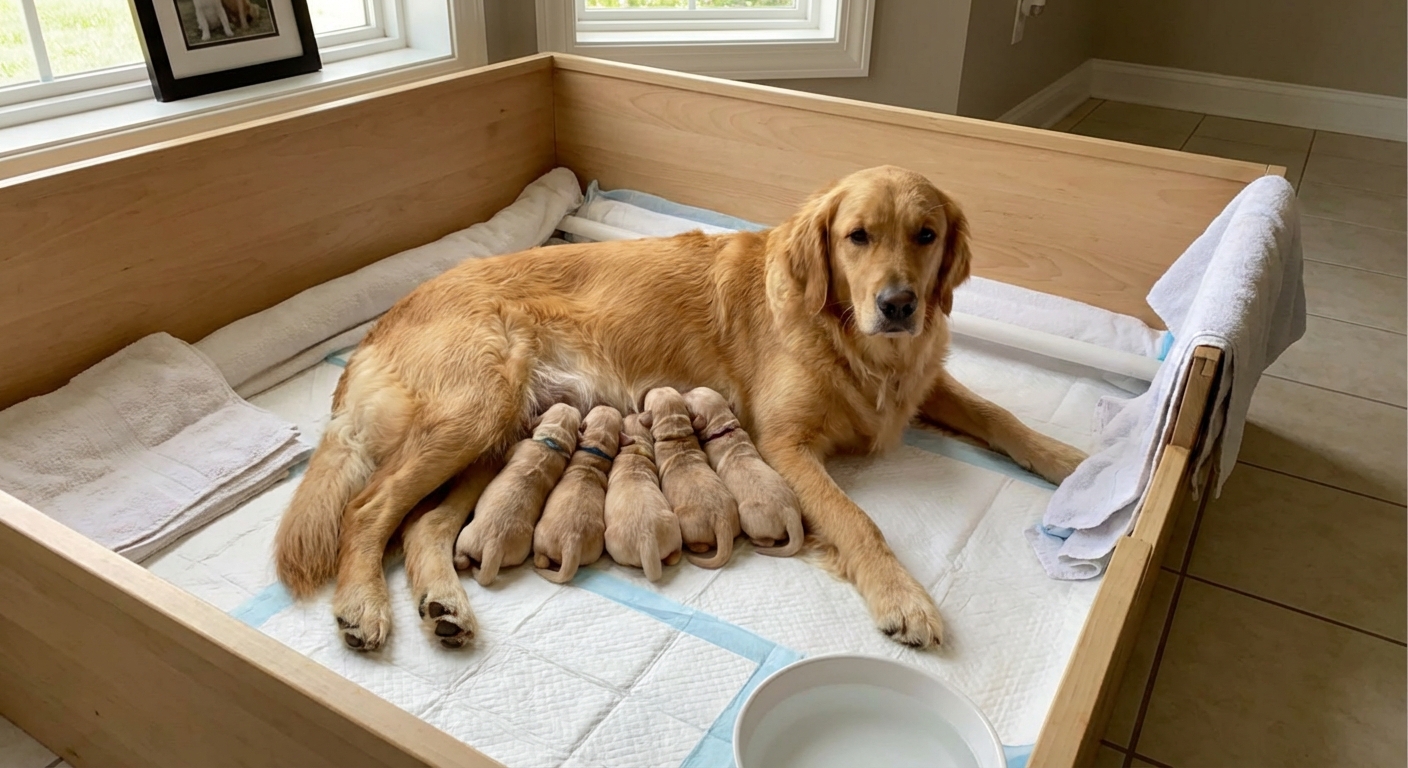
Week 1: Neonatal stage (days 0 to 7)
Puppies spend most of their time sleeping and nursing. They navigate by touch and smell and will root toward warmth and milk. Eyes and ear canals are closed.
- Normal behavior: lots of sleep, strong nursing, gentle squirming
- Care focus: warmth, hydration for mom, clean bedding, minimal handling
Week 2: Eyes begin to open (days 8 to 14)
This is the “peeking” stage. Eyelids start separating and puppies may react to brighter light by turning away. Ear canals also begin opening around this time, and hearing becomes more reliable over the following week.
- What you may see: eyelid slits, mild watery eyes, more wriggling and early attempts to push up
- Care focus: keep the nest area clean and low-dust, avoid bright lights and strong fragrances or powdery cleaners near the whelping area
Week 3: The world gets bigger (days 15 to 21)
Vision improves, hearing is more functional, and puppies start taking their first unsteady steps. This is also when many puppies begin to notice littermates more intentionally.
- What you may see: wobbly walking, more awareness of movement, early play
- Care focus: safe footing (no slick floors), gentle handling, calm exposure to normal household sounds
Weeks 4 to 6: Socialization and learning
Puppies are more mobile, more curious, and more interactive. They begin transitioning to solid food, learn bite inhibition through play, and benefit from positive, gentle introductions to people and appropriate environments. Most puppies have much more functional vision by about 3 to 4 weeks, with continued refinement as they grow.

What eyes should look like
When puppies first open their eyes, you might notice the eyes look:
- Slightly hazy or blue-gray at first (often normal early on), but not thickly opaque
- Slow to focus and sensitive to bright light
- Slightly watery for a short time as they adjust
Over the next few weeks, clarity improves and the eye color may change. Many puppies start with a blue tone that shifts as pigment develops.
When to worry: call your vet
Most eye opening is completely routine, but early eye problems can become serious quickly in a young puppy. Reach out to your veterinarian if you notice any of the following:
- Swelling or bulging of the eyelids
- Yellow, green, or thick discharge
- Crusting that seals the eyelids shut (especially if one eye looks worse than the other)
- Redness around the eye or eyelid margin
- Foul-smelling discharge or skin irritation around the eye area
- Puppy seems painful (crying when touched, rubbing face, restlessness)
- Eyes not open by about 16 days (or there is a big mismatch between littermates)
Important: Do not pry a puppy’s eyes open. If there is infection trapped under the lids, forcing them open can damage the cornea. Let your vet guide the next step.
If your puppy has a flatter face or prominent eyes, such as some brachycephalic breeds , keep an extra-close watch for irritation or discharge and check in early if anything looks off.
How to support healthy eye opening
You do not need fancy products to help a puppy through this stage. The basics matter most:
- Keep bedding clean and dry: reduces bacteria and irritation.
- Maintain a warm, draft-free area: puppies chill easily and stress can impact health.
- Use soft lighting: avoid direct bright lights aimed at the whelping area.
- Handle gently: short, calm sessions help puppies adapt without overstimulation.
- Watch mom’s health: good nutrition, hydration, and a calm environment support the whole litter.
If you see mild crusting, do not use human eye drops, and do not apply ointments or medications unless your veterinarian prescribes them. Call your veterinarian for guidance. In many cases, early treatment is simple, but timing is everything.
Frequently asked questions
Do all puppies open their eyes at the same time?
Not always. It is common for one eye to open first, or for one puppy in a litter to be a day or two ahead of the others.
Can puppies see right away?
No. Their vision starts out blurry and improves over the next couple of weeks. They rely heavily on scent and warmth at first.
Do ears open before eyes?
They usually happen around a similar time, but eyes are often noticed first because it is visually obvious. Ear canals typically open around the second week, and hearing becomes clearer over the following week.
Bottom line
Most puppies open their eyes around 10 to 14 days, and their vision continues developing through week 3 and beyond. Your job is to keep the environment clean, warm, and calm, and to watch for warning signs like swelling, colored discharge, or eyes that stay sealed past about day 16.
If something feels off, trust that instinct and call your veterinarian. Early care can protect a puppy’s vision for life.