
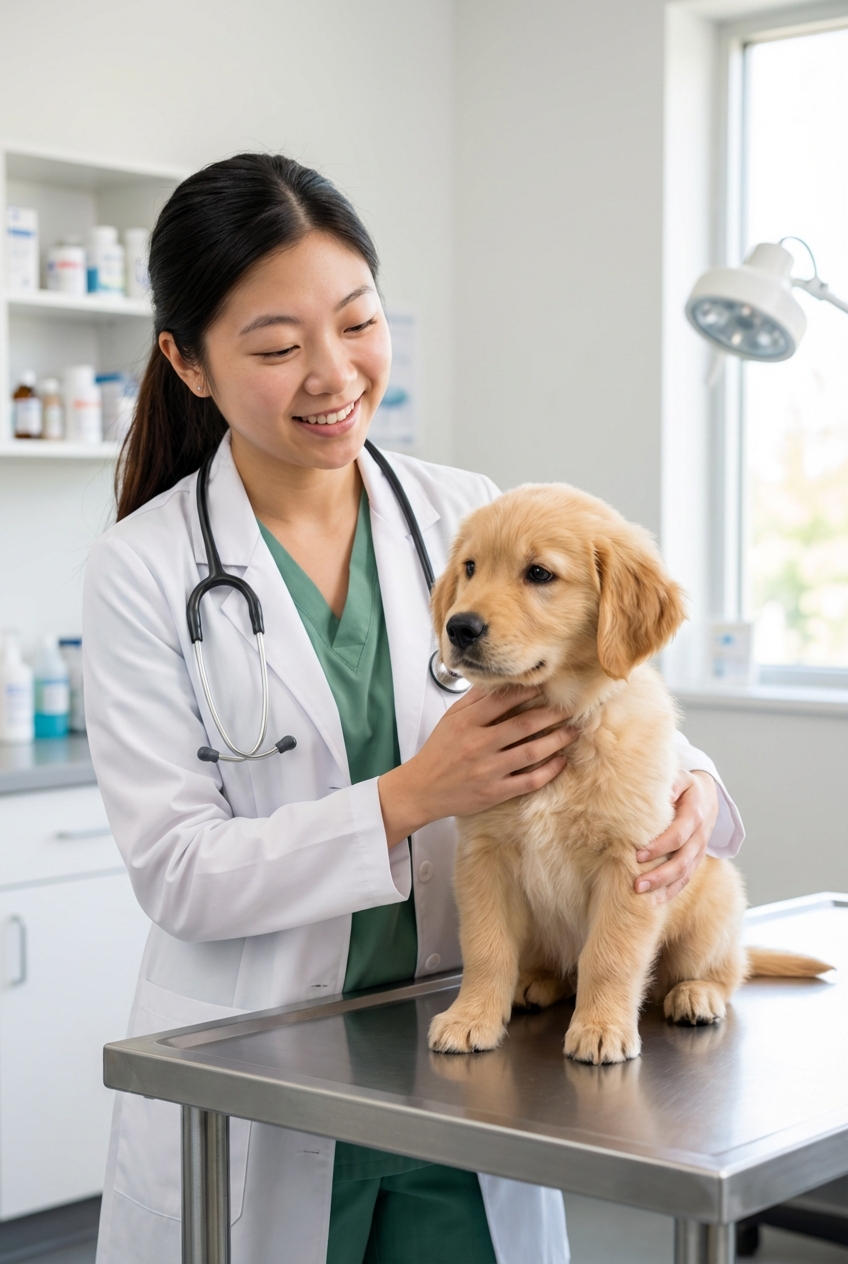
Use this vet-informed puppy vaccine timeline to stay on track with DHPP and rabies, add lifestyle vaccines as needed, and learn safe socialization plus what ...
Article
•
Designer Mixes
When Do Puppies Get Shots?

Shari Shidate
Designer Mixes contributor
Bringing home a puppy is pure joy, until you realize there is a whole medical schedule that comes with that wagging tail. Vaccines are one of the simplest, most evidence-based ways to protect puppies from diseases that can be severe, expensive to treat, or even fatal.
As a veterinary assistant in Frisco, Texas, I love helping new puppy families understand the “why” behind the schedule and how to make shot visits easier on everyone, including your puppy.
Quick note: This article is general education, not a substitute for care from your veterinarian. Vaccine timing and legal requirements can vary by location, product label, and your puppy’s health history.

The quick answer
Most puppies start their vaccine series at 6 to 8 weeks old, then receive boosters every 3 to 4 weeks until they are at least 16 weeks old. After that, most core vaccines move to an adult schedule (often a booster around 1 year, then every 1 to 3 years depending on the vaccine and your veterinarian’s recommendations).
Exact timing can vary based on your puppy’s health, lifestyle, local disease risk, and whether the mother was well-vaccinated and passed along antibodies.
Why puppies need a series
Puppies are born with temporary protection from their mother called maternal antibodies. Those antibodies are helpful early on, but they can also block vaccines from working. The tricky part is that maternal antibodies fade at different rates for different puppies.
That is why veterinarians give a series of boosters. The goal is to “catch” the immune system at the right time, when maternal antibodies are low enough for vaccines to create strong, lasting protection.
Typical puppy vaccination schedule
Below is a general schedule many clinics use. Your veterinarian may adjust it, especially if your puppy starts late or has unknown vaccine history.
6 to 8 weeks
- DHPP (core): distemper, adenovirus (hepatitis), parvovirus, parainfluenza
- Optional by risk: Bordetella (kennel cough) may be started depending on daycare, grooming, training classes, or boarding plans
10 to 12 weeks
- DHPP booster (core)
- Leptospirosis (non-core, often recommended in many areas): first dose if your vet advises it
- Optional by risk: Bordetella booster or second dose depending on product used
14 to 16 weeks
- DHPP booster (core, very important)
- Rabies (core, required by law in many places): commonly given around 12 to 16 weeks depending on local regulations, the vaccine label, and clinic protocol. Your area’s law and the vaccine label set the minimum age and revaccination interval.
- Leptospirosis: second dose if started earlier
12 months (about 1 year)
- DHPP booster
- Rabies booster (timing depends on local law and vaccine label)
- Optional by risk: Leptospirosis, Bordetella, influenza, Lyme boosters depending on exposure and requirements
Important: “Core” means recommended for nearly all dogs because the diseases are serious and widespread. “Non-core” means recommended based on lifestyle and local risk.
Also helpful to know: You may hear the distemper combo called DHPP, DAPP, or DA2PP. The name and exact combo can vary by product and clinic, but the intent is the same: broad protection against the big contagious viruses.
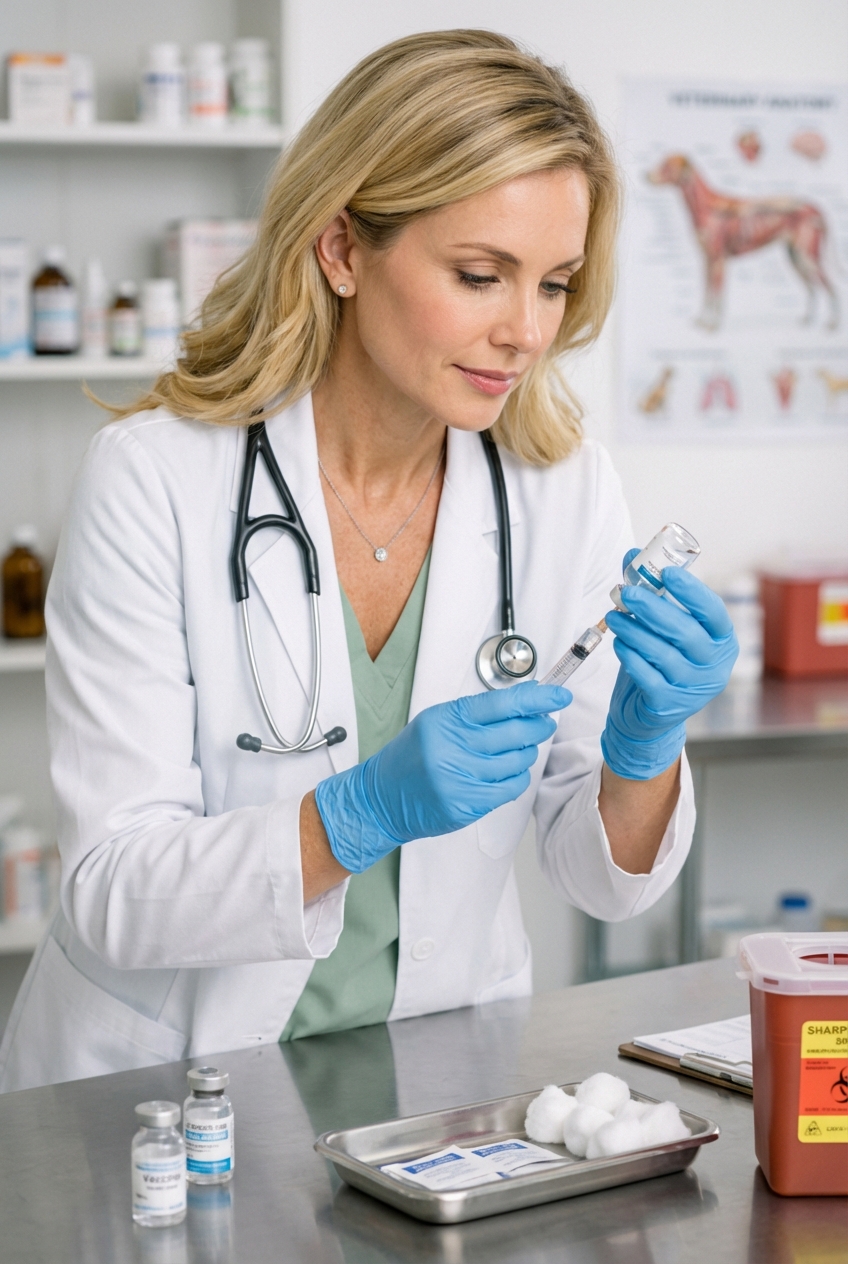
What are the core vaccines?
Distemper combo (DHPP, DAPP, DA2PP)
This combination vaccine protects against multiple highly contagious illnesses, including distemper and parvovirus, plus adenovirus and usually parainfluenza depending on the product.
- Parvovirus: causes severe vomiting and diarrhea, dehydration, and can be deadly, especially in young puppies.
- Distemper: a serious virus that can affect the respiratory system, GI tract, and nervous system.
Rabies
Rabies is fatal once symptoms appear and can spread to people. This vaccine is not just a medical recommendation, it is also a public health requirement in many states and cities. Your veterinarian will follow the vaccine label and your local rules for minimum age and booster timing.
Lifestyle vaccines
These are frequently recommended depending on where your puppy goes and what they do.
Bordetella (kennel cough)
If your puppy will attend daycare, training classes, grooming, boarding, or dog parks, Bordetella is often worth discussing. “Kennel cough” is usually not life-threatening, but it spreads easily and can be miserable for puppies.
What to expect: Some Bordetella vaccines are given as a single initial dose (often oral or intranasal) with boosters on a schedule set by your vet or required by facilities. Injectable Bordetella more commonly needs two initial doses a few weeks apart.
Leptospirosis
Lepto is a bacterial disease that dogs can pick up from wildlife urine and contaminated water or soil. It can cause kidney or liver damage and can also affect humans. In many parts of Texas and across the U.S., veterinarians recommend it more often than they used to.
What to expect: Lepto typically starts as a two-dose series given 2 to 4 weeks apart, then is usually boosted about yearly for ongoing risk (specific timing depends on the product and your vet’s protocol).
Canine influenza
Some areas have outbreaks. If your puppy will be around lots of dogs in close quarters, your veterinarian may recommend it.
What to expect: Canine flu vaccines commonly require a two-dose initial series a few weeks apart, then boosters (often yearly) depending on risk and facility requirements.
Lyme
More relevant in areas with high tick exposure and Lyme prevalence. Your vet will help you weigh the risk.
Care tips for shot visits
Before the appointment
- Bring high-value treats (tiny, soft pieces). Treating during the exam can build a positive association.
- Avoid high-risk dog areas (like dog parks) until 1 to 2 weeks after the final puppy booster (usually given at or after 16 weeks). That is when protection is generally considered more reliable.
- Write down questions such as vaccine brands used, timing, and what is required by your city or county.
After the appointment
- Expect mild sleepiness for 12 to 24 hours. Many puppies nap more after vaccines.
- Watch the injection site. A small lump or tenderness can happen and usually resolves on its own.
- Keep activity gentle for the rest of the day if your puppy seems sore or tired.
- Offer normal meals and water. A slightly reduced appetite for a short time can happen, but most puppies eat normally.

Side effects
Usually normal
- Sleepiness or lower energy for a day
- Mild soreness or a small lump where the vaccine was given
- Temporary decreased appetite
Call your vet right away
- Facial swelling, hives, intense itching
- Vomiting or diarrhea that is repeated or severe
- Labored breathing, weakness, collapse
- Extreme lethargy that does not improve
True allergic reactions are uncommon, but they can happen. Prompt treatment makes a big difference.
Safe socialization
One of the biggest worries I hear is: “If my puppy cannot go everywhere yet, how do I socialize them?” Great question, because the socialization window is real and important.
- Invite healthy, vaccinated adult dogs you trust to meet your puppy in a clean home or yard.
- Carry your puppy in public places so they can see and hear the world without touching high-traffic ground.
- Puppy classes can be a good option when run with vaccine and sanitation requirements. Ask the trainer what their rules are.
- Focus on experiences: different surfaces at home, gentle handling, grooming tools, crate comfort, car rides.
If you do not know vaccine history
This is common with rescues and rehomed puppies. Your veterinarian may recommend treating your puppy as unvaccinated and starting a vaccine series based on age. It is not about “overdoing it.” It is about making sure your puppy is truly protected.
If you miss a booster
Life happens. If you miss a scheduled vaccine visit or your puppy starts late, call your clinic and get back on the calendar. In many cases, your veterinarian can pick up the series rather than “starting over,” but the best plan depends on your puppy’s age, the vaccine type, and how much time has passed.
Other puppy visit basics
Many families are surprised that “shot visits” often include more than vaccines. Your veterinarian will usually talk about deworming, fecal testing, flea and tick prevention, and heartworm prevention based on your puppy’s age and local risk.
Shot records and proof
Keep your puppy’s vaccine paperwork somewhere easy to find. Many daycares, boarding facilities, groomers, and training programs require proof of:
- Rabies
- DHPP
- Bordetella (often)
- Sometimes canine influenza
If you lose the paperwork, your veterinary clinic can usually email or print a copy.
The bottom line
Puppies typically start vaccines at 6 to 8 weeks, then boost every 3 to 4 weeks until 16 weeks (or older in some cases). Those boosters are not “extra.” They are how we help your puppy build reliable immunity during a time when maternal antibodies may still interfere. Immunity is generally considered more dependable about 1 to 2 weeks after the final puppy booster.
If you tell your veterinarian where your puppy will spend time, like dog parks, daycare, hiking trails, or a quiet homebody lifestyle, they can tailor the plan so your puppy stays protected without guessing.