A practical, week-by-week newborn kitten care guide for pet owners—set up a safe warm nest, bottle-feed KMR correctly, stimulate pottying, track weight dai...
Article
•
Designer Mixes
When Do Kittens Open Their Eyes?

Shari Shidate
Designer Mixes contributor
One of the sweetest (and most nerve-wracking) parts of raising newborn kittens is waiting for that first sleepy blink. If you are caring for a litter at home, knowing what is typical can help you relax and spot problems early. As a veterinary assistant, I always tell new kitten caregivers: early development happens fast, but it is not identical for every kitten.
Quick note: This article is educational and not a substitute for veterinary care. If you are worried about a kitten, especially a very young one, a prompt call to your veterinarian is the safest next step.
When kittens open their eyes
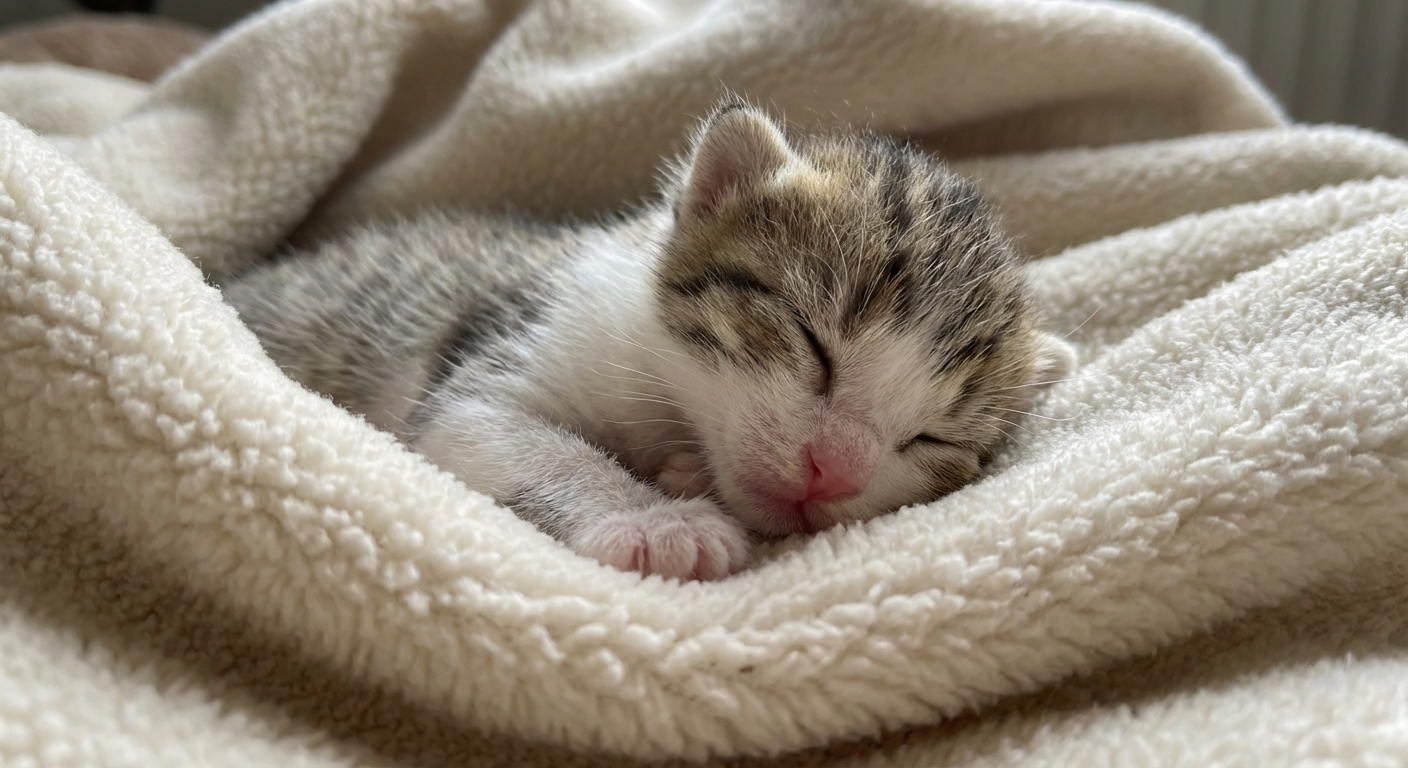
Most kittens start to open their eyes between 7 and 14 days old. Many open closer to 7 to 10 days, with some taking up to (or slightly beyond) two weeks. It often begins as a tiny slit at the inner corner of the eye, then gradually widens over a few days.
- Typical range: 7 to 14 days (sometimes a little later)
- Not always together: one eye may open 1 to 2 days before the other
- Fully open: many kittens have both eyes open by about 2 weeks, but a few take longer
Even after the eyes open, vision is still developing. Newborn kittens are not ready to explore safely yet, and their eyes can be sensitive while they adjust to light.
What kitten eyes look like
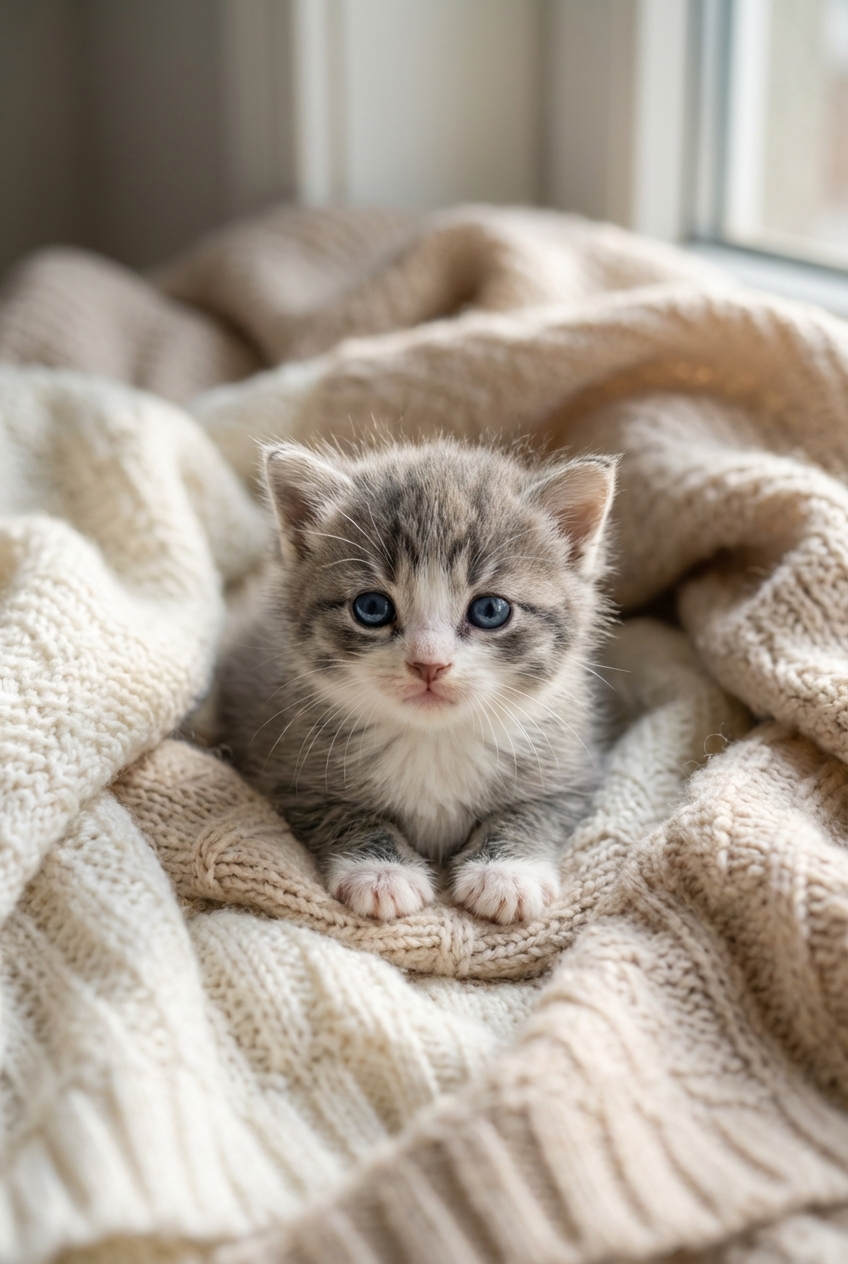
When kittens first open their eyes, they almost always appear blue or blue-gray. That is normal. Eye color typically begins to change around 6 to 8 weeks, and many kittens settle into their adult color by 3 to 4 months. Some continue changing longer, sometimes up to 6 to 12 months depending on the cat.
Why kittens are born with closed eyes
Kittens are born underdeveloped compared to many other mammals. Closed eyes help protect delicate tissues while the eyes and nervous system mature. The eyelids stay sealed while the surface of the eye and the tear system finish developing.
This is also why it is so important to keep newborns in a warm, calm space. Their bodies are doing a lot of growing in a very short period of time.
Early milestones (week by week)
Week 1 (0 to 7 days)
- Eyes and ear canals are closed
- They sleep most of the day and nurse frequently
- They cannot regulate body temperature well, so warmth is essential
- Healthy kittens should gain weight daily
Week 2 (8 to 14 days)
- Eyes begin opening
- Ear canals start to open and they respond more to sound
- They may start tiny, wobbly crawling and kneading
Week 3 (15 to 21 days)
- Improving vision and hearing
- First attempts at standing and walking, still very unsteady
- Baby teeth begin to emerge
- They start to eliminate more independently (though some still need help if orphaned)
Week 4 (22 to 28 days)
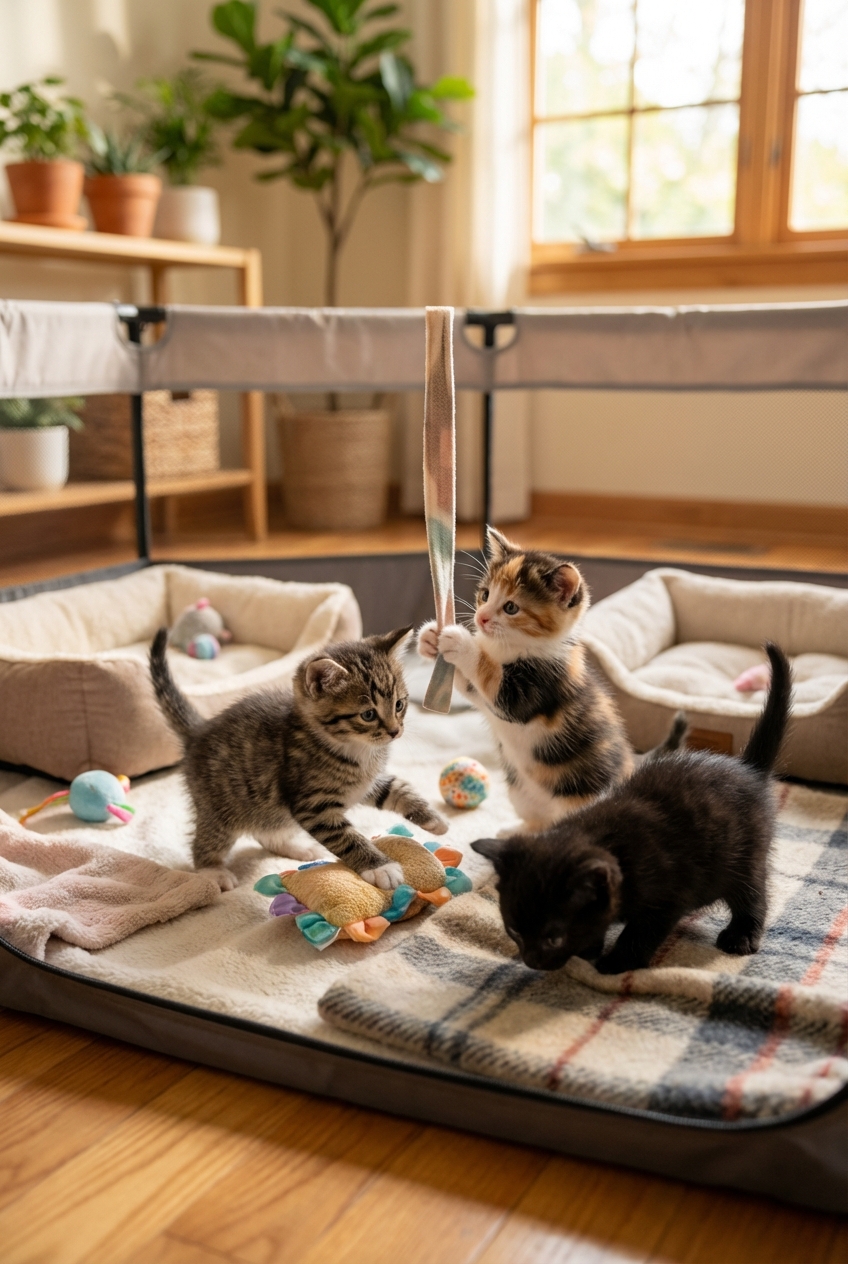
- More coordinated walking and play
- Interest in soft food begins, though nursing is still important
- Social behaviors increase, including play-fighting and grooming
Care when eyes open
The eye-opening window is a sensitive time. Here are simple, practical ways to protect those developing eyes.
- Keep lighting soft. Avoid bright lamps or direct sunlight in the nesting area.
- Do not pry eyelids open. Let them open naturally. Forcing them can cause injury.
- Keep bedding clean and dry. Dirty bedding increases the risk of eye infection.
- Reduce dust and drafts. Avoid strong airflow and dusty litter or bedding that can irritate eyes.
- Wash hands before handling. Newborns have fragile immune systems.
- Monitor weight and hydration. Steady weight gain is one of the best signs things are going well.
What is not normal
A small amount of crusting can happen as eyelids separate, but discharge can also be an early sign of infection (including conjunctivitis or an upper respiratory infection). Because kitten eye issues can worsen quickly, it is smart to monitor closely and involve your veterinarian early.
Call a vet promptly if you notice:
- Thick yellow or green discharge
- Swelling, significant puffiness, or bulging around the eye
- One or both eyes still sealed by about 2 weeks, especially if there is swelling or discharge (some late openers can be OK if the lids look normal and the kitten is thriving)
- Redness, cloudiness, or a blue-white haze on the surface of the eye
- Constant squinting or obvious pain
- Crusting plus lethargy, poor nursing, or failure to gain weight
What does “promptly” mean? For young kittens, think the same day when possible, or within 24 hours, especially if there is swelling, colored discharge, or a kitten that is not nursing well.
Seek emergency care now if:
- The eye is bulging or severely swollen
- There is trauma (scratches, punctures, a fall, or something stuck in the eye)
- A kitten is suddenly very weak, cold, struggling to breathe, or refusing to nurse
Please avoid home remedies like homemade saline, herbal rinses, or leftover human eye drops. Some products can irritate the eye or be unsafe for kittens. Only use sterile products your vet specifically approves (including store-bought saline), and never try to force eyelids apart to “clean under them.”
If you see signs of a respiratory illness like sneezing or nasal discharge, ask your vet about next steps. These infections can spread through a litter, so minimizing close contact between sick and well kittens may be recommended depending on age and situation.
Quick FAQ
Can kittens open their eyes at 5 days?
It is uncommon, but not impossible for a kitten to start earlier than 7 days. If the eyes look irritated, swollen, or stuck, check in with your veterinarian.
Is it normal if one eye opens before the other?
Yes. A 1 to 2 day difference is common. If one eye stays closed more than 2 days longer than the other, or there is swelling or discharge, it is worth a vet call.
Are kittens blind when their eyes first open?
They can see some light and movement, but vision is blurry at first. Coordination and depth perception take time to develop.
Gentle takeaway
Most kittens open their eyes between 7 and 14 days, and those first blue peeks are just the beginning of a busy month of growth. Keep their space warm, clean, draft-free, and softly lit, and trust your instincts. If something looks off, especially discharge, swelling, or a kitten that is not thriving, your veterinarian can help quickly and safely.