Cats don’t need veggies, but small portions of the right ones can add fiber and moisture. See cat-safe options, serving sizes, prep tips, and veggies to av...
Article
•
Designer Mixes
What Veggies Can Cats Eat? (Printable List)

Shari Shidate
Designer Mixes contributor
Cats are obligate carnivores, which means their bodies are built to thrive on animal-based protein and fat. But that does not mean a little vegetable is “bad.” In the right form and portion, certain vegetables can be a safe, fiber-rich topper that may support digestion and hydration. If you use veggies instead of higher-calorie treats, they can also help some cats feel fuller, but overall calorie control matters most.
In this guide, I will walk you through cat-safe vegetables, how to prep them, which ones to avoid, and a printable list you can save. If your cat has diabetes, kidney disease, food allergies, urinary issues, or is on a prescription diet, check with your veterinarian before making dietary changes.
Quick rules for feeding vegetables to cats
- Keep it tiny: Vegetables are treats or toppers, not a meal. A common starting point is 1 to 2 teaspoons for most cats (up to 1 tablespoon for larger cats) a few times per week.
- Stick to the 10% rule: Treats and toppers (including veggies) should make up no more than about 10% of daily calories.
- Cooked is usually best: Lightly steaming or boiling makes veggies easier to digest. Many cats struggle with raw, fibrous plants and may vomit or get diarrhea.
- Plain only: No butter, oil, salt, seasoning blends, garlic, onion, or sauces.
- Introduce slowly: Start with a pea-sized amount and watch stool, appetite, and vomiting for 24 to 48 hours.
- Cut small: Reduce choking risk, especially for crunchy vegetables like carrots.
Printable list: cat-safe vegetables
These vegetables are commonly considered safe for healthy cats when served plain and in small portions. Individual tolerance varies, so your cat might love one and ignore another.
Best beginner vegetables
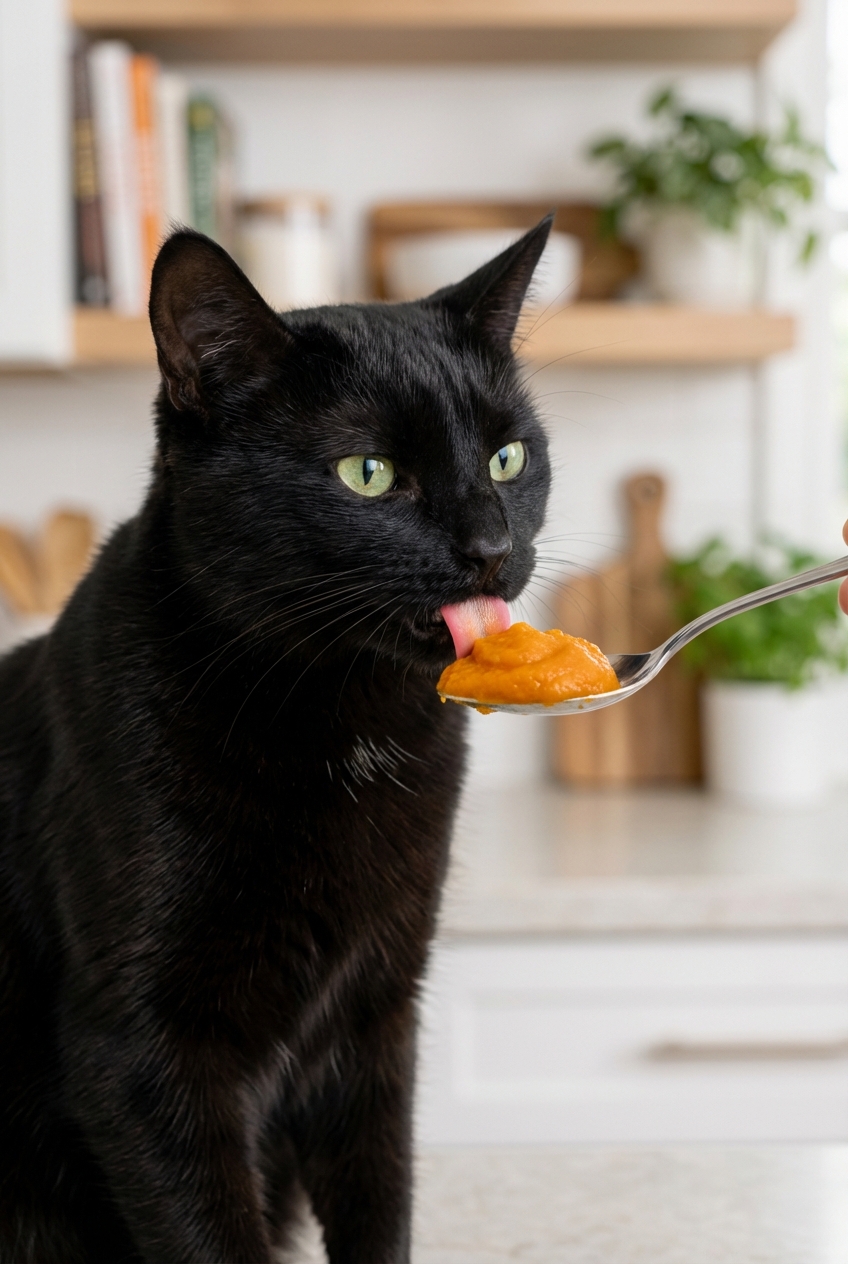
- Cooked pumpkin (plain): Great for fiber. Use plain pumpkin, not pie filling.
- Cooked carrots: Soft-cooked and chopped or mashed.
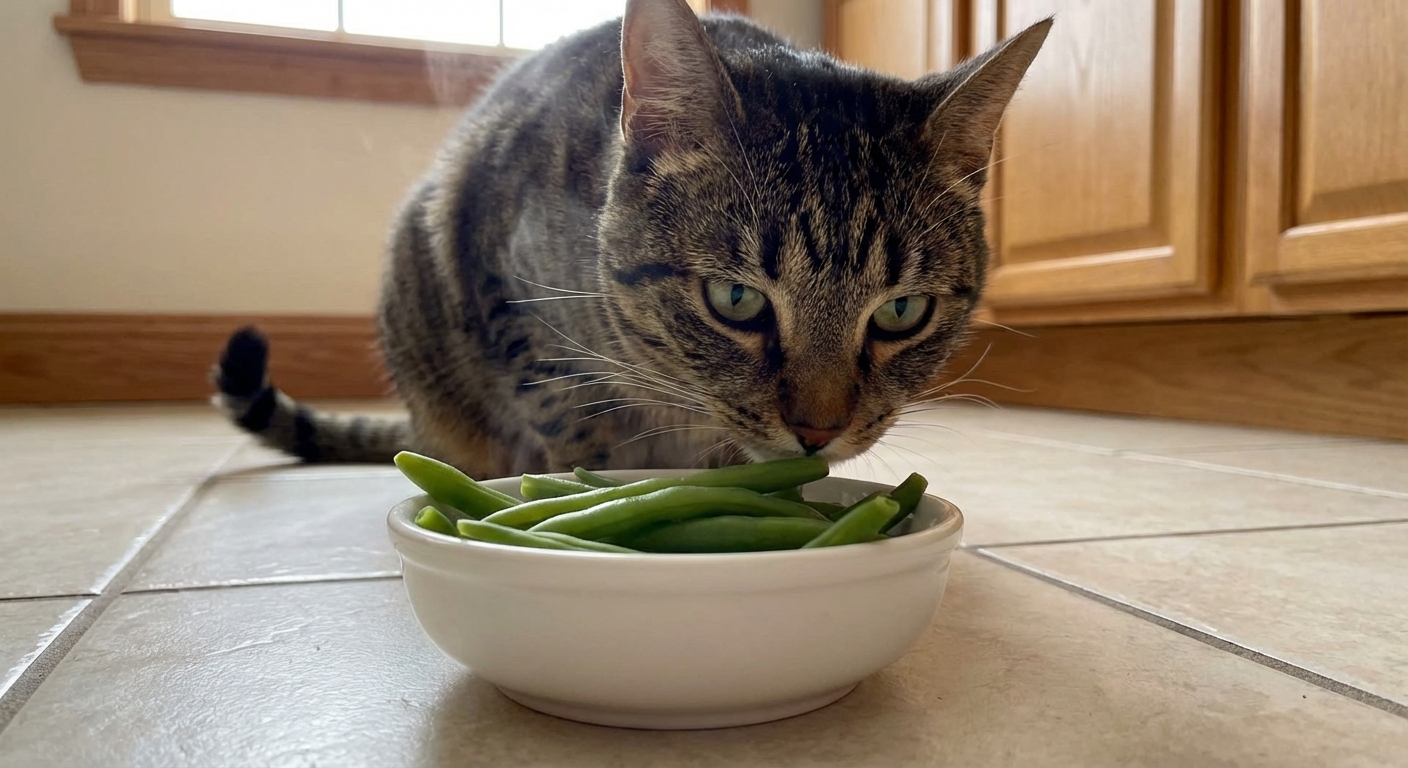
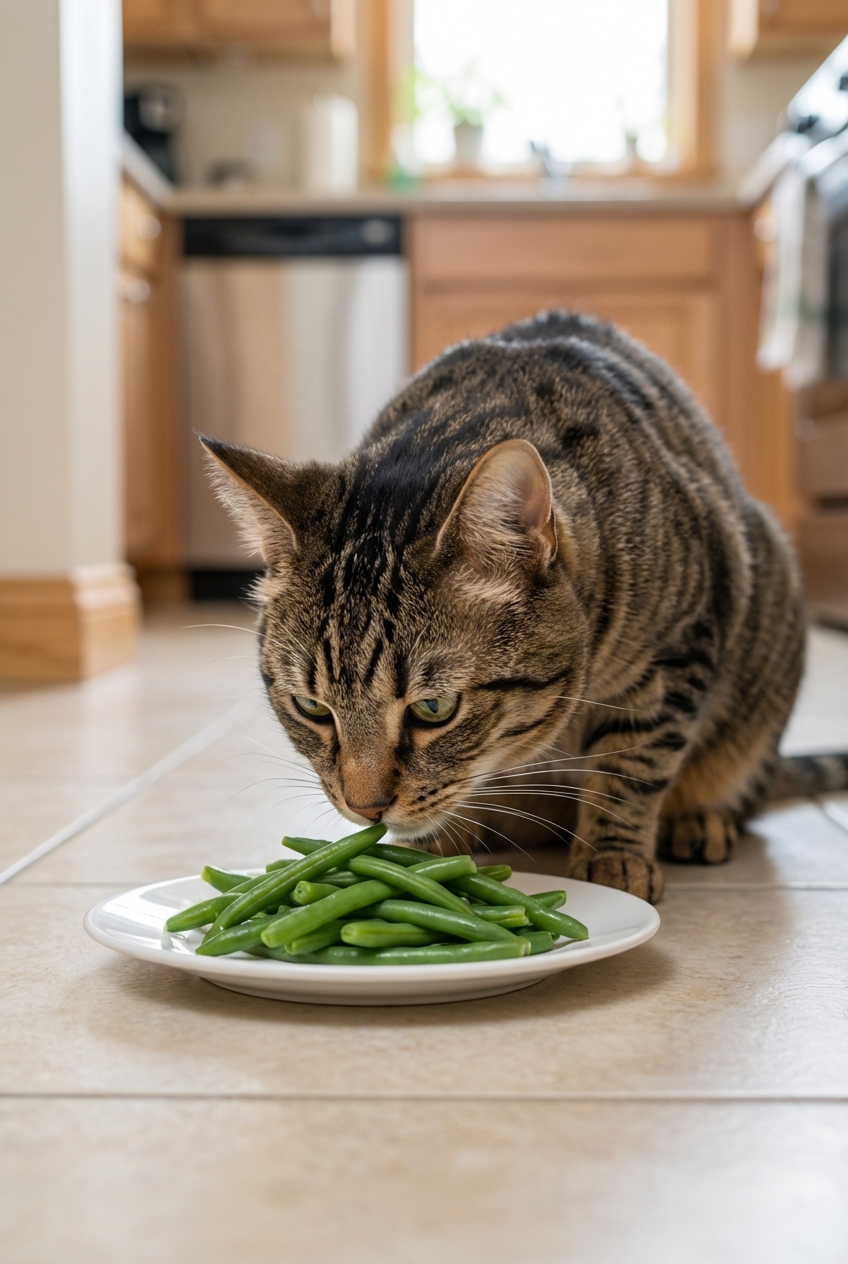
- Cooked green beans: Soft, plain, cut into small pieces.
- Cooked peas: A few peas mashed into food can be a simple topper.
Other cat-safe vegetables (serve cooked, plain)
- Squash: Zucchini or yellow squash, cooked and soft.
- Sweet potato: Cooked thoroughly, mashed, no skin, tiny portions.
- Broccoli: Steamed florets in very small amounts.
- Cauliflower: Steamed, chopped, small amounts.
- Asparagus: Cooked until soft, cut small.
- Cucumber: A thin slice or two is fine for some cats, but many do better with cooked vegetables.
- Lettuce: A few small pieces can be okay, but it is not very nutrient-dense for cats.
- Spinach: Not a great default choice. Only offer a tiny amount to healthy cats, and skip it if your cat has kidney disease or a history of calcium oxalate stones (see cautions below).
“Sometimes” vegetables
- Cabbage: Cooked only, tiny amounts, can cause gas.
- Brussels sprouts: Cooked only, very small amounts, often gassy.
- Kale: Tiny portions, cooked, may not agree with sensitive stomachs.
Printable version (copy and save)
CAT-SAFE VEGETABLES (PLAIN, SMALL AMOUNTS)

Great starters:
- Pumpkin (plain)
- Carrots (cooked)
- Green beans (cooked)
- Peas (cooked)

Also safe for many cats:
- Zucchini / yellow squash (cooked)
- Sweet potato (cooked)
- Broccoli (steamed)
- Cauliflower (steamed)
- Asparagus (cooked)
- Cucumber (small amount)
- Lettuce (small amount)

Use caution:
- Spinach (skip for kidney disease or calcium oxalate stone history)

Sometimes (more gas risk):
- Cabbage (cooked)
- Brussels sprouts (cooked)
- Kale (cooked)
Vegetables cats should not eat
Some vegetables and plant foods are genuinely dangerous for cats. This is not a complete list of every risky food, but these are some of the most important ones to avoid.
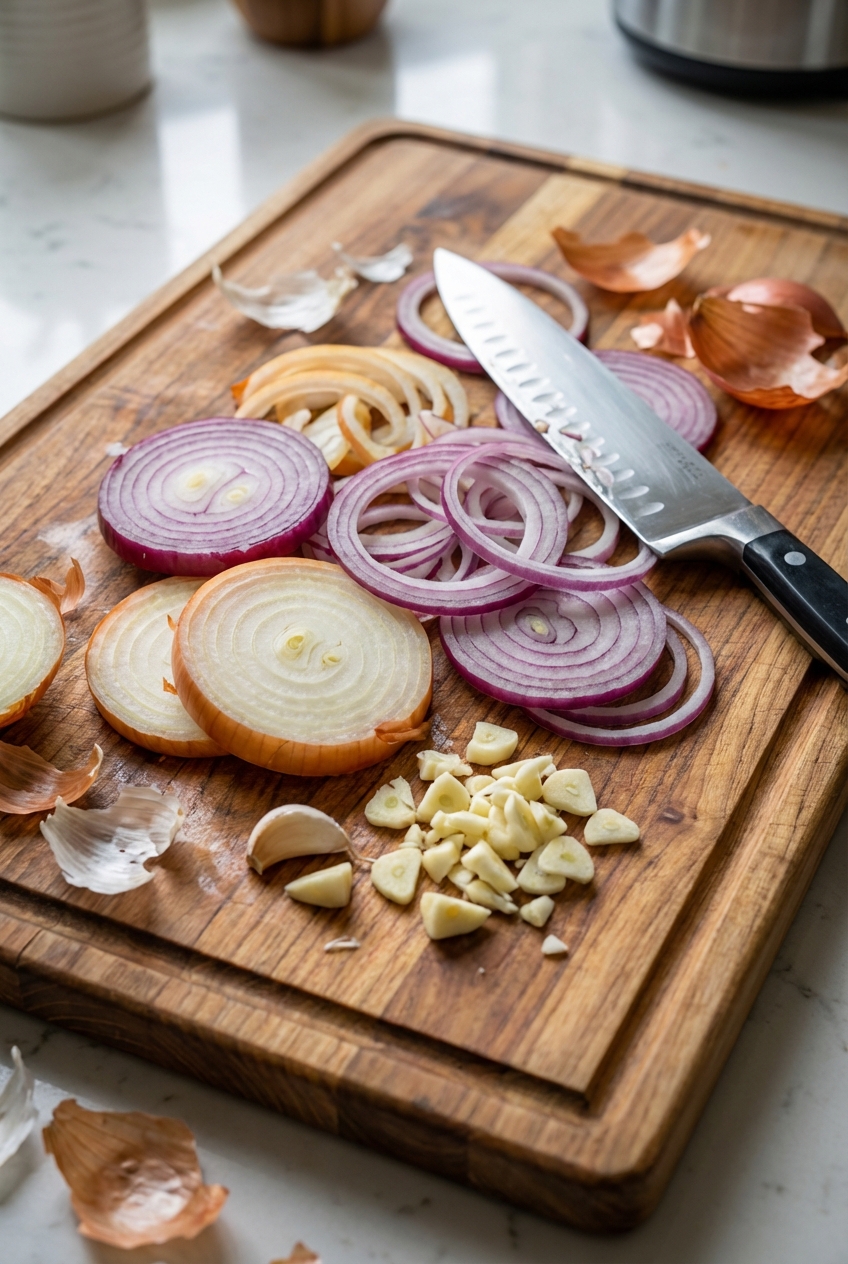
Alliums (toxic)
- Onions (all forms including powder)
- Garlic (all forms including powder)
- Chives
- Leeks
- Shallots
These are part of the allium family and can damage red blood cells, leading to anemia. Even small amounts over time can be a problem, and concentrated powders are especially risky.
Other common kitchen risks
- Green (unripe) tomatoes and tomato leaves and stems (can contain solanine)
- Potato leaves and stems, and green potatoes (solanine risk)
- Wild mushrooms (not a vegetable, but commonly asked about, and many can be dangerous)
- Pickled or highly seasoned vegetables (salt, spices, onion and garlic additives)
- Raw bread dough (not a vegetable, but a serious kitchen hazard)
How to prepare vegetables for cats
Best cooking methods
- Steam: Softens fiber while preserving nutrients.
- Boil: Fine for many vegetables, just drain and cool.
- Bake: Great for sweet potato and squash. Serve plain and soft.
Serving tips cats actually like
- Mash and mix a teaspoon into wet food.
- Warm slightly (not hot) to increase aroma.
- Add moisture with a spoon of warm water or unsalted broth made without onion or garlic.
Skip: butter, oils, salt, seasoning blends, cheese sauces, pickling brine, and anything labeled “garlic flavor” or “onion powder.”
Portion guide and frequency
Think of vegetables like a small add-on, not a replacement for a complete and balanced cat food. Cats have limited ability to use plant nutrients, so the goal here is mostly fiber and moisture, not “more vitamins.”
- Small adult cats: about 1 teaspoon, 2 to 3 times per week
- Average adult cats: about 1 to 2 teaspoons, 2 to 3 times per week
- Large cats: up to 1 tablespoon, a few times per week
Adjust based on your cat’s size, diet, and stool quality, and keep toppers within about 10% of daily calories. If your cat gets loose stool, gas, or vomiting, stop the vegetable and return to their normal diet. If symptoms persist, call your veterinarian.
Extra cautions
Vegetables seem simple, but certain medical conditions change the rules.
- Kidney disease or urinary crystals: Ask your vet before adding frequent plant toppers. This is especially true for higher-oxalate foods like spinach.
- Diabetes or weight loss plans: Even vegetables have carbohydrates. Portion and consistency matter.
- History of calcium oxalate stones: Your vet may advise avoiding higher-oxalate foods like spinach.
- Food allergies or IBD: Simple diets are often part of treatment. Additions can trigger flare-ups.
- Prescription diets: Do not add extras unless your veterinarian says it is OK.
Cats cannot be made vegetarian safely. If you are feeding a homemade diet as the main diet, it needs to be formulated to be complete and balanced for cats. Vegetables cannot “round out” missing nutrients.
If your cat ate something unsafe
If your cat ate onion, garlic, a toxic plant, or an unknown food, contact your veterinarian right away. If you are in the US, you can also call ASPCA Animal Poison Control (888-426-4435) or Pet Poison Helpline (855-764-7661). Fees may apply.
Seek urgent help if you notice signs like repeated vomiting, lethargy, drooling, diarrhea, trouble breathing, collapse, or pale gums.
FAQ
Do cats need vegetables?
No. Cats do not require vegetables the way humans do. But small amounts of the right vegetables can add fiber and moisture, which may help some cats with hairballs or constipation.
Is pumpkin good for cats?
Plain pumpkin is one of the most popular vet-recommended fiber add-ons. Start with 1/2 teaspoon mixed into wet food and see how your cat responds.
Can cats eat raw vegetables?
Some can, but many cats digest cooked vegetables better. If you offer raw, keep portions tiny and monitor for vomiting or diarrhea.
Bottom line
Your cat does not need vegetables to thrive, but a little plain, cooked pumpkin, green beans, carrots, or peas can be a safe topper for many healthy cats. Keep portions small, introduce slowly, keep toppers to about 10% of daily calories, and avoid alliums like onion and garlic completely.