Skip mystery ingredients and bake simple veggie dog treats at home. Learn dog-safe vegetables, easy formulas, and 3 recipes—pumpkin oat crunch, sweet potat...
Article
•
Designer Mixes
What Vegetables Can a Puppy Eat

Shari Shidate
Designer Mixes contributor
As a veterinary assistant here in Frisco, Texas, I get this question all the time: which vegetables are actually safe for puppies, and how do you serve them without causing tummy trouble? The good news is that many veggies can be a wonderful, whole-food topper or training treat for a growing pup when you introduce them slowly and prepare them the right way.
Vegetables are not meant to replace a complete puppy food (or a properly balanced homemade plan). Think of them as a nutrient-rich add-on that can support digestion, add fiber, and help your puppy learn to enjoy real foods.
Before you start: puppy safety notes
Puppies have sensitive digestive systems, and they are still growing fast. Keep these basics in mind:
- Make puppy food the “main course.” Treats and toppers (including veggies) should generally stay under about 10 percent of daily calories. This is a common veterinary guideline, but your vet may adjust it based on your puppy’s size, breed, and health.
- Go slow. Start with one vegetable at a time so you can spot gas, loose stool, or itching.
- Cook is often easier. Many puppies digest lightly steamed or boiled veggies better than raw, especially at first.
- Skip seasoning. No salt, onion powder, butter, spicy oils, or sauces.
- Cut small. Puppies can choke easily, so chop or mash into tiny pieces.
- Extra caution for some pups. If your puppy has a history of GI upset, food allergies, pancreatitis, urinary issues, or is very small or brachycephalic, check with your veterinarian before adding new foods.
How to introduce vegetables
Step 1: Pick one gentle veggie
Start with a mild option like steamed carrots or cooked green beans.
Step 2: Prepare it simply
Steam, boil, or bake until soft. For many puppies, a softer texture is easier to tolerate than crunchy raw vegetables.
Step 3: Offer a tiny portion
For most puppies, begin with 1 to 2 teaspoons per day mixed into their normal food (or a few pea-sized pieces as a treat), staying mindful of the overall treat calorie guideline.
Step 4: Watch the poop and the pup
Over the next 24 to 48 hours, look for vomiting, diarrhea, straining, excessive gas, or unusual itching. Also watch appetite and energy. If you see concerning signs, stop that veggie and talk to your veterinarian.
Step 5: Build variety gradually
If your puppy does well, you can keep that veggie in rotation and try a new one a few days later. Variety can help broaden nutrient exposure and reduce the risk of picky eating.
Best vegetables for puppies
These vegetables are commonly well tolerated when cooked and served plain:
- Carrots (steamed or lightly cooked): crunchy can be fun for older pups, but start soft to reduce choking risk and stomach upset.
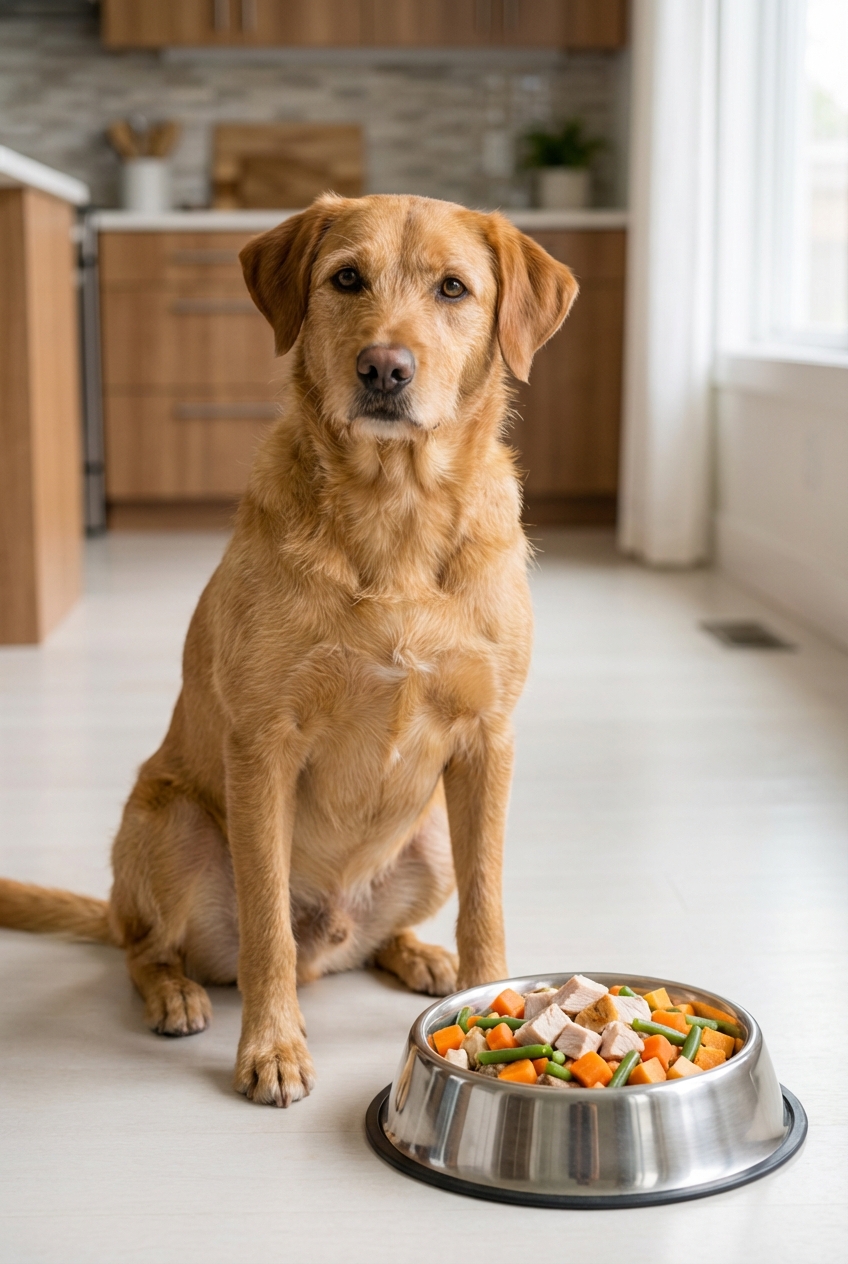
- Green beans (steamed): low calorie and simple, often used as a topper.
- Sweet potato (baked or steamed): soothing and fiber-rich. Serve in small amounts.
- Pumpkin (plain cooked or canned 100% pumpkin): commonly used to support stool quality. Avoid pumpkin pie filling.
- Zucchini (steamed): mild taste, easy on many stomachs.
- Celery (cooked or raw, very finely chopped): generally safe, but the strings can be a choking hazard if pieces are too big.
- Cucumber (peeled, small pieces): hydrating and crunchy, but introduce slowly and watch for loose stool.
- Asparagus (cooked, chopped): generally safe, but can be a little harder on some stomachs, so keep portions small.
Veggies to limit
Some vegetables are not “bad,” but they can be harder for puppies to handle or are easy to overdo:
- Peas (cooked): fine in small treat or topper portions. I do not recommend using peas or other legumes as a major diet ingredient for puppies unless your veterinarian specifically advises it.
- Broccoli (lightly steamed): nutritious, but can cause gas. Keep portions tiny.
- Cauliflower (steamed): similar to broccoli, small amounts only due to gas potential.
- Brussels sprouts and cabbage (cooked): can be very gassy. Tiny portions only.
- Leafy greens (kale, chard): can be fine cooked and in small amounts, but too much may trigger gas or stomach upset.
- Spinach (cooked): okay in small amounts, but not an everyday staple for all puppies. If your puppy has urinary or kidney concerns, ask your veterinarian before offering spinach due to oxalates.
- Corn: not toxic, but not very nutrient-dense and can be hard to digest. Skip corn cobs entirely (high obstruction risk).
- Bell peppers: safe, but the skin can be tough. Cook and chop very small.
- Beets: safe in small amounts but can cause red-tinted stool that worries people.
Vegetables puppies should not eat
These are the ones I am strict about in clinic conversations because the risks are real:
- Onions (all forms, including cooked, dehydrated, and powder): can damage red blood cells.
- Garlic (especially concentrated forms): safety depends heavily on dose, and puppies are more sensitive. For puppy care tips, I recommend avoiding garlic unless your veterinarian gives specific guidance.
- Leeks, chives, scallions: same concern as onion.
- Wild mushrooms: some are highly toxic and it is not worth the gamble.
- Unripe green tomatoes and tomato plant parts: can cause GI and neurologic signs. Ripe red tomato flesh is generally considered non-toxic in small amounts, but avoid stems and leaves.
- Raw potato and green potato (and potato sprouts): can contain solanine, which is unsafe. Plain cooked white potato is typically fine in small amounts, but it is not something I would make a regular puppy staple.
- Hot peppers: not toxic in the classic sense, but can cause pain and GI upset.
If your puppy gets into any of the above, call your veterinarian or a pet poison hotline right away.
Portion sizes
Most puppy veggie trouble comes from too much too fast. These are starting daily portions for most healthy puppies, still keeping treats and toppers to roughly 10 percent of daily calories:
- Tiny puppies (under 10 lb): start with 1 teaspoon once daily, or a few pea-sized bites.
- Small to medium puppies (10 to 30 lb): start with 1 to 2 teaspoons once daily.
- Larger puppies (over 30 lb): start with 1 tablespoon once daily.
If all goes well, you can gradually increase. If stools soften, scale back.
Best ways to serve veggies
Steamed and chopped
This is the easiest, most reliable method for puppies. Steam until soft, cool fully, then chop tiny.
Mashed into their meal
Mash sweet potato, pumpkin, or zucchini and mix a spoonful into kibble or a balanced wet diet.
Frozen enrichment (safer options)
For teething pups, I prefer freezing veggies in formats that reduce choking and tooth risk, like a thin layer of pumpkin on a lick mat, or a small amount of puree in a Kong-style toy. Supervise closely.
Lick mat topper
Spread a thin layer of plain pumpkin or mashed sweet potato on a lick mat for enrichment. Keep it thin so you do not overfeed.
Signs a veggie is not agreeing
Stop the veggie and check in with your veterinarian if you notice:
- Repeated vomiting
- Diarrhea lasting more than 24 hours
- Swollen face, hives, or intense itching
- Straining to poop or signs of abdominal pain
- Lethargy, reduced appetite, or refusal to eat
Most mild tummy upsets improve quickly once the new food is removed, but puppies can dehydrate faster than adult dogs, so do not wait too long if symptoms are significant.
Quick tips
- Keep a simple food journal. Write down the veggie, amount, and your puppy’s stool quality for 2 days.
- Use veggies as training rewards. Tiny bits of steamed carrot or green bean can be a lower-calorie treat for some pups.
- Balance matters more than perfection. A complete puppy diet provides the core nutrition. Veggies are the supporting cast.
- When in doubt, ask. If your puppy is very small, brachycephalic, prone to GI issues, or has a medical condition, ask your veterinarian before adding new foods.
Warm takeaway: start with one soft, cooked veggie, offer a tiny amount, and let your puppy’s digestion guide the next step. Slow and steady wins here.