A compassionate, vet-informed guide to coping after losing a dog—what grief can feel like, handling guilt after euthanasia, memorial ideas, helping kids an...
Article
•
Designer Mixes
What to Say When Someone’s Dog Dies

Shari Shidate
Designer Mixes contributor
Losing a dog can feel like losing a family member, because for most of us, that is exactly what it is. If you are here because you want to comfort someone and you are afraid of saying the wrong thing, that already tells me your heart is in the right place.
As a veterinary assistant in Frisco, Texas, I have seen how deep this grief runs, and I have also seen what helps most: simple, sincere support that honors the bond. This guide gives you specific phrases to use, what to avoid, and how to show up in a way your friend will actually feel.
First, what grief after pet loss can look like
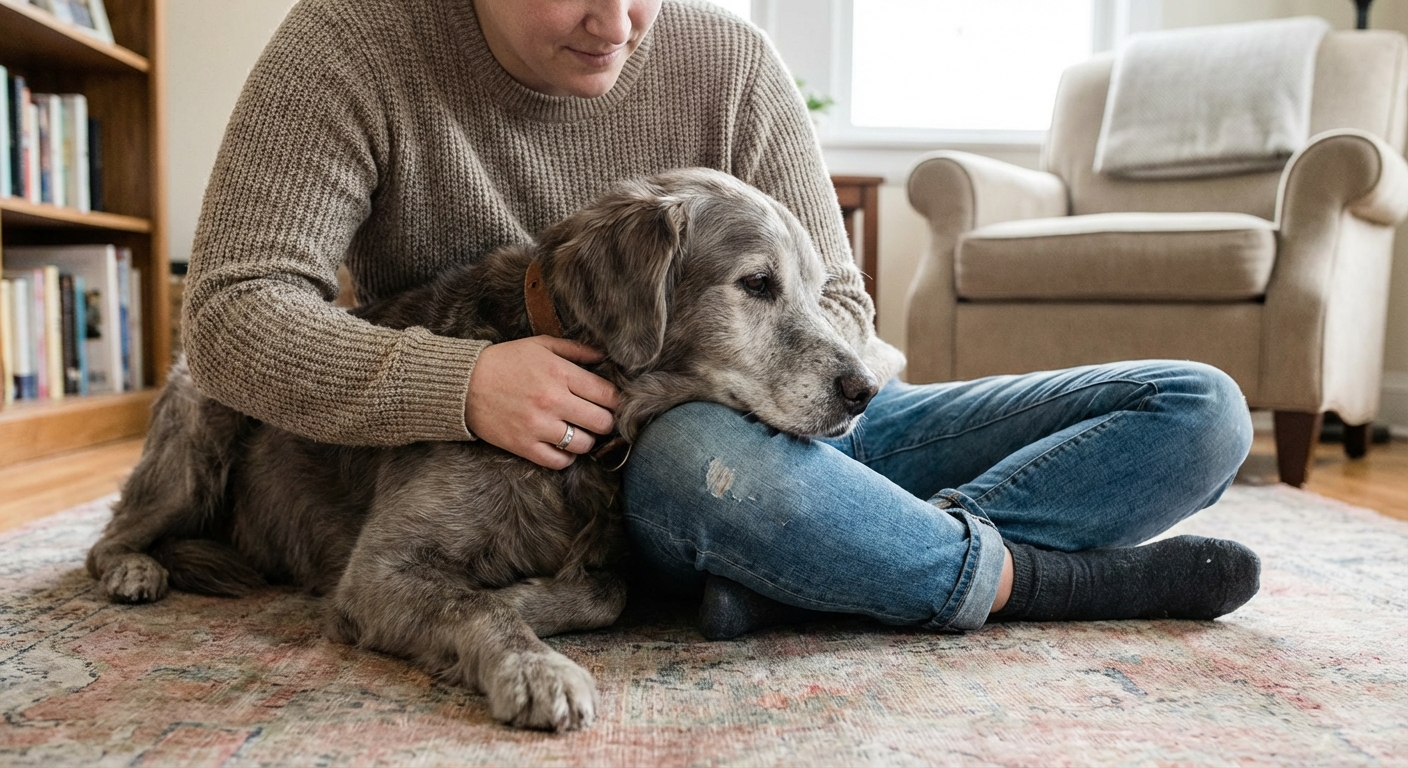
Pet loss grief is real grief. It can include sadness, numbness, guilt, anger, and even physical symptoms like fatigue or trouble sleeping. People may also feel embarrassed about how intense it is, especially if others minimize it.
Helpful mindset: you do not need to fix anything. You are simply witnessing their love and their loss.
- Some people want to talk. Others do better with quiet company.
- Some grieve immediately. Others feel it weeks later when routines change.
- Many struggle with guilt. Especially after euthanasia, sudden illness, or an accident.
What to say right away (simple, safe, and meaningful)
When emotions are fresh, short and clear is best. Aim for warmth, validation, and the dog’s name if you know it.
Go-to phrases
- “I’m so sorry. I know how much you loved [dog’s name].”
- “[Dog’s name] was family. This is a huge loss.”
- “I’m thinking of you today. Do you want to talk about what happened, or would you rather have a distraction?”
- “I don’t have the perfect words, but I’m here with you.”
- “You gave [dog’s name] a beautiful life.”
If the person chose euthanasia
Euthanasia is often a final act of love, but it can come with heavy second-guessing. These phrases reduce shame and validate the decision without being pushy.
- “That choice is heartbreaking, and it was made out of love.”
- “You didn’t give up on them. You protected them from suffering.”
- “It’s normal to replay everything. You made the best decision you could with the information you had.”
If the death was sudden or traumatic
- “I’m so sorry. That is a shock. I can’t imagine how unreal this feels.”
- “You don’t have to make sense of it today. Just take the next hour at a time.”
- “This wasn’t your fault.” (Only say this if you truly believe it and they are blaming themselves.)
When in doubt, lead with: “I’m so sorry. Tell me about them.” It invites a story, and stories are how we honor love.
What not to say (and what to say instead)
Most “wrong” comments come from discomfort, not bad intentions. Here are common phrases that can sting, plus kinder alternatives.
Avoid minimizing
- Instead of: “It was just a dog.”
Try: “I know they were a huge part of your life.” - Instead of: “At least they lived a long life.”
Try: “Even a long life never feels long enough.” - Instead of: “You can get another one.”
Try: “No one can replace [dog’s name]. If you ever want to talk about the future, I’m here.”
Avoid spiritual statements unless you know they want them
- Instead of: “Everything happens for a reason.”
Try: “This is unfair, and I’m so sorry.” - Instead of: “God needed another angel.”
Try: “I’m holding you in my thoughts. I’m here.”
Avoid making it about you
- Instead of: “I know exactly how you feel.”
Try: “I can’t fully know how this feels for you, but I care about you so much.”

The best questions to ask (so you don’t guess wrong)
Grief support works better when you offer choices. It helps the person feel in control when everything feels upside down.
- “Would you like to talk about [dog’s name] right now, or would you rather have quiet company?”
- “Do you want a text check-in, a phone call, or for me to stop by?”
- “Are you eating and sleeping at all? Can I drop off something simple?”
- “Do you have support at home tonight?”
- “Would it help if I handled one small task for you today?”
How to help in real, practical ways
In the first few days, many people are overwhelmed by logistics. Specific offers are better than “Let me know if you need anything,” because grief makes decision-making hard.
Specific things you can do
- Bring dinner or a grocery delivery: soup, a rotisserie chicken, fruit, easy breakfast items.
- Offer a “quiet errand run”: pharmacy pickup, returning calls, mailing a package.
- If they have other pets, offer to walk them or help keep routines steady.
- Send a short message each day for a week: “Thinking of you and [dog’s name].”
- Offer to sit with them while they clean up items, if they choose to. Do not push this.
Thoughtful gifts that usually land well
- A handwritten card with a favorite memory of the dog.
- A framed photo you know they love.
- A donation to an animal shelter or veterinary hardship fund in the dog’s name.
- A soft blanket, candle, or comfort item, paired with a note that keeps it simple.

Text messages you can copy and send
If you are staring at your phone and your mind is blank, you are not alone. Here are messages that feel human and supportive.
Short and immediate
- “I’m so sorry about [dog’s name]. I love you. I’m here.”
- “My heart hurts for you. [dog’s name] mattered so much.”
- “No need to respond. Just wanted you to know I’m thinking of you.”
Offering help
- “Can I drop off dinner tonight or tomorrow? I can leave it at the door.”
- “Do you want company this evening? I can sit with you, no talking required.”
- “If you want, send me your favorite photo of [dog’s name]. I’d love to remember them with you.”
One week later (this matters)
- “I’ve been thinking about [dog’s name] today. How are you holding up?”
- “Grief can hit in waves. If today is heavy, I’m here.”
What to say at the vet clinic or pet cremation service
If you are supporting someone in-person during appointments or arrangements, the environment can feel clinical and surreal. Your calm presence helps.
- “I can handle the paperwork if you want.”
- “Want me to ask the questions? You can just focus on [dog’s name].”
- “It’s okay to cry. You don’t have to hold it together here.”
If they are unsure what to choose (private cremation, paw prints, urns), avoid pressure. Try: “There’s no perfect choice. We can take it one step at a time.”
How to support children after a dog dies
Kids often grieve in bursts. They might cry, then ask to play, then cry again. That is normal. Clear, gentle language is best.
Helpful phrases for kids
- “[Dog’s name] died, and that means their body stopped working.”
- “It’s okay to feel sad, mad, confused, or all of it.”
- “We can remember [dog’s name] together. Want to draw a picture or tell me your favorite memory?”
Avoid euphemisms like “went to sleep” with very young children, because it can create fear around bedtime or anesthesia.
How to support someone who is grieving deeply
Sometimes pet loss triggers intense depression, panic, or complicated grief, especially if the dog was a primary source of daily companionship. Continue gentle check-ins.
Signs they may need extra support
- They cannot eat or sleep for several days.
- They are using alcohol or substances to numb out.
- They express hopelessness or say life is not worth living.
- They cannot function at work or care for themselves.
If you hear anything that worries you, it is okay to say: “I’m really concerned about you. Can we call someone together?” You can also encourage pet loss support resources like a local grief counselor, a therapist, or a pet loss support hotline. Many veterinary schools and humane societies offer them.
What to say when you do not know what to say
You can always come back to three truths: this hurts, their dog mattered, and they are not alone.
- “I’m so sorry. I’m here.”
- “Tell me what you loved most about [dog’s name].”
- “Do you want help with something small today?”
And if you already said something awkward, you can repair it simply: “I’ve been thinking about what I said, and I’m sorry if it came out wrong. I care about you, and I’m here.”